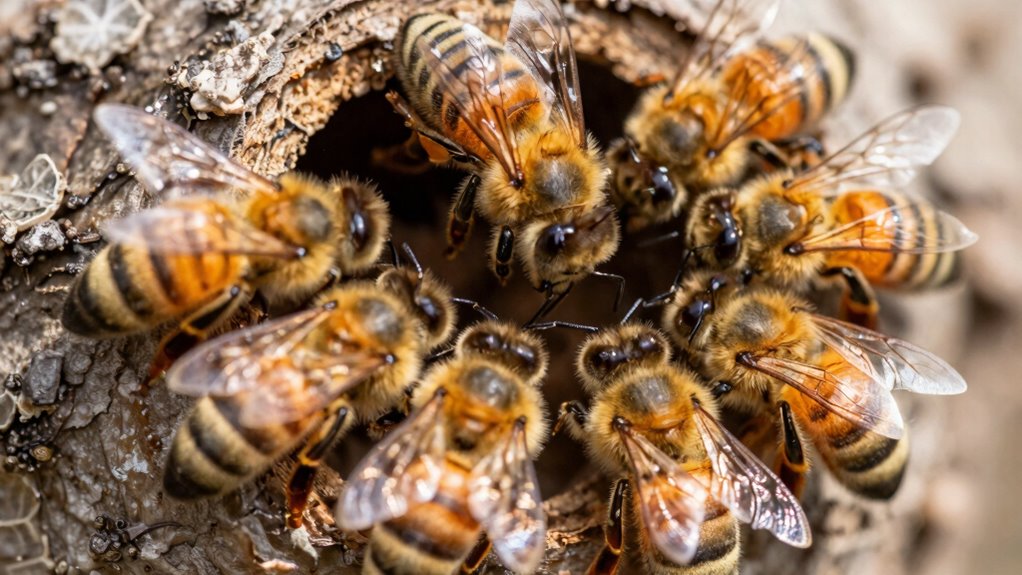

When bees need a new nest site, scout bees explore options and perform waggle dances to promote their favorite locations. The more convincing a scout’s dance, the more support it gains from other workers. As support accumulates, the colony reaches a consensus, and the bees coordinate their move. This efficient process guarantees they select the best site for safety and resources. If you’re curious about how they coordinate so precisely, there’s much more to uncover.

Get pet supplies delivered free with Prime
- Fast, free delivery on millions of items
- Prime Video, Amazon Music and more included
- Member-only deals all year
Key Takeaways
- Scout bees perform waggle dances to propose and indicate the quality of potential nest sites.
- The intensity and duration of dances reflect the confidence and support for each candidate site.
- Bees evaluate sites collectively based on factors like safety, proximity, and space, influencing support levels.
- Support for a site increases as more bees join in dance, creating a critical mass for consensus.
- The hive relocates once a quorum is reached, demonstrating collective decision-making and agreement.
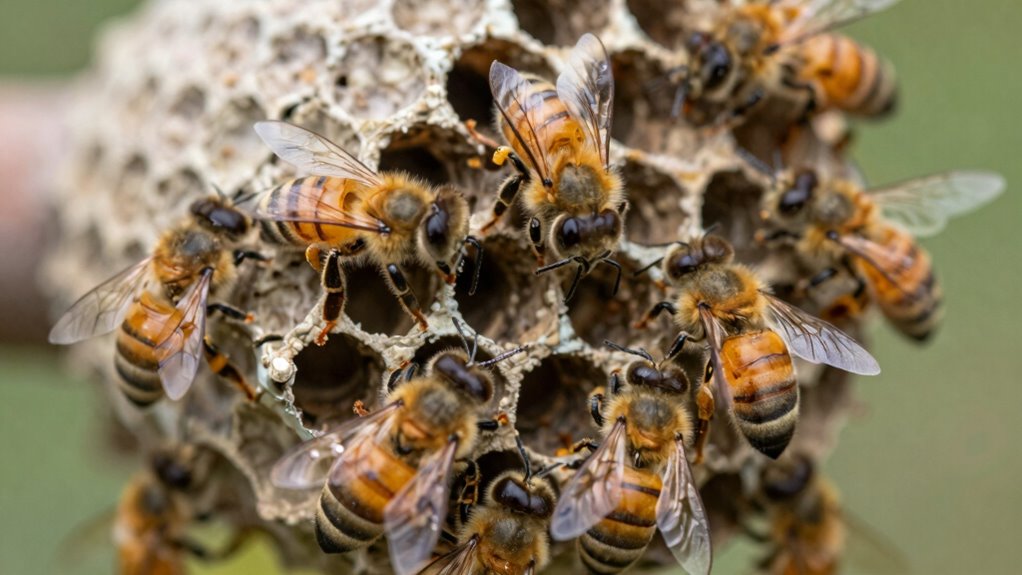
When a hive outgrows its current home, the bees must find a new nesting site, and they do so through a remarkable democratic process. This process begins with a scout bee or multiple scout bees leaving the hive to search for potential locations. These scouts use swarm communication to share information about suitable sites, returning to the cluster excitedly and performing waggle dances that convey the distance and quality of their chosen spots. These dances are vital because they influence the other bees’ opinions and help coordinate the collective decision-making process.
Once the scout bees return, they engage in a lively debate, buzzing around and performing their waggle dances to promote their candidates. Each dance acts as a proposal for a specific site, and the intensity or duration of the dance often reflects the scout’s confidence in its candidate. The other worker bees then observe these dances carefully, using swarm communication to evaluate the quality and suitability of each proposed site. This evaluation process is essential because it guarantees that only the best options gain support in the colony. As more bees become convinced of a particular candidate, they join in the dance, reinforcing the site’s popularity through increased communication and enthusiasm. The efficiency of this process demonstrates their collective intelligence, allowing the hive to make decisions swiftly and effectively.
Candidate evaluation is a vital part of the process because it allows the entire hive to weigh the pros and cons of each option. Bees consider factors like proximity, internal space, safety from predators, and overall accessibility. During this phase, some sites are dismissed while others gain momentum. The bees don’t rely on a single scout’s opinion but instead use collective swarm communication to gauge the consensus. This collective decision-making is a remarkable example of how social insects make complex decisions efficiently. Additionally, the bees’ ability to rapidly share and process information demonstrates their sophisticated communication system, which is key to their decision-making. Their use of swarm intelligence enables them to adapt quickly to changing conditions during this process. As the voting progresses, the number of bees supporting a site increases, creating a tipping point. When a critical mass of bees commits to a candidate, the hive begins to coordinate its final move, signaling readiness to relocate.
Eventually, the colony reaches a consensus, and the majority of the bees agree on the best site. This democratic process ensures that the hive moves to a location that maximizes safety, resource availability, and colony growth. The entire decision-making process, driven by swarm communication and candidate evaluation, exemplifies a highly efficient form of collective intelligence. By trusting their communication system and collective judgment, bees effectively vote on the best new home, guaranteeing the colony’s survival and prosperity in their next nesting site. Understanding bee communication highlights the sophistication of their collective decision-making system.
As an affiliate, we earn on qualifying purchases.
Frequently Asked Questions
How Do Bees Communicate Their Preferences During the Voting Process?
You observe that bees communicate their preferences through pheromone signaling and dance language. When a bee finds a promising nest site, it performs a waggle dance to share information about its quality, attracting others. Pheromone signaling intensifies from bees supporting a particular site, influencing the hive’s decision. This combined communication method helps the hive collectively evaluate options and reach a consensus during the voting process.
What Factors Influence a Bee’s Choice of a New Nest Site?
You’ll find that swarm dynamics and nest selection strategies heavily influence a bee’s choice of a new nest site. Factors like location safety, size, and structural stability are key. Bees assess potential sites collectively, with those offering the best protection and resources gaining more support. Their decision-making process balances individual preferences and group needs, ensuring the colony chooses the most suitable site for survival and thriving.
How Long Does the Entire Voting Process Typically Take?
The entire nest selection process usually takes a few days, depending on swarm dynamics. You’ll notice scout bees exploring options, sharing information, and competing for attention. During this period, the swarm gradually narrows down choices, with more bees supporting preferred sites. Once a consensus emerges, the hive rapidly moves to establish the new nest. The process is efficient, ensuring the bees pick the best site for their colony’s survival.
Do All Worker Bees Participate Equally in the Decision-Making?
Not all worker bees participate equally in the decision-making process. While some scout and present nest site options, the queen’s influence and hive memory shape the overall consensus. Worker bees that gather information use their experience and hive memory to evaluate options, but the queen’s pheromones subtly sway their choices. This collective effort guarantees the hive makes a balanced decision, with some bees more active in voting than others.
Can Environmental Changes Affect the Voting Outcomes?
Environmental changes, like climate impact and habitat alteration, can definitely influence how bees vote on a new nest site. You might notice that shifts in temperature or changes in landscape alter the availability of ideal locations, prompting bees to prioritize different options. These factors can sway their collective decision-making process, making some sites more attractive or suitable than others, ultimately affecting the outcome of their nesting choice.
Conclusion
As you watch the bees’ dance unfold, it’s clear their decision-making is a finely tuned orchestra of communication and consensus. Like a tight-knit team, they weigh each option carefully, their collective voice guiding the swarm to the best new home. In this tiny democracy, every bee’s vote matters, proving that even the smallest creatures can orchestrate complex decisions. Their dance isn’t just movement; it’s a symphony of unity, showing nature’s remarkable ability to work together.
Halloween Picks
halloween
As an affiliate, we earn on qualifying purchases.