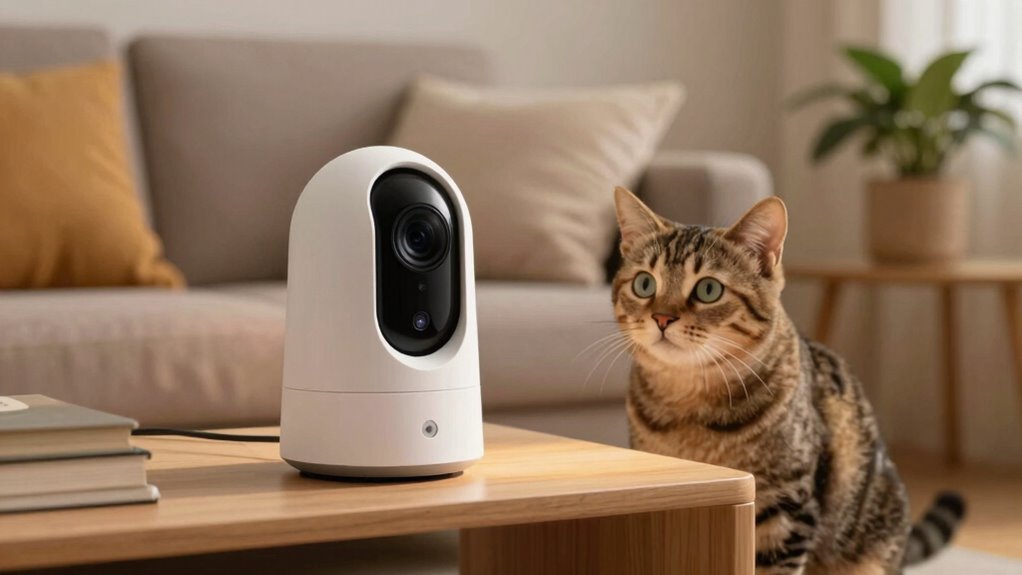
To reduce your pet’s separation anxiety with a camera, choose one with features like two-way audio, calming sounds, and treat dispensers. Place it at eye level in a secure spot and establish a consistent routine for departure and return. Use the camera to monitor behavior, recognize early signs of stress, and implement calming strategies like music or reassurance. Keep adjusting your approach, and you’ll discover effective ways to comfort your furry friend even more.
Key Takeaways
- Use pet cameras to monitor stress signs and respond calmly without punishment, fostering a sense of security.
- Incorporate calming sounds and treats via the camera to soothe pets during separation.
- Establish consistent routines and gradual desensitization with camera reinforcement to reduce anxiety triggers.
- Ensure secure setup with stable internet and proper placement to prevent added stress from technical issues.
- Use two-way audio to reassure pets and reinforce calm behavior, preventing escalation of anxiety.
What Is Separation Anxiety in Pets and How Can Cameras Help?
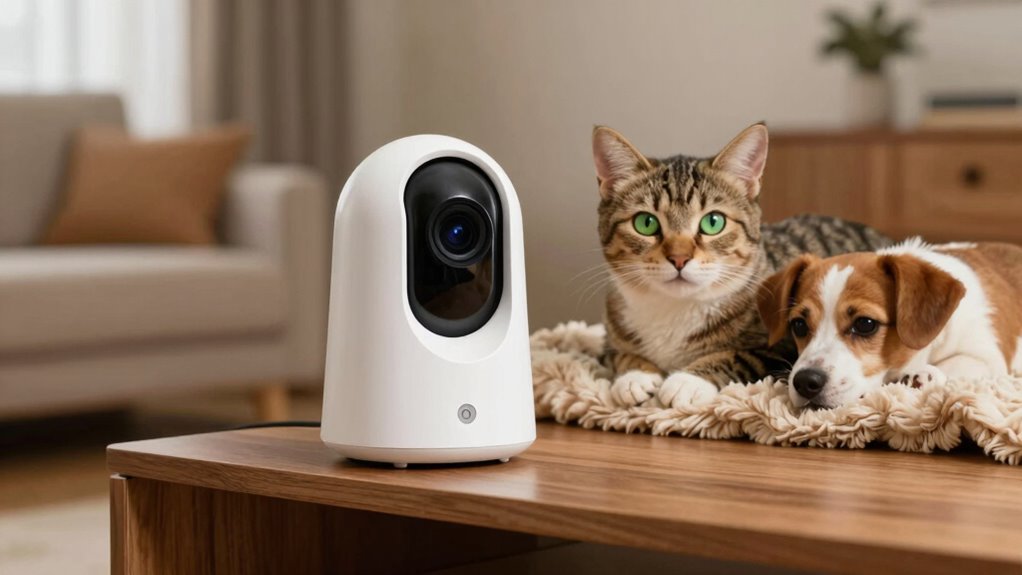
Separation anxiety in pets occurs when they become distressed or anxious when left alone, often leading to behaviors like barking, destructive chewing, or accidents indoors. This reaction is rooted in pet behavior that stems from fear of abandonment or unfamiliar surroundings. To address this, training techniques such as gradual desensitization and positive reinforcement can help your pet feel more secure. Pet cameras play a valuable role by allowing you to observe their behavior when you’re away, giving you insights into triggers and patterns. With this information, you can adjust your training strategies more effectively. Additionally, monitoring your pet’s behavior through cameras can help identify specific stressors that may not be evident during brief interactions. Recognizing the signs of stress early can enable prompt and targeted interventions to ease their anxiety. Incorporating essential oils for anxiety into your environment, such as lavender oil, may also help create a calming atmosphere for your pet. Furthermore, understanding pet behavior patterns can aid in developing more effective calming routines.
How to Choose the Best Pet Camera Features to Reduce Stress
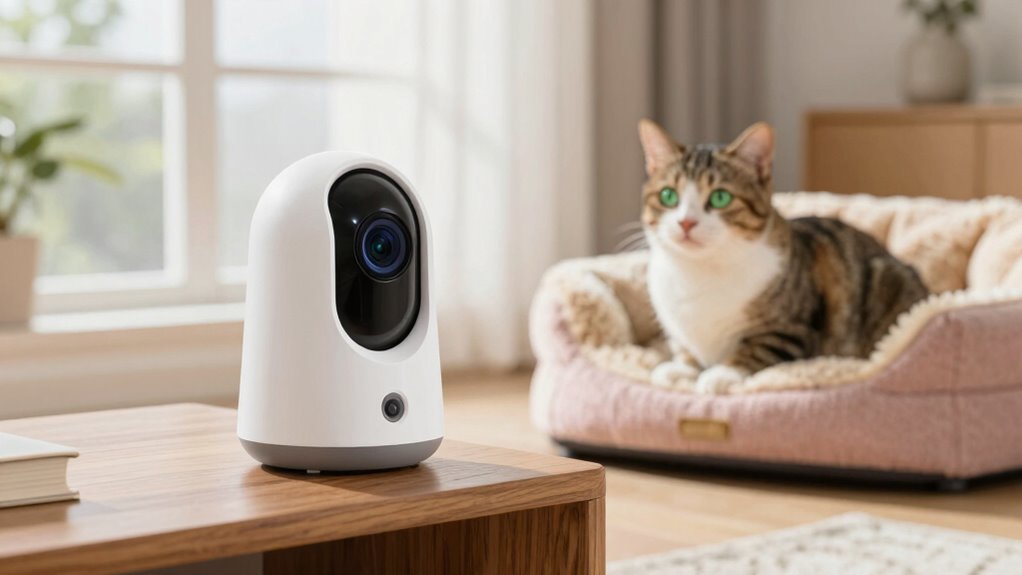
When selecting a pet camera, consider models with noise and sound options that can comfort your pet or alert you to distress. Interactive features, like treat dispensers or two-way communication, make it easier to keep your pet engaged and calm. These features can substantially reduce your pet’s stress when you’re away. Additionally, understanding how the camera’s filtration systems work can help ensure clear audio and video, providing a more reliable connection between you and your pet. Choosing a camera with smart connectivity ensures seamless integration with your other devices, enhancing overall monitoring capabilities. Incorporating audio enhancement technologies can further improve communication clarity, making it easier to soothe your pet. Paying attention to wiring basics can also help you set up your system safely and effectively. Emphasizing ethical design principles in your selection process can ensure your pet’s well-being is prioritized through responsible product features.
Noise and Sound Options
Choosing a pet camera with noise and sound options can make a big difference in keeping your furry friend calm and comfortable. Sound masking helps drown out stressful noises, creating a soothing environment. Look for cameras with adjustable volume control so you can set the perfect level. Here are key features to contemplate:
- Sound masking capabilities to reduce external noise triggers. Incorporating sound masking technology can further enhance calming effects by selectively blocking disruptive sounds.
- Volume control that you can easily adjust to suit your pet’s preferences.
- The ability to play calming sounds or music remotely to soothe separation anxiety.
- Incorporating air quality considerations can further enhance your pet’s environment by reducing airborne irritants that may contribute to stress. This highlights the importance of understanding cloud service dependencies and how they can affect your pet’s comfort if the system relies on internet connectivity. Additionally, selecting a system with redundant connectivity options can help prevent interruptions in sound management.
- Additionally, selecting a pet camera with reliable connectivity options ensures consistent sound management and reduces potential disruptions that could cause stress for your pet.
These options allow you to tailor the sound environment, helping your pet feel secure without overwhelming them. Proper sound management can considerably reduce stress and prevent your pet from becoming more anxious.
Interactive Engagement Features
Interactive engagement features are essential for reducing your pet’s stress because they foster a sense of connection and activity. Features like interactive play allow you to engage your pet remotely, providing mental stimulation and companionship that can ease separation anxiety. Look for cameras with two-way audio so you can talk and listen, strengthening your bond. Automatic feeding adds convenience and comfort, giving your pet regular treats or meals even when you’re away. These features help your pet feel less lonely and more engaged, reducing destructive behaviors caused by boredom or anxiety. Make certain the camera offers easy control over these functions, making it simple to interact and support your pet’s emotional well-being throughout your absence. Additionally, choosing a user-friendly interface ensures you can quickly respond to your pet’s needs without added frustration. Incorporating smart home automation can further enhance your pet’s comfort by adjusting settings based on your pet’s activity levels. Moreover, selecting a camera with real-time alerts can notify you immediately if your pet shows signs of distress, allowing timely intervention. To maximize the benefits of these features, consider how arcade-style engaging options can keep your pet mentally stimulated even during long periods alone. Including interactive toys that can be controlled remotely can also provide additional enrichment for your pet when you’re not home.
Setting Up Your Pet Camera for Comfort and Safety
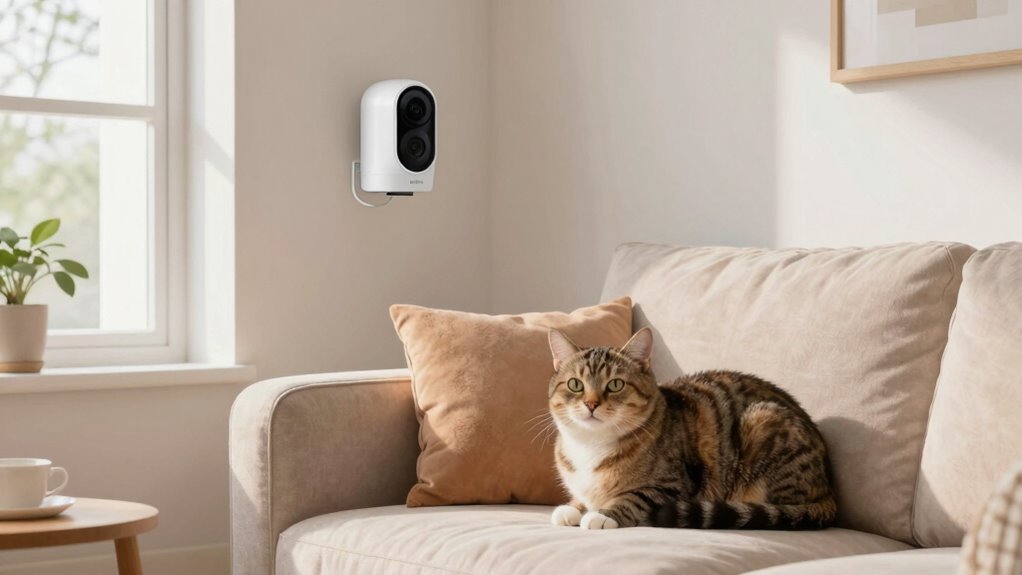
Start by placing your pet camera in a spot that offers a clear view without causing discomfort, like at your pet’s eye level. Make sure your connection is secure and stable to avoid interruptions when monitoring your pet. Proper placement and a reliable connection guarantee your pet’s safety and comfort at all times. Additionally, choosing the right cookie settings can help ensure your privacy and enhance your browsing experience. Regularly updating your camera’s firmware can also improve exfoliation and performance, leading to better monitoring. Ensuring your camera has secure network access helps protect your pet’s privacy and prevents unauthorized viewing. Incorporating vintage-inspired tech can add a charming touch to your setup while maintaining modern functionality, and understanding your home wiring can help prevent potential electrical issues.
Optimal Camera Placement
To guarantee your pet feels comfortable and safe, placing the camera at your pet’s eye level to capture their natural behavior. Field‑of‑view is crucial for ensuring your pet’s environment is fully visible. Choose a spot with even lighting, avoiding harsh shadows or glare. Place the camera where your pet spends most of their time, such as near their bed or favorite spot. Keep an eye on market trends and insights to stay informed about new features or promotional offers that can enhance your pet monitoring experience. This setup minimizes distractions and provides a clear view of your pet’s environment. Adjust the camera angle to avoid blind spots and ensure you can see their face and body clearly. Proper placement helps you monitor your pet comfortably and safely without causing stress.
Ensuring Secure Connections
Ensuring your pet camera has a secure connection is essential for reliable monitoring and safety. Stable connection guarantees you can check in on your pet without interruptions or lag, reducing worries when you’re away. To improve pet camera security and connection stability, place your router close to the camera or use a Wi-Fi extender if needed. Avoid crowded networks or interference from other devices, which can weaken the signal. Regularly update your camera’s firmware and password for added protection against security breaches. Use a secure, encrypted Wi-Fi network to prevent unauthorized access. By prioritizing connection stability and security, you ensure your pet’s environment remains safe and your monitoring remains consistent, giving you peace of mind whenever you’re not at home.
Creating Routines and Using Desensitization Techniques With Cameras
Establishing consistent routines around your pet camera helps your pet feel more comfortable and reduces anxiety. To do this effectively, consider these steps:
Creating a predictable routine with your pet camera eases anxiety and helps your pet feel secure.
- Introduce the camera gradually, allowing your pet to explore it with positive reinforcement, like treats or praise.
- Use gradual desensitization by starting with short absences, then slowly increasing the time away, always pairing the experience with rewards.
- Keep a predictable schedule for check-ins and departures, so your pet learns what to expect and feels secure.
How to Spot Signs of Anxiety and Adjust Your Approach
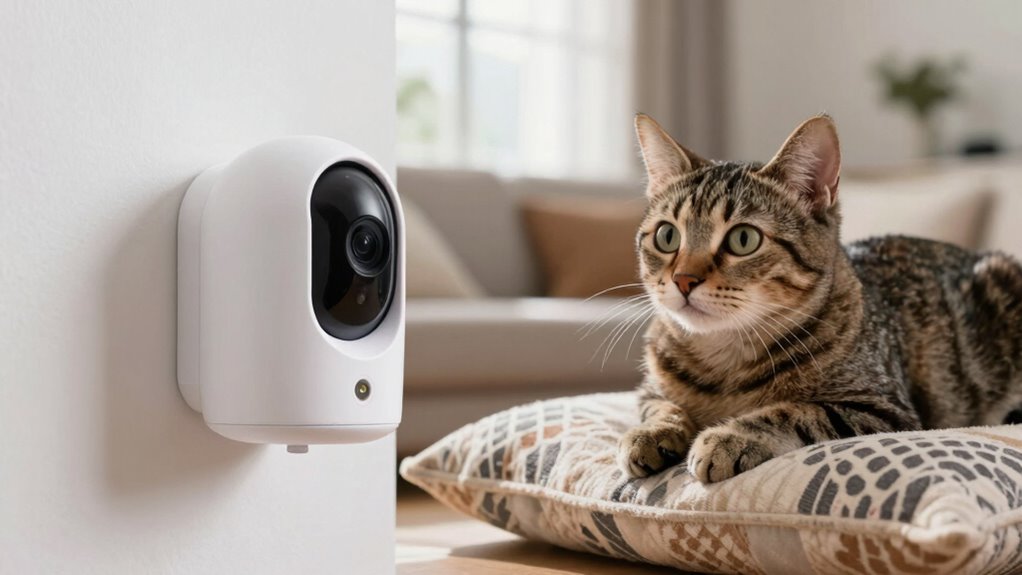
Recognizing signs of anxiety in your pet is essential for adjusting your approach and ensuring their well-being. Pay attention to their body language and behavioral cues, such as pacing, whining, excessive licking, or trembling. These signs indicate your pet feels stressed or uneasy. Notice if they hide, bark excessively, or show other repetitive behaviors. When you spot these cues, it’s important to respond calmly and avoid punishment, which can worsen their anxiety. Instead, gradually introduce positive reinforcement and comfort. Using your pet camera, observe these signals discreetly and consistently. By understanding their body language and behavioral cues, you can tailor your interactions and create a calming environment, helping your pet feel safer and less anxious over time.
Additional Tips for Using Pet Cameras to Calm Your Furry Friend
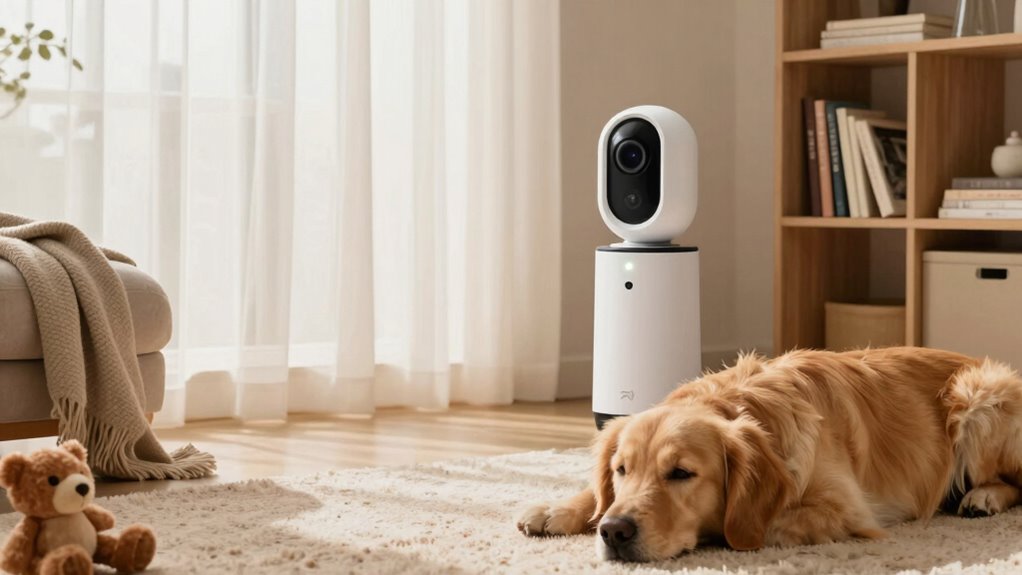
Using your pet camera effectively can make a significant difference in calming your furry friend when you’re not around. To optimize its benefits, consider these tips:
- Play calming music through the camera’s speaker to soothe anxiety.
- Use the camera’s two-way audio to talk softly and reassure your pet during stressful moments.
- Incorporate pet training techniques by rewarding calm behavior when your pet remains relaxed on camera.
Consistently using calming music can reduce stress levels, while engaging in gentle pet training via the camera reinforces positive habits. Remember, your goal is to create a predictable environment that fosters security and trust. These simple strategies help your pet feel less alone and more comforted, even when you’re away.
Frequently Asked Questions
Can Pet Cameras Replace Human Interaction Effectively?
Pet cameras can’t fully replace human interaction, but they help with remote monitoring. You can check on your pet anytime, easing their separation anxiety. However, be aware of tech limitations like lag or connectivity issues, which might make your pet feel more isolated. While cameras offer reassurance, they shouldn’t substitute your presence or quality time, as direct interaction remains essential for your pet’s emotional well-being.
How Often Should I Monitor My Pet With the Camera?
You should monitor your pet with the camera as often as needed to comfort them without causing stress. Check in when you’re away or to see how they’re doing, but avoid constant monitoring that might increase anxiety. Prioritize good video quality so you can clearly see your pet’s behavior, and consider a camera with strong battery life to allow longer periods of monitoring without interruptions. Balance is key to reducing separation anxiety effectively.
Are There Specific Camera Types Better for Anxious Pets?
Yes, certain cameras are better for anxious pets. Look for models with two-way audio, so you can soothe your pet with calming techniques and treat dispensing features to help treat separation. Cameras with gentle, adjustable sound and motion alerts also allow you to monitor without startling them. These features help create a calming environment, reducing separation anxiety while allowing you to stay connected and reassure your pet whenever needed.
Can Pet Cameras Detect Health Issues Beyond Anxiety?
Think of pet cameras as your pet’s silent health detectives. While they mainly focus on health monitoring and behavior analysis, some advanced models can spot signs of illness like lethargy or abnormal activity. By keeping a watchful eye, you catch health issues early, much like a caring guardian angel. These cameras don’t replace vet visits, but they give you valuable insights, helping you respond swiftly to your pet’s changing needs.
How Do I Prevent My Pet From Becoming More Dependent?
To prevent your pet from becoming more dependent, encourage independent behavior and avoid excessive reassurance. Use your pet camera to check in without overdoing it, gradually increasing your pet’s confidence in being alone. Provide engaging toys and routines that promote attachment development without fostering reliance. This balanced approach helps your pet feel secure while developing independence, reducing dependence over time and supporting their emotional well-being.
Conclusion
Using pet cameras is like holding a lifeline for your furry friend, easing separation anxiety without making it worse. By choosing the right features, setting up a safe space, and establishing routines, you create a calm environment they can trust. Keep an eye on signs of stress and adjust your approach accordingly. With patience and consistency, you’ll build a sense of security that makes both of you feel more relaxed, like a gentle wave settling into calm.