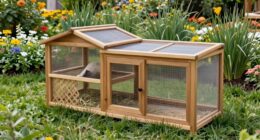
If your rabbit seems stressed, check their pen setup. Make sure it’s spacious, safe, and has no sharp edges or gaps. Confirm they have soft bedding and clean litter to keep them comfortable, and good ventilation to prevent stale air. Proper lighting and temperature are key—avoid direct sunlight or drafts. Creating a calm, enriching environment with hiding spots and toys helps reduce stress. Keep everything balanced, and you’ll improve their well-being. More tips await if you keep exploring.
Key Takeaways
- Ensure the enclosure is spacious, well-ventilated, and free of sharp edges or gaps to allow natural movement and prevent escapes.
- Provide appropriate bedding and litter that are soft, dust-free, and regularly cleaned to promote comfort and respiratory health.
- Balance lighting and airflow to mimic natural conditions, avoiding direct sunlight, overheating, or stagnant air inside the pen.
- Include hiding spots, chew toys, and enrichment items to reduce stress and encourage natural behaviors.
- Keep the environment quiet, calm, and free from loud noises to support your rabbit’s emotional well-being.
Spot the Signs Your Rabbit’s Pen Is Causing Stress
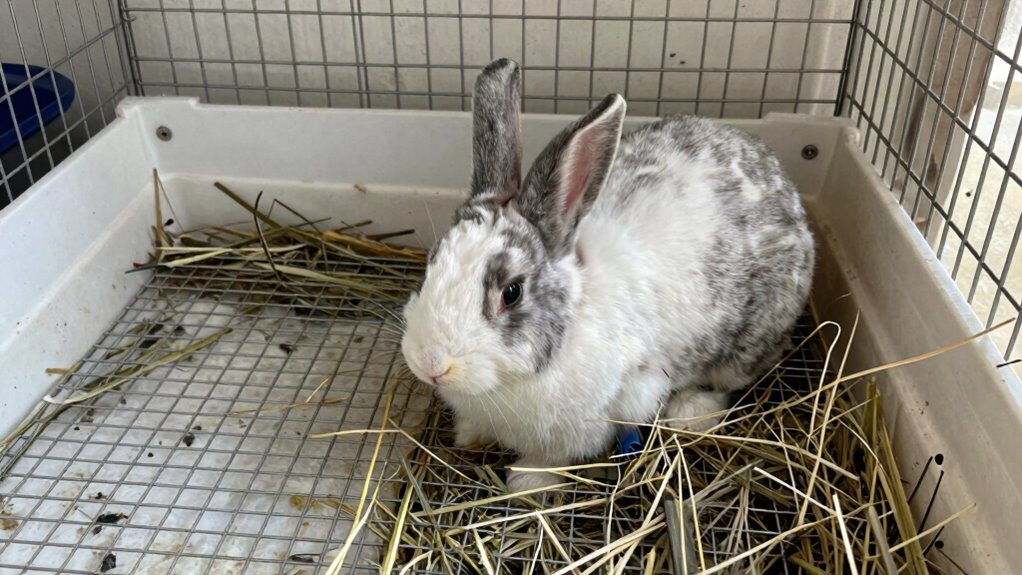
When your rabbit shows signs of stress, it’s often linked to its living environment. You’ll notice behavior signs like excessive hiding, aggressive nipping, or repetitive grooming, which indicate discomfort. Changes in activity levels—either lethargy or hyperactivity—are also health indicators of stress. Pay attention if your rabbit refuses food or water, as this can signal anxiety or illness. Unusual vocalizations or increased scratching may suggest discomfort with its pen setup. These signs aren’t just behaviors; they reflect your rabbit’s physical and emotional health. Recognizing these indicators early helps you address potential issues before they worsen. If your rabbit displays these signs consistently, it’s a clear signal that something in the pen might be stressing them out, prompting you to evaluate and adjust their environment. Additionally, understanding how home environment factors influence their stress levels can help you create a more comfortable space for your rabbit.
Pick a Spacious, Safe Enclosure for Your Bunny
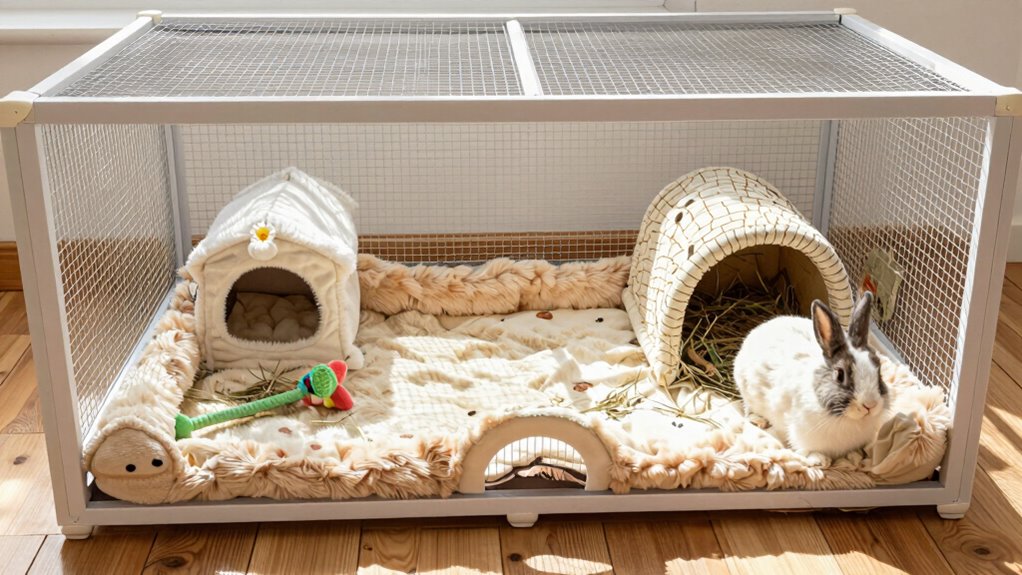
Choosing a spacious and secure enclosure is essential for your rabbit’s well-being. An adequate enclosure size provides enough hopping space, reducing stress and encouraging natural movement. A larger enclosure offers your rabbit room to explore and play, which is crucial for their mental and physical health. Ensure the enclosure is safe, with no gaps or sharp edges, and that it’s tall enough to prevent escapes. Prioritize enclosure size to keep your bunny happy and healthy. Additionally, choosing an energy-efficient enclosure can reduce environmental impact and promote sustainable pet care practices. Proper enclosure design supports your rabbit’s overall health and happiness, especially when it incorporates safe materials that are non-toxic and durable. Selecting the right enclosure size is vital for providing your bunny with the space they need to thrive and stay stress-free.
Set Up Proper Bedding and Litter for Comfort
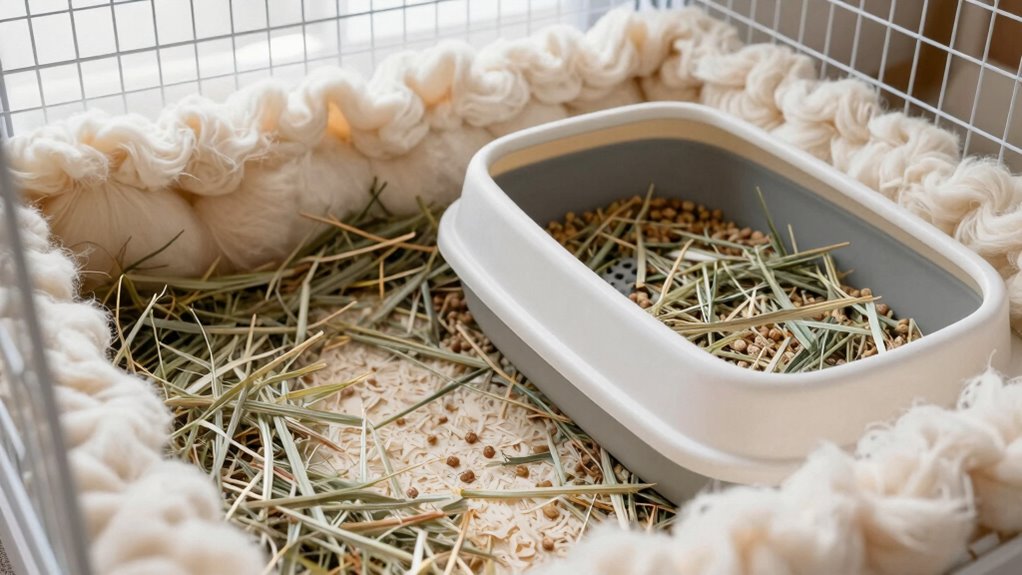
Providing your rabbit with the right bedding and litter is essential for their comfort and health. Choose soft, absorbent bedding like hay, shredded paper, or specially designed rabbit bedding to guarantee good bed comfort. Avoid materials that can cause irritation or are difficult to clean. Proper litter hygiene is equally important; use dust-free, odor-control litter to prevent respiratory issues and reduce odors. Regularly change the bedding and clean the litter box to maintain a fresh environment. This not only keeps your rabbit comfortable but also prevents infections and promotes overall well-being. Ensure the bedding is deep enough for your rabbit to burrow and nest, making their space feel safe and cozy. Using the right bedding materials can also help reduce stress and encourage natural behaviors in your rabbit. Additionally, maintaining proper filter maintenance in your cleaning routines can help ensure a healthier living space for your bunny. Incorporating proper ventilation can further improve air quality and reduce dust buildup in their environment. Regularly monitoring air quality levels is important for preventing respiratory problems caused by dust and poor airflow.
Ensure Good Ventilation and Temperature Control
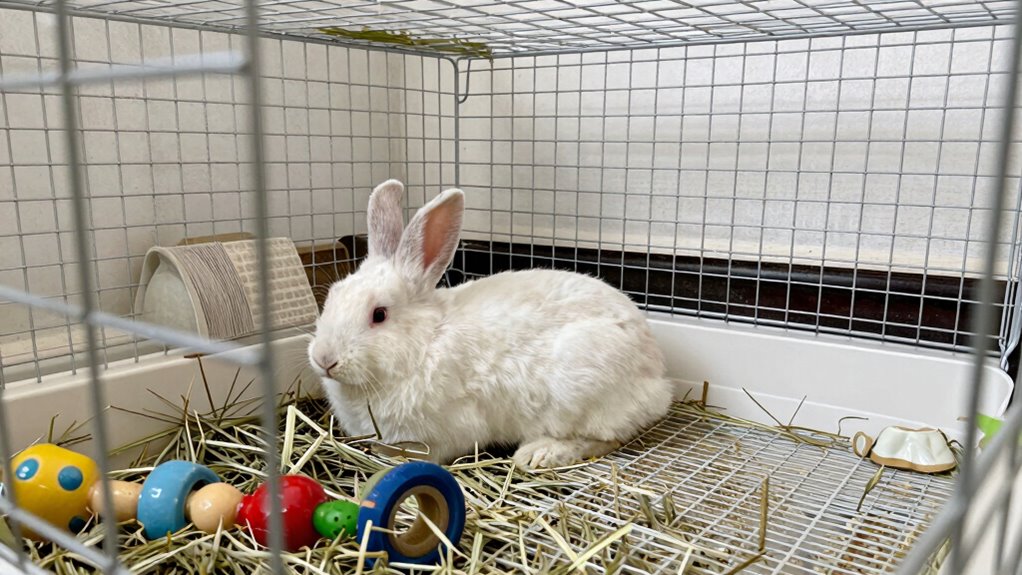
Good ventilation and temperature control are essential for keeping your rabbit healthy and comfortable. Ensure your cage size is appropriate, allowing enough space for airflow and movement. Proper enclosure placement matters too—avoid placing the pen in direct sunlight or drafty areas, which can cause temperature fluctuations. Position the enclosure in a well-ventilated spot with stable temperatures, ideally between 60-70°F. Use fans or vents to promote air circulation without creating strong drafts. Monitor the environment regularly to prevent overheating or cold spots. Proper setup is crucial for ensuring your rabbit remains stress-free and healthy in its environment. Additionally, understanding ventilation systems can help you optimize airflow and maintain a consistent climate within the enclosure. A well-ventilated, properly located cage helps reduce stress and respiratory issues, keeping your rabbit happier and healthier. Prioritize these factors by considering airflow management to create a safe, comfortable space your rabbit can thrive in. Incorporating climate control features can further enhance your setup by stabilizing temperature and humidity levels, ensuring your rabbit’s comfort year-round.
Avoid Common Setup Mistakes That Stress Your Rabbit
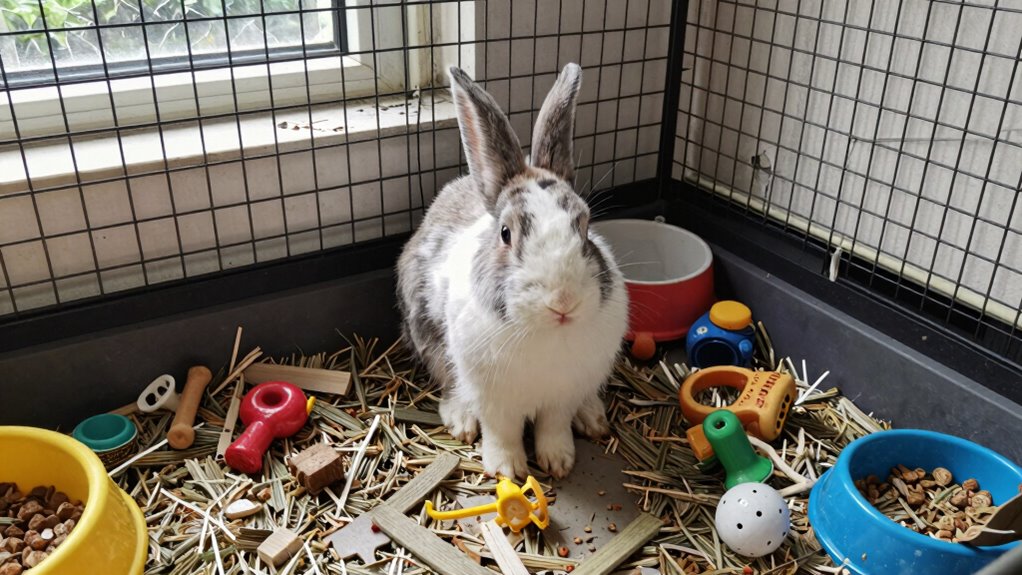
One common mistake is giving your rabbit too little space or choosing a poorly designed enclosure, which can cause stress and health issues. Poor ventilation and inadequate lighting can also make the environment uncomfortable and increase your rabbit’s anxiety. To keep your rabbit calm and healthy, make sure the setup provides enough room, good airflow, and proper lighting.
Insufficient Space and Enclosure Design
Many rabbit owners underestimate how much space their pets truly need, which can lead to stress and health problems. An undersized enclosure restricts movement, causing frustration and even digestive issues. To improve your rabbit’s well-being, assure their space allows for natural behaviors like hopping, digging, and exploring. A cramped setup can disrupt their rabbit diet, leading to selective eating and nutritional gaps. Proper handling techniques also depend on a stable environment—stressful enclosures make handling more difficult. Consider these setup tips:
- Provide at least 4 square feet of space per rabbit
- Include hideouts and tunnels for mental stimulation
- Use a secure, escape-proof enclosure
- Incorporate different textures for enrichment
- Regularly clean and refresh the environment
Ensuring your rabbit’s environment is thoughtfully designed supports their Natural Behavior and overall health. A well-designed enclosure fosters healthier, happier rabbits and easier handling.
Poor Ventilation and Lighting
Poor ventilation and inadequate lighting can substantially stress your rabbit and compromise their health. Poor ventilation causes stale air, increasing the risk of respiratory problems and making your rabbit uncomfortable. Ventilation problems can also lead to a buildup of ammonia from urine, which irritates their eyes and lungs. Proper airflow is crucial to remove toxins and odors, ensuring a healthier environment. Additionally, understanding air quality and how it impacts small animals can help you optimize your setup for their safety. Ensuring good ventilation involves not only the right placement but also regular cleaning to prevent bacterial growth, which can further harm your rabbit’s health. Maintaining ventilation systems and monitoring air exchange rates can greatly improve your rabbit’s comfort and safety. Lighting issues, such as insufficient natural light or overly harsh artificial lighting, can disrupt your rabbit’s circadian rhythm, causing stress and affecting their overall well-being. Guarantee your pen has good airflow and is positioned where fresh air can circulate freely. Use natural light during the day, but avoid direct sunlight that can overheat the enclosure. Proper ventilation and balanced lighting are essential to create a healthy, comfortable environment that reduces stress for your rabbit.
Create a Calm, Enriching Environment for Your Bunny
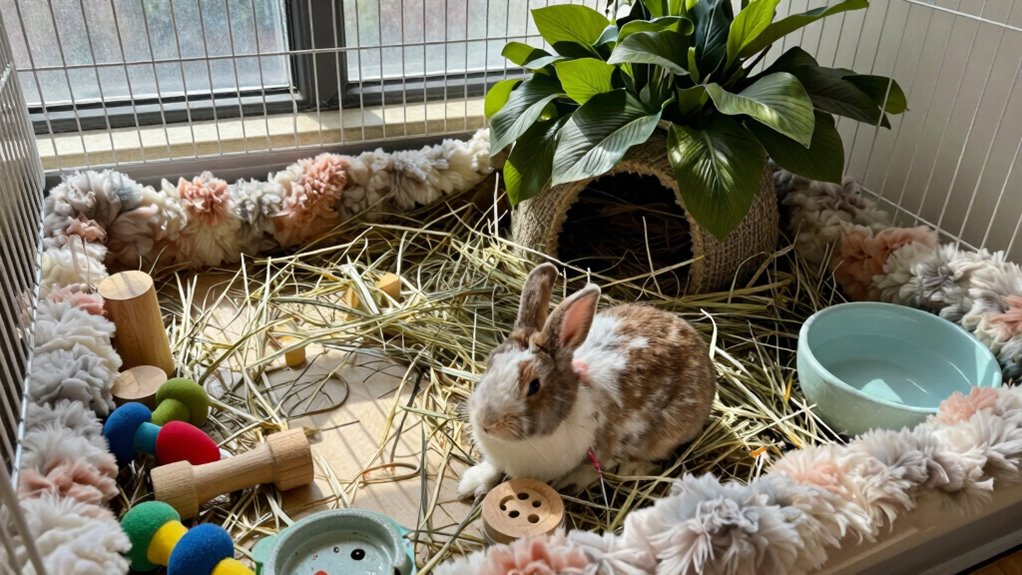
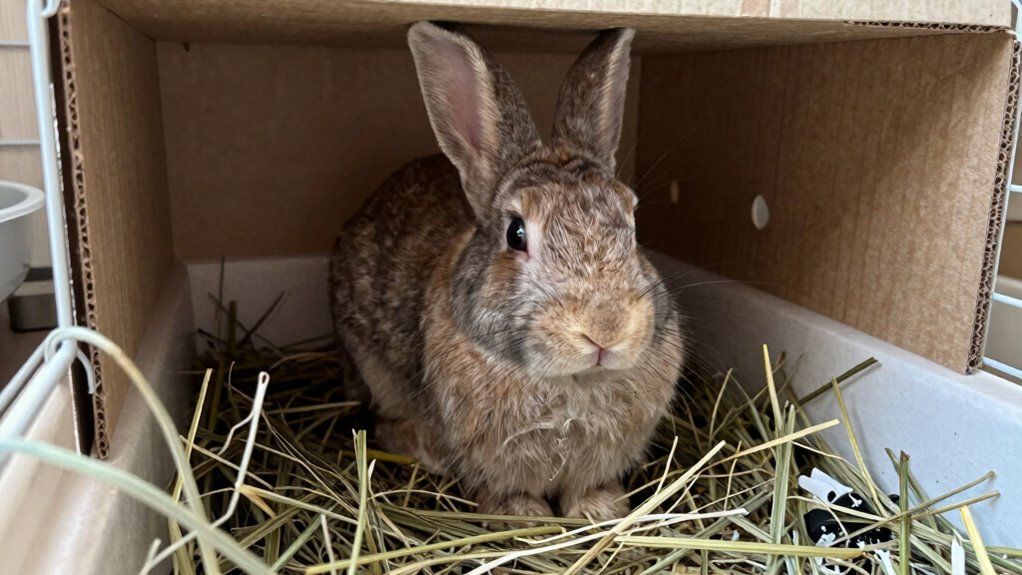
Creating a calm, enriching environment for your bunny starts with understanding its natural needs and behaviors. You want to promote behavior enrichment and ensure dietary considerations are met. This means providing spaces where your bunny can explore safely and relax. Add hiding spots and chew toys to satisfy natural instincts. Incorporate a variety of fresh hay, vegetables, and pellets to support healthy eating habits. Keep the environment quiet and avoid sudden loud noises to reduce stress. Use cozy bedding and soft lighting to create a peaceful atmosphere. Remember, a well-designed space encourages your bunny to be active, curious, and comfortable, leading to a happier, healthier pet. Your effort in creating this environment directly impacts their well-being and overall happiness.
Frequently Asked Questions
How Often Should I Clean My Rabbit’s Pen to Prevent Stress?
You should clean your rabbit’s pen at least once a week to maintain proper enclosure hygiene and prevent stress. A consistent cleaning schedule keeps their environment fresh, reducing odors and bacteria buildup. Spot-clean daily to remove droppings and soiled bedding. By staying on top of enclosure hygiene, you create a comfortable space that keeps your rabbit happy and healthy, minimizing stress caused by an unclean environment.
Can the Pen’s Location Inside the House Affect My Rabbit’s Stress Levels?
Yes, the house placement of your rabbit’s pen affects their stress levels. Choose a quiet, stable spot with minimal noise and traffic to mitigate environmental influence on your bunny’s well-being. Avoid placing it near loud appliances or drafts, and ensure it’s in a temperature-controlled area. Proper house placement helps your rabbit feel safe and relaxed, preventing stress caused by environmental factors.
Are There Specific Materials I Should Avoid When Setting up the Enclosure?
Don’t put all your eggs in one basket when choosing materials for your rabbit’s enclosure. Avoid unsafe bedding like cedar or pine shavings, which can harm their respiratory system. Instead, use safe bedding such as paper-based or hay. Also, steer clear of fragile or toxic items, and include chewable toys made from natural, non-toxic materials. These choices keep your rabbit safe and happy in their cozy setup.
How Does Noise Pollution Impact My Rabbit’s Well-Being?
High noise levels can markedly stress your rabbit, especially since they’re naturally sound sensitive. Sudden loud noises or constant background noise can cause anxiety, disrupt sleep, and even weaken their immune system. To keep your rabbit healthy and happy, reduce noise pollution around their enclosure, provide a quiet space, and avoid exposing them to loud sounds. A calm environment helps them feel secure and promotes overall well-being.
What Are the Signs My Rabbit Is Truly Relaxed in Their Environment?
You’ll notice your rabbit is truly relaxed when they sit with a calm posture, legs tucked in comfortably, and their ears are relaxed. Look for relaxed grooming, like gentle licking or preening, which shows they feel safe. They might also lie down stretched out or flop onto their side, indicating they’re at ease. These signs mean your environment supports their well-being and minimizes stress.
Conclusion
By fixing these setup errors, your rabbit will feel more at ease—like a knight finally resting in a cozy castle after a long quest. Keep an eye out for signs of stress, choose a spacious, safe enclosure, and create a calm environment filled with enrichment. Remember, a well-designed pen isn’t just a cage; it’s their sanctuary. With a little effort, your bunny will hop happily, free from unnecessary stress and ready to enjoy their new kingdom.