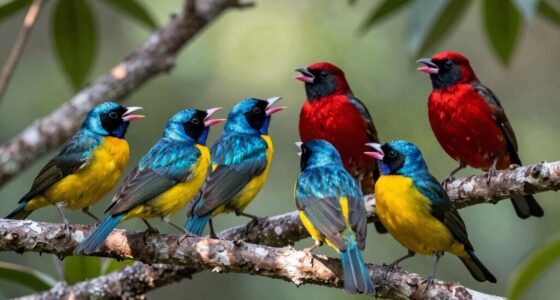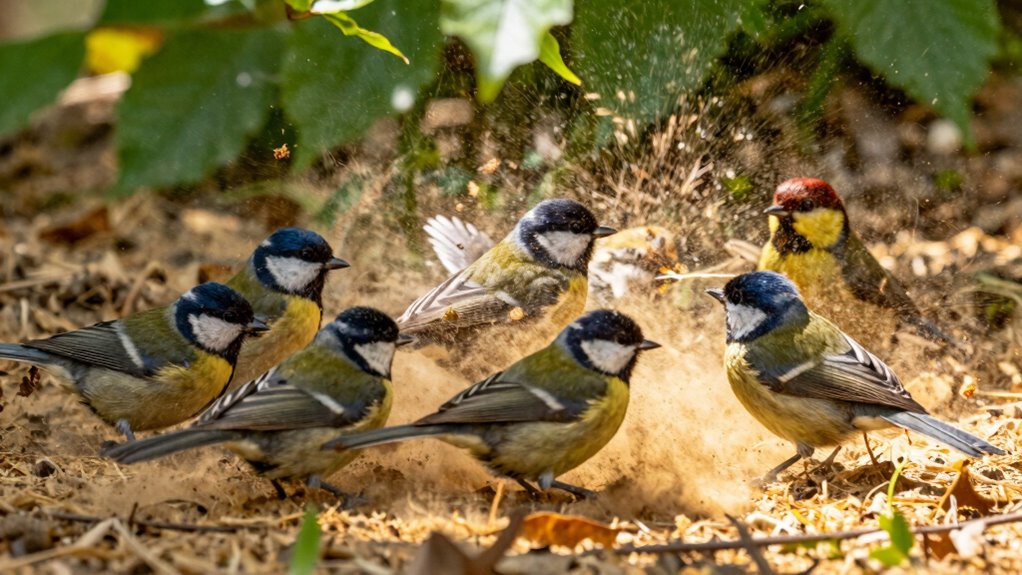
You’ll see that birds use dust baths to keep their feathers clean and healthy. They pick dry, loose soil or sand, fluff their feathers, and roll or shake vigorously. The dust gets into gaps and cracks, loosening dirt, oil, and parasites. This natural cleaning helps keep feathers light and in top condition, supporting their ability to fly and stay alert. Keep exploring, and you’ll discover more about how dust baths contribute to their survival.

Get pet supplies delivered free with Prime
- Fast, free delivery on millions of items
- Prime Video, Amazon Music and more included
- Member-only deals all year
Key Takeaways
- Birds use dust baths to remove excess oil, dirt, and parasites from their feathers.
- Fluffing and rolling in dry soil help loosen debris and parasites for natural cleaning.
- Dust bathing maintains lightweight, healthy feathers essential for flight and insulation.
- It supports overall health by preventing feather clogging and disease.
- The activity also enhances vigilance, aiding in predator awareness and escape.
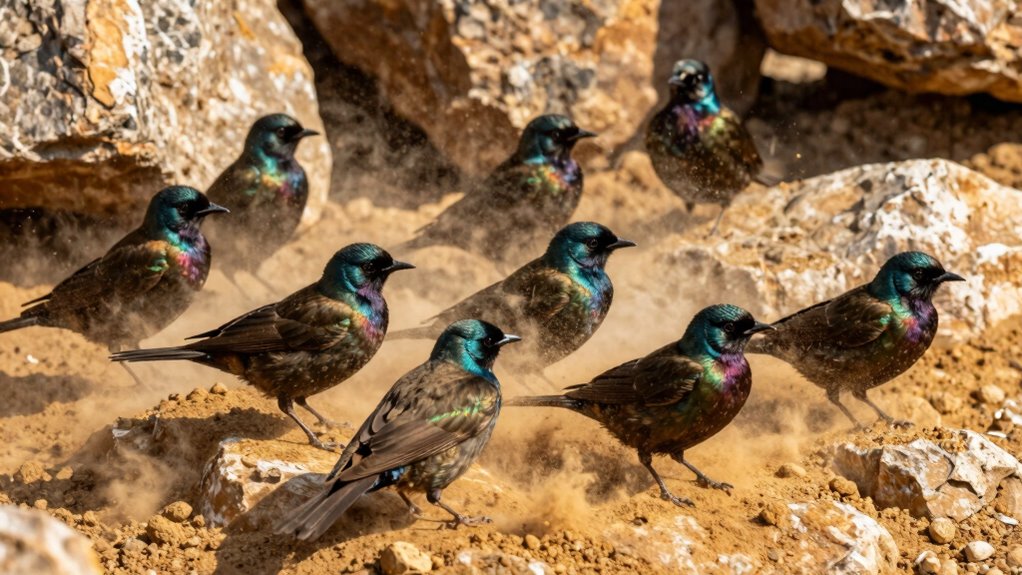
Birds are among the most fascinating creatures on Earth, with over 10,000 species worldwide. One of the ways they stay healthy and maintain their feathers is by taking dust baths. When you observe a bird rolling or flapping in dry soil or sand, it’s not just playing; it’s engaging in a key part of feather maintenance. Dust baths help remove excess oil, dirt, and parasites that can cling to feathers over time. As a bird kicks up dust around itself, the particles settle into the tiny gaps and crevices of the feathers, loosening debris and parasites that could cause discomfort or disease. This natural cleaning process keeps their plumage in top condition, making sure they remain lightweight for flight and insulated against weather.
Dust baths keep birds clean, healthy, and lightweight for flight by removing dirt, oil, and parasites naturally.
You might notice that birds often choose specific spots for their dust baths, usually areas with loose, dry soil or sand that can easily absorb oils and grime. During the bath, they fluff their feathers and roll or shake vigorously, spreading the dust across their bodies. This active process is essential because it reaches parts of the feathers that preening alone can’t reach. When you see a bird vigorously shaking off or scratching after a dust bath, it’s a sign they’ve just completed a thorough cleaning. Without this regular practice, their feathers could become clogged with dirt and parasites, which would impair their ability to stay warm, dry, and able to fly efficiently.
Dust bathing also plays a role in predator awareness. When a bird is busy cleaning, it’s momentarily vulnerable, but it’s also more alert. The act of bathing often takes place in open areas, giving the bird a clear view of its surroundings. This awareness helps them spot potential predators early, so they can react swiftly. Birds that maintain their feathers well through dust baths are better equipped to escape threats because their feathers stay lightweight and flexible, allowing for quick, agile flight. Additionally, healthy feathers are less likely to be damaged or torn, which could compromise their flight capabilities and make them more vulnerable to predators.
In essence, dust baths serve a dual purpose: they are a fundamental part of feather maintenance, keeping birds clean and parasite-free, and they enhance predator awareness by allowing birds to stay alert while they clean. By engaging in this simple yet effective activity, birds preserve their health, improve their chances of survival, and make sure they remain agile enough to avoid danger. So next time you see a bird rolling in the dirt, remember it’s doing more than just getting dirty — it’s actively taking care of itself in a way that’s indispensable for its survival.
As an affiliate, we earn on qualifying purchases.
Frequently Asked Questions
Do All Bird Species Take Dust Baths Regularly?
Not all bird species take dust baths regularly, but many do as part of their natural behaviors. Dust bathing helps with feather maintenance by removing excess oil, parasites, and dirt. You’ll notice that species like finches, sparrows, and chickens frequently engage in this behavior, while others may rely on water baths or grooming. Observing these natural behaviors shows how birds keep their feathers healthy and functional.
How Often Should a Bird Take a Dust Bath?
You should let your bird take a dust bath about once or twice a week. Think of it as “an ounce of prevention,” because dust baths are essential for feather cleaning and pest control. Regular dusting keeps their feathers in top shape, removing dirt and parasites. Observe your bird; if it seems more restless or dirty, more frequent baths may be needed, but avoid overdoing it to prevent dryness or irritation.
Can Birds Get Sick From Dirty Dust Baths?
Yes, birds can get sick from dirty dust baths if hygiene isn’t maintained. Contaminated dust can introduce bacteria or fungi, overwhelming their immune response and causing infections. To keep your bird healthy, guarantee the dust bath is clean and dry, replacing the dust regularly. Good dust bath hygiene supports their immune system, helping them stay free from illness and maintain ideal health.
What Types of Dust Are Best for Bird Baths?
Imagine a bird owner noticing their finch prefers a dust bath with natural minerals. The best dust for bird baths has a balanced dust composition, mainly composed of fine, dry earth rich in natural minerals like silica or clay. Avoid powders with additives or chemicals. Such mineral-rich dust helps birds shed parasites and keep feathers in prime condition, making it essential to select the right dust for their health.
Do Indoor Birds Need Dust Baths Too?
Indoor birds do need dust baths for feather maintenance and behavioral enrichment. Providing a shallow dish with suitable dust allows them to mimic their natural bathing habits, helping to remove excess oil and dirt. Regular dust baths keep their feathers healthy and promote mental stimulation. You should guarantee the dust is appropriate for indoor environments, and supervise your bird during baths to prevent any accidents or ingestion of unsuitable materials.
Conclusion
Next time you see a bird fluffing its feathers in a dusty patch, remember it’s not just cleaning—it’s boosting its health. Imagine a robin in your garden, dusting itself beneath a bush, shaking off parasites and bacteria. That simple act keeps it thriving, just like a person taking a quick shower. Dust baths are nature’s way of helping birds stay strong and happy, proving that sometimes, the smallest actions make the biggest difference.
Halloween Picks
halloween
As an affiliate, we earn on qualifying purchases.