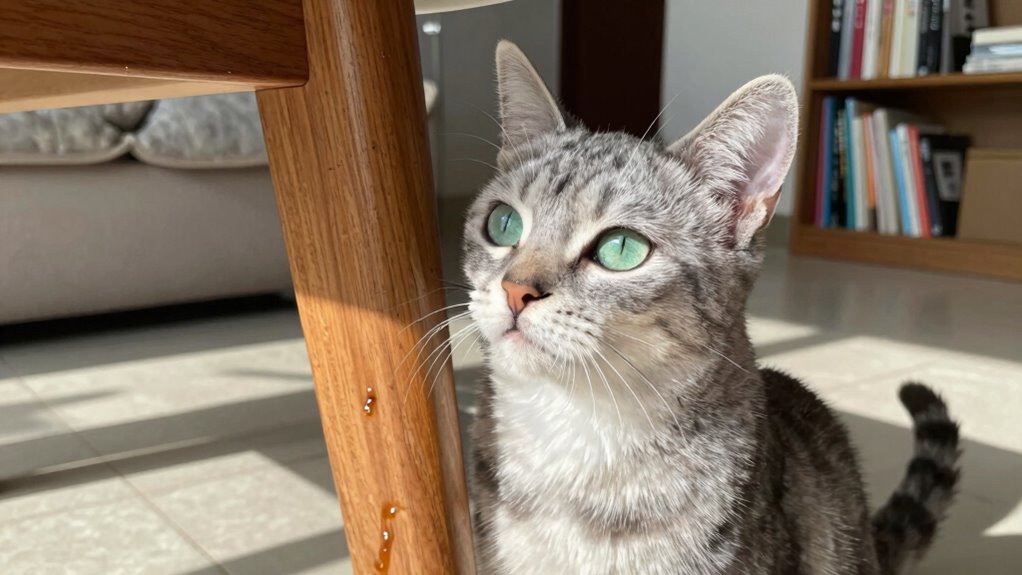

When your cat rubs against you or furniture, it’s a way of showing affection and strengthening your bond. They leave their scent to mark territory and create a sense of familiarity and security. Rubbing also helps your cat feel more comfortable and relaxed, especially in new or stressful situations. It’s a sign they’re happy and content. Keep watching to discover more about what their actions reveal about their feelings and needs.
Key Takeaways
- Cats rub to mark their territory with scent, establishing familiarity and a sense of security.
- Rubbing signals social bonding, affection, and trust between cats and humans or other animals.
- It helps cats communicate their comfort, happiness, and emotional well-being.
- Rubbing reinforces familiar scents, reducing stress in new or stressful environments.
- It is a natural behavior that strengthens the bond and encourages positive interactions.
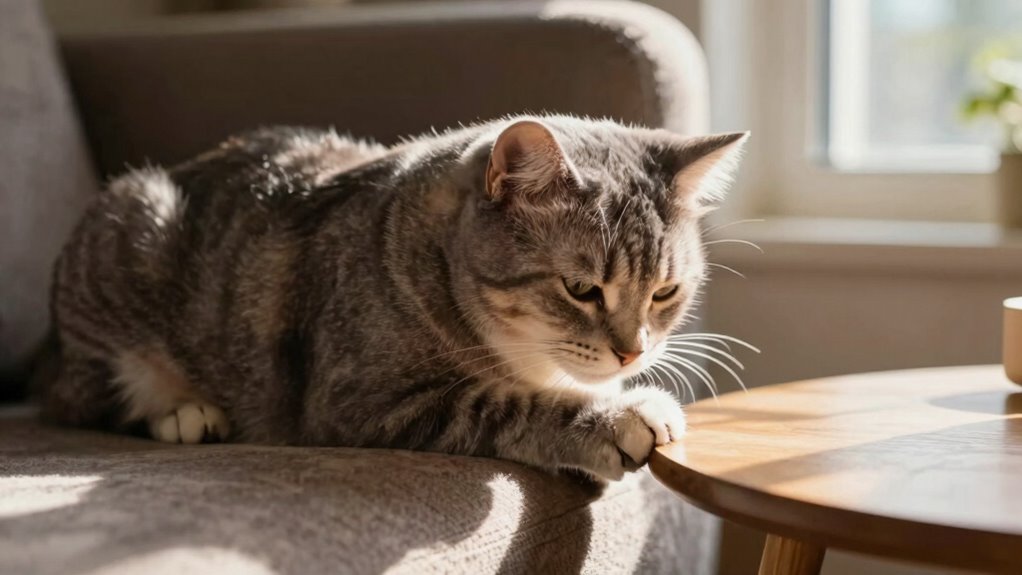
This marking isn’t just about territory; it also plays a crucial role in social bonding. Cats are creatures who rely heavily on scent to understand their world and communicate with others. When your cat rubs against you, they’re fundamentally marking you as part of their social group, signaling trust and affection. It’s their way of saying, “We belong together.” Similarly, when they brush against furniture or other household items, they’re leaving their scent behind, establishing a familiar and safe environment. This behavior helps your cat feel at ease, especially in new or stressful situations, by reinforcing the presence of familiar scents. By doing so, they create a familiar environment that promotes comfort and security.
You might notice that your cat often chooses specific spots or objects to rub against, which is a sign they consider those areas important or comforting. It’s a natural part of their territory management and social communication. By rubbing on furniture, they’re not only marking their territory but also creating a scent-rich environment that feels familiar and secure. This behavior can also be a sign of contentment, as cats tend to rub against things more when they’re relaxed and happy. Additionally, this scent-marking behavior is a way for cats to establish a territory boundaries, helping them feel safe within their environment. Recognizing this behavior as a form of communication allows you to better understand your cat’s needs and emotional state.
Understanding that rubbing is both a territorial and social act helps you better interpret your cat’s behavior. It’s a positive sign that your cat feels safe and connected to you. Recognizing this as a form of communication can deepen your bond and improve your relationship. Instead of viewing it as a nuisance, you can see it as a natural way your cat expresses social bonding. You can also use this behavior to reinforce your relationship, perhaps by gently petting your cat or providing treats when they come to you for a rub. Overall, this scent-marking and social bonding behavior should be appreciated as a natural, healthy part of your cat’s way of connecting with their environment and their favorite humans.
As an affiliate, we earn on qualifying purchases.
Frequently Asked Questions
Do All Cats Rub Against People and Furniture Equally?
Not all cats rub against people and furniture equally. Each cat’s social signals and scent marking behaviors vary based on personality, mood, and environment. Some cats do it more often to establish territory and communicate comfort, while others are more reserved. Your cat’s individual temperament influences how frequently they engage in these behaviors. Paying attention to their cues helps you understand their feelings and strengthens your bond.
Can Rubbing Be a Sign of Illness in Cats?
Yes, rubbing can sometimes be a sign of illness in cats. If your cat suddenly starts rubbing more than usual or shows other behavioral signs like lethargy, loss of appetite, or hiding, it could indicate health issues. Keep an eye on their cat health and behavior, and consult a veterinarian if you notice unusual rubbing patterns or other concerning signs. Early detection helps guarantee your cat stays healthy.
How Can I Tell if My Cat’s Rubbing Is Excessive?
Your cat’s rubbing can be excessive if it happens constantly, like a runaway train. Keep an eye out for frequent, intense grooming or rubbing that causes skin irritation. Normally, cats rub to mark territory and for grooming, but if it becomes obsessive, it could signal stress or health issues. Monitoring their behavior helps you spot when rubbing crosses the line into excess, so you can seek advice if needed.
Does Rubbing Help Cats With Anxiety or Stress?
Yes, rubbing helps cats with anxiety or stress by providing stress relief through scent marking. When your cat rubs against you or furniture, they release scent glands, creating a familiar and calming environment. This behavior helps them feel secure and reduces stress. You can encourage this comforting behavior by offering your cat safe, cozy spaces to rub against, enhancing their sense of safety and emotional well-being.
Are There Specific Scents Cats Prefer When Rubbing?
Think of your cat’s scent marking as their personal signature, and they prefer familiar scents when rubbing. They often favor scents like catnip, valerian, or their own territory’s aroma, which comfort them. I once watched my cat rub against my lavender-scented pillow, clearly seeking reassurance. Cats use scent marking for territory communication, so they gravitate toward scents that feel safe and familiar, helping them feel secure.
Conclusion
You can think of a cat rubbing against you or furniture as their way of leaving a gentle, scented hug—like a painter leaving a signature on their masterpiece. It’s their way of marking territory and showing affection, a clear sign they trust you and feel safe. So, next time your cat nudges you or your furniture, know they’re sending a silent, loving message—just as warm and comforting as a cozy blanket on a chilly day.