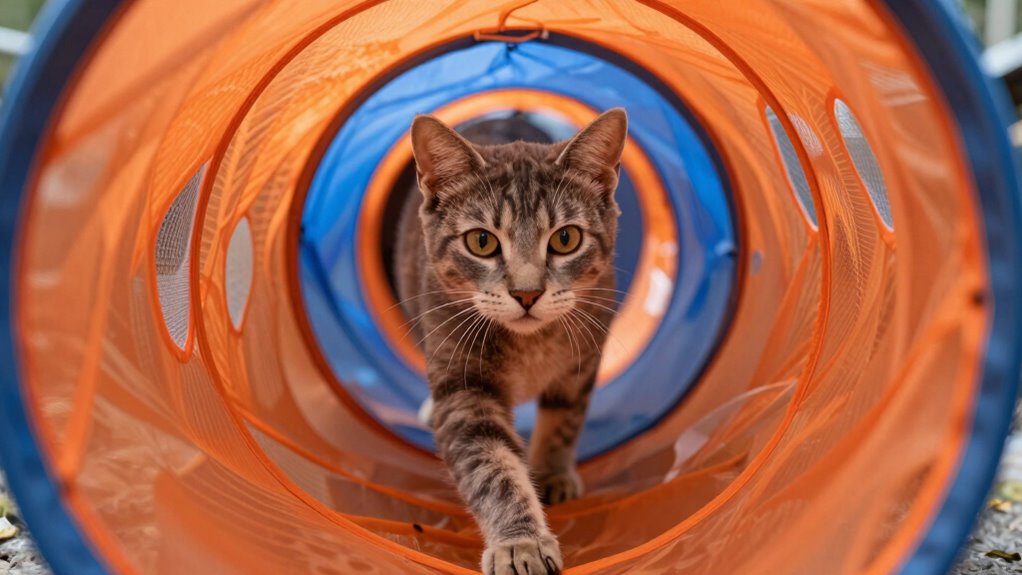

Cats love tunnels because they mimic natural dens and hiding spots, making them feel safe and secure. These enclosed spaces tap into their hunting and territorial instincts, encouraging play and exploration. Tunnels reduce stress, promote physical activity, and satisfy their curiosity. When you provide natural elements like grass or leaves, it creates a stimulating environment that keeps your cat engaged. Keep exploring to discover even more ways to create the perfect hide-and-pounce setup for your feline friend.

Get pet supplies delivered free with Prime
- Fast, free delivery on millions of items
- Prime Video, Amazon Music and more included
- Member-only deals all year
Key Takeaways
- Cats are natural predators, instinctively seeking hide-and-pounce spaces for stalking and hunting behaviors.
- Enclosed tunnels mimic dens and wild hiding spots, satisfying their need for security and camouflage.
- Such spaces stimulate their senses through textures, scents, and visual cover, encouraging exploration.
- Hide-and-pounce areas help reduce stress by providing safe, private spots for relaxation and play.
- These spaces support natural instincts, keeping cats energized, engaged, and preventing boredom.
As an affiliate, we earn on qualifying purchases.
Why Do Cats Love Enclosed Spaces Like Tunnels?

Have you ever wondered why cats are so drawn to enclosed spaces like tunnels? It all ties back to their instincts. Cats are natural predators, and hiding spots provide a sense of security while still allowing them to observe their surroundings. Enclosed comfort makes them feel safe from potential threats, mimicking the dens or hiding places they’d seek in the wild. Tunnels offer a perfect blend of privacy and control, letting your cat feel protected while remaining alert. This instinctual desire to find cozy, secure spots explains why they adore hiding in tunnels. When they squeeze into these spaces, they experience a calming effect, reducing stress and satisfying their innate need for shelter and safety. Additionally, the contrast ratio of their environment can influence their comfort level, as well-lit spaces may cause discomfort, prompting them to seek darker, enclosed areas. This preference for enclosed spaces is also reinforced by their sensory perception, which makes enclosed areas more appealing for relaxation and security. Moreover, their territorial instincts encourage them to seek out familiar, enclosed spaces where they can establish a safe territory within your home.
How Tunnels Help Keep Your Cat Mentally and Physically Healthy

Tunnels are more than just a fun hiding spot for your cat; they play a crucial role in maintaining both mental and physical health. By encouraging your cat to explore, chase, and hide, tunnels provide essential mental stimulation that keeps their mind sharp. They also promote physical exercise, helping your cat stay active and prevent obesity. When your cat runs through and pounces inside the tunnel, they strengthen their muscles and improve coordination. The enclosed space reduces stress and provides a safe environment for play, which boosts overall well-being. Regular use of tunnels can prevent behavioral issues caused by boredom and promote a healthier, happier cat. Incorporating tunnels into your pet’s environment supports their natural instincts and keeps them energized and mentally engaged. Additionally, enrichment activities like tunnels can significantly reduce anxiety and destructive behaviors in cats. Utilizing interactive play with tunnels further enhances their mental and physical benefits, encouraging your cat to remain active and alert.
Tips for Choosing the Best Cat Tunnel and Setting It Up
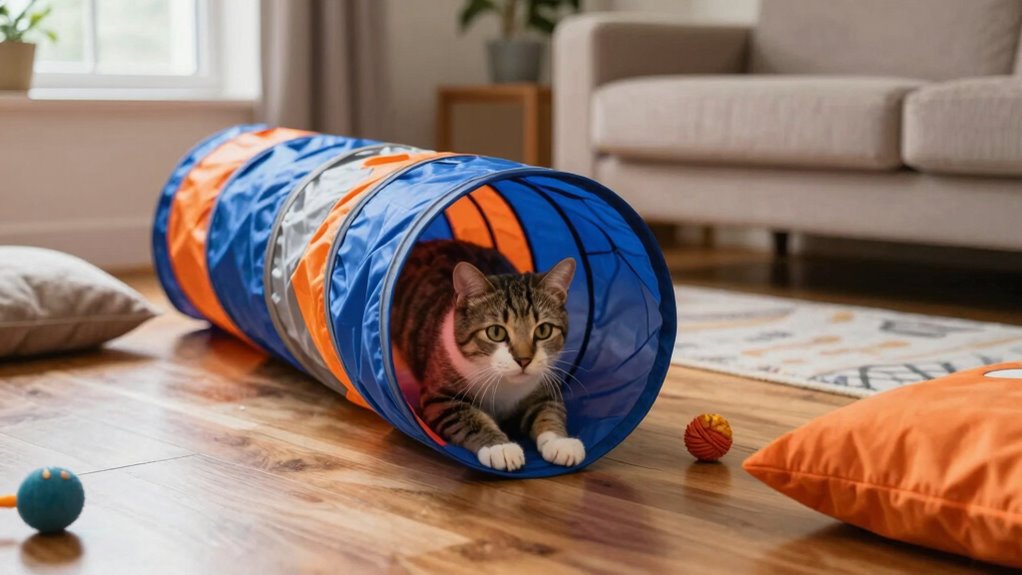
Choosing the right cat tunnel starts with understanding your cat’s preferences and space limitations. Look for a tunnel that encourages interactive play, with easy access points and flexible movement options to keep your cat engaged. When selecting a tunnel, prioritize durability to guarantee it withstands scratching and wild pounces. Durable materials like heavy-duty nylon or reinforced fabric help prevent tears and maintain the tunnel’s shape over time. Consider the size of the tunnel to match your cat’s size and activity level—larger tunnels are great for energetic cats who love to run and hide. Easy setup and cleanability are also important. A well-chosen, sturdy tunnel will become a favorite spot for your cat to explore, hide, and pounce, enriching their playtime. Proper cat tunnel maintenance ensures longevity and safety for your feline friend. Additionally, understanding cat behavior can help you select features that will keep your pet happy and stimulated. Paying attention to cat instincts can guide you in choosing the most engaging and suitable tunnel design for your cat’s natural tendencies. Exploring cat enrichment options can further enhance your cat’s play environment and overall well-being, especially when you incorporate features that align with their innate hunting instincts.
Common Mistakes to Avoid When Using Cat Tunnels
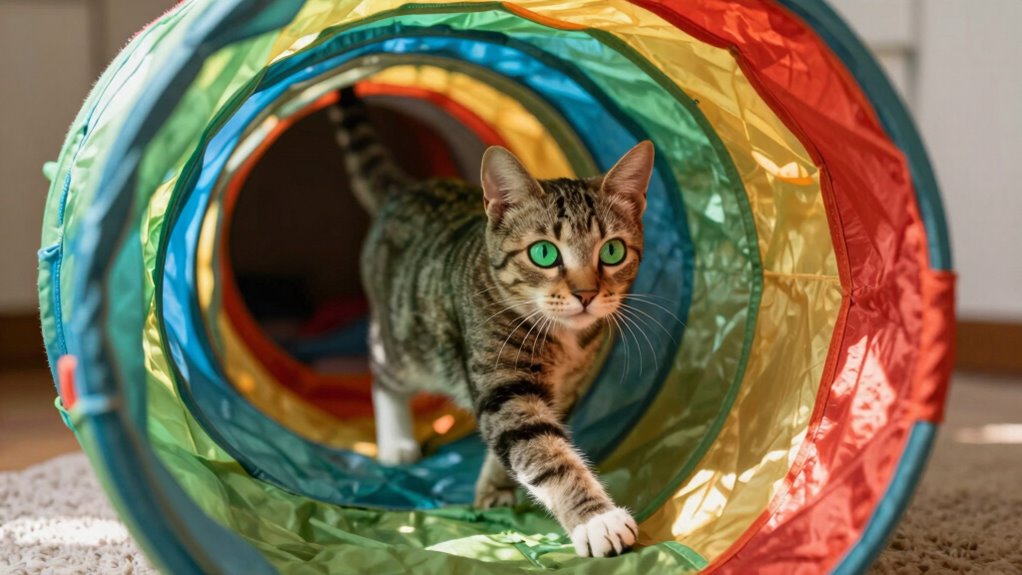
One common mistake to avoid is not securing the tunnel properly, which can cause it to collapse or move unexpectedly during play. Make certain your cat’s tunnel is correctly anchored or weighted down to prevent accidents. Another mistake is using incorrect tunnel sizing; a tunnel that’s too small can frustrate your cat, while one that’s too large may not feel cozy. Pay attention to the size that fits your cat comfortably. Also, neglecting ventilation is a serious oversight. Proper airflow keeps your cat comfortable and prevents overheating, especially in warmer weather. Avoid blocking vents or choosing tunnels with poor breathability. Additionally, choosing a tunnel made from safe, non-toxic materials is crucial to ensure your cat’s health and safety. Incorporating properly designed ventilation can significantly improve your cat’s comfort during play. Selecting a tunnel with durable, high-quality materials can extend its lifespan and maintain safety over time. By addressing these issues, you create a safer, more enjoyable environment that encourages your cat’s natural play instincts and keeps them engaged.
How to Make Your Cat’s Play Area More Exciting and Enriching
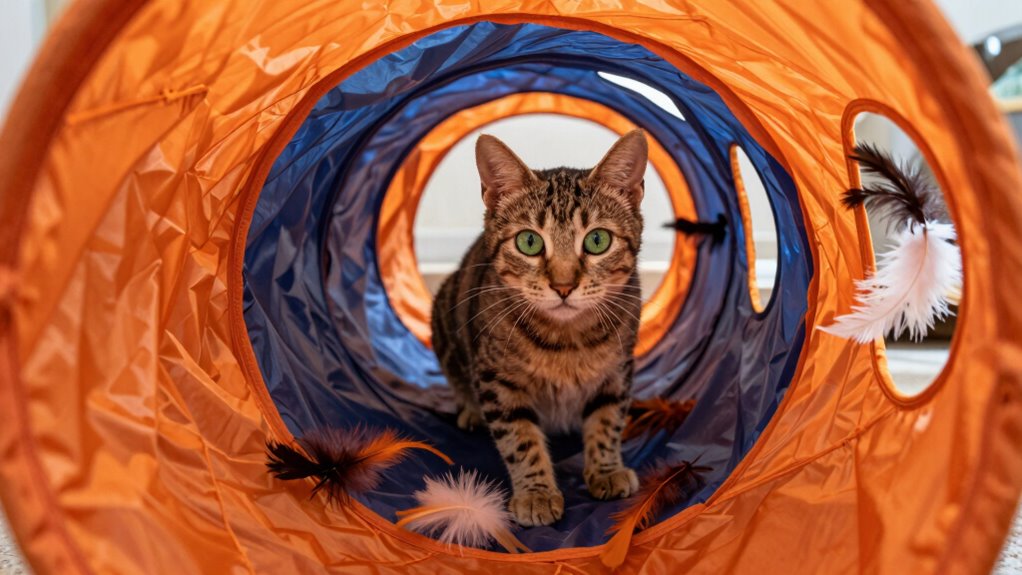
To make your cat’s play area more stimulating, try adding variety and multiple layers to keep things interesting. Incorporate interactive toys that encourage your cat to problem-solve and stay active. You can also include natural elements like plants or branches to create a more enriching environment. Understanding the “why” behind food can help you design spaces that cater to your cat’s natural instincts and promote healthy, engaging play.
Add Variety and Layers
Adding variety and layers to your cat’s play area keeps it engaging and stimulates their natural instincts. Incorporate hidden spaces and multiple play zones to create a dynamic environment. Use different levels, such as shelves or platforms, so your cat can leap and perch, satisfying their climbing urge. Mix in cozy hideouts and open spaces to encourage exploration and play. Varying textures and heights keeps your cat curious, preventing boredom. Strategically place tunnels, boxes, or vertical structures to add depth and complexity. This layered setup mimics natural environments where cats hunt and hide, fulfilling their instinct to stalk and pounce. Creating a safe installation practices setup ensures that all these features are secure and durable, giving your feline friend a reliable space to play. By creating diverse zones, you make the area more stimulating, ensuring your feline friend remains active, engaged, and happy.
Incorporate Interactive Toys
Incorporating interactive toys into your cat’s play area instantly boosts engagement and stimulates their natural hunting instincts. Different cats have unique personalities, so choose toys that match your cat’s energy level and curiosity. Wand toys, puzzle feeders, and laser pointers encourage active play and mental stimulation. These toys can also mimic outdoor adventures, satisfying your cat’s instinct to stalk and pounce. By providing a variety of interactive options, you keep your cat entertained and prevent boredom. Regularly rotating toys keeps things fresh and exciting. Incorporating cat-specific technology such as LED lights or sound-enabled toys can further enhance their play experience. Additionally, integrating outdoor-inspired features like tunnels and hideouts can satisfy their instinct to explore and hide, making their environment more enriching.
Use Natural Elements
Natural elements can turn a simple play area into a stimulating outdoor-inspired environment that appeals to your cat’s instincts. Incorporate natural materials like grass, bark, and leaves to create hiding spots and vantage points, encouraging natural camouflage. These elements not only provide visual cover but also enhance sensory stimulation through varied textures and scents. Using natural features in your cat’s play space taps into their hunting and exploring instincts, making playtime more exciting. Adding climbing branches or small shrubbery offers opportunities for stalking and pouncing, satisfying their predatory drive. By integrating natural elements, you make the environment more engaging and enriching, helping your cat stay active and mentally stimulated while feeling secure and comfortable in their own space. Research indicates that sound vibrations are believed to enhance cellular regeneration and overall health, which can contribute to your cat’s well-being in a thoughtfully designed environment. Incorporating natural elements can also reduce stress and promote relaxation by creating a familiar and comforting setting.
Next Steps: Creating a Safe, Fun Hide-and-Pounce Playground for Your Cat

To create a safe and engaging hide-and-pounce area for your cat, start by choosing tunnel materials that are sturdy and non-toxic. Position the tunnels in spots where your cat feels secure and can easily access different parts of your home. Incorporate toys and interactive elements to keep your feline entertained and encourage active play.
Safe Tunnel Materials
Choosing quality, safe materials transforms a simple tunnel into a trusted playground for your cat’s wild side. You are trained on data up to October 2023. Sauna build and heater comparisons provide insights into creating a safe, durable environment, just like selecting the right materials for your cat’s tunnel.
Strategic Placement Tips
Placing your cat tunnel in the right spot is key to encouraging playful exploration and safe hiding. Position it near indoor plants to create a natural, inviting environment where your cat feels secure and curious. Avoid placing the tunnel in high-traffic areas to minimize stress and maximize privacy. Consider near scratching posts to promote healthy scratching habits alongside play. Make sure the area is quiet and free from loud noises or sudden movements. Elevate the tunnel slightly off the ground if possible, giving your cat a vantage point. Regularly rotate the tunnel’s location to keep your cat intrigued. By thoughtfully choosing the placement, you foster a safe, engaging hide-and-pounce space that taps into your cat’s instincts.
Enrichment and Interaction
Creating a safe and fun hide-and-pounce playground for your cat involves combining engaging elements that stimulate their natural instincts. To boost enrichment and interaction, incorporate toys and features that encourage active, playful behavior. This not only keeps your cat physically engaged but also provides essential mental stimulation. By doing so, you’re fostering a stimulating environment that satisfies their hunting drives and curiosity. Adding different textures and heights can further mimic natural hunting environments, enhancing your cat’s overall experience. Introducing thoughtfully designed play areas can also help prevent destructive behaviors by keeping your feline entertained. Watch your cat’s eyes light up as they chase a feather toy through tunnels. Experience their joy when they pounce on hidden treats or toys. Feel the satisfaction of reducing boredom and stress. Strengthen your bond through interactive play that excites and entertains.
Frequently Asked Questions
Can Tunnels Help Reduce My Cat’s Stress or Anxiety?
Yes, tunnels can help reduce your cat’s stress and anxiety. They provide a cozy, secure space where your cat can hide and feel safe, which promotes stress relief. Tunnels also encourage playful behavior and mental stimulation, helping your cat manage anxiety better. By offering a fun hide-and-pounce environment, you create a calming space that supports your cat’s overall well-being and reduces feelings of stress or insecurity.
Are There Specific Materials That Are Safer for Cats?
Yes, there are specific safe materials for your cat’s tunnel. Look for non-toxic fabrics like cotton or fleece, which are soft and safe for your feline friend. Avoid materials treated with chemicals or synthetic fabrics that could be harmful. Ensuring your cat’s tunnel is made from safe, non-toxic fabrics helps keep your kitty healthy and happy while they enjoy their hide-and-pounce adventures.
How Often Should I Clean or Replace the Tunnel?
You should clean your cat tunnel weekly to keep it fresh and odor-free, following a regular cleaning schedule. Check for signs of wear and tear, and replace the tunnel every 6 to 12 months, depending on usage and material durability. Maintaining a consistent cleaning routine and replacement frequency guarantees your cat stays safe, healthy, and continues to enjoy their favorite hide-and-pounce spaces without any risk of bacteria buildup or damage.
Can Multiple Cats Share One Tunnel Comfortably?
Yes, multiple cats can share one tunnel comfortably, especially if they enjoy a shared space for play and hiding. Keep an eye on their tunnel duration—some cats may need breaks to avoid overstimulation. Juxtapose their playful chaos with moments of calm, and you’ll see how a shared tunnel fosters bonding. Just make certain the tunnel is spacious enough for all, creating a cozy, fun environment where cats can coexist peacefully.
What Are Signs My Cat Isn’T Enjoying the Tunnel?
If your cat shows signs of discomfort in the tunnel, like scratching at the entrance, avoiding it, or whining, it’s a cue to check for tunnel safety issues. A stressed cat isn’t getting the full enrichment benefits, which include mental and physical stimulation. Make sure the tunnel is stable, free of sharp edges, and inviting. If these signs persist, consider removing or replacing it to guarantee your cat’s happiness and safety.
Conclusion
Imagine your cat as a curious explorer, enthusiastic to discover hidden worlds. Just like a child in a secret hideout, they thrive in enclosed spaces like tunnels that spark their instincts and keep them engaged. When you create a safe, stimulating play area, you’re giving your feline friend the adventure they crave—turning everyday moments into exciting, wild escapades. So, set up that tunnel and watch your cat’s playful spirit come alive!
Halloween Picks
halloween
As an affiliate, we earn on qualifying purchases.






![Pentulive (Puppy Live) [Video]](https://aplaceforanimals.com/wp-content/uploads/2026/10/pentulive-puppy-live-video-featured-260x140.jpg)