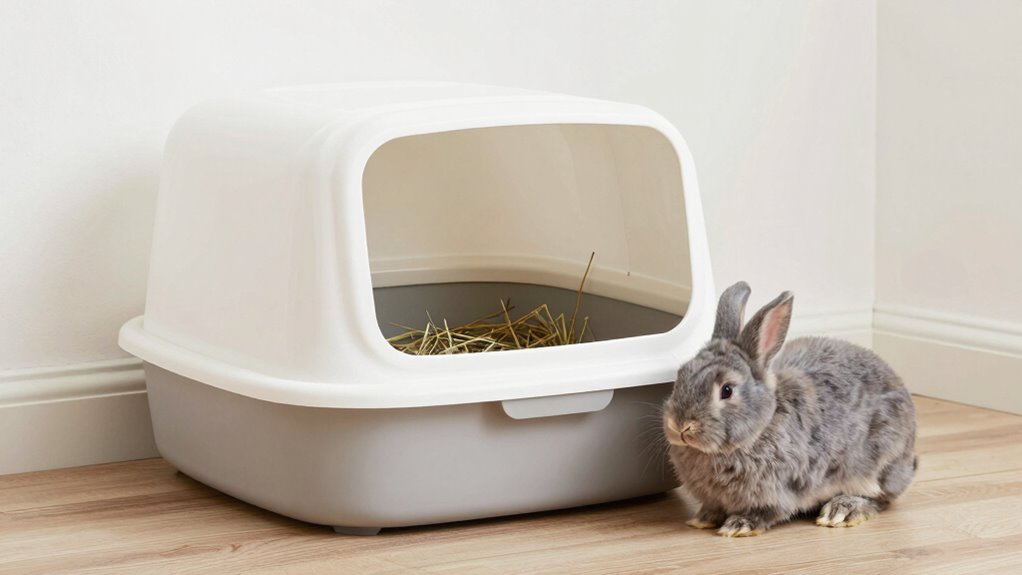

A simple, well-placed rabbit litter box makes training much easier by encouraging consistent use and reducing messes. Choose a size that gives your bunny room to turn around and opt for materials like plastic or untreated wood that are safe and easy to clean. Place the box in a quiet, familiar spot with proper bedding and reinforce good habits with treats. Keep things consistent, and you’ll find your rabbit becoming a pro at using it—more tips await to help you succeed.
Key Takeaways
- Place the litter box in a quiet, accessible area away from food and water to encourage consistent use.
- Choose a size that allows your rabbit to turn comfortably, with deep rims to prevent bedding scattering.
- Use absorbent, odor-control bedding like paper-based products or hay for easy cleaning and a fresh environment.
- Incorporate positive reinforcement, treats, and familiar scents to create a comfortable, inviting space for your rabbit.
- Maintain a routine of daily scooping and weekly bedding changes to reinforce good habits and keep the environment hygienic.
Why a Good Rabbit Litter Box Makes Training Easier
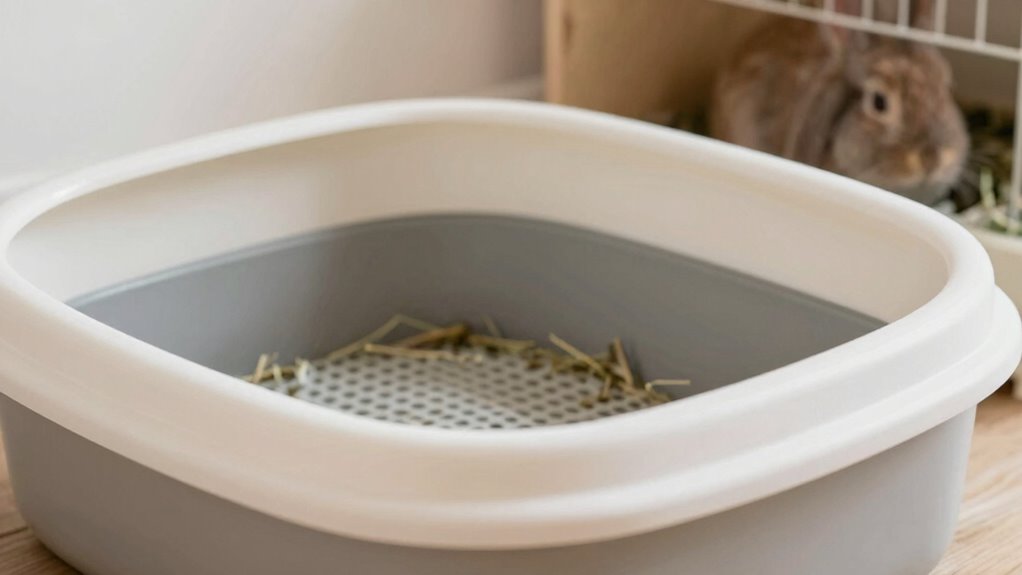
A good rabbit litter box simplifies training because it encourages your rabbit to use a designated spot consistently. Proper litter box placement is key—you should place it in an area where your rabbit feels comfortable and spends time. Avoid placing it near food or water bowls to prevent confusion. A well-placed box helps your rabbit develop a habit of going in the same spot, making cleanup easier. Establishing a consistent cleaning routine also reinforces good habits. Regularly scooping out soiled litter and washing the box keeps it inviting and odor-free, which motivates your rabbit to keep using it. When your rabbit understands where to go and the box stays clean, training becomes quicker and less stressful for both of you. Additionally, understanding rabbit behavior can help you anticipate their needs and improve the success of litter training. Furthermore, choosing the right litter material can impact your rabbit’s comfort and the effectiveness of training. Using a suitable litter that absorbs moisture and controls odor can make the process smoother for both you and your rabbit. Being aware of rabbit habits can also guide you in better managing their litter box routine.
How to Choose the Right Size and Design for Your Rabbit
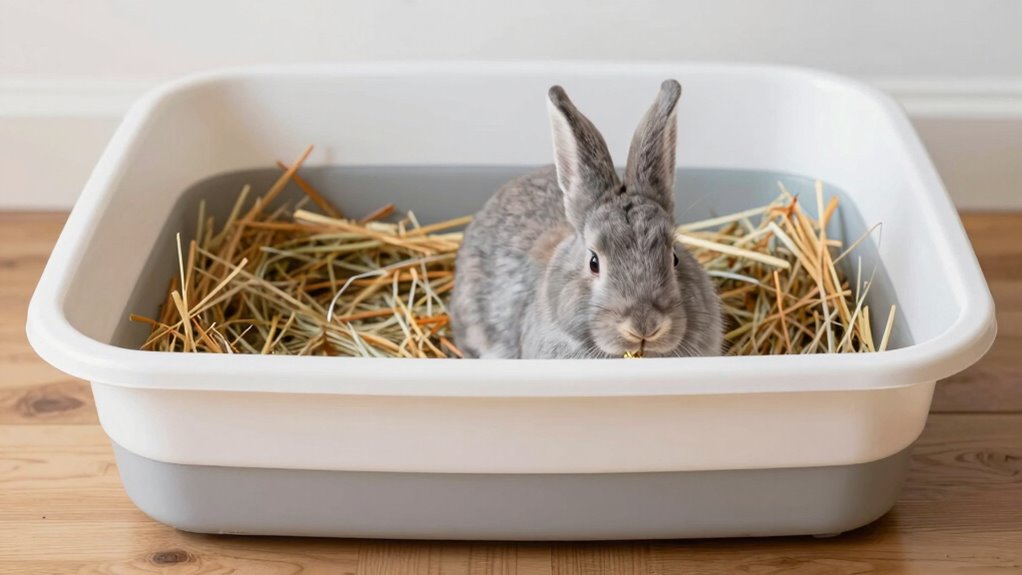
Choosing the right size for your rabbit’s litter box is essential for comfort and easy cleaning. You’ll want a design that provides enough space without being too large or difficult to access. Consider your rabbit’s size and activity level to select a box that fits their needs perfectly.
Appropriate Size Selection
To guarantee your rabbit feels comfortable and has enough space to move, selecting the right size and design for the litter box is essential. A well-chosen size promotes natural behaviors and keeps your rabbit happy. When contemplating litter box aesthetics, opt for a model that blends seamlessly into your rabbit enclosure integration, making cleaning easier and maintaining a clean look.
Here are three key points to consider:
- It should be large enough for your rabbit to comfortably turn around—roughly the size of their body plus a few extra inches.
- A deep enough rim prevents scattering and keeps bedding contained.
- Choose a design that fits your rabbit’s habits and your space constraints, ensuring ease of access and cleaning.
Design Considerations
Selecting the right design for your rabbit’s litter box involves considering both functionality and how well it integrates into your enclosure. Look for litter box aesthetics that match your space without compromising ease of cleaning. Clear, simple designs often work best, but decorative options can add charm to your setup. Choose a shape and height that prevents spillage and allows your rabbit to move comfortably. Consider whether you want a corner unit or a flat-bottomed tray, depending on your rabbit’s habits. A well-designed litter box should blend seamlessly with your enclosure while being easy to access and maintain. Incorporating European cloud innovation can inspire the selection of sustainable and durable materials for your rabbit’s litter box. Additionally, selecting materials that are non-toxic and environmentally friendly can promote a healthier habitat for your pet and support eco-conscious practices.
What Materials Are Safe and Effective for Rabbit Litter Boxes
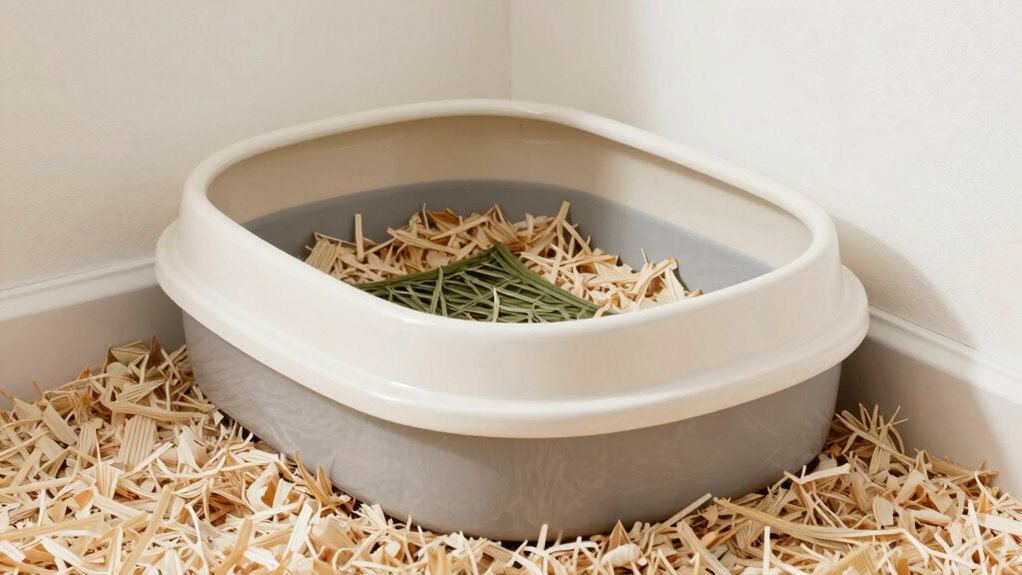
When it comes to rabbit litter boxes, using safe and effective materials is essential for your pet’s health and hygiene. Choosing the right material guarantees material safety and makes cleaning more effective. You want materials that won’t harm your rabbit and are easy to maintain. Here are three top choices:
Using safe, effective materials in rabbit litter boxes ensures your pet’s health and makes cleaning easier.
- Plastic: Lightweight, durable, and easy to clean, plastic is a popular option, especially if it’s free from harmful dyes.
- Wire: Perfect for allowing waste to fall through, keeping the bedding dry and fresh, which improves cleaning effectiveness.
- Wood: Untreated, natural wood can be safe, but avoid pressure-treated or painted options that may contain toxins.
Prioritize material safety and cleaning effectiveness to create a healthy, stress-free environment for your rabbit.
Where and How to Set Up Your Rabbit’s Litter Box for Best Results
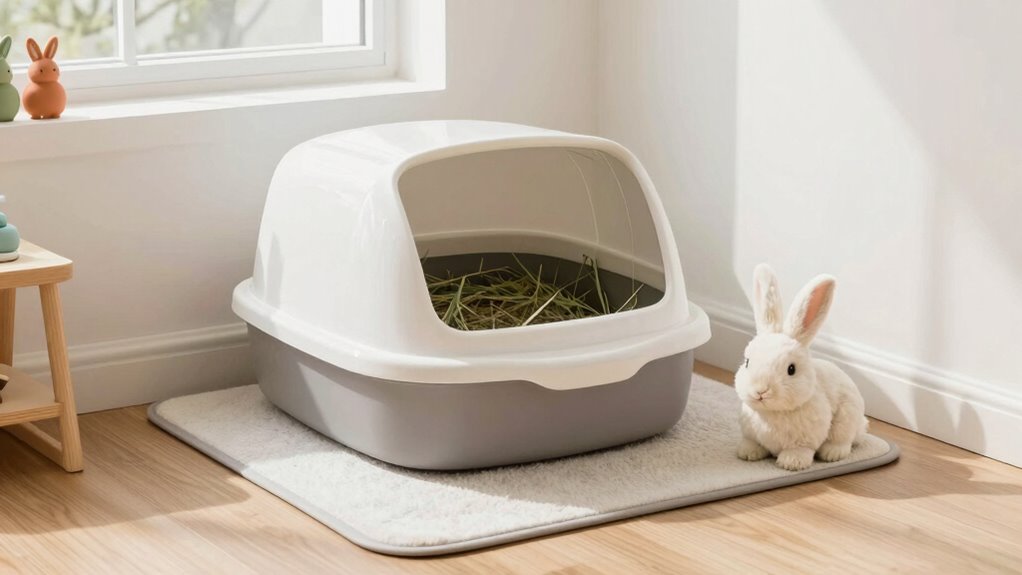
Placing your rabbit’s litter box in the right spot is essential for encouraging proper use and maintaining a clean environment. Choose a quiet, accessible area away from food and water stations. When selecting bedding, opt for absorbent materials like paper-based bedding or hay, which help control odors and keep the box clean. Position the litter box on a sturdy, non-slip surface to prevent spills. Establish a regular cleaning routine—scooping waste daily and changing bedding weekly—to keep the area fresh and inviting. Avoid placing the box in drafty or high-traffic zones, as this can discourage your rabbit from using it. Proper placement and bedding choices make training easier and promote consistent litter box use, creating a healthier space for your bunny. Incorporating natural, odor-absorbing bedding materials can further enhance the odor control and comfort of your rabbit’s environment. Additionally, selecting electric-powered accessories for cleaning or maintenance can streamline your routine and keep the area hygienic. Utilizing reliable cleaning tools can also make regular upkeep more efficient and effective.
How to Introduce the Litter Box and Encourage Your Bunny to Use It
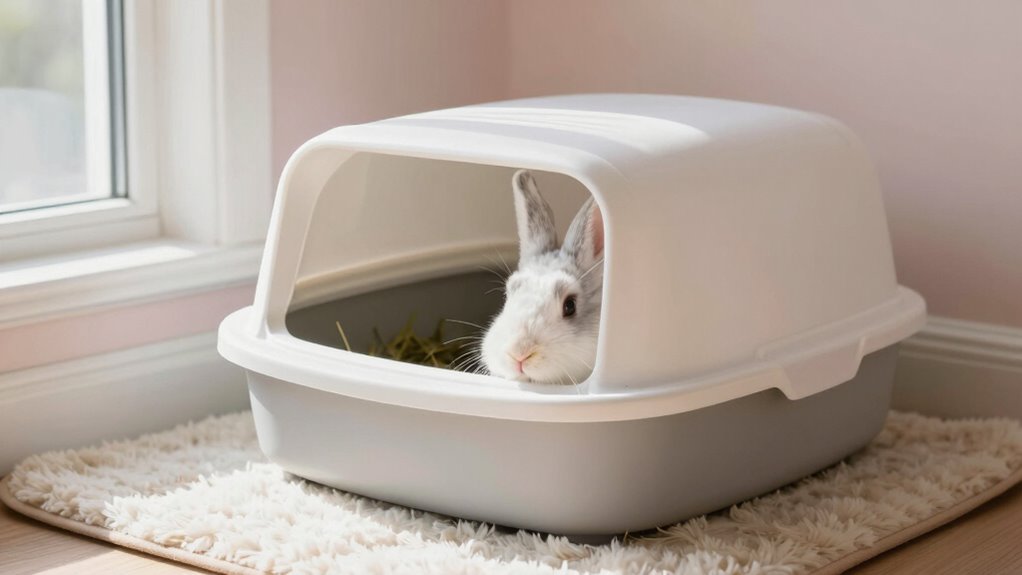
Start by placing the litter box in a quiet, easily accessible spot where your bunny spends time. Use familiar scents around the box to make it feel safe, and positively reinforce any use with gentle praise or treats. Consistently encouraging your bunny to use the box helps build positive associations and habits. Incorporating essential oils for behavior support, such as lavender oil, in a safe manner can also help create a calming environment that encourages litter box use. Additionally, choosing architectural solutions that optimize space and comfort can make the environment more inviting for your bunny. Ensuring the litter box has proper drainage and ventilation can also improve the overall environment and promote consistent use. Understanding global chaos related to outages can help you prepare backup plans for emergencies affecting your pet’s environment.
Choose a Quiet Spot
Choosing a quiet spot for your bunny’s litter box is essential to encourage consistent use. Bunnies are sensitive to noise levels and nearby distractions, which can make them hesitant to use the box if it’s in a busy or noisy area. To foster good habits, consider these points:
- Select a secluded corner away from loud appliances or foot traffic that could startle your bunny.
- Ensure the area is calm, with minimal sudden noises or movements that might scare your pet. Creating a quiet environment can help reduce stress and promote regular use of the litter box.
- Position the litter box in a spot your bunny naturally prefers, where they feel safe and undisturbed.
- Using a soundproof or quiet location can further help reduce stress and promote regular use of the litter box.
- Incorporating proper placement and a consistent routine can reinforce your bunny’s training and comfort. Additionally, understanding your bunny’s behavioral cues can help you identify the best spot for their litter box.
A quiet, low-traffic location helps your bunny associate the litter box with comfort, making training easier and more successful.
Use Familiar Scents
Introducing familiar scents into the litter box area can remarkably encourage your bunny to use it consistently. Scent anchoring helps your bunny recognize the box through scent familiarity, making it feel safe and natural. To boost this effect, add a small amount of bedding or litter from your bunny’s previous favorite spot. This creates a strong scent connection, guiding your bunny to the right place. Use the table below to understand key scent anchoring elements:
| Scent Anchor | Purpose |
|---|---|
| Bedding from previous spot | Builds scent familiarity |
| Your bunny’s fur or droppings | Reinforces scent cues |
| Familiar bedding | Promotes comfort |
| Owner’s scent | Encourages trust |
| Natural hay | Creates a pleasant environment |
Leveraging scent familiarity makes litter training smoother and more instinctive. Incorporating scent anchoring techniques is also supported by understanding the environmental adaptation of rabbits, which helps them feel secure in their surroundings. Additionally, understanding animal behavior can assist you in creating an effective training routine that aligns with your bunny’s natural instincts. Recognizing the importance of consistent routines can further enhance the success of training your bunny to use the litter box.
Encourage Positive Associations
To encourage your bunny to use the litter box consistently, you’ll want to create positive associations with it from the start. This helps prevent accidents and makes training smoother. Here are three ways to do this:
- Place treats or favorite snacks in or near the litter box to motivate your bunny to approach it.
- After grooming tips or treating illness, gently guide your bunny to the litter box, praising them when they go inside.
- Avoid scolding or punishing mishaps; instead, clean the area thoroughly to prevent lingering odors that might discourage use.
- Using Glycolic Acid can help in maintaining the cleanliness and odor control of the litter box area, promoting better hygiene for your bunny.
- Consistent Litter Box Placement helps your bunny recognize their designated spot and builds routine. Additionally, ensuring the litter box is placed in a quiet, accessible area can further encourage consistent use.
- Providing a Comfortable Environment around the litter box, such as adding a soft mat or cover, can make the area more inviting for your bunny.
Building a positive connection reduces stress and fosters good habits. Remember, patience and consistency are key to successful training and a happy, healthy bunny.
What to Do When Your Rabbit Won’t Use the Litter Box?
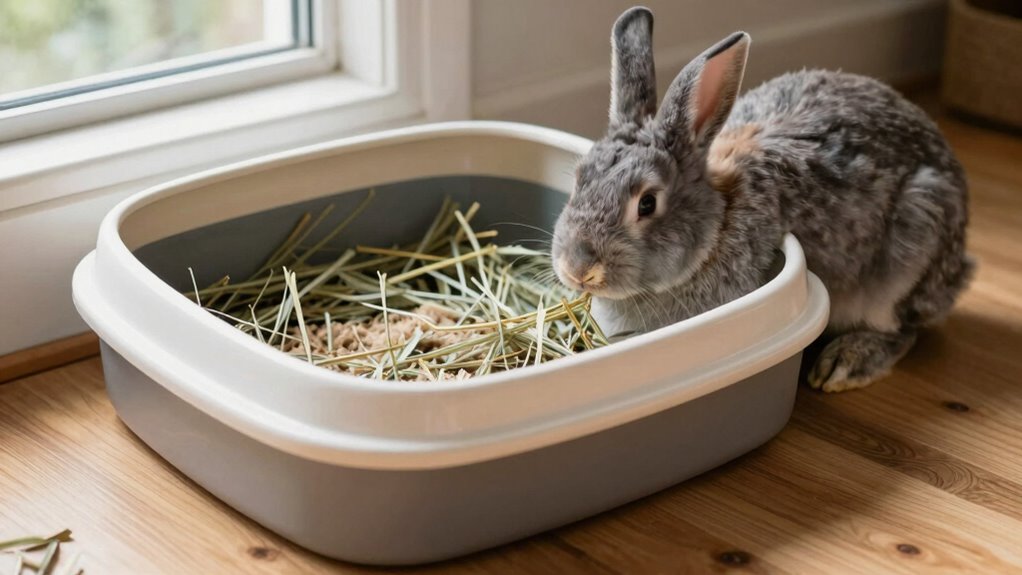
If your rabbit isn’t using the litter box, it can be frustrating, but there are steps you can take to encourage proper habits. Start with behavior modification by observing where your rabbit tends to eliminate and placing the litter box there. Clean the box thoroughly and use a preferred substrate to make it more inviting. If your rabbit continues to avoid the box, consider alternative solutions like adding more litter boxes in different areas or changing the location to a quieter spot. You might also try placing hay inside or near the box to attract them. Consistency is key, so remain patient and avoid punishment. With persistent effort, you can help your rabbit develop better litter habits and reduce unwanted messes.
Frequently Asked Questions
How Often Should I Clean My Rabbit’s Litter Box?
You should clean your rabbit’s litter box at least once a week to maintain a good cleaning schedule. Regular cleaning helps control odor and keeps your rabbit comfortable. Scoop out soiled bedding daily and replace it entirely when needed. This routine prevents unpleasant smells and encourages good litter habits. By staying consistent with cleaning, you’ll create a clean, odor-free environment that keeps your bunny happy and healthy.
Can I Use Cat Litter for My Rabbit?
You shouldn’t use cat litter for your rabbit’s litter box. Rabbit litter needs to be safe and non-toxic, specifically designed for their sensitive paws and health. Using cat litter can cause health issues and interfere with litter box training. Instead, opt for paper-based or hay-based rabbit litter, which makes training easier and keeps your bunny comfortable. Always choose a safe, absorbent litter to maintain a clean and healthy environment.
What Signs Indicate My Rabbit Dislikes Its Litter Box?
Ever wondered if your rabbit’s behavior signals discomfort? If your rabbit consistently avoids the litter box, scratches or digs at the area, or urinates outside it, these are clear behavioral cues of litter box avoidance. You might notice reluctance to use it or signs of stress. These behaviors indicate your rabbit dislikes its litter box, prompting you to reassess its placement, cleanliness, or type of litter used for better training success.
How Do I Prevent Litter Box Odor in My Home?
To prevent litter box odor in your home, start with proper litter box placement—choose a well-ventilated, easily accessible spot away from your rabbit’s food and water. Regularly scoop out soiled litter and wash the box with mild soap. Use odor neutralizers designed for small animals, and consider adding baking soda to absorb smells. Keeping a consistent cleaning schedule helps maintain a fresh environment and keeps odors under control.
Are There Any Natural or Hypoallergenic Litter Options?
You’ll be amazed at how natural alternatives and hypoallergenic options transform your rabbit’s litter box experience! Opt for wood pellets, paper-based litters, or coconut husk fibers—they’re eco-friendly, gentle on sensitive noses, and won’t trigger allergies. These natural choices reduce dust and odors, making your home healthier and happier. Say goodbye to harsh chemicals and hello to a cleaner, safer environment for both you and your furry friend!
Conclusion
A well-placed, proper-sized, and perfectly prepared rabbit litter box promotes potty training success. By blending basic boundaries with gentle encouragement, you’ll build a bond based on trust and tidiness. Consistent setup, clear cues, and caring consistency create a clean, comfortable corner for your bunny. With patience and persistence, you’ll develop a delightful daily dance of discipline and devotion, turning training troubles into triumphs. Your bunny’s best behavior begins with the right setup!