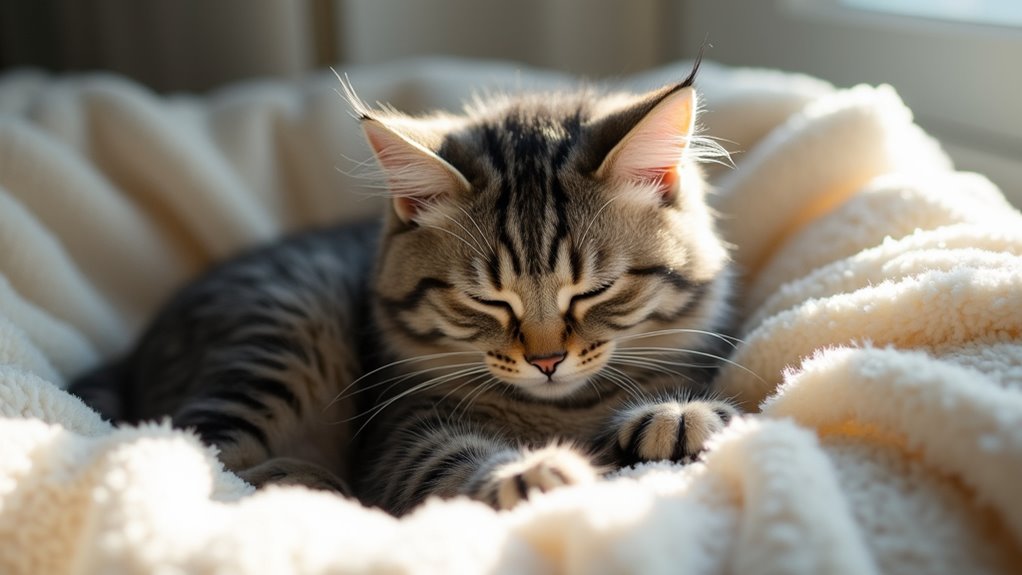

When your cat kneads, it’s a sign of comfort, trust, and contentment. This instinctive behavior, known as “making biscuits,” comes from kittenhood when they press their paws on their mother’s belly to stimulate milk flow. In adults, it signals relaxation and emotional security, while also marking territory with scent glands. If you want to understand your cat’s feelings better, noticing their kneading tells you a lot about their state of mind—keep exploring to learn more.
Key Takeaways
- Cats knead to show comfort, relaxation, and affection, often signaling trust in their environment or owner.
- The behavior originates from kittenhood when kneading helps stimulate their mother’s milk flow.
- Kneading leaves a scent mark via scent glands in their paws, reinforcing territory and safety.
- It is a social signal indicating the cat feels secure and bonded with their human or surroundings.
- Kneading is often accompanied by purring and stretching, highlighting contentment and emotional well-being.
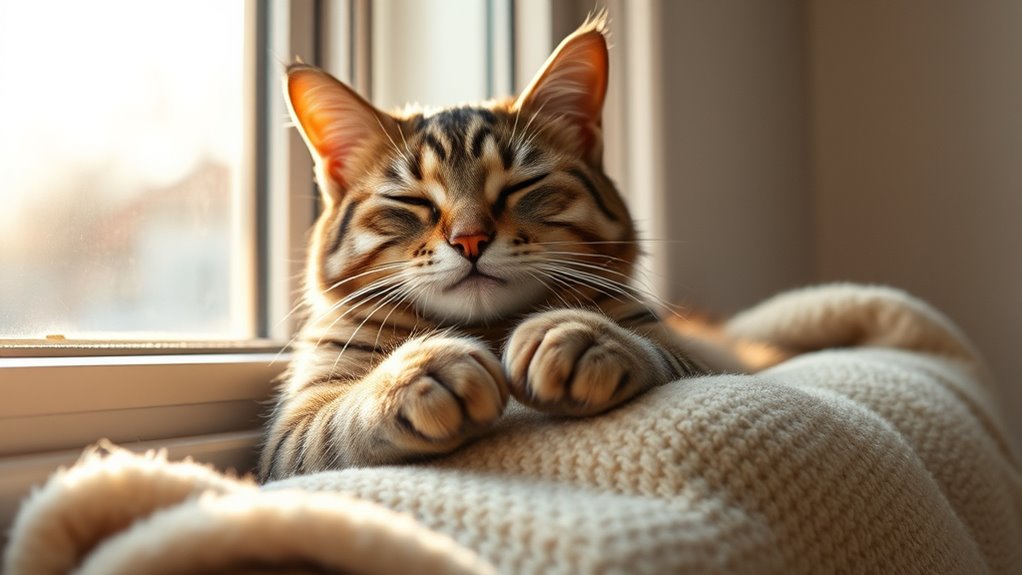
Have you ever wondered why cats knead with their paws? It’s a common feline behavior, but understanding what it really means can deepen your connection with your cat. Kneading is a form of feline body language that signals comfort, contentment, and even affection. When your cat presses their paws into a soft surface—whether it’s your lap, a blanket, or a pillow—they’re expressing positive emotions in a way that’s hard to miss once you know what to look for.
In the wild, cats knead as a survival instinct. Kittens knead their mother’s belly to stimulate milk flow, a behavior that sticks with them into adulthood. However, when your cat kneads on you or their favorite spot, it’s less about feeding and more about marking their territory with scent glands located in their paws. This behavior leaves a subtle but meaningful feline signature, letting other animals—and you—know that they feel safe and secure in that space. It’s a way for cats to create a cozy, familiar environment, signaling that they’re relaxed and happy. Additionally, this behavior can also reinforce a sense of security and reinforce their bond with their human companions, which is essential for building trust. Understanding the innate behaviors of cats can help you better interpret these actions.
Kneading also plays a role in how cats communicate through their feline body language. When your cat kneads, they often purr softly and may even stretch out or roll onto their side. These are signs of trust and comfort, indicating that they see you as part of their social group. Cats tend to knead when they’re in a relaxed state, often during grooming sessions or when they’re settling down for a nap. This behavior is a clear sign that your cat feels secure around you, and they trust you enough to show their vulnerable side. Recognizing feline body language can help you better understand your cat’s feelings and needs. Being aware of behavioral cues like kneading enables you to respond more appropriately to their emotional states.
As an affiliate, we earn on qualifying purchases.
Frequently Asked Questions
Do All Cats Knead, or Just Certain Breeds?
Not all cats knead, but many do, regardless of breed. Breed differences can influence kneading habits, with some breeds showing more frequent or intense kneading behaviors. For example, domestic shorthairs often knead more openly, while certain purebreds may do it less. Your cat’s individual personality also plays a role, so while kneading is common, it’s not exclusive to specific breeds. Watch your feline’s habits to understand their unique behavior.
Can Kneading Cause Discomfort or Pain in Cats?
You might wonder if kneading causes your cat discomfort or pain. Usually, it’s a normal behavior that signals contentment, but watch for pain indicators like vocalizing, licking, or limping during kneading. If your cat shows signs of discomfort, it could indicate an underlying issue, so consult your vet. Generally, kneading shouldn’t cause pain—just make certain your cat’s paws and claws are healthy.
How Can I Tell if My Cat’S Kneading Is Stressed?
To tell if your cat’s kneading is stress-related, watch their body language closely. Stress signals include flattened ears, dilated pupils, tense muscles, or a flicking tail. If your cat seems tense or avoids contact afterward, their kneading might be a sign of stress. Otherwise, gentle kneading usually indicates contentment. Pay attention to these cues to better understand your cat’s emotional state during this behavior.
Is Kneading Related to a Cat’S Age or Health?
Kneading is like a cozy song your cat softly hums, often linked to age-related behaviors and health indicators. As cats grow, their kneading patterns may change, reflecting comfort or stress levels. Older cats might knead less or more, depending on their health. While kneading itself isn’t a direct sign of illness, persistent or unusual behavior can hint at health issues, so keep an eye on your feline friend.
Are There Specific Times When Cats Are More Likely to Knead?
You’ll notice your cat kneads more during relaxation or before sleep because it’s a comforting behavior. Cats often knead when they’re feeling safe and content, helping them relax. You might see them kneading on your lap or bedding as they wind down for rest. This behavior signals happiness and security, so expect more kneading during calm, cozy moments, especially when they’re preparing to settle in for sleep.
Conclusion
Next time your cat kneads, remember it’s more than just a habit — it’s a comforting gesture rooted in their past. That gentle pressing might seem small, but it’s a reminder of warmth, security, and love they carry with them. Sometimes, the smallest acts reveal the deepest bonds. So, when your feline friend “makes biscuits,” realize it’s a silent message: you’re their safe haven, a comforting constant in their little world.