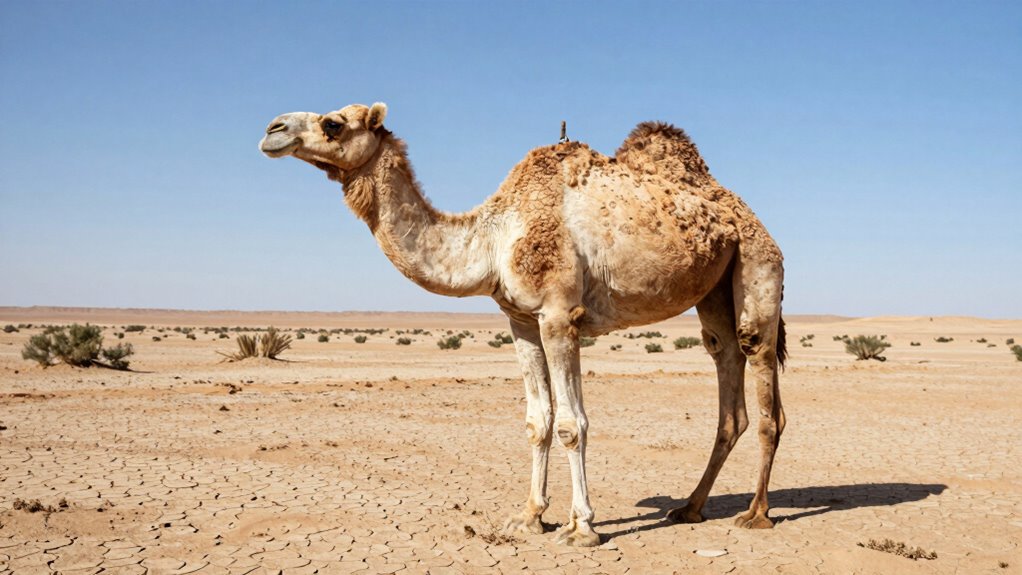

A camel can go up to two weeks without water, thanks to its incredible adaptations. It conserves water by producing concentrated urine, having dry feces, and regulating body temperature to reduce sweating. Its thick coat, nostrils, and specialized hooves also help it survive extreme heat and sandy terrain. The camel’s ability to store fat in its hump, which can be converted into water, makes it a true desert survivor. Discover more about how it manages this impressive feat.

Get pet supplies delivered free with Prime
- Fast, free delivery on millions of items
- Prime Video, Amazon Music and more included
- Member-only deals all year
Key Takeaways
- Camels can survive up to two weeks without water, depending on conditions and activity level.
- Their ability to store fat in the hump allows for hydration and energy during dry periods.
- Efficient kidney function produces concentrated urine, minimizing water loss.
- They can drink up to 40 gallons of water rapidly when water becomes available.
- Their body temperature fluctuations help reduce sweating and conserve water in hot environments.

Have you ever wondered how camels survive in the harsh desert environment with limited water sources? It’s truly remarkable how these animals thrive where other creatures struggle to survive. The secret lies in their specialized desert adaptations and unique camel hydration strategies that enable them to endure long periods without water. Unlike most animals, camels have developed physical features and behaviors that help them conserve water and stay cool under extreme heat.
One of the key desert adaptations of camels is their ability to minimize water loss. They have thick, insulating coats that protect them from the intense desert sun and help regulate their body temperature. Their nostrils are also designed to conserve moisture—they can close tightly to prevent water from escaping during hot, dry conditions. Additionally, camels can withstand significant changes in their body temperature, sometimes allowing it to fluctuate by 6°C or more. This temperature regulation reduces the need for sweating, which is a major way animals lose water. Their hooves are broad and sturdy, enabling them to walk easily on loose sand and avoid overheating from the ground.
Camel hydration strategies are equally impressive. When they do find water, they drink quickly and in large quantities—up to 40 gallons in one go. However, they don’t need to drink every day. Instead, camels are capable of surviving for prolonged periods without water—often up to two weeks—depending on the temperature, their activity level, and the availability of food. Their bodies are highly efficient at conserving water; their blood contains concentrated electrolytes that help retain fluid, and their kidneys produce highly concentrated urine to minimize water loss. Even their feces are dry, extracting as much moisture as possible from their food. Interestingly, their ability to regulate body temperature helps further reduce water loss during the hottest parts of the day. Their remarkable capacity to adapt extends to their metabolic processes, which are optimized to maximize water retention and energy use. Moreover, these adaptations are complemented by their efficient respiratory system, which further minimizes water loss during breathing.
Another interesting aspect is that camels can absorb and store water in their body tissues, especially in their hump. Contrary to popular belief, the hump doesn’t contain water but stores fat, which can be metabolized into water and energy when needed. This process provides additional hydration during dry spells. Their diet also helps sustain them—feeding on succulent plants and thorny bushes provides some moisture content, reducing their dependence on direct water intake.
In essence, it’s their combination of desert adaptations and clever hydration strategies that allow camels to go for days or even weeks without water. These adaptations make them perfectly suited for life in some of the world’s most inhospitable environments, demonstrating nature’s incredible ability to engineer survival in extreme conditions.
As an affiliate, we earn on qualifying purchases.
Frequently Asked Questions
Do Camels Store Water in Their Humps?
No, camels do not store water in their humps. Instead, their humps store fat, which they can convert to water and energy when needed. Their desert adaptation includes a special diet and physiology that help them survive long periods without water. You’ll notice that their ability to go days without drinking is thanks to these adaptations, not water stored in their humps. Their camel diet and unique features make them true desert survivors.
How Do Camels Survive Dehydration?
You might wonder how camels survive dehydration. Thanks to their desert adaptations, they conserve water efficiently by reducing sweat and urinating less. Their kidneys concentrate urine, and they can tolerate high body temperatures. You’ll notice they can drink large amounts of water quickly when available, storing it in their bloodstream. These water conservation strategies enable camels to endure long periods without water, making them well-suited for arid environments.
Can Camels Drink Saltwater?
Yes, camels can drink saltwater, thanks to their incredible desert adaptation skills. During camel migration, they often encounter salty water sources and have specialized kidneys that filter out excess salt, allowing them to drink it safely. This ability helps them survive in harsh desert environments where fresh water is scarce. Their unique adaptations enable them to endure long periods without water and thrive in extreme conditions.
What Is the Longest Recorded Waterless Period for a Camel?
You’ll find that camels can survive up to about two weeks without water, thanks to their incredible desert survival strategies. During camel migration patterns, they conserve water by limiting sweating and storing fat in their humps. These adaptations allow them to endure long stretches in harsh desert conditions, making them resilient travelers. Your understanding of their survival tactics highlights just how well camels are built for desert life.
How Do Camels Regulate Their Body Temperature?
You might think camels are just water tanks, but they’re true desert artists, regulating their body temperature through a remarkable process. As the sun blazes, their body temp fluctuates between 34°C and 41°C, preventing excessive sweating and conserving water. Their diet, rich in dry plants, supports this desert adaptation, allowing them to withstand extreme heat while keeping their internal climate steady—like a thermostat tuned for desert life.
Conclusion
So, next time you think you’re stranded in a desert of doubt, remember the camel’s secret: it can go up to two weeks without a sip, like a resilient sailor weathering a storm. Its body’s a fortress, holding onto water like a precious treasure. You, too, can be like that hardy traveler—resilient and prepared—knowing that even in the driest moments, you’ve got the strength to endure.
Halloween Picks
halloween
As an affiliate, we earn on qualifying purchases.