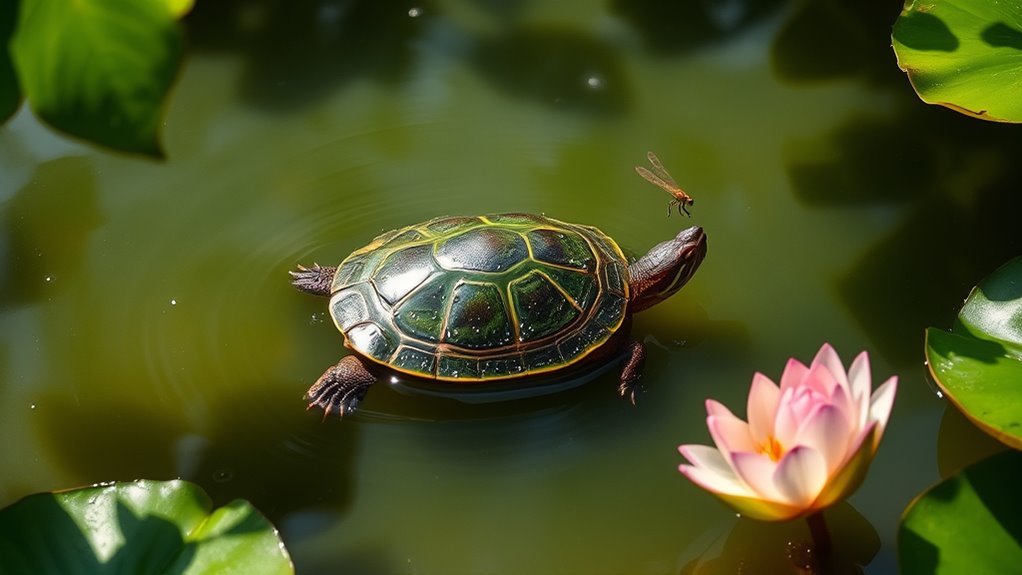

Yes, turtles can breathe through their butts! This unique ability, known as cloacal respiration, lets them extract oxygen while submerged. They can take in water through their cloaca, where gas exchange occurs, allowing them to stay underwater for extended periods without surfacing. This adaptation helps them conserve energy and reduce predation risk while basking. Interested in discovering more about how this fascinating process works and the variations among different turtle species?

Get pet supplies delivered free with Prime
- Fast, free delivery on millions of items
- Prime Video, Amazon Music and more included
- Member-only deals all year
Key Takeaways
- Yes, turtles can breathe through their rear ends using a process called cloacal respiration.
- This adaptation allows for gas exchange in the cloaca, similar to lung function.
- Cloacal respiration is especially beneficial for turtles during prolonged underwater periods.
- While all turtles possess this ability, aquatic species rely on it more than terrestrial ones.
- This unique respiratory method enhances survival by conserving energy and oxygen levels.
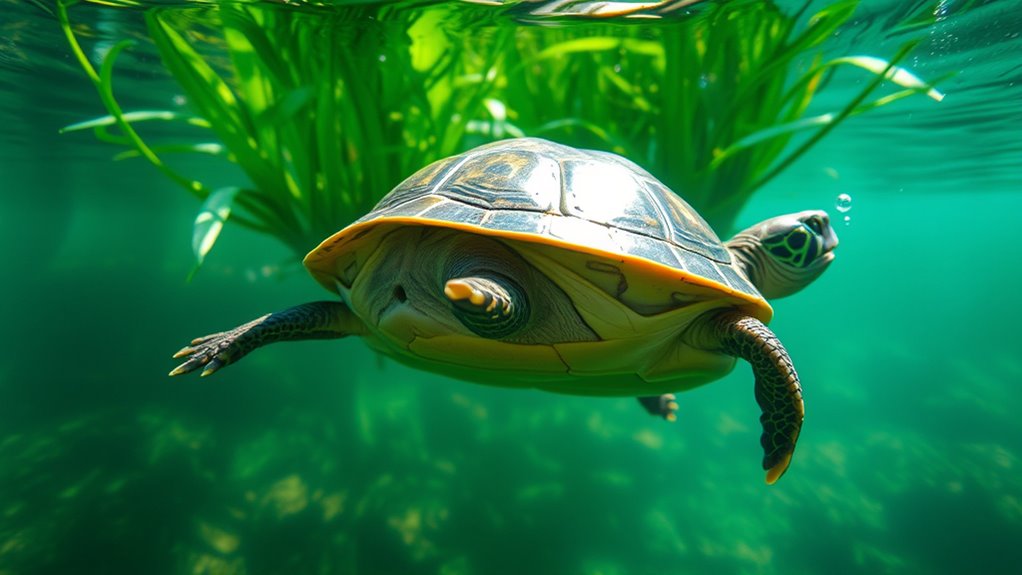
While you might think of turtles as slow-moving reptiles that primarily breathe through their mouths, they actually have a fascinating adaptation that allows them to draw in oxygen through their rear ends. This unique ability stems from specific respiratory adaptations that have evolved over millions of years. In fact, this trait is particularly beneficial for turtles that spend a significant amount of time submerged in water, as it helps them conserve energy and maintain their oxygen levels without needing to surface frequently.
Turtles possess a remarkable ability to breathe through their rear ends, an adaptation that enhances their survival underwater.
The process is known as cloacal respiration. Turtles possess a specialized body part called the cloaca, which serves multiple functions, including excretion and reproduction. Within this area, they have structures that allow for gas exchange similar to lungs. When submerged, turtles can draw water into the cloaca and extract oxygen from it, effectively breathing through their butts. This evolutionary trait is essential for survival, especially in environments where access to air is limited.
If you’ve ever watched a turtle basking in the sun, you might’ve noticed how still they can be. This behavior isn’t just to soak up warmth; it’s also a tactic to manage their oxygen intake. By remaining motionless, they can maximize the efficiency of their respiratory adaptations. Instead of expending energy swimming to the surface for air, they can stay underwater longer, reducing their risk of predation and allowing them to remain in their habitat undisturbed.
You might be surprised to learn that not all turtles utilize this method equally. Aquatic species, like the Australian Fitzroy River turtle, are more dependent on cloacal respiration compared to their terrestrial cousins. The evolutionary pressures of their environments have shaped how these reptiles adapt their breathing strategies. Those that can maximize their oxygen intake while submerged are more likely to thrive in their specific niches. This ability to adapt is similar to how some creatures enhance their performance with high refresh rates in gaming environments.
Understanding these respiratory adaptations not only sheds light on turtle biology but also highlights the incredible diversity of life on our planet. Each unique evolutionary trait serves a purpose, helping species adapt and survive. So, the next time you see a turtle gliding gracefully through the water, remember that there’s more to their breathing than meets the eye. They’ve developed remarkable capabilities that allow them to thrive in their underwater worlds, proving that even the slowest creatures can possess extraordinary skills.
aquarium turtle basking platform
As an affiliate, we earn on qualifying purchases.
As an affiliate, we earn on qualifying purchases.
Frequently Asked Questions
Do All Turtle Species Breathe Through Their Butts?
Not all turtle species breathe through their butts, but some do have unique evolutionary adaptations that allow for alternative respiratory mechanisms. For instance, certain aquatic turtles can absorb oxygen through their cloaca, which helps them stay submerged longer. This adaptation isn’t universal, though, as many turtles rely primarily on their lungs for breathing. Understanding these differences highlights the fascinating ways species evolve to thrive in their environments.
How Do Turtles Breathe Underwater?
Turtles breathe underwater using specialized respiratory adaptations that allow for aquatic respiration. They have the ability to absorb oxygen from water through their skin and cloaca, which helps them stay submerged longer. When submerged, they limit their energy use and can hold their breath for extended periods. This unique capability enables them to thrive in aquatic environments, ensuring they get the oxygen they need without constantly surfacing for air.
Is Butt Breathing Unique to Turtles?
Butt breathing isn’t unique to turtles. Other animals, like some amphibians and fish, also have respiratory adaptations that allow them to exchange gases through their skin or cloaca. These adaptations offer evolutionary advantages, especially in oxygen-poor environments, enabling survival when traditional breathing methods are less effective. So, while turtles might be famous for this trait, you’ll find similar strategies in various creatures within the animal kingdom.
Can Turtles Live Without Breathing Through Their Mouths?
Yes, turtles can live without breathing through their mouths, thanks to their ability to use marine respiration and terrestrial breathing. When underwater, they can absorb oxygen through their skin and cloaca, which helps them survive longer periods without traditional breathing. However, they still need to come up for air occasionally. In their natural habitats, they adapt their breathing methods based on their surroundings and activity levels, ensuring their survival.
What Other Animals Can Breathe Through Their Butts?
You’ll find that several animals can breathe through their butts! For instance, some species of frogs utilize a process called cloacal respiration, allowing them to absorb oxygen directly from the water. Certain marine mammals, like the manatee, exhibit adaptations that help them utilize different breathing methods. These unique respiratory strategies showcase the incredible versatility of amphibian respiration and marine mammal adaptations, highlighting nature’s creativity in survival!
Conclusion
So, next time you think about turtles, remember they’ve got a unique way of breathing! This fascinating ability, known as cloacal respiration, allows them to extract oxygen from water while they’re submerged. In fact, studies show that some turtle species can absorb up to 70% of their needed oxygen this way. Isn’t it amazing how nature equips these creatures with such remarkable adaptations? Turtles truly are more than just slow movers; they’re experts at survival!
Halloween Picks
halloween
As an affiliate, we earn on qualifying purchases.