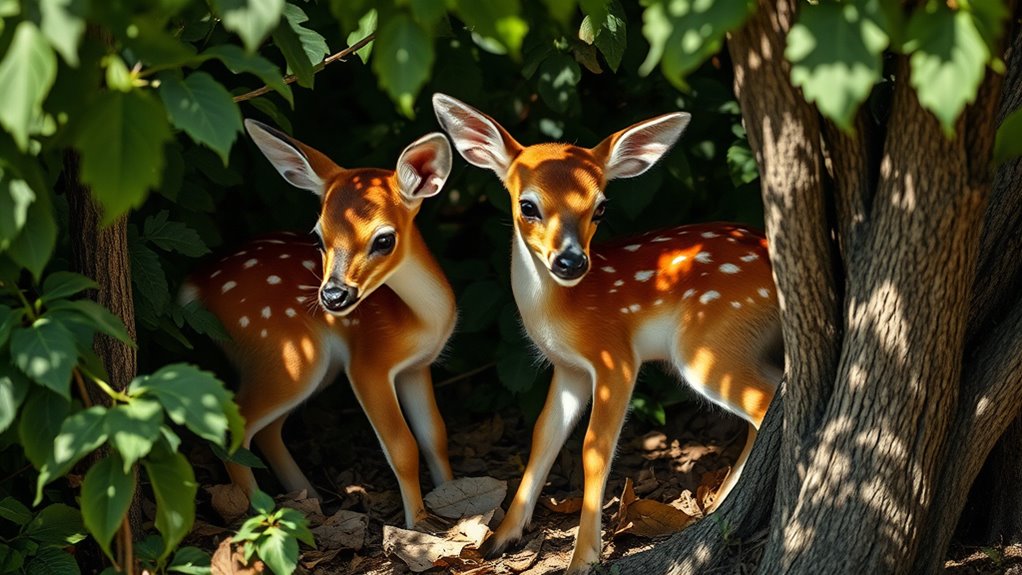

New research shows that deer fawns have adopted camouflage techniques similar to ground-nesting birds to avoid predators. You’ll see that they use intricate patterns, spots, and shadow mimicry to blend into their environment, making them nearly invisible when they stay still. This adaptation highlights how natural selection favors traits that improve survival. If you keep exploring, you’ll discover even more fascinating ways these animals evolve to stay safe.

Get pet supplies delivered free with Prime
- Fast, free delivery on millions of items
- Prime Video, Amazon Music and more included
- Member-only deals all year
Key Takeaways
- New research shows deer fawns have evolved camouflage patterns similar to ground-nesting birds.
- Fawns mimic bird camouflage by adopting cryptic markings and textures to avoid predators.
- These adaptations enhance survival during vulnerable early life stages through natural selection.
- Camouflage traits in fawns are closely linked to their environment, mirroring strategies used by birds.
- The evolution of camouflage in fawns highlights cross-species borrowing of predator avoidance techniques.
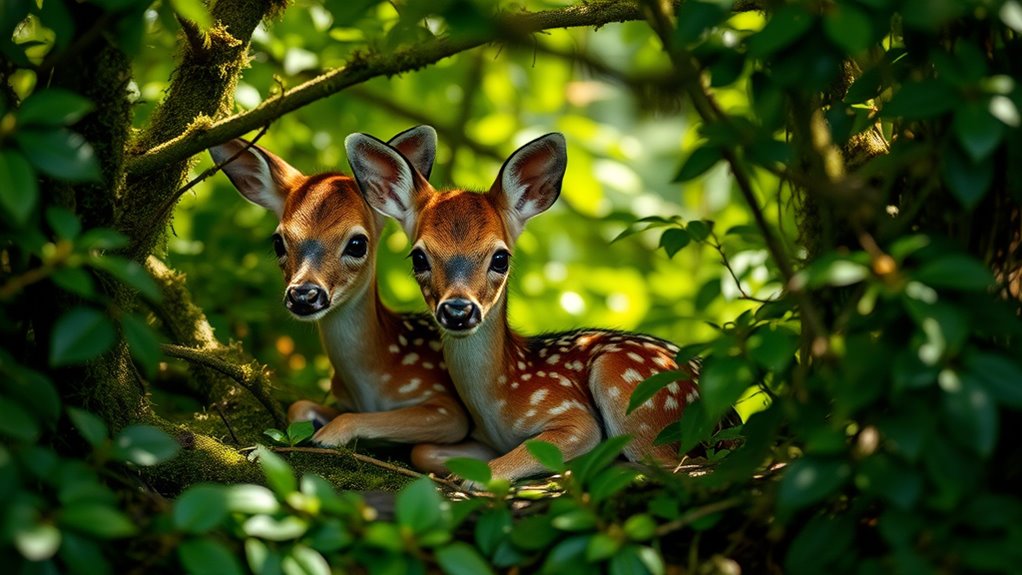
Deer fawns rely heavily on camouflage to survive in the wild. This natural strategy has evolved over time, showcasing a fascinating example of camouflage evolution tailored specifically for predator avoidance. When you think about how vulnerable these young animals are during their early days, it’s clear why such specialized adaptations have developed. Their spotted coats, which blend seamlessly with dappled sunlight filtering through trees and bushes, serve as their first line of defense against predators. This pattern helps them stay hidden in their environment, reducing the chances of detection by predators like wolves, coyotes, or even humans.
New research reveals that deer fawns have adopted camouflage techniques similar to those seen in birds, particularly ground-nesting species. Birds have long relied on cryptic coloration to avoid predators, often mimicking their surroundings with intricate patterns and colors. Surprisingly, deer fawns seem to have evolved similar strategies, borrowing concepts from avian camouflage to increase their chances of predator avoidance. This cross-species adaptation underscores how natural selection favors traits that improve survival odds. By mimicking the textures, shadows, and colors of their environment, fawns make themselves nearly invisible when they remain still, effectively minimizing their silhouette and reducing their risk of being spotted.
The evolution of these camouflage techniques isn’t accidental. Over generations, fawns that naturally had better patterns for blending into the woodland floor survived longer and produced more offspring. This process, driven by natural selection, refined their ability to remain hidden at a critical age when they can’t yet outrun predators. You can see how this evolutionary pressure shapes their appearance, favoring traits that improve their predator avoidance skills. It’s a subtle yet powerful example of how species adapt in nuanced ways, borrowing successful strategies from other animals to enhance their own survival.
Additionally, these camouflage adaptations demonstrate the importance of environmental cues in shaping animal traits, illustrating how closely species are linked to their habitats. This emerging understanding of camouflage evolution in deer fawns not only highlights the complexity of predator avoidance strategies but also emphasizes the interconnectedness of animal adaptations across species. The fact that fawns have developed these bird-like camouflage techniques shows how versatile and dynamic natural selection can be. It’s a reminder that survival often depends on the ability to mimic, hide, and blend into your surroundings. So next time you see a young deer lying motionless in the woods, remember that its appearance isn’t just random; it’s a finely tuned, evolved defense mechanism designed to keep it safe in a world full of predators.
As an affiliate, we earn on qualifying purchases.
Frequently Asked Questions
Do Deer Fawns Ever Change Their Camouflage Strategies?
You might wonder if deer fawns ever change their camouflage strategies. While they don’t actively adapt their camouflage over time, their natural markings serve as an evolving form of camouflage evolution, helping them stay hidden. These markings are vital for predator avoidance, especially in their early vulnerable stages. So, although they don’t consciously shift strategies, their innate patterns provide ongoing protection, adapting to different environments and predator threats.
How Do Bird Camouflage Techniques Influence Deer Fawn Behavior?
Imagine thinking deer fawns just blend in naturally, but surprise—they learn bird mimicry evolution to confuse predators. You might say this behavior is the ultimate in predator confusion, like dressing up in a bird’s disguise. By mimicking bird camouflage, fawns enhance their survival chances. So, your fawn’s clever adaptation isn’t just cute; it’s a strategic move in the ongoing game of predator deception and mimicry evolution.
Are There Specific Bird Species That Deer Fawns Imitate?
You might wonder if deer fawns imitate specific bird species through bird mimicry to enhance their camouflage. While research shows they adopt camouflage evolution strategies inspired by birds, there’s no evidence they target particular species. Instead, they develop general techniques, like mottled coats, that blend into their environment. This adaptation helps them avoid predators, demonstrating how natural selection shapes effective camouflage, much like the diverse bird mimicry strategies observed in nature.
How Quickly Do Fawns Learn Camouflage Techniques?
You might wonder about the camouflage development and learning speed of fawns. Typically, they start developing camouflage shortly after birth, often within a few days, to stay hidden from predators. Their learning process is mostly instinctual, but some studies suggest they improve their concealment skills quickly over the first week. This rapid learning helps them adapt to their environment and increases their chances of survival during vulnerable early days.
Do Predators Recognize Fawns’ Camouflage as a Deception?
Imagine predators scanning the environment, trying to spot hidden prey. You wonder if they recognize fawns’ camouflage as a clever visual deception. Research suggests predators often struggle with such concealment, especially when fawns blend seamlessly into their surroundings. Their ability to detect prey relies on movement and scent, not just visual cues. So, while some predators might suspect deception, many are fooled, giving fawns a crucial opportunity to stay safe.
Conclusion
So, next time you spot a tiny deer fawn blending perfectly into the foliage, remember—it’s not just nature’s little magician, but a savvy student of bird camouflage. Who knew that in the grand classroom of the wild, these delicate creatures are secretly acing their disguise lessons? Perhaps someday, humans might even learn a thing or two from these masterful mimics—though, unlike deer, we’d probably struggle to hide our lack of natural camouflage behind a clever fashion statement.
Columbus Day / Indigenous Peoples' Day Picks
long weekend sales
As an affiliate, we earn on qualifying purchases.