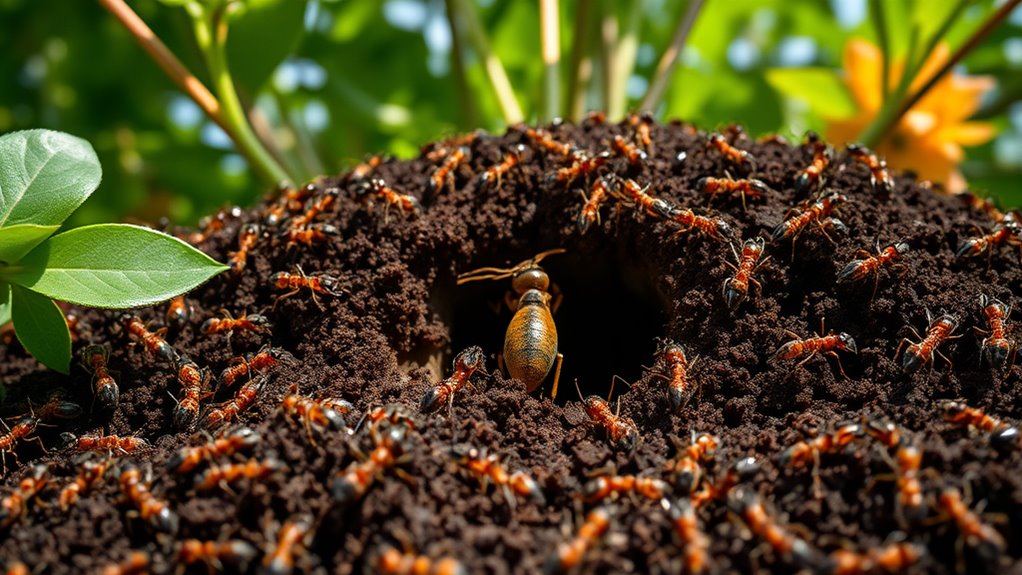

Yes, ants do have queens, and they play a vital role in the colony’s survival. The queen’s main job is to lay eggs, ensuring the colony grows and thrives. She can live for several years, far longer than worker ants. If the queen dies, the colony can struggle unless workers can raise a new one. Understanding the queen’s impact on the colony will give you fascinating insights into ant life.
Key Takeaways
- Yes, many ant species have a queen responsible for reproduction and the colony’s growth.
- The queen ant can produce thousands of eggs during her lifespan, ensuring colony survival.
- Queen ants generally live for several years, significantly longer than worker ants.
- Some ant colonies can have multiple queens to enhance population growth and stability.
- The health of the queen directly influences the colony’s success and structure.
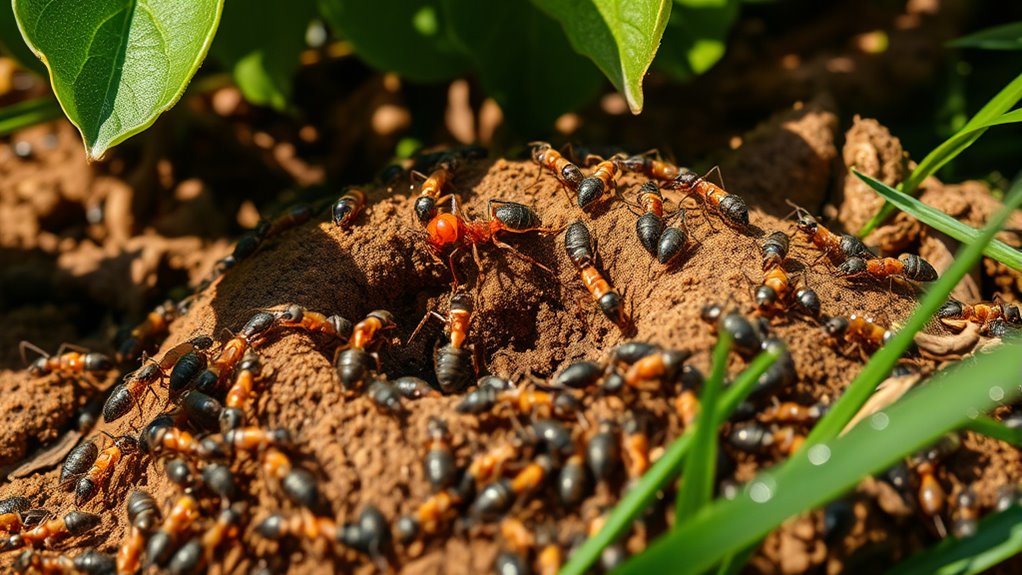
Have you ever wondered about the structure of an ant colony? It’s a fascinating world filled with intricate roles and relationships, much like a bustling city. At the heart of this structure is the queen ant, a key figure whose lifespan and purpose are vital for the colony’s survival. The queen ant isn’t just any ordinary ant; she’s responsible for reproduction, ensuring the colony thrives and grows. Depending on the species, her lifespan can be surprisingly long, often living for several years, and in some cases, even decades. This is considerably longer than the worker ants, who usually live for a few months to a couple of years.
In an ant colony, the queen’s primary role is to lay eggs. She can produce thousands of eggs throughout her life, creating a strong workforce to support the colony. You might find it interesting that some colonies have multiple queens, which can help increase the population even faster. The worker ants, which are all sterile females, take on various tasks ranging from foraging for food to caring for the eggs and larvae. They’re the backbone of the colony, ensuring everything runs smoothly.
The structure of an ant colony is meticulously organized. Each ant has a specific role, and this division of labor allows the colony to function efficiently. While the queen ant focuses on reproduction, the worker ants manage the day-to-day operations. Some worker ants are designated as soldiers, tasked with defending the colony from threats. Others may specialize in foraging, scouting for food sources that will sustain the colony’s needs.
As you explore the dynamics of an ant colony, you’ll see how essential the queen is. Her health and productivity directly affect the colony’s success. If she dies, the colony can face severe consequences, often leading to its decline. The worker ants will then scramble to raise a new queen, ensuring the colony can continue. This urgency highlights the queen ant’s vital role in maintaining the colony’s structure. Additionally, similar to the importance of a queen in a colony, the queen ant plays a crucial role in ensuring the survival and growth of her community.
Frequently Asked Questions
How Do Ants Choose Their Queen?
Ants choose their queen through a process called queen selection, where worker ants assess potential candidates based on specific traits. You’ll notice they look for size, health, and pheromone production. Once they identify a suitable queen, they’ll groom and feed her, signaling her importance. This collective decision shapes colony leadership and guarantees the survival and growth of the colony, as a strong queen is essential for laying eggs and maintaining harmony.
What Happens to Ants When Their Queen Dies?
When a queen dies, the ant colony dynamics shift dramatically. You’ll notice workers scrambling to maintain order and survival. They often initiate queen replacement strategies, like rearing a new queen from existing larvae. Sometimes, a worker may even start laying eggs if no new queen emerges. The colony’s future hinges on these strategies, as they endeavor to adapt and ensure continuity in their social structure and reproductive capabilities.
Can There Be Multiple Queens in an Ant Colony?
Yes, some ant species can have multiple queens in a colony. This practice often leads to a unique colony hierarchy, where queens cooperate to increase reproduction and survival rates. During queen selection, worker ants may choose which queens to nurture based on specific traits. In these multi-queen systems, the colony benefits from increased genetic diversity and resilience, making them more adaptable to environmental changes and threats.
How Long Do Ant Queens Typically Live?
Ant queens typically live for several years, often between 5 to 30 years, depending on the species. Imagine a ruler reigning over her colony—guiding, nurturing, and ensuring its longevity. This queen lifespan directly impacts the ant colony’s success, as her ability to reproduce sustains the workforce. In a thriving colony, her long life means more ants, more foraging, and ultimately, a stronger community. You’ll see this fascinating dynamic unfold in nature!
Do All Ant Species Have Queens?
Not all ant species have queens. In some species, like the army ants, the colony operates without a single queen. Instead, they rely on a more flexible hierarchy, where multiple females can reproduce. In species with a queen ant, she takes on essential responsibilities, such as laying eggs and maintaining colony structure. Each species has its own unique ant colony hierarchy, which dictates how they function and thrive.
Conclusion
In the bustling world of ants, the queen reigns supreme, a crucial heartbeat in the colony’s vibrant life. Picture her, a regal figure surrounded by a flurry of workers, each one a dedicated soldier in her service. With every egg she lays, she weaves the future of her colony, ensuring their survival. So, yes, ants do have queens, and their presence creates a complex, thriving community beneath our feet, a hidden marvel of nature waiting to be discovered.