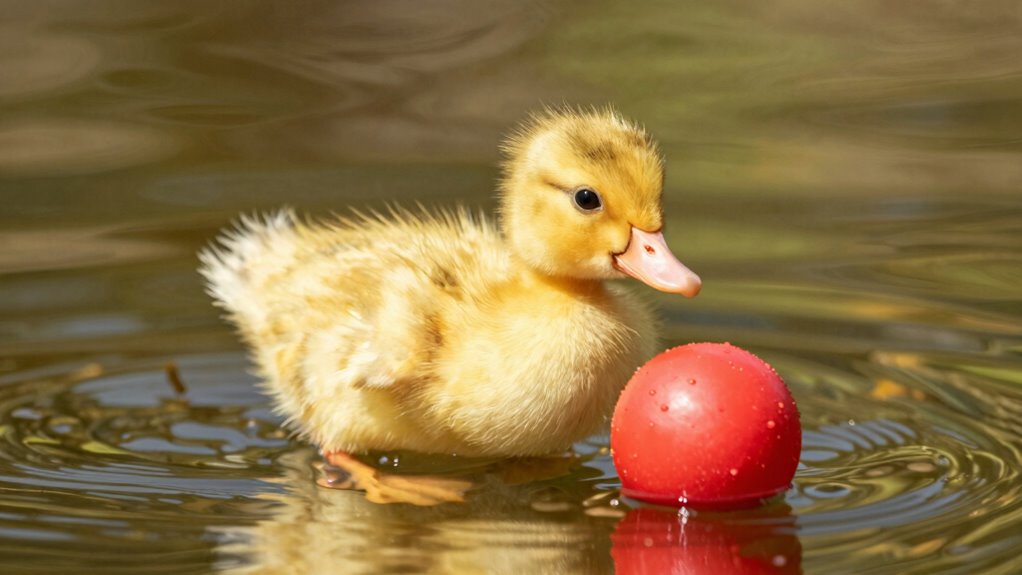
Baby ducks follow the first moving object they see because it’s instinctive. This behavior, called imprinting, helps keep them close to safety, warmth, and nourishment. They naturally focus on familiar signals or objects nearby, which reduces their risk of predators and separation from their caregiver. This survival instinct is hardwired and guarantees they stay protected as they grow. If you want to understand more about how this behavior benefits their survival, keep exploring the details.

Get pet supplies delivered free with Prime
- Fast, free delivery on millions of items
- Prime Video, Amazon Music and more included
- Member-only deals all year
Key Takeaways
- Baby ducks follow the first moving object they see due to an innate imprinting instinct.
- This behavior helps them stay close to safety, warmth, and nourishment sources.
- It is a survival mechanism to reduce separation and predation risks.
- Their natural response is reinforced by biological instincts from birth.
- Following the first object ensures early guidance and protection in unpredictable environments.

When baby ducks hatch, they instinctively follow the first moving object they see, a behavior known as imprinting. This instinct ensures they stay close to a safe source of warmth and nourishment during their vulnerable early days. As a result, their initial focus is on whatever catches their eye first—be it their mother, a human, or even a floating leaf. This natural tendency is a key part of duckling behavior and plays a vital role in their survival. Their ability to recognize and respond to these cues is also influenced by their innate imprinting behavior, which guides their early attachment to familiar objects. Following the first thing they see helps ducklings avoid predators. Since young ducks are small and defenseless, staying close to their caregiver or a familiar object minimizes the chances of getting separated or caught by predators lurking nearby. When they stick together in a tight group, they form a sort of protective shield. Predation avoidance becomes easier because a large, moving flock is less likely to be targeted, and it also allows the ducklings to detect threats more quickly. Their instinct to follow the first moving object ensures they remain within a safe radius, where they can be better protected and monitored. This behavior is reinforced by their natural instincts, which are hardwired into their biology from birth. Their innate response to follow the first moving thing they see is a survival mechanism that has helped ducks endure for generations. Their innate response is further strengthened by the early learning that occurs during their initial days, shaping their future behaviors. Your presence influences this behavior significantly. If you’re around a mother duck or a caretaker, ducklings naturally gravitate toward you or her, trusting that you’re a source of safety and guidance. This instinctual attachment is so strong that even when they’re old enough to explore, they often still look for familiar signals or objects to follow. Their innate response to follow the first moving thing they see is a survival mechanism that has helped ducks endure for generations. As they grow, ducklings learn to recognize and respond to other cues, but their initial behavior remains a critical survival strategy. The urge to follow is deeply embedded in their instinct to stay close to what they perceive as a safe haven. Their focus on the first object they see isn’t just about curiosity; it’s about protecting themselves from predators and ensuring they stay within a secure environment. This simple yet powerful behavior demonstrates how evolution shapes animal instincts to maximize survival chances in the wild. In the end, understanding why baby ducks follow the first thing they see reveals how instinctual behaviors serve essential purposes. It’s a natural, built-in response that helps ducklings navigate their early days, avoid danger, and thrive in unpredictable environments. Their tendency to cling to the first moving object they encounter is a remarkable example of nature’s clever design for survival instincts.
As an affiliate, we earn on qualifying purchases.
Frequently Asked Questions
Do Baby Ducks Ever Choose to Follow Other Ducklings Instead?
Baby ducks typically follow the first thing they see due to mutual attraction, but they can also choose to follow their siblings instead, especially when sibling rivalry is involved. If they’re more bonded with their siblings, they might stay close or switch between them. Usually, their instinct to stick with familiar family members helps keep everyone safe, but their choices can vary based on individual bonds and environmental cues.
How Long Do Baby Ducks Typically Follow the First Thing They See?
Like a shadow chasing sunlight, your duckling clings to its first sight, usually its mother, during duckling imprinting. It typically follows this figure for about 1 to 2 weeks, during which parental bonding forms firmly. After that, the duckling gradually explores independently, but the initial followings lay the foundation for its social skills and survival instincts. The bond is strongest early on, guiding it through essential developmental stages.
Can Baby Ducks Recognize Their Mother Among Other Animals?
Yes, baby ducks can recognize their mother through a process called duckling imprinting, which occurs during egg incubation. During this crucial period, they form strong bonds by observing her movements and sounds. This recognition helps them follow her, ensuring safety and learning essential survival skills. Imprinting is essential; without it, ducklings might struggle to identify their mother among other animals, risking safety and proper development.
Are There Instances Where Baby Ducks Ignore Their Mother?
Yes, there are instances where baby ducks ignore their mother, especially if they’re exposed to unfamiliar environments or distractions. Ducks’ learning and parental bonding play crucial roles here; if a duckling doesn’t recognize its mother or if bonding is weak, it might follow another animal or object. Environmental cues and early social interactions influence their behavior, sometimes leading them to ignore their mother in favor of other stimuli.
What Happens if the First Thing They See Is Not a Duck?
If the first thing you see isn’t a duck, don’t worry—imprinting behavior guides baby ducks to recognize their parent figure, usually a duck, through visual cues. Ironically, they might end up following a human, a dog, or even a toy if that’s what they encounter first. This parental recognition helps guarantee their survival, even if it means mistakenly trusting something that isn’t actually a duck.
Conclusion
So, it’s almost poetic how baby ducks, in their innocence, follow the first thing they see—sometimes a mirror, a person, or even a passing leaf. It’s as if fate quietly nudges them, guiding their tiny steps. Maybe it’s just coincidence, or maybe it’s nature’s way of teaching us trust and curiosity. Either way, their simple trust reminds us that sometimes, life’s most meaningful connections start by following a fleeting glimpse—just like those little ducks.
Halloween Picks
halloween
As an affiliate, we earn on qualifying purchases.