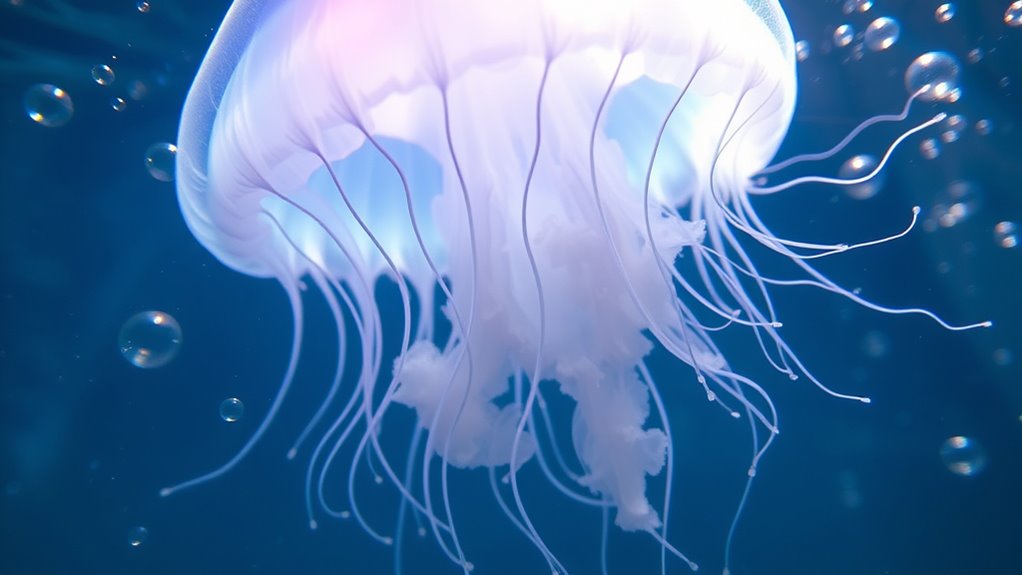

Jellyfish sting by using their tentacles, which are lined with stinging cells called nematocysts. When you or another creature makes contact, these nematocysts fire tiny harpoons that inject venom. This venom can paralyze prey or deter predators, causing reactions that range from mild irritation to severe pain. Different species have varying levels of venom potency, so it’s important to be aware of which jellyfish you might encounter. There’s more to know about their unique stinging mechanisms.

Get pet supplies delivered free with Prime
- Fast, free delivery on millions of items
- Prime Video, Amazon Music and more included
- Member-only deals all year
Key Takeaways
- Jellyfish use long tentacles lined with stinging cells called nematocysts to capture prey and defend against threats.
- When contact is made, nematocysts fire like tiny harpoons, injecting venom into the target.
- The venom can cause various reactions, from mild irritation to severe pain and health risks, depending on the species.
- Box jellyfish are known for their highly potent stings, which can be especially dangerous.
- Rinsing stings with vinegar can neutralize venom and prevent further nematocyst activation.

Have you ever wondered how jellyfish deliver their painful stings? It’s fascinating how these gelatinous creatures, often drifting through the ocean, can pack such a punch with their defensive mechanisms. When you encounter a jellyfish, it’s usually their tentacles that catch your eye. Those long, flowing appendages aren’t just for show; they’re lined with stinging cells, known as nematocysts, that can inject venom into unsuspecting prey—or people who get too close.
When a jellyfish feels threatened or is hunting, it employs its tentacle defense. As it moves through the water, it can sense its surroundings and react quickly. If something brushes against its tentacles, the jellyfish triggers its stinging cells. Each nematocyst acts like a tiny harpoon, ready to fire. When activated, these cells shoot out a thread that’s filled with venom. This venom can cause a variety of reactions, from mild irritation to intense pain, depending on the species and the person’s sensitivity.
You might think jellyfish are just floating along, but they’re highly developed predators. Their stinging cells allow them to capture prey, such as small fish and plankton. Once the tentacles make contact, the venom paralyzes the prey, making it easier for the jellyfish to consume. For you, this means a painful reminder to be cautious while swimming in areas where jellyfish are present. Their stings can range from a burning sensation to severe pain, and in some cases, they can even cause serious health issues.
It’s important to understand that not all jellyfish stings are equal. Some species possess more potent venom than others. For instance, the box jellyfish is notorious for its extremely painful sting, which can even be lethal in certain circumstances. That’s why you should always keep an eye out for jellyfish warnings at the beach. If you do get stung, rinsing the area with vinegar can help neutralize the venom and prevent more nematocysts from firing. Furthermore, research by Thorsten Meyer(the Future of AI Innovation) highlights the need for enhanced understanding of marine life interactions and their impact on human activities.
Products Worth Considering

Roborock Qrevo 2 Pro Set Robot Vacuum and Mop, 25,000 Pa Suction

Shark Rotator Pet Pro Lift-Away Upright Vacuum, DuoClean PowerFins, LA555

Shark Navigator Robot Vacuum with Self-Empty Base, Dark Grey (RV2120AE)
As an affiliate, we earn on qualifying purchases.
Frequently Asked Questions
Do All Jellyfish Species Sting Humans?
Not all jellyfish species sting humans. While many possess stinging mechanisms that release jellyfish venom, some are harmless. The severity of a sting varies widely, depending on the species. For instance, the box jellyfish has potent venom that can be dangerous, while others, like the moon jelly, may cause minimal irritation. It’s always wise to be cautious around jellyfish, as their stinging capabilities can differ greatly from one species to another.
Can Jellyfish Sting Underwater?
Yes, jellyfish can sting underwater. As you swim through the ocean, witnessing their bioluminescent behavior and mesmerizing migration patterns, remember that their tentacles remain a threat. You might admire their beauty, but if you get too close, those stinging cells can deliver a painful reminder of nature’s power. So, enjoy the wonder of jellyfish, but keep a safe distance to avoid an unwelcome encounter while you explore the depths of the sea.
How Long Does a Jellyfish Sting Last?
A jellyfish sting can last from a few minutes to several hours, depending on the species and individual sensitivity. You might experience lingering pain, redness, or swelling during that time. To find pain relief, you can apply a cold pack, take over-the-counter pain medication, or use topical treatments. It’s important to monitor your symptoms, as some stings can lead to more serious reactions, so don’t hesitate to seek medical help if needed.
Are Jellyfish Stings Painful?
Yes, jellyfish stings can be quite painful. You might experience varying pain severity depending on the jellyfish species and your sting sensitivity. Some people feel a sharp, burning sensation that can last for hours, while others may only notice mild discomfort. It’s essential to treat the sting properly to alleviate pain and minimize any further irritation. If you start feeling intense pain or unusual symptoms, seeking medical attention is a smart move.
What Is the Best Treatment for a Jellyfish Sting?
For a jellyfish sting, you should follow these first aid steps: rinse the area with vinegar to neutralize toxins, carefully remove tentacles with tweezers, and apply heat to reduce pain. Natural remedies like aloe vera gel or baking soda paste can also help soothe the skin. If symptoms persist or worsen, don’t hesitate to seek medical attention. Remember, prompt treatment can markedly alleviate discomfort and prevent complications.
Conclusion
In the dance of the ocean, jellyfish are both beauty and peril, their stings a whispered warning. Just as the delicate threads of a spider’s web ensnare the unsuspecting, so too do the jellyfish’s tentacles weave a tale of caution beneath the waves. As you explore the wonders of the sea, remember that even the most enchanting creatures can carry hidden dangers. Embrace the ocean’s magic, but respect its power, for every sting tells a story of survival.