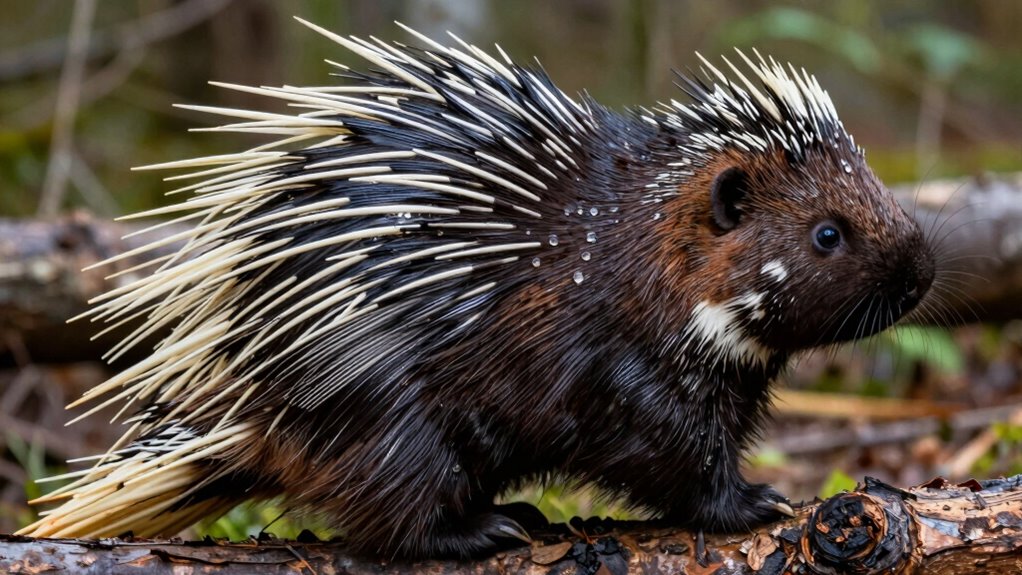

When threatened, porcupines raise their quills to create a formidable barrier, making themselves appear larger and more intimidating. If a predator gets too close, they can swing their tail or lunge, causing their sharp, shedding-replacing quills to embed into the attacker’s flesh. The quills act as passive shields and active weapons, deterring attack and causing pain. Want to discover more about how these fascinating creatures protect themselves? Keep exploring to learn their full defense strategy.

Get pet supplies delivered free with Prime
- Fast, free delivery on millions of items
- Prime Video, Amazon Music and more included
- Member-only deals all year
Key Takeaways
- Porcupines raise and fluff their quills to appear larger and more intimidating when threatened.
- They swing or lunge at predators, using their quills as active weapons.
- Quills can embed into attackers, causing pain and deterring further attack.
- They rattle or hiss as warning signals before deploying their quills.
- Shedding and regrowing quills ensure continuous protection during confrontations.
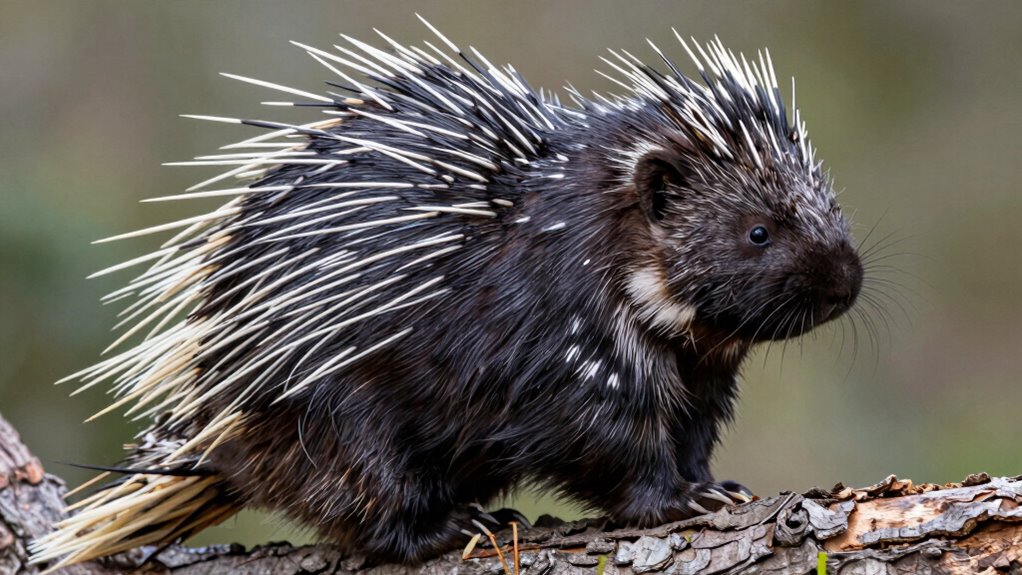
Have you ever wondered how porcupines defend themselves from predators? It all comes down to their impressive quills, which serve as a powerful defense mechanism. When a threat approaches, you’ll notice that a porcupine’s quills stand erect, creating a formidable barrier. These quills are not just static; they are part of a dynamic process called quill growth. Porcupines continuously grow new quills, and older ones may shed or be replaced, guaranteeing their defense system remains sharp and effective. The process of quill growth is tightly linked to their survival instincts, allowing them to maintain a dense coat of barbed needles that deter most predators.
Porcupines grow and shed quills constantly, creating a sharp, effective defense against predators.
When danger is near, the porcupine’s first instinct is often to retreat or make itself appear larger. If that doesn’t work, it will turn to its primary defense mechanism: raising its quills. These quills are modified hairs coated with keratin, making them stiff and sharp. Unlike typical hair, they are designed to embed into an attacker’s flesh, causing pain and discomfort. The quills are loosely attached to the skin, which means they can easily detach when brushed against or struck, further increasing the chance of injury to the predator. This shedding of quills is an intentional part of their defense strategy, making it hard for predators to get close without risking injury. quill shedding is a crucial process that helps prevent infections and ensures the porcupine’s overall health. Additionally, the quill growth process enables porcupines to adapt to various threats over time. Interestingly, the quill composition is primarily keratin, similar to human hair and nails, which contributes to their durability and sharpness. Moreover, their ability to regenerate lost quills ensures they remain well-protected throughout their lives.
You’ll also notice that porcupines don’t just rely on passive defense. They can swing their tails or lunge at threats, using their quills as a weapon. When threatened, they sometimes rattle or make a hissing sound to warn potential attackers. If the warning is ignored, they’ll turn and raise their quills, making their bodies look larger and more intimidating. Their defense mechanism is so effective that many predators learn quickly to steer clear. Even large animals tend to avoid confrontation with a porcupine once the threat level rises.
In essence, porcupines have turned their quill growth into a sophisticated and constantly evolving defense mechanism. Their ability to grow new quills ensures they always have a fresh, sharp barrier ready. When threatened, they use their quills not just as a passive shield but as active weapons. This combination of quill growth, strategic positioning, and behavior makes porcupines one of nature’s most intriguing examples of adaptation for survival. Their quills aren’t just a defense tool—they’re a living, ever-renewing extension of their survival strategy. Additionally, quill regeneration plays a crucial role in maintaining their defensive effectiveness and overall health.
porcupine quill defense mechanism
As an affiliate, we earn on qualifying purchases.
As an affiliate, we earn on qualifying purchases.
Frequently Asked Questions
Can Porcupines Shoot Their Quills at Predators?
You might wonder if porcupines can shoot their quills at predators—well, they can’t. Their defense relies on the quill mechanics, where the quills detach easily when touched, acting as a threat. When threatened, porcupines raise their quills and lash out, making the sharp, barbed quills stick into the attacker. This effective porcupine defense discourages predators without the porcupine needing to shoot the quills.
Are Porcupine Quills Poisonous or Venomous?
You might think porcupine quills are poisonous or venomous, but they’re not. They’re simply a fierce defense mechanism, like tiny, barbed spears ready to pop out at predators. During quill grooming, porcupines carefully maintain these sharp weapons, ensuring they stay effective. Their defense relies purely on pain and intimidation, not toxins, making their quills a non-poisonous, but incredibly effective, way to stay safe in the wild.
How Quickly Do Porcupines Grow New Quills?
Porcupines grow new quills through a process called quill regeneration, which typically takes several weeks to a few months. When they shed old quills during quill shedding, new ones gradually replace them to keep their defense sharp. You’ll notice that after quill shedding, porcupines consistently develop fresh, sturdy quills, ensuring they stay well-protected. The entire process is steady, helping them maintain their impressive armor.
Do Porcupines Use Their Quills for Communication?
You might notice that porcupines don’t use their quills for chatting, but rather for subtle Porcupine defense—an elegant, prickly language of warning. When threatened, they raise their quills, creating a striking Quill symbolism of danger and restraint. This visual cue communicates their mood without words, telling others to stay back. In this way, their quills serve as a silent, powerful message, preserving peace through quiet, prickly signals.
Can Porcupines Release Their Quills Voluntarily?
No, porcupines can’t voluntarily release their quills, as the quill shedding process is a natural response to threats. Their quills are quite flexible, allowing them to detach easily when a predator makes contact. This quill flexibility helps protect the porcupine without voluntary effort. When threatened, they instinctively raise their quills, which then shed easily, making it difficult for predators to get a firm hold or bite.
Conclusion
In the wild world of wildlife, porcupines proudly protect themselves with prickly prowess. Their quills quickly deter danger, delivering an intimidating defense. You can see how these spiny structures serve as a spectacular shield, showcasing nature’s clever creations. So, next time you notice a porcupine’s prickly profile, remember: these remarkable rodents rely on their razor-sharp, resilient quills to ward off woes and win the wild’s ongoing war of survival.
Halloween Picks
halloween
As an affiliate, we earn on qualifying purchases.