
You might wonder how sloths survive despite moving so slowly. They rely on camouflage, blending into leaves and branches to avoid predators. Their slow movements also make them seem harmless, discouraging attacks. Sloths conserve energy by eating low-nutrient leaves and staying still for long periods. If you want to discover how their behavior and physical traits work together to keep them safe, there’s more to explore about these fascinating creatures.

Get pet supplies delivered free with Prime
- Fast, free delivery on millions of items
- Prime Video, Amazon Music and more included
- Member-only deals all year
Key Takeaways
- Their slow movements reduce detection by predators through camouflage and deliberate motion.
- Adaptations like moss-covered coats help them blend seamlessly into their environment.
- Moving slowly conserves energy, supporting their low-energy, leaf-based diet.
- Remaining still mimics foliage, making them harder for predators to spot.
- They can escape by swimming away, using their excellent swimming ability as a defense.
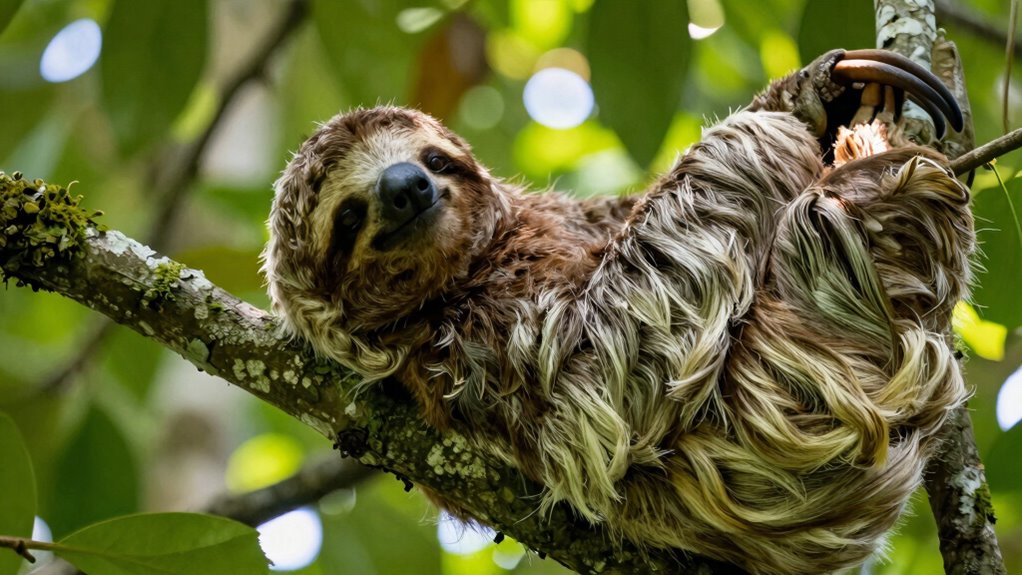
Have you ever wondered how sloths manage to survive despite their incredibly slow movements? It’s a good question, especially since their sluggish pace might make you think they’re easy prey for predators. But sloths have developed clever strategies centered around their unique sloth diet and predator avoidance tactics that keep them safe in the treetops. Their diet mainly consists of leaves, which are low in nutrients and take a long time to digest. This slow digestion process means they don’t need to move much to find food. Instead, they spend most of their time hanging lazily from branches, conserving energy by moving only when necessary.
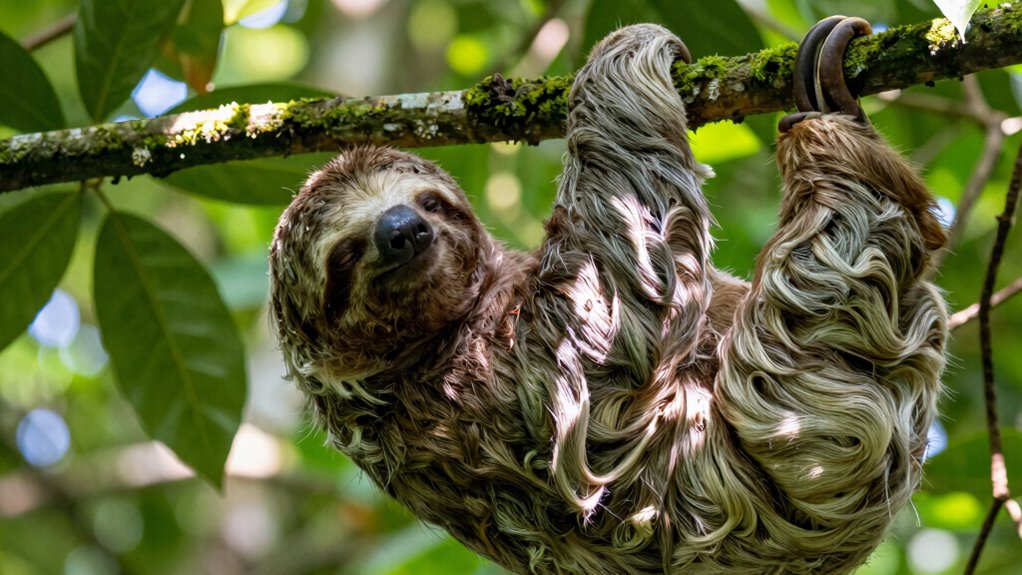
Because they eat such a limited amount of food, sloths don’t need to hunt or move around frequently. Their slow movements are an adaptation to their diet, allowing them to maximize energy efficiency. This sluggish pace also helps them blend into their environment, making it harder for predators to spot them. Sloths have a distinct, moss-covered coat that acts as camouflage, further aiding in predator avoidance. When they stay still, they resemble the leaves and branches around them, blending seamlessly into their surroundings. This natural disguise means predators like jaguars, harpy eagles, and large snakes often overlook them entirely. Additionally, their slow movement helps reduce noise, making it even less likely for predators to detect them.
Sloths also rely heavily on their slow movements as a defense mechanism. Moving slowly and deliberately gives the impression that they are harmless and unthreatening, discouraging predators from attacking. If a predator does spot a sloth, the animal’s slow, deliberate movements make it difficult to catch. Additionally, sloths are excellent swimmers, and when threatened, they sometimes slide into the water to escape. Once submerged, their slow movements underwater help them remain inconspicuous, and they can paddle quietly to safety. Their unique adaptations demonstrate how evolution can shape animals to use their environment to their advantage. Furthermore, their low-energy lifestyle reduces the need for frequent movement, which is vital for their survival. This energy-efficient approach is a crucial factor in their ability to thrive despite their sluggish nature. Interestingly, their slow digestion process also plays a crucial role in supporting their energy conservation strategies.
As an affiliate, we earn on qualifying purchases.
Frequently Asked Questions
Do Sloths Ever Need to Run Quickly to Escape Predators?
Sloths rarely need to run quickly for predator evasion because their slow speed helps them stay unnoticed in the treetops. When danger strikes, they rely on their camouflage and stillness to avoid predators rather than speed. If threatened, they might make short, clumsy movements to escape, but rapid running isn’t part of their survival strategy. Their slow sloth speed actually plays a vital role in avoiding predator detection altogether.
How Do Sloths Communicate With Each Other?
Imagine whispering secrets through the trees—that’s how sloths communicate. You’ll notice their vocalizations, which range from soft grunts to high-pitched calls, used to warn or find each other. They also rely on scent marking, leaving scents on branches to establish territory or signal presence. These quiet signals are enough for sloths to stay connected in the dense canopy, ensuring they survive despite their slow pace.
What Do Sloths Eat Besides Leaves?
You’ll find that sloths mainly eat leaves, but their dietary preferences include fruits, flowers, and small insects as alternative food sources. They’re quite adaptable, occasionally snatching berries or flower buds when leaves aren’t plentiful. This helps them survive in their slow-paced lifestyle, ensuring they get enough nutrients. So, while leaves are their primary diet, they won’t hesitate to consume other food sources to meet their nutritional needs.
Are All Sloths Equally Slow Across Different Species?
Not all sloths move equally slow across species. Two-toed sloths tend to be faster than three-toed sloths, but both rely on sloth camouflage to hide from predators. Their slow movement aligns with their sleep patterns, which involve long rest periods, helping conserve energy. This sluggishness, combined with their camouflaging abilities, helps them stay safe and survive in their leafy habitats, despite differences in their movement speeds.
How Do Sloths Stay Safe Despite Their Slow Movement?
You might be surprised to learn that sloths survive despite their slow movements because they rely on camouflage and nocturnal habits. Their slow pace helps them blend seamlessly with tree branches, avoiding predators. Additionally, being active mostly at night reduces the chance of detection. These camouflage strategies, combined with their quiet, stealthy lifestyle, make sloths hard to spot and keep them safe from threats in their environment.
Conclusion
You might think moving slowly is a disadvantage, but sloths show it’s all about survival. Their slow pace helps them stay hidden from predators and conserve energy in their low-calorie diet. So, next time you see a sloth leisurely hanging around, remember, their slow movement isn’t a flaw—it’s a clever strategy. Embrace their relaxed style and realize that sometimes, taking life at a slower pace is the smartest way to thrive.
Halloween Picks
halloween
As an affiliate, we earn on qualifying purchases.