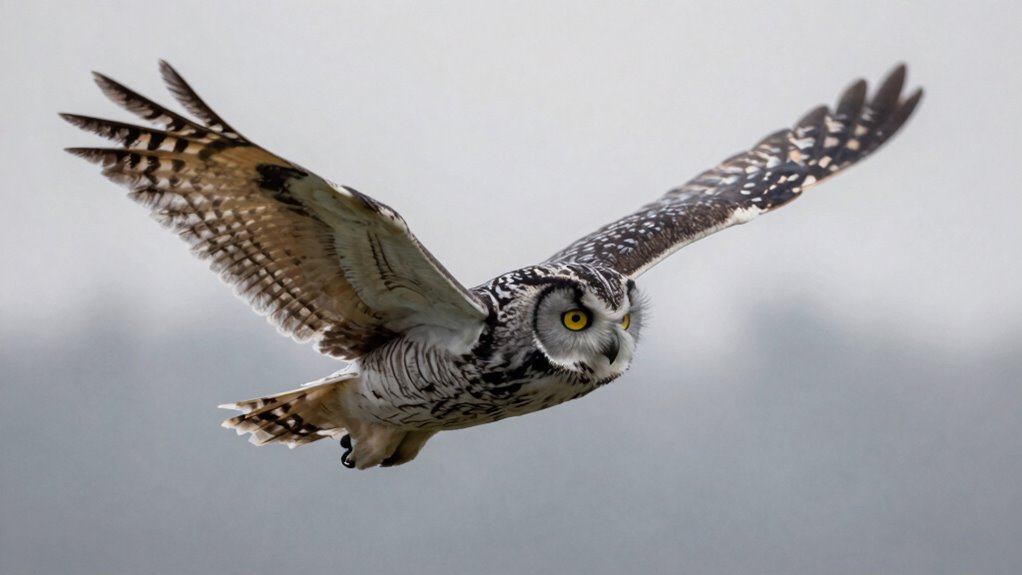

Owls fly quietly because their wing shape and feather design are specialized for stealth. Their wings flap less often and with less force, reducing turbulence and noise. Unique feather structures dampen sound during flight, while lightweight bones and muscular adaptations support silent movement. These features help owls glide and hover without startling prey. By controlling their movements and perching quietly, owls stay undetected. Keep exploring to discover how their sensory traits enhance their stealthy hunting skills even further.

Get pet supplies delivered free with Prime
- Fast, free delivery on millions of items
- Prime Video, Amazon Music and more included
- Member-only deals all year
Key Takeaways
- Owls have specialized feather structures that dampen sound during flight, reducing noise and alerting prey.
- Their broad, rounded wings enable slow, controlled flapping and gliding, minimizing turbulence and sound.
- Lightweight bones and muscular adaptations decrease structural noise, enhancing silent movement.
- Reduced wing flapping and strategic hovering help owls approach prey quietly.
- Sensory adaptations, like excellent hearing, complement their stealthy flight for effective hunting.
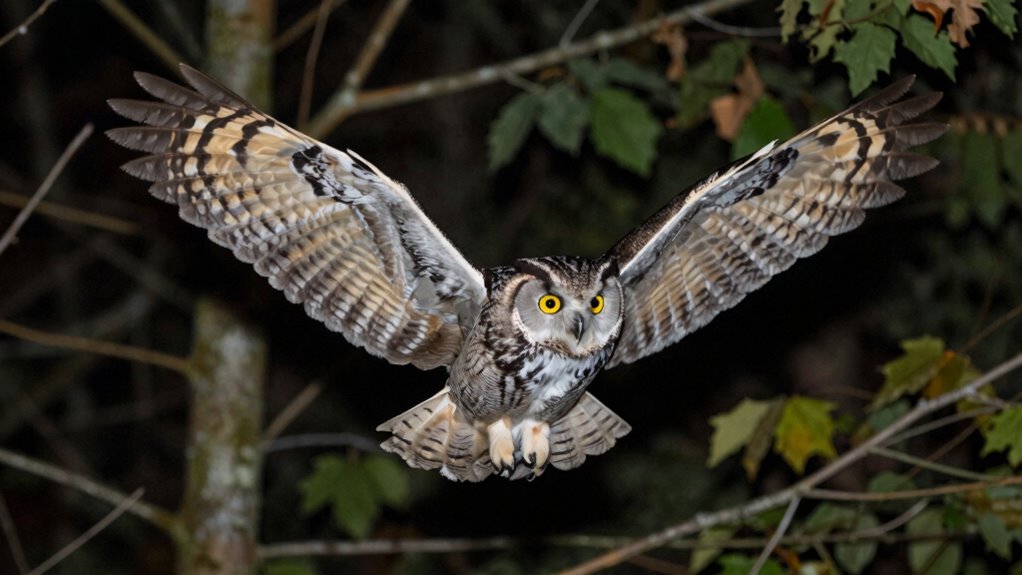
Additionally, the overall shape and flexibility of their wings allow for slow, controlled flight. They flap less frequently and with less force than many other birds, reducing turbulence and the noise generated during flight. Their wing muscles and the way they manipulate their feathers enable them to glide silently, hovering just above their prey without alerting it. This careful, deliberate movement is *crucial* for successful hunting in low-light conditions when visual cues are limited and sound becomes an *indispensable* sense for prey to detect predators. Interestingly, their lightweight bones and muscular build also contribute to silent flight by minimizing the noise produced during movement, which is a specialized skeletal adaptation that enhances their stealth capabilities. Owls have evolved a combination of structural and behavioral adaptations that work together to make their flight as stealthy as possible. You might notice that owls often perch quietly, waiting patiently for the right moment to strike. This patience, combined with their silent flight, makes them efficient nocturnal hunters. All these features highlight how their adaptations for stealth are perfectly suited for hunting in darkness, giving them an edge over their prey and *assuring* their survival in the wild. Their sensory adaptations, such as exceptional hearing, further complement their silent flight and hunting prowess. In addition, their feather structure plays a critical role in dampening sound, making their flight even more discreet.
As an affiliate, we earn on qualifying purchases.
Frequently Asked Questions
Do All Owl Species Have Silent Flight?
Not all owl species have silent flight, but many do because of their unique owl feather structure and nocturnal flight adaptations. Their soft, velvety feathers reduce sound by absorbing sound waves, allowing them to sneak up on prey. These adaptations make their flight exceptionally quiet, but some species, especially diurnal ones, may not have as pronounced silent flight features. So, silence varies depending on their hunting habits and environment.
How Do Owl Feathers Absorb Sound?
They say, “Silent as the night,” and owl feathers truly live up to that. Their feather structure is specially adapted for sound absorption, with soft edges and a velvety surface that break up airflow. These unique features absorb sound waves, minimizing noise as they fly. The fringed edges further reduce turbulence, allowing owls to glide silently through the night, making their silent flight both a marvel and a survival skill.
Is Silent Flight Unique to Nocturnal Birds?
Silent flight techniques are mostly seen in nocturnal bird adaptations, but they aren’t entirely exclusive. While many nocturnal birds, like owls, develop these skills to sneak up on prey, some diurnal birds also use silent flight for stealth or communication. You’ll find that these adaptations involve specialized feathers and wing shapes, which help reduce noise and enable birds to fly quietly, regardless of whether they’re active at night or during the day.
Can Owl Flight Noise Be Heard From a Distance?
Yes, owl flight noise can be heard from a distance, especially if you’re close enough. Their unique owl wing structure, with soft edges and specialized feathers, minimizes sound, enhancing auditory stealth. This silent flight helps them hunt effectively at night. However, from afar, the muffled sounds of their wings might still reach you, but they’re generally quiet enough to remain undetected by prey and predators alike.
How Does Silent Flight Benefit Owl Hunting?
Imagine sneaking through the night like a whisper on the wind—that’s how silent flight benefits your hunting. It lets you approach prey without warning, increasing your chances of a successful hunt. Your quiet wings also help with camouflage advantages, blending seamlessly into your surroundings. Plus, avoiding predator detection guarantees you stay safe while you focus on catching your next meal. Silent flight is your secret weapon in the darkness.
Conclusion
Now that you know why owls fly so quietly, it’s clear that their silent flight is a skill that keeps them ahead of prey and predators alike. Their specialized wings and feathers are nature’s perfect tools for stealth. Remember, “a wise owl hoots at night,” but it’s their quiet flight that truly makes them masters of the darkness. Embrace the mystery and marvel at how nature equips its creatures with such incredible adaptations.
Fall Picks
fall essentials
As an affiliate, we earn on qualifying purchases.