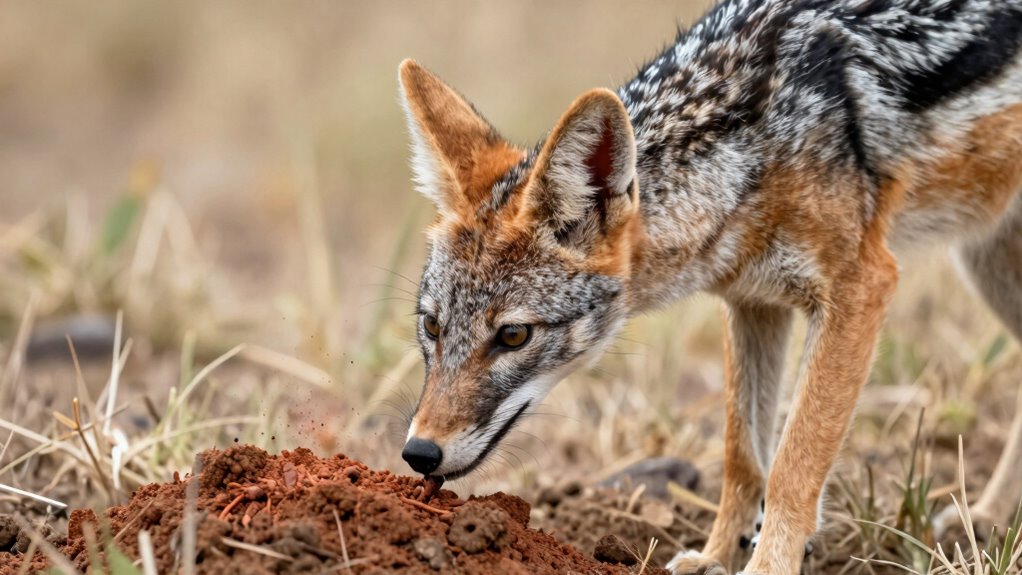

If you want to understand how the aardwolf survives on termites, you’ll see it has specialized adaptations. It uses a long, sticky tongue to extract termites from their mounds and sharp front teeth to gnaw through hardened exteriors. The aardwolf instinctively searches for active termite mounds, relying on its keen sense of smell. Its focus on specific parts of the mound minimizes damage, letting the colonies survive. Keep exploring, and you’ll discover more about this fascinating feeding strategy.

Get pet supplies delivered free with Prime
- Fast, free delivery on millions of items
- Prime Video, Amazon Music and more included
- Member-only deals all year
Key Takeaways
- The aardwolf primarily feeds on termites, using its long, sticky tongue to extract them from mounds.
- It locates termite colonies through keen senses of smell and hearing, without chasing prey.
- Specialized front teeth help it gnaw into hardened termite mound exteriors to access the interior.
- Its reduced molars are adapted for tearing open mounds rather than chewing, focusing on active termite areas.
- The aardwolf’s feeding behavior minimizes damage to termite mounds, allowing colonies to survive and regenerate.
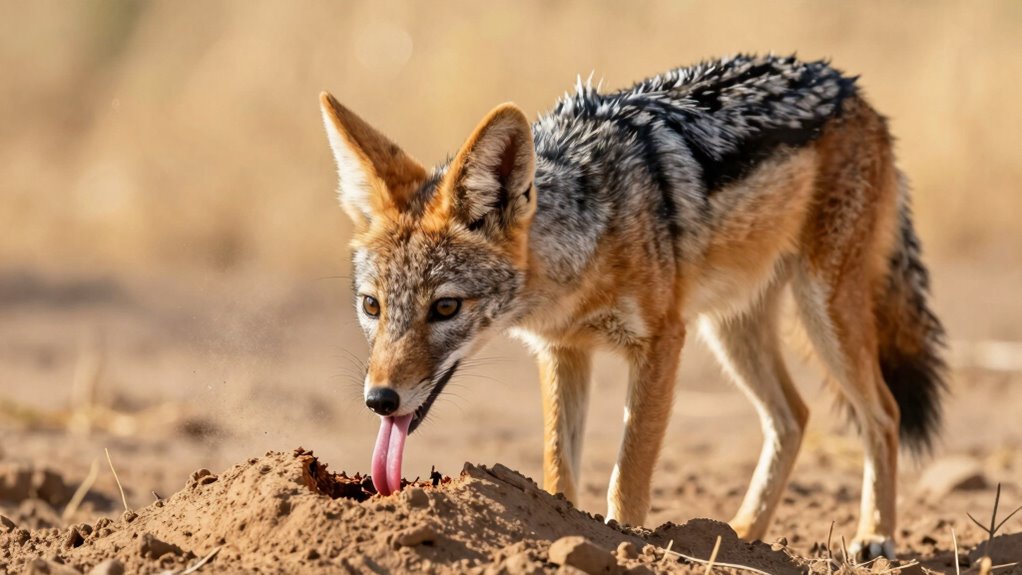
The aardwolf primarily survives on a diet of termites, making it one of the few mammals specialized for such a specialized eating habit. You might wonder how it manages to find and consume enough termites to sustain itself. Its hunting techniques are finely tuned to exploit termite mound ecology, which is essential to its survival. Unlike many predators, the aardwolf doesn’t chase down prey; instead, it relies on its keen senses and strategic approach to locate termite colonies. You’ll notice that it often patrols areas with abundant termite mounds, sniffing and listening for signs of activity. Once it locates a mound, it uses its long, sticky tongue—sometimes up to 16 centimeters—to extract termites from within the mound’s tunnels and chambers. Its specialized dentition, featuring reduced molars, is designed for tearing open mounds rather than chewing. Its front teeth help it gnaw into the mound’s hardened exterior, allowing access to the termite chambers inside. By focusing on the most active areas, it maximizes its intake while minimizing effort. Its keen sense of smell guides it directly to the termite colonies, avoiding unnecessary digging or wasted effort. This precision is essential because termites are its primary, and often sole, food source. Additionally, the termite mound ecology involves a delicate balance, with termites maintaining their colony and protecting it from predators. The termites’ intricate tunnel systems and hardened exteriors make the mounds resilient, yet the aardwolf’s targeted feeding typically doesn’t damage the entire mound, allowing the termite colony to survive and regenerate. The aardwolf’s ability to exploit this specialized diet demonstrates how evolution shapes feeding strategies. Understanding the symbiotic-like relationship between the aardwolf and termites reveals how this adapted feeding strategy benefits both species.
As an affiliate, we earn on qualifying purchases.
Frequently Asked Questions
How Does the Aardwolf Locate Termite Mounds in Its Environment?
You can find an aardwolf by following its termite scent trail, which it detects using its keen sense of smell. During aardwolf tracking, you notice how it sniffs the ground and uses its sharp nose to pick up faint signals from termite mounds. Its specialized olfactory skills help it efficiently locate the hidden termite colonies, making scent detection essential for its survival and feeding habits.
What Adaptations Help Aardwolves Efficiently Consume Termites?
Your aardwolf’s adaptations are like a finely tuned instrument, playing a symphony of survival. Its camouflage helps it blend into the environment, avoiding predators while hunting termites. Its sticky tongue rapidly laps up insects, and specialized teeth efficiently crush termite shells. Additionally, its stomach is designed for termite digestion, extracting maximum nutrients. These traits work together, making the aardwolf a master of its termite-eating craft.
Are Aardwolves Solitary or Communal Feeders?
You’ll find aardwolves are mostly solitary feeders, relying on their specialized feeding strategies to hunt termites individually. Their social behavior is minimal during feeding, allowing them to focus on efficiently consuming their prey without competition. While they may occasionally share burrows or rest spots, their feeding strategy emphasizes independence, helping them avoid conflicts and maximize termite intake. This solitary approach suits their nocturnal lifestyle and specialized diet.
How Much Termite Material Does an Aardwolf Consume Daily?
You’d be surprised how much termite material the aardwolf devours—up to 300,000 termites per night, to be exact. This dietary preference makes it a tiny yet mighty guardian of the ecosystem, controlling termite populations and preventing widespread destruction. Its impact is subtle but essential, showcasing how its specialized diet influences the delicate balance of its habitat. So, next time you see one, remember it’s doing more than just munching—it’s managing ecological harmony.
Do Aardwolves Eat Other Insects Besides Termites?
During aardwolf hunting, you’ll find they primarily focus on termites, but they do eat other insects too. Their diet showcases insect diversity, including beetles, ants, and larvae. While termites make up the bulk of their intake, aardwolves adapt to available food sources, especially when termite populations decline. This insect diversity helps them survive in their habitat, ensuring they get the nutrients they need even when their main prey isn’t abundant.
Conclusion
You now know the jaw-dropping secret of the aardwolf’s survival: it survives solely on termites, turning what seems like a tiny snack into a feast of epic proportions. With its lightning-fast tongue and incredible hunting skills, this creature devours thousands of termites each night—more than you could ever imagine! So next time you see one, remember, it’s not just a small hyena — it’s a termite-eating superhero, conquering the insect world one mouthful at a time!
Halloween Picks
halloween
As an affiliate, we earn on qualifying purchases.