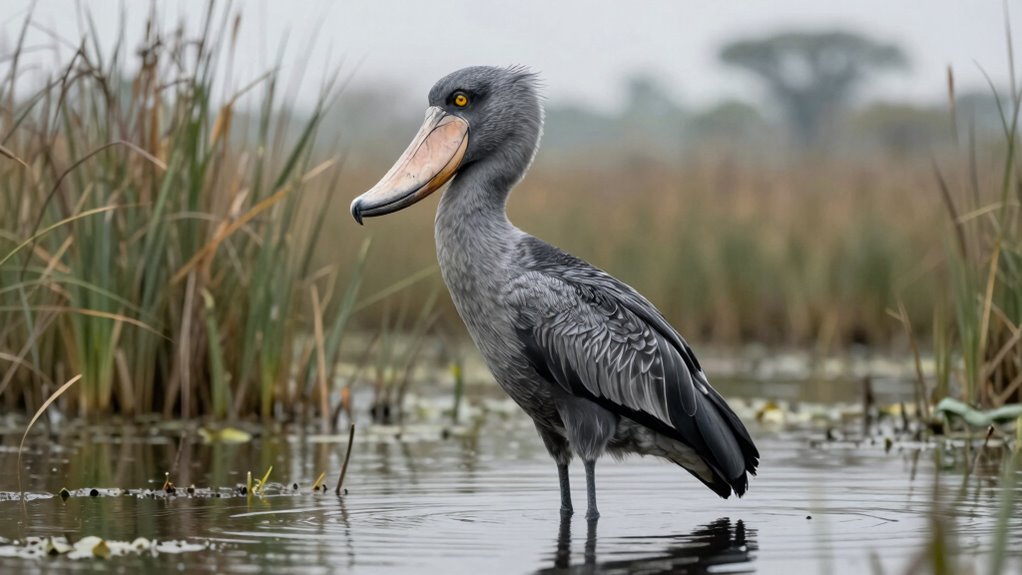

You’ll see that the shoebill’s strange appearance and behaviors come from its unique adaptations to life in Africa’s wetlands. Its massive, shoe-shaped bill helps it catch large prey, while its long legs allow it to wade silently through shallow waters. The bird’s patient hunting style and dense habitat offer it survival advantages. These features, shaped by evolution, truly make the shoebill stand out. To discover more about this fascinating bird, keep exploring its story.

Get pet supplies delivered free with Prime
- Fast, free delivery on millions of items
- Prime Video, Amazon Music and more included
- Member-only deals all year
Key Takeaways
- Its unique shoe-shaped bill evolved for specialized hunting in murky wetlands.
- Long legs and stillness adapt it for efficient stalking in dense marshes.
- Its striking appearance and behaviors distinguish it from other African birds.
- Habitat specialization in swampy wetlands shaped its morphological and behavioral traits.
- Evolutionary adaptations made the shoebill a niche predator with a distinctive look.

The shoebill is one of Africa’s most bizarre and enthralling birds, instantly recognizable by its massive, shoe-shaped bill. When you observe this bird, you’re struck by its unusual stance and deliberate movements. Its bird behavior is quite fascinating; it often stands motionless for long periods, patiently waiting for prey to come within striking distance. This hunting style showcases its patience and precision, setting it apart from many other birds. Instead of flitting about, the shoebill prefers to remain still, scanning the water for movement, then striking with incredible speed. Its sharp, powerful bill is perfectly adapted to catch large fish, frogs, and even small crocodiles, highlighting its role as a top predator in its habitat. This specialized feeding strategy is a prime example of adaptations for survival that have evolved over time.
You’ll notice that the shoebill’s habitat is closely tied to its unique behavior. It thrives in swampy, marshy wetlands, where calm waters and dense vegetation provide both cover and abundant food sources. These environments suit its preference for stalking prey quietly, blending seamlessly into the surrounding reeds and water lilies. Over time, the bird has adapted remarkably well to this habitat, developing long legs that allow it to wade through shallow waters with ease. Its large, broad bill acts as both a fishing tool and a means of intimidation, often deterring potential competitors or predators. This habitat adaptation enables the shoebill to hunt efficiently, even in murky waters where visibility is limited. Its ability to remain still and patient is further enhanced by its specialized habitat, which offers the perfect conditions for stalking prey. Interestingly, the bird’s distinctive appearance makes it easily recognizable and adds to its intriguing nature. Its large size and striking features also serve as a form of visual communication within its environment. Moreover, the shoebill’s unique hunting techniques exemplify how it has become a master of patience and precision.
The bird’s behavior and habitat adaptation are intertwined, creating a perfect survival strategy. Its stillness and patience in hunting are complemented by its environment, which offers ample cover and food. Its tall stature and powerful bill allow it to exploit prey that other birds might overlook, giving it a competitive edge in its wetland homes. Over generations, this combination of traits has solidified the shoebill’s reputation as one of Africa’s most extraordinary birds. Its peculiar appearance, combined with its specialized behaviors and habitat, has helped it survive in a niche where few others can thrive. You might say the shoebill’s oddity is a testament to how evolution molds creatures into perfect fits for their environment, making it truly one of Africa’s strangest and most captivating avian wonders.
As an affiliate, we earn on qualifying purchases.
Frequently Asked Questions
What Is the Lifespan of a Shoebill in the Wild?
In the wild, you can expect a shoebill to live around 35 years. Its migration patterns are limited, mostly staying in wetlands year-round, which influences its lifespan. Shoebill nesting behaviors, like building large nests and caring for young, help guarantee survival. These birds’ unique habits and environment contribute to their longevity. Protecting their habitat and understanding their nesting and migration habits are key to helping them thrive in the wild.
How Do Shoebills Communicate With Each Other?
Think of their communication as a dance of shadows and sounds. You’ll notice shoebills use vocalizations like grunts, bill claps, and bill snaps to share messages, especially during breeding season. Their behavior includes upright postures and visual signals like spreading wings or stretching necks, which help them communicate dominance or alert others. This combination of vocal and visual cues creates a silent yet expressive language in their wetland world.
Are Shoebills Dangerous to Humans?
Shoebills aren’t generally dangerous to humans, but their size and powerful beak can cause injury if they feel threatened. During bird migration or nest building, they’re focused on their tasks and unlikely to attack. It’s best to keep a respectful distance, avoid disturbing their nests, and observe their behavior calmly. Remember, respecting their space helps guarantee safe coexistence and preserves their natural habitat.
What Unique Hunting Strategies Do Shoebills Use?
Shoebills use unique feeding techniques and hunting adaptations to catch prey. You’ll see them stand still for long periods, patiently waiting for fish or small animals to approach. When a target gets close, they strike swiftly with their large, shoe-shaped bill, acting like a trap. Their sharp eyesight and stillness make them efficient hunters, blending into their environment and surprising prey with their powerful, precise strikes.
How Do Environmental Changes Impact Shoebill Populations?
Environmental changes like habitat loss and climate change threaten shoebill populations considerably. When wetlands dry up or shrink due to these factors, you’ll find it harder to spot these birds, as they rely on specific swampy habitats. Rising temperatures and unpredictable weather patterns disrupt their breeding and feeding routines, making survival more difficult. To protect shoebills, you need to support conservation efforts that address habitat preservation and combat climate change impacts.
Conclusion
You’ve just seen how the shoebill’s unique features make it one of Africa’s most fascinating birds. Its giant bill, eerie stare, and mysterious habitat set it apart from other birds. Isn’t it incredible how nature creates such oddities? As you marvel at its strange beauty, remember that the shoebill reminds us how wonderfully weird and diverse life on Earth truly is. Wouldn’t you love to see this extraordinary bird in the wild someday?
Halloween Picks
halloween
As an affiliate, we earn on qualifying purchases.