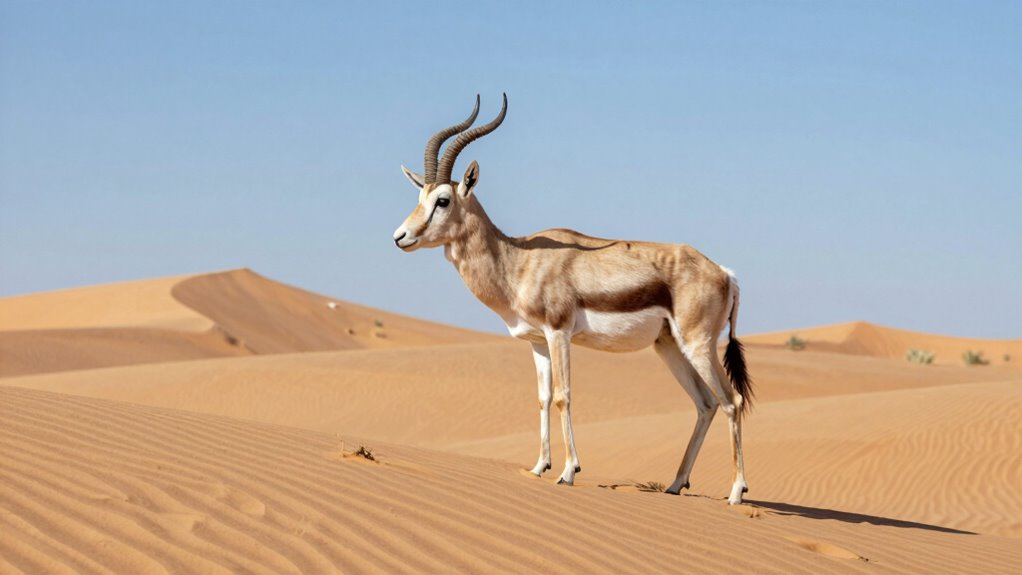

The Addax is a critically endangered desert antelope facing threats from habitat loss and illegal hunting in North Africa’s harsh sands. Its pale coat helps reflect the sun, while broad hooves allow it to move across shifting dunes. Conservation efforts focus on protecting its remaining habitats and fighting illegal activities that threaten its survival. If you want to learn how efforts to save this majestic species are making a difference, keep going to discover more.

Get pet supplies delivered free with Prime
- Fast, free delivery on millions of items
- Prime Video, Amazon Music and more included
- Member-only deals all year
Key Takeaways
- The Addax is critically endangered due to habitat loss and illegal hunting in North African deserts.
- Its pale coat and broad hooves are specialized adaptations for surviving extreme desert conditions.
- Conservation efforts focus on habitat preservation, protected reserves, and raising awareness to prevent extinction.
- Human activities like overgrazing and land development threaten its remaining populations.
- Public support and policy changes are essential to ensure the species’ survival and ecological balance.

Have you ever wondered what it’s like to survive in one of the harshest environments on Earth? The Addax, also known as the white antelope, lives in the scorching, arid deserts of North Africa. Its survival depends heavily on habitat conservation efforts that protect the fragile ecosystem it calls home. Sadly, this magnificent creature is rapidly slipping toward extinction, making it one of the world’s most critically endangered species.
You might be surprised how well the Addax has adapted to such extreme conditions. Its pale, almost white coat reflects the sun’s rays, helping it stay cool, while its broad hooves distribute its weight on shifting desert sands. Despite these remarkable adaptations, the Addax’s habitat is shrinking due to human activities like overgrazing, illegal hunting, and land development. These threats threaten not only the species but also the delicate balance of the desert ecosystem. Conservationists recognize the importance of habitat preservation, knowing that protecting the Addax’s environment is crucial for its survival. They work hard to establish protected areas and restore degraded lands, hoping to create safe havens where these antelopes can thrive. Habitat preservation plays a vital role in ensuring the long-term survival of the Addax and similar species.
As an endangered species, the Addax faces constant dangers from poaching and habitat loss. Its rarity makes it a target for illegal hunters who prize its hide and horns. Without effective habitat conservation, the remaining populations could vanish altogether. The fight to save the Addax isn’t just about one species—it’s about maintaining biodiversity and ecological resilience in these fragile desert landscapes. Protecting the Addax’s habitat involves understanding the impact of habitat destruction, which is often driven by human activities. Every effort counts, from funding protected reserves to raising awareness about the importance of conserving endangered species like the Addax. These measures help ensure that future generations can still witness this extraordinary creature roaming the sands.
You play a role in this conservation story. Supporting organizations dedicated to habitat conservation helps provide the resources needed to protect the Addax and its environment. By understanding the threats it faces, you can help advocate for policies that curb illegal hunting and promote sustainable land use. Protecting the Addax is more than just saving a single species; it’s about safeguarding an entire ecosystem that supports countless other plants and animals. Additionally, understanding the adaptations that enable the Addax to survive in such harsh conditions emphasizes the importance of preserving its natural habitat. If we act now, we have a chance to reverse the decline of this incredible desert antelope and preserve its place in the wild. The Addax’s story reminds us that even in the harshest environments, life finds a way—but only if we commit to protecting its habitat and helping endangered species like the Addax survive.
desert antelope conservation book
As an affiliate, we earn on qualifying purchases.
As an affiliate, we earn on qualifying purchases.
Frequently Asked Questions
What Is the Average Lifespan of an Addax in the Wild?
In the wild, you’ll find that an addax’s average lifespan is around 10 to 15 years. Their desert adaptations, like their ability to conserve water and withstand extreme heat, help them survive harsh conditions. You’ll notice their unique antelope behavior, such as nocturnal activity, which reduces heat exposure during the day. These adaptations and behaviors are essential for their survival in the challenging desert environment.
How Do Addaxes Find Water in the Desert?
You might think addaxes just wander the desert thirsting endlessly, but they actually excel at water conservation. They find water by grazing on plants that store moisture and by extracting dew from sparse vegetation. Their incredible desert survival skills let them survive long periods without direct water, turning their environment’s scarcity into an advantage. Ironically, their ability to thrive in such harsh conditions makes them masters of desert survival.
Are Addaxes Affected by Climate Change?
Yes, climate impact affects addaxes markedly. Rising temperatures and changing rainfall patterns threaten their desert habitat, making water and food sources scarcer. You can help with addax conservation efforts by supporting organizations working to protect their environment and combat climate change. These actions are essential to guarantee the survival of addaxes, whose delicate balance with the desert ecosystem makes them especially vulnerable to the effects of climate change.
What Are the Main Predators of Addaxes?
Ever wonder what threatens the elusive addax? Lions and hyenas are their main predators, especially at night when they hunt in the desert shadows. During addax conservation efforts, understanding desert predator adaptations helps protect this fragile species. You can imagine how these predators’ keen senses and stealth tactics challenge the addax’s survival. Recognizing these threats is essential for ensuring the addax’s continued existence in its harsh habitat.
How Do Addaxes Communicate With Each Other?
You might notice that addaxes communicate through desert vocalizations and antelope scent markings. They produce low grunts, snorts, or whistles to signal alarm or establish territory. Additionally, they use scent markings on the ground to mark their presence and boundaries, helping them recognize each other over vast desert areas. This combination of vocalizations and scent markings guarantees they stay connected and alert in their harsh, arid environment.
Conclusion
You might think the addax’s struggles are just about survival, but they remind you of resilience in the face of adversity. Even in harsh deserts, this antelope endures, symbolizing strength and adaptability. Protecting the addax isn’t just about saving a species; it’s about safeguarding a fragile balance in our ecosystems. By acting now, you guarantee that this remarkable creature continues to inspire and remind us of nature’s incredible resilience.
Halloween Picks
halloween
As an affiliate, we earn on qualifying purchases.