When you think of the albatross, picture a bird with a stunning wingspan of up to 12 feet, gliding effortlessly over the ocean. These incredible creatures master the winds and migrate thousands of miles without landing, using their keen navigational skills. They feed on fish and squid, skimming the water’s surface with agility. With their resilience and connection to the wild, albatrosses embody freedom and adventure. Discover more about their majestic journey and survival strategies.
Key Takeaways
- Albatrosses possess an impressive wingspan, allowing them to glide effortlessly across vast ocean distances.
- They masterfully utilize wind currents and thermals to travel thousands of miles without landing.
- Their innate navigational skills help them adapt to changing weather and find efficient migratory paths.
- Albatrosses rely on environmental cues and memory to steer their journeys across oceans.
- These birds symbolize freedom and resilience, showcasing the enduring bond between wildlife and the sea.
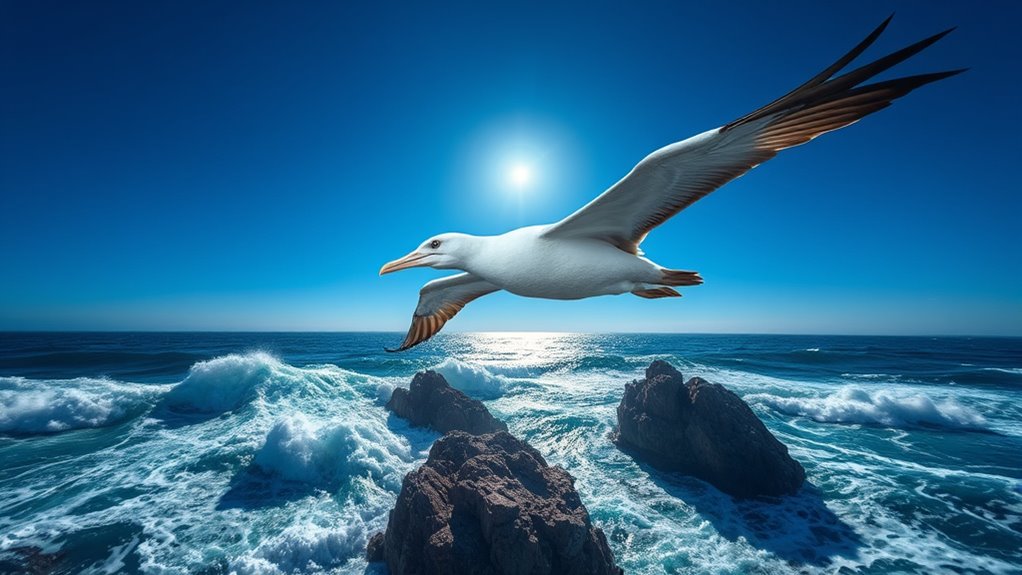
The albatross, with its impressive wingspan and effortless grace, embodies the spirit of the open ocean. You can’t help but marvel at how this majestic bird rides the wind, almost as if it’s playing a game with the elements. With wings that can stretch up to 12 feet, the albatross is equipped for long-distance travel. When you see one soaring high above the waves, you realize it’s not just flying; it’s gliding, using thermals and wind currents to cover vast distances with minimal effort.
These magnificent creatures are known for their incredible migration routes. You might be surprised to learn that some species can traverse thousands of miles without landing. Their journey often takes them across entire oceans, from breeding grounds in remote islands to feeding areas in nutrient-rich waters. As you observe their flight patterns, you’ll notice how they seem to steer with an innate understanding of the wind, always choosing the most efficient path. This instinctual knowledge is vital for survival, allowing them to find food and avoid predators.
Witness the albatross as it navigates vast oceans, mastering the winds and embracing a journey of survival and adventure.
When you think about the challenges they face during these migrations, it’s quite impressive. Weather changes can be sudden and severe, yet the albatross adapts seamlessly. You might wonder how they manage to find their way over such great distances. Researchers believe they utilize a combination of environmental cues, such as the position of the sun and the patterns of ocean currents, along with their own memory of previous journeys.
Their diet mainly consists of fish and squid, which they catch while skimming the surface of the water. You can visualize them deftly dipping their beaks into the sea, showcasing their agility despite their size. This feeding technique is another reason why their migration routes are so essential; they need to reach areas where food is abundant. Additionally, the albatross’s feeding habits highlight the importance of nutrient-rich waters, which are crucial for their survival during long migrations.
As you explore the life of the albatross, you’ll come to appreciate not just their physical attributes but also their remarkable resilience. They represent the wild, untamed beauty of nature, effortlessly steering the vast expanse of the ocean. The albatross isn’t merely a bird; it’s a symbol of freedom, endurance, and the unbreakable bond between life and the sea. You’ll find yourself inspired by their journey, reminding you of the endless possibilities that await those who dare to embrace the winds of adventure.
Top picks for "albatros master wind"
Open Amazon search results for this keyword.
As an affiliate, we earn on qualifying purchases.
Frequently Asked Questions
What Is the Lifespan of an Albatross?
An albatross can live for over 50 years, showcasing impressive albatross longevity. Their lifespan is influenced by various factors, such as environmental conditions, food availability, and predation. When you consider these elements, it’s clear that a stable habitat helps them thrive. In fact, some species, like the wandering albatross, are known for their remarkable long lives. So, protecting their environment is vital to ensuring they continue to soar for decades.
How Do Albatrosses Find Their Mates?
Albatrosses soar gracefully above the ocean, their wings gliding effortlessly. During courtship displays, you’ll see them engage in elaborate dances, showcasing their beauty and agility. They’ll preen, call, and perform synchronized movements, engrossing potential mates. This ritual is essential for mate selection, as it strengthens bonds and ensures compatibility. You can almost feel the energy in the air as they circle each other, solidifying their lifelong partnership amidst the vast, open sky.
Do Albatrosses Migrate?
Yes, albatrosses do migrate, covering vast distances across oceans. Their incredible flight mechanics allow them to glide effortlessly on wind currents, conserving energy during long journeys. You’ll find them traveling thousands of miles between feeding and breeding grounds. Conservation efforts are vital to protect their habitats and guarantee their survival. By supporting these initiatives, you help maintain the balance of marine ecosystems that these magnificent birds rely on for their migratory patterns.
What Do Albatrosses Eat?
Albatrosses feast like gourmet chefs at a lavish buffet, primarily dining on fish, squid, and crustaceans. Their feeding habits are fascinating; they often glide effortlessly above the ocean, using their keen eyesight to spot prey. When they spot a meal, they employ impressive hunting techniques, including diving and surface seizing. You’ll find them scavenging behind fishing boats, taking advantage of the rich leftovers from human activities, showcasing their adaptability in the wild.
How Do Albatrosses Care for Their Young?
Albatrosses care for their young with dedicated nest building strategies and attentive parental feeding habits. You’ll notice they choose remote, safe locations for their nests, often using grass and other materials to create a sturdy structure. Once the eggs hatch, both parents take turns feeding the chick with regurgitated food. This nurturing bond lasts until the young albatross can fly, showcasing the commitment and care these birds provide to their offspring.
Conclusion
In the grand scheme of nature, albatrosses truly soar above the rest. Their remarkable ability to glide for miles without flapping their wings is nothing short of a marvel. You’ve seen how these birds dance with the winds, effortlessly steering through the vast oceans. So next time you spot one, remember: they’re not just flying; they’re living proof that sometimes, you have to go with the flow to master the skies. Embrace your own winds and let your spirit soar!