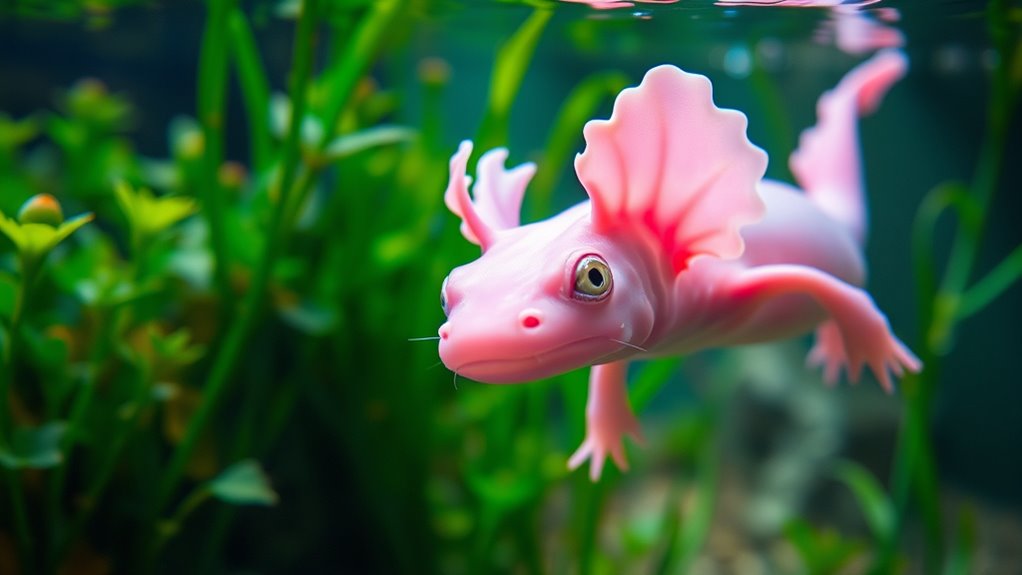

The axolotl is a unique salamander famous for its striking appearance and remarkable ability to regenerate limbs, organs, and even parts of its heart and brain. Native to Mexico City’s canals, this fascinating creature captivates scientists and enthusiasts alike. However, urbanization and pollution threaten its survival, pushing it closer to extinction. With its incredible regenerative capabilities, the axolotl could open breakthroughs in medical science. Discover more about its significance and conservation efforts that aim to protect this incredible species.
Key Takeaways
- The axolotl is a unique salamander known for its striking appearance and remarkable regenerative abilities, including limb and organ regeneration.
- Native to the canals of Mexico City, the axolotl is critically endangered due to habitat destruction and pollution.
- Its regenerative capabilities offer valuable insights for scientific research, potentially aiding in advancements for healing human injuries.
- Ethical considerations arise when studying axolotls, particularly regarding genetic manipulation and the balance between conservation and research.
- Preservation efforts, including habitat restoration and captive breeding programs, are essential for the survival of this fascinating species.
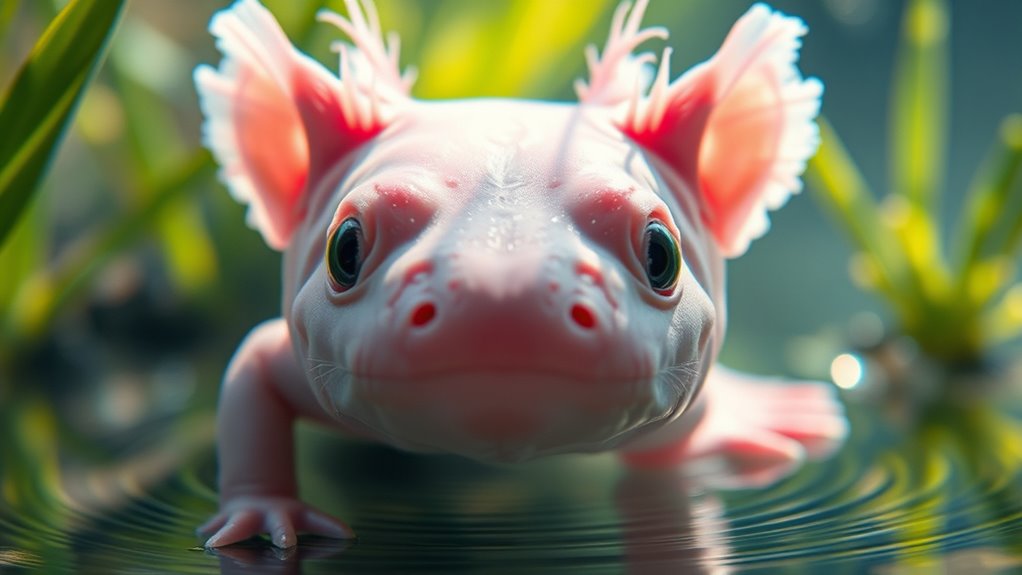
Have you ever encountered a creature that seems to defy the rules of nature? The axolotl, a fascinating salamander, is one such being. With its striking appearance and remarkable regenerative abilities, it captures the imagination of scientists and enthusiasts alike. Native to the canals of Mexico City, this unique amphibian has gained attention not only for its looks but also for its potential contributions to science. You might be surprised to learn that the axolotl can regenerate lost limbs, tail, and even parts of its heart and brain. This extraordinary ability raises questions about genetic modification and how it applies to medical research.
The axolotl captivates with its unique beauty and astonishing regenerative powers, offering insights into the potential of medical science.
As you explore more about the world of axolotls, it becomes clear that their survival is threatened. Habitat destruction due to urbanization and pollution has pushed this species toward the brink of extinction. Understanding the significance of cultural sensitivity becomes vital when you consider the unique genetic makeup of these creatures. Their regenerative capabilities could hold the key to advances in regenerative medicine, but only if they continue to thrive in their natural environment. Without adequate efforts to protect their habitat, we risk losing not just a species, but also the potential breakthroughs that come from studying them.
When you think about genetic modification, the axolotl presents an intriguing case. Researchers are studying its genes to uncover the secrets behind its regenerative prowess. The insights gained could pave the way for innovative treatments for human injuries and diseases. Imagine a future where we can harness the axolotl’s unique biology to heal human tissue or even restore lost limbs. However, this raises ethical questions about the extent to which we should manipulate nature for our benefit. As you reflect on these issues, it’s vital to recognize that responsible research and conservation efforts must go hand in hand.
In your quest to learn more about the axolotl, you’ll discover that preservation efforts are underway. Organizations are working tirelessly to restore their natural habitats and maintain captive breeding programs. By supporting these initiatives, you can play a role in ensuring that this captivating species survives for generations to come. The axolotl isn’t just a symbol of nature’s wonders; it’s a profound example of the interconnectedness of life and the responsibility we share in safeguarding our planet. Through your awareness and action, you can help preserve the axolotl and the remarkable secrets it holds.
Frequently Asked Questions
Can Axolotls Be Kept as Pets in Home Aquariums?
Yes, axolotls can be kept as pets in home aquariums! You’ll need to make certain they have a suitable habitat with cool water, hiding spots, and minimal flow. Their breeding behavior is unique, so if you plan to breed them, be prepared for specific tank conditions and care. Remember, they’re sensitive to water quality, so regular maintenance is vital. With the right setup, axolotls can thrive and be fascinating companions!
What Do Axolotls Eat in Captivity?
When it comes to feeding axolotls, you’ll want to put your best foot forward. They thrive on a varied diet that includes high-quality pellets, live or frozen worms, and small fish. Their dietary requirements are vital for their health, so keep an eye on their feeding habits. Offering a mix ensures they get the essential nutrients they need to grow strong and vibrant. Happy feeding!
How Long Do Axolotls Typically Live?
Axolotls typically live around 10 to 15 years in captivity, but lifespan variations can occur based on several longevity factors. If you provide them with a stable environment, proper diet, and regular care, you can help extend their lifespan. Stress, water quality, and genetics also play a role in how long they thrive. So, it’s important to keep their habitat clean and monitor their health to ensure they live a long, happy life.
Are Axolotls Endangered in the Wild?
Yes, axolotls are endangered in the wild. Their populations have drastically declined due to habitat destruction and pollution in their native lakes. You’ll find that conservation efforts are underway to protect these unique creatures, focusing on restoring their natural environment and breeding programs. It’s vital to support these initiatives, as every action helps preserve their existence. By raising awareness, you can contribute to the survival of axolotls and their habitat.
What Is the Ideal Water Temperature for Axolotls?
Think of your axolotl like a delicate flower that thrives in the right climate. The ideal water temperature for axolotls is between 60°F and 68°F (16°C to 20°C). Keeping the water within this range not only promotes their health maintenance but also prevents stress. If it gets too warm, they can become lethargic or develop health issues. So, keep an eye on that thermometer to make sure your aquatic friend blooms beautifully!
Conclusion
In conclusion, the axolotl is a remarkable creature that showcases nature’s incredible ability to regenerate. Did you know that these fascinating salamanders can regrow lost limbs and even parts of their heart and brain? With the ability to replace up to 1,000 different types of cells, they inspire scientists in the quest for medical advancements in regeneration. So, the next time you think about resilience, remember the axolotl – a true marvel of the animal kingdom!