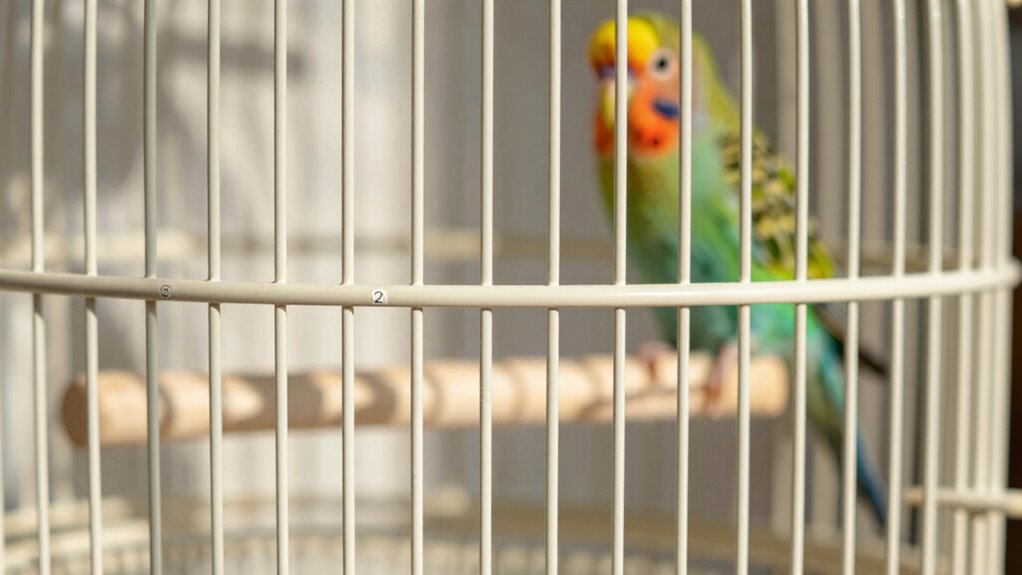

To keep your bird safe, make certain the cage bars are spaced correctly for their size. Small birds need narrow gaps to prevent escape or injury, while larger birds require wider spacing but still avoid head or wing entrapment. Measure carefully at several points and check for damage or unevenness regularly. Proper spacing prevents stress, injuries, and escapes. Keep your bird secure by following these guidelines—more details will help you choose the best cage for your feathered friend.
Key Takeaways
- Proper bar spacing prevents small birds from escaping or getting stuck, ensuring safety.
- Measure the widest point between bars to determine appropriate spacing for different bird sizes.
- Regularly inspect cage bars for stability, rust, or damage to maintain safety standards.
- Use size-specific bar spacing guidelines: narrow for small birds, wider for large parrots.
- Correct spacing reduces injury risk and feather damage, promoting a stress-free environment.
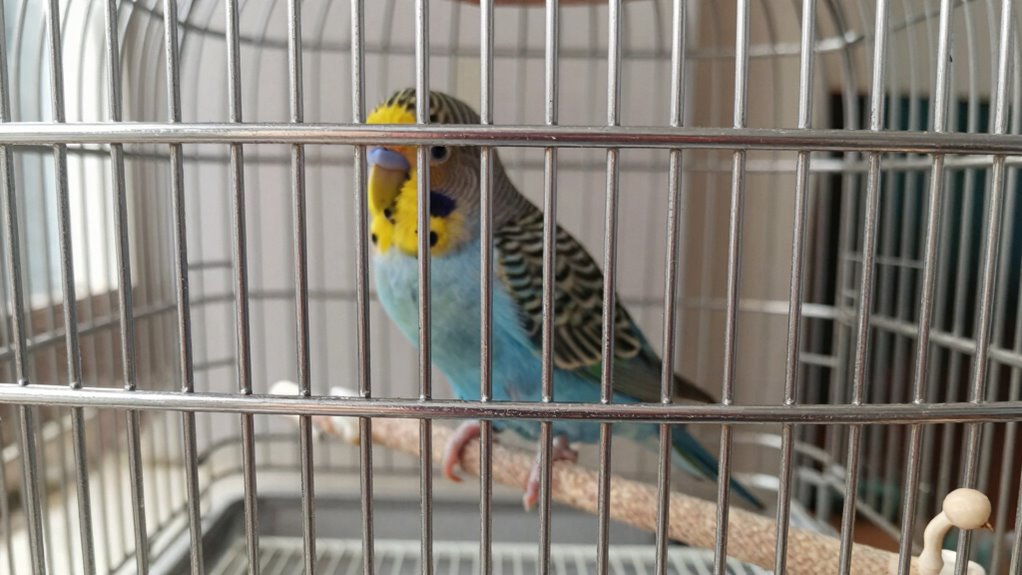
small bird cage with narrow bar spacing
As an affiliate, we earn on qualifying purchases.
As an affiliate, we earn on qualifying purchases.
Why Proper Cage Bar Spacing Is Critical for Bird Safety
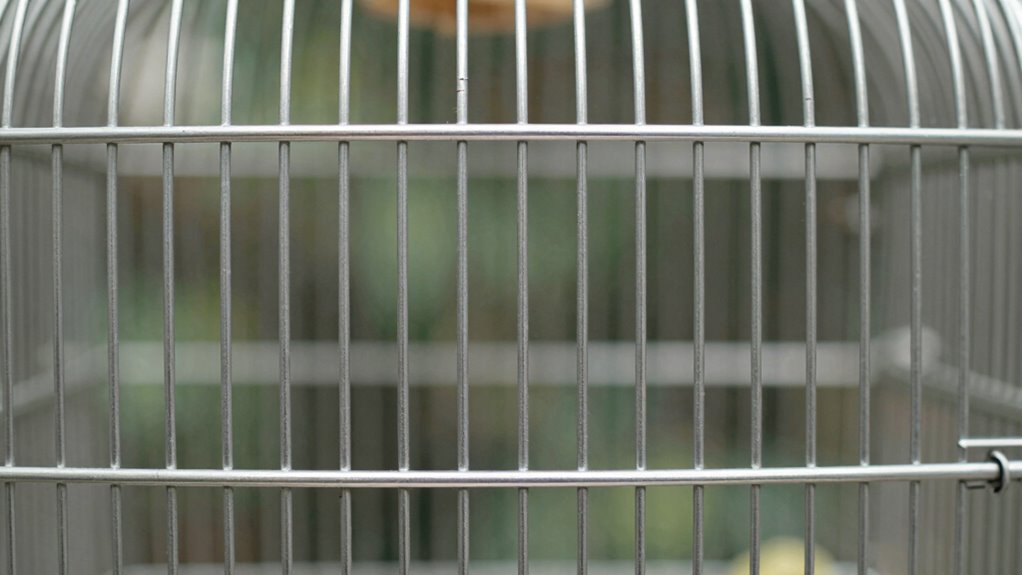
Proper cage bar spacing is crucial to guarantee your bird’s safety. If the bars are too wide, your bird might squeeze through or get stuck, risking injury. Conversely, bars that are too close can restrict movement and cause stress, affecting feather health. Maintaining the right spacing ensures your bird can move comfortably without risking escape or injury. Ensuring this balance improves overall cage design and functionality. It also enhances cage aesthetics by providing a clean, organized look. Well-spaced bars contribute to a safe environment where your bird feels secure and comfortable. Remember, the right bar spacing balances safety, comfort, and visual appeal, making your pet’s space both functional and attractive. Prioritize proper spacing to protect your bird’s health and keep your cage looking great. Additionally, choosing the appropriate bar spacing is essential for accommodating different bird sizes and ensuring long-term safety, as proper cage design supports overall health and wellbeing.
How Bar Spacing Differs for Small, Medium, and Large Birds
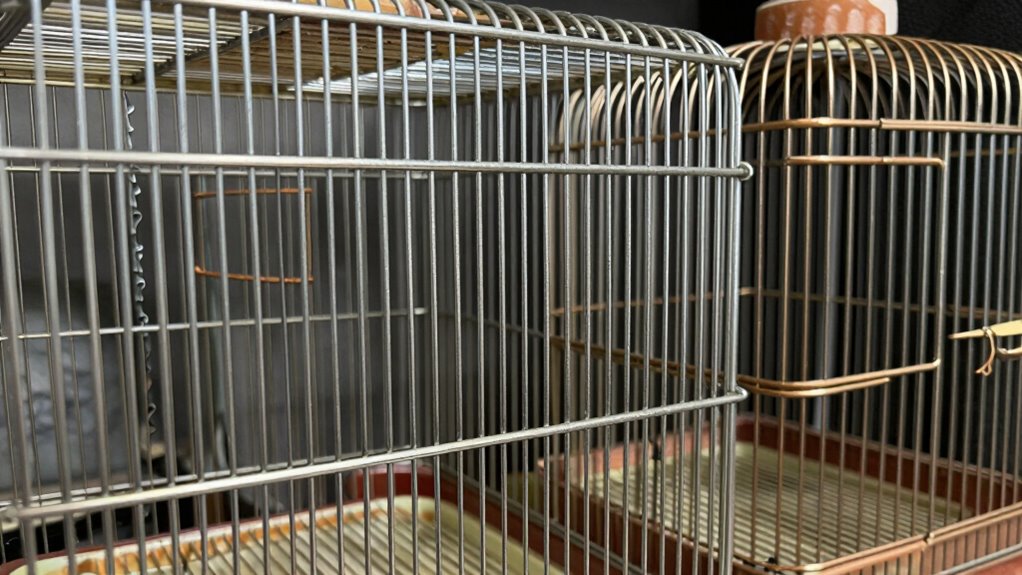
Different bird sizes require different cage bar spacings to keep them safe and comfortable. Small birds, like finches or canaries, need narrow bar spacing to prevent escape and protect their delicate feathers from damage. Medium-sized birds, such as conures or cockatiels, benefit from moderate spacing that balances safety with cage aesthetics. Large birds like parrots require wider bars but must still prevent their head or wings from getting stuck, which can impact feather health. Proper bar spacing guarantees your bird’s feathers stay intact and healthy, avoiding stress or injury. Additionally, choosing appropriate spacing enhances cage aesthetics by maintaining a clean, uncluttered look that complements your home decor while prioritizing your bird’s safety. Ensuring the correct bar spacing also helps promote natural behaviors and reduces stress for your pet. For optimal health and well-being, consider the bird’s size and activity level when selecting cage bars.
Determining the Correct Bar Spacing for Your Bird’s Size
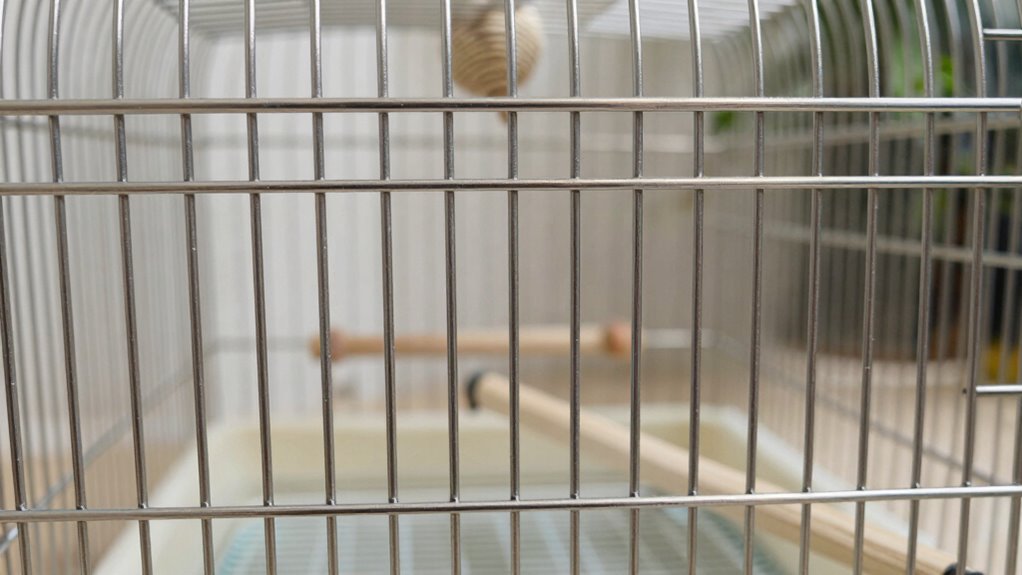
Choosing the right bar spacing depends on your bird’s size to keep it safe and comfortable. If the bars are too wide, your bird could escape or get stuck; if they’re too narrow, it might feel cramped. Assess your bird’s dimensions carefully to find the perfect balance that prevents escapes and guarantees its well-being. Incorporating balanced designs in the cage can help promote harmony and comfort for your bird.
Bird Size Considerations
When selecting a bird cage, it’s essential to match the bar spacing to your bird’s size to guarantee safety and comfort. Larger birds, like parrots, need wider spacing to prevent feather damage and promote feather health, while smaller birds require narrower gaps to avoid escaping or injury. Considering your bird’s size also helps maintain cage aesthetics, ensuring the design complements your space without compromising safety. If the bars are too tight, it can restrict airflow and make the cage look cluttered. Conversely, too wide a spacing risks injury or escape, especially for tiny or delicate birds. Always measure your bird’s body and be mindful of their natural behaviors when choosing bar spacing, giving them a safe, comfortable environment that supports their well-being. Proper cage design takes into account both safety and aesthetics, making it easier to care for your pet.
Appropriate Bar Spacing
To guarantee your bird’s safety and comfort, you need to determine the appropriate bar spacing based on their size. Smaller birds, like finches or canaries, require narrow spacing—typically around 1/4 to 1/2 inch—to prevent escape or getting stuck. Larger birds, such as cockatiels or conures, need wider spacing, usually 3/4 to 1 inch. Observe your bird’s feather coloration; vibrant feathers often indicate agility, so sizing must match their ability to navigate the cage safely. Additionally, consider perch materials; smooth, sturdy perches help keep your bird stable and comfortable, reducing the risk of injury from sharp or uneven bars. Proper bar spacing ensures your bird can move freely without danger, promoting a healthy, stress-free environment. Understanding cage design helps you create a safer habitat tailored to your bird’s needs. Incorporating knowledge about sound vibrations can also contribute to a calming environment for your pet. Recognizing the importance of Indigenous wellness principles can inspire natural, holistic approaches to creating a peaceful space for your bird, aligning with the importance of holistic health in fostering overall well-being. Additionally, paying attention to bar material safety ensures that your bird is protected from potential toxicity or damage.
Preventing Escape Risks
Ensuring the bar spacing matches your bird’s size is vital for preventing escapes. If the gaps are too wide, your bird might slip through or get stuck, risking injury or escape. Proper spacing also promotes feather hygiene by reducing the chance of feathers snagging or becoming damaged on sharp edges. When choosing a cage, consider how the bar spacing impacts cage aesthetics; a well-designed cage with appropriate gaps looks neater and feels more secure. Adjusting spacing for your bird’s size minimizes escape risks and maintains a clean, safe environment. Regularly check bars for stability and wear, ensuring no gaps widen over time. This attention keeps your bird safe, comfortable, and prevents unnecessary stress or loss.
Common Mistakes When Choosing Cage Bar Spacing: and How to Avoid Them
Choosing the wrong cage bar spacing can lead to accidents or injuries for your bird. Avoid this by selecting the correct spacing for your bird’s size and activity level. Common mistakes include choosing too wide or too narrow bars, which can cause escape or injury. Think of the cage like a grid:
| Small Bird | Large Bird |
|---|---|
| Too wide: risk of escape | Too narrow: restricted movement |
| Wrong paint colors: can hide damage | Improper cage accessories: unsafe corners |
| Inadequate spacing: injury risk | Overly tight bars: difficult cleaning |
| Ignoring bar durability | Using fragile paint or coatings |
Ensure your cage’s bar spacing suits your bird’s size, and avoid mixing incompatible paint colors or unsuitable accessories that compromise safety. Proper Indonesian decor masks can also serve as attractive accents that add cultural richness to your space, but always prioritize safety and suitability in cage design. Additionally, regularly inspecting the bar stability helps prevent unexpected breakage and potential injuries.
How to Measure and Verify Bar Spacing in Your Bird Cage
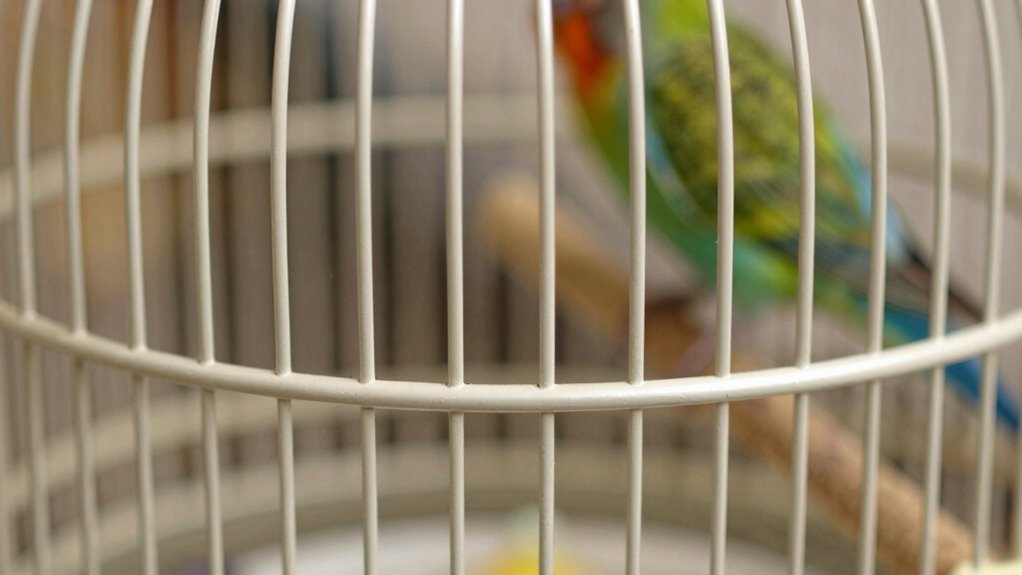
To guarantee your bird’s safety, you need to measure the bar spacing accurately. Use a ruler or caliper to check the gaps between the bars and confirm they meet safety standards. Verifying this helps you avoid potential escape routes or injuries for your feathered friend. Additionally, understanding deep-sky imaging techniques can be useful if you’re interested in capturing your bird’s environment at night. Incorporating smart home technology such as cameras can help monitor your bird remotely and ensure their safety around the clock. Proper cage maintenance also plays a key role in keeping your bird healthy and safe. Regular cage cleaning prevents the buildup of bacteria and debris that could harm your pet. Being aware of at-home safety measures can further prevent accidents and promote a secure environment for your pet.
Measuring Bar Spacing Accurately
Accurately measuring the bar spacing in your bird cage is essential for your bird’s safety and comfort. To do this, use a ruler or caliper to measure the distance between two adjacent bars at the widest point. Guarantee your measurements are precise, as even small gaps can pose risks. When checking, look for signs of material durability, such as rust or deformation, which can affect the cage’s safety over time. Maintaining consistent bar spacing also enhances cage aesthetics, giving it a neater, well-maintained appearance. Take multiple measurements to confirm accuracy, especially if the cage is slightly bent or uneven. Proper measurement ensures your cage meets safety standards and keeps your bird secure and comfortable. Measuring techniques play a crucial role in ensuring your cage remains safe over time. Additionally, understanding the bar spacing rule helps prevent accidental escapes or injuries, further emphasizing the importance of precise measurement. Regular inspection and maintenance of the cage are also vital to identify any wear or damage that could compromise safety.
Confirming Cage Compliance
Once you’ve measured the bar spacing, it’s important to verify that it complies with safety standards. Use a ruler or caliper to double-check the spacing at multiple points to guarantee consistency. Proper bar spacing prevents small birds from escaping and keeps larger birds safe from injury. Confirming cage compliance also involves inspecting for sharp edges or loose bars that could harm your bird. Regular cage cleaning promotes bird health, as accumulated debris can hide damage or misalignment. Remember, maintaining the right bar spacing supports good bird nutrition by reducing stress and injury risk, enabling your pet to eat and move comfortably. Conducting periodic cage inspections ensures your setup remains secure and safe for your bird. Consistent verification ensures your cage remains a safe environment, giving you peace of mind and your bird ideal protection. Additionally, understanding potential hazards like loose bars or sharp edges can further enhance safety. Staying informed about AI security threats can help you anticipate and prevent cyber risks to your digital environments.
Other Factors That Affect Cage Safety and Comfort
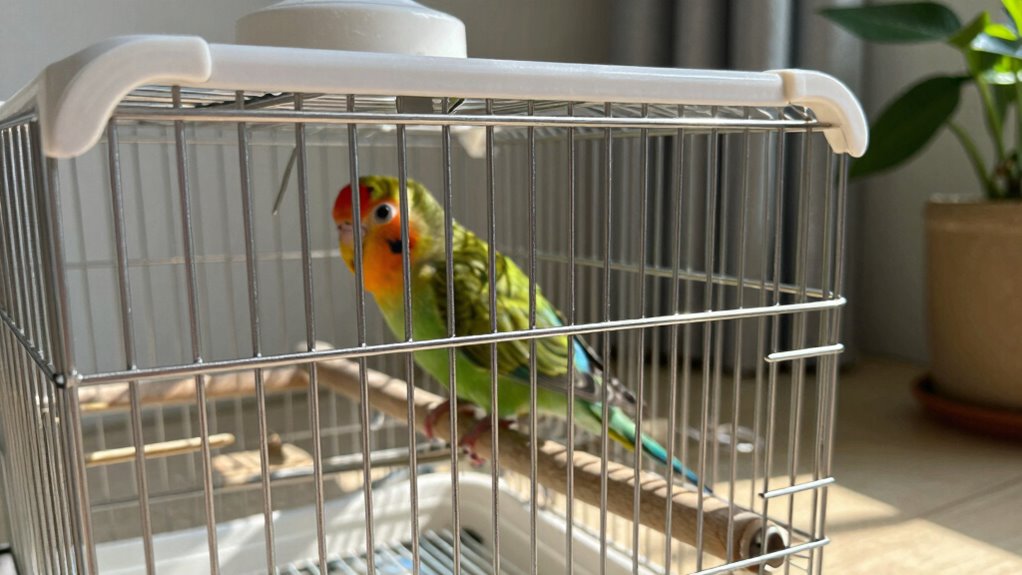
Various factors beyond cage size and design can influence your bird’s safety and comfort. First, guarantee your bird receives proper bird nutrition to keep it healthy and stress-free. Second, choose cage accessories that are safe, non-toxic, and appropriate for your bird’s size. Third, regularly inspect perches and toys for wear or damage that could cause injury. Fourth, maintain a clean environment, as a dirty cage can lead to infections and discomfort. These elements directly impact your bird’s wellbeing, making it essential to pay attention to both nutrition and cage accessories. By addressing these factors, you improve safety, reduce stress, and promote a happier, healthier life for your feathered friend.
Tips for Selecting the Best Cage for Your Bird’s Needs
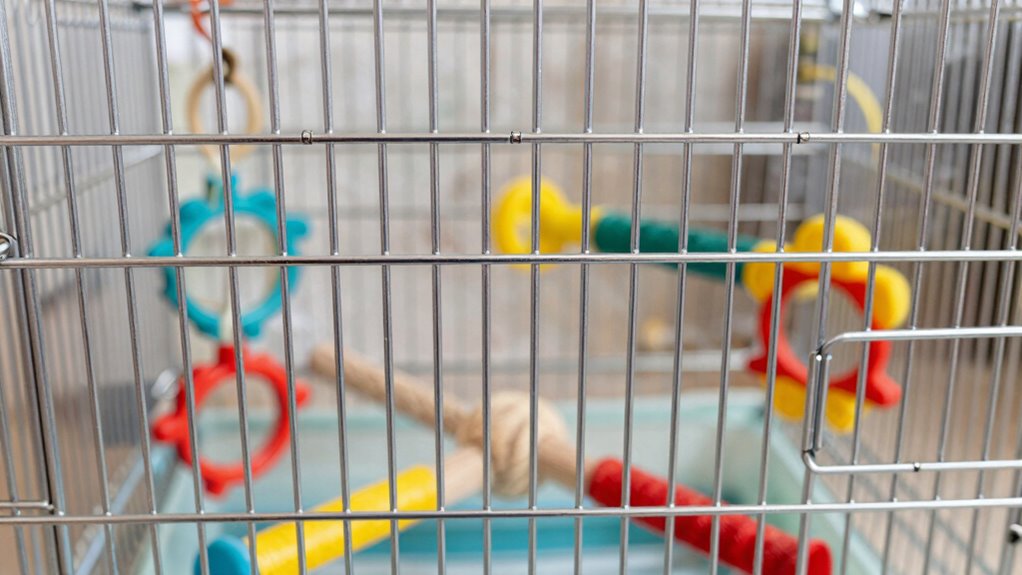
Choosing the right cage for your bird’s needs is essential to guarantee its safety and happiness. Consider cage size, bar spacing, and ease of cleaning to support good bird nutrition and hygiene. A spacious cage allows for varied activities and prevents stress. Proper bar spacing keeps your bird safe, especially for small or curious species. Easy-to-clean cages save time and promote better cage cleaning habits, which is crucial for health. Use the table below to compare key features:
| Feature | Importance | Tips |
|---|---|---|
| Size | Ensures comfort and activity | Choose a cage that permits flying or stretching |
| Bar Spacing | Prevents escapes or injuries | Match spacing to your bird’s size |
| Ease of Cleaning | Maintains hygiene | Opt for cages with removable trays or smooth surfaces |
What Are the Risks of Incorrect Bar Spacing: and How Can You Prevent Them?
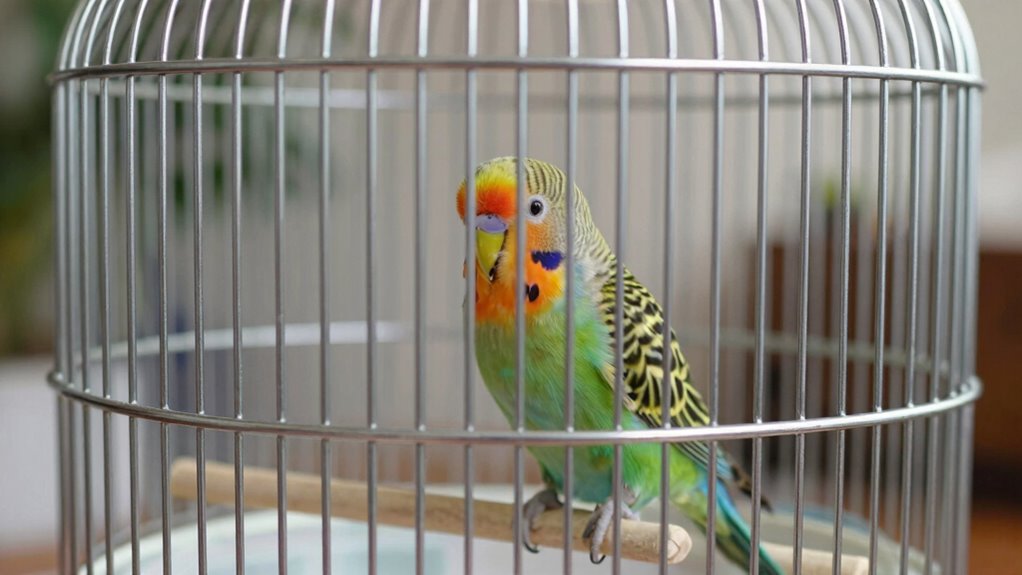
Incorrect bar spacing can pose serious risks to your bird’s safety and well-being. If the bars are too wide, your bird might squeeze through or get stuck, risking injury or escape. Conversely, bars that are too narrow can restrict movement, impacting bird health and causing stress. To prevent these issues, keep these points in mind:
Proper bar spacing prevents injuries and keeps your bird safe and healthy.
- Measure your bird’s size carefully before choosing a cage.
- Ensure bar spacing matches your bird’s beak and body size.
- Regularly inspect the cage for gaps or damage.
- Balance cage aesthetics with safety, avoiding overly ornate designs that compromise spacing.
Proper bar spacing safeguards your bird from injury and maintains good bird health. It also preserves the cage’s visual appeal without sacrificing safety.
Next Steps: What to Do If Your Cage Doesn’t Meet Spacing Standards
If you find that your cage’s bar spacing doesn’t meet safety standards, addressing the issue promptly is essential. First, assess whether the gaps are too wide, risking feather health and escape. You can narrow the spacing by adding vertical or horizontal dividers, or replacing the cage entirely. Keep in mind, a secure cage maintains both safety and aesthetics.
| Action | Consideration |
|---|---|
| Add cage dividers | Improves safety and cage look |
| Replace with a suitable cage | Ensures ideal feather health |
| Consult a pet store expert | For tailored solutions |
Taking quick action preserves your bird’s safety, feather health, and cage aesthetics.
Frequently Asked Questions
Can Bar Spacing Influence a Bird’s Ability to Exercise?
Yes, bar spacing can influence your bird’s ability to exercise. If the spacing is too wide, your bird might try to squeeze through, risking escape and reducing its perching comfort. On the other hand, properly spaced bars prevent escape and encourage safe movement within the cage. This guarantees your bird can stretch, hop, and exercise freely without feeling confined or risking injury from improper bar spacing.
How Does Cage Material Affect Bar Spacing Choices?
You should consider cage material because it impacts bar spacing choices considerably. For example, stainless steel offers high durability, ensuring the bars stay securely spaced, protecting your bird. Meanwhile, wrought iron may have a more aesthetic appeal but might require more maintenance to prevent rust, affecting spacing over time. Choosing the right material balances durability and appearance, helping you maintain safe, comfortable, and visually pleasing environments for your bird.
Are There International Standards for Bird Cage Bar Spacing?
Yes, there are international guidelines and safety standards for bird cage bar spacing. These standards help guarantee your bird’s safety by preventing escapes and injuries. Organizations like the World Organisation for Animal Health and various national agencies set recommended spacing based on bird size. You should always check these guidelines when choosing or designing a cage, as adhering to international safety standards protects your bird’s well-being and promotes responsible pet ownership.
How Often Should I Inspect Cage Bars for Safety?
You should inspect your cage bars weekly to guarantee safety. During cage cleaning, take the opportunity to check for loose or damaged bars that might harm your bird. Regular inspections help prevent injuries and maintain a secure environment. While doing so, also consider bird enrichment by ensuring the cage remains clean and stimulating. Address any issues promptly to keep your bird happy, healthy, and safe in their home.
Can Adjustable Cages Help Accommodate Different Bird Sizes?
Did you know that adjustable cages can markedly improve bird size compatibility? They offer flexible bar spacing, making it easier to accommodate different bird sizes safely. With cage flexibility, you can customize the environment to keep your bird comfortable and secure. This adaptability is especially helpful if you have multiple birds or if your bird grows. So, investing in an adjustable cage ensures your feathered friend stays safe and happy.
Conclusion
Now that you know the importance of proper bar spacing, the next step is ensuring your bird’s safety. But what if your cage falls short? Could hidden dangers be lurking? Stay vigilant, double-check the measurements, and don’t settle for less. Your bird’s well-being depends on it. The key to a safe, happy life for your feathered friend might just be one careful inspection away. Are you ready to make that vital change?