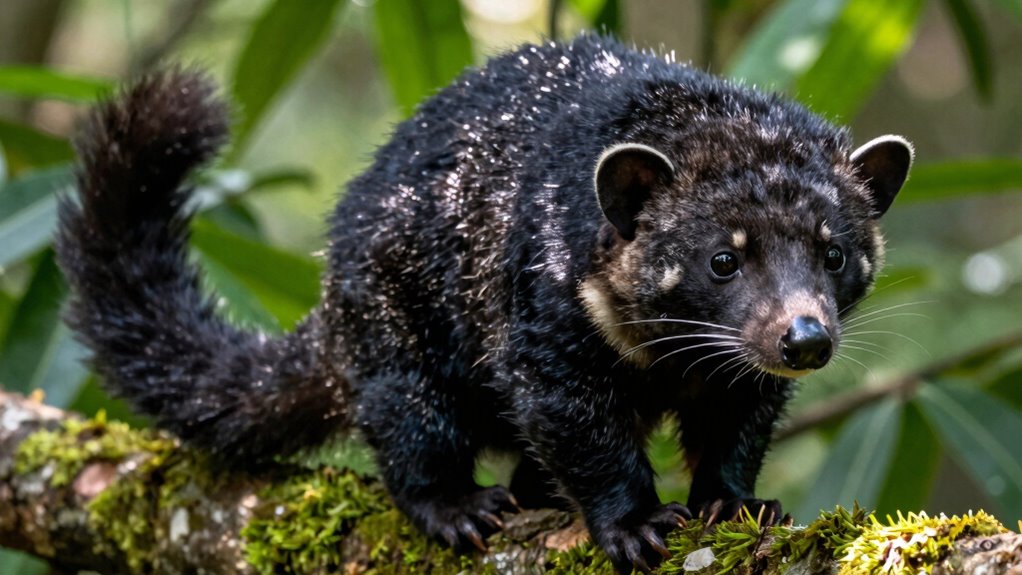

You’ll find that the binturong smells like popcorn because it produces a chemical called 2-AP in scent glands near its tail. This compound is released through scratching or touching, creating scent trails that serve as social signals. It helps mark territory, recognize mates, and avoid conflicts in dense forests. This fascinating adaptation plays a key role in their survival and communication. If you want to discover more about this unique scent and its purpose, keep exploring.

Get pet supplies delivered free with Prime
- Fast, free delivery on millions of items
- Prime Video, Amazon Music and more included
- Member-only deals all year
Key Takeaways
- The binturong produces the chemical compound 2-AP, which has a popcorn-like scent.
- This scent is generated by glands near the binturong’s tail for communication.
- 2-AP is also found in human foods like popcorn, bread, and coffee.
- The scent functions as a territorial marker and social recognition signal.
- It serves as an evolutionary adaptation for survival and reproductive success.
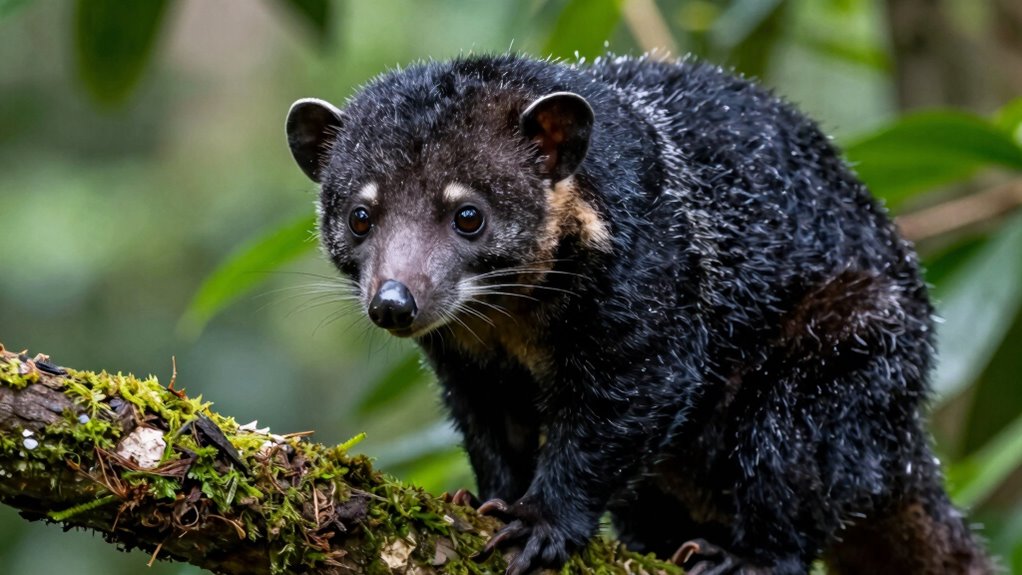
Ever wondered why the binturong, also known as the Asian bearcat, smells like freshly popped popcorn? It’s a question that often surprises people when they first encounter this unique creature. The answer lies in its distinctive Binturong scent, which is caused by a specific chemical compound. This scent isn’t just a random quirk; it serves an important evolutionary purpose. It acts as a form of communication, helping binturongs mark their territory and recognize each other from a distance.
The binturong’s popcorn scent is a vital communication tool for territory marking and social recognition.
When you consider the evolutionary purpose behind the popcorn-like smell, it becomes clear that it’s a survival adaptation. The scent signals to other binturongs that a territory is already claimed, reducing conflicts and establishing social bonds. This olfactory marker is especially useful in the dense forests of Southeast Asia, where visual cues can be obscured by thick foliage. The smell functions as a kind of identity badge, allowing binturongs to identify one another even in dark or crowded environments. Additionally, the chemical compound responsible for this aroma is quite complex, illustrating how specialized this scent production is for their survival needs. Understanding chemical communication helps shed light on how animals use scents for social interactions.
The chemical responsible for this unique aroma is called 2-AP, or 2-acetyl-1-pyrroline. This compound is also found in foods like popcorn, bread, and roasted coffee, which explains why the scent triggers such a familiar and appealing smell to humans. But for the binturong, it’s a natural, biological signal. The scent is produced in glands located near its tail, and it’s often transferred to objects the binturong touches or scratches. This creates a scent trail that others can follow or interpret, serving as a natural form of communication. The biological function of this scent extends beyond mere marking, influencing various aspects of their behavior. Interestingly, the glands near the tail actively secrete this scent, highlighting a specialized adaptation for communication and survival.
Interestingly, the popcorn smell isn’t just about territorial marking. It also plays a role in reproductive behaviors. Males and females recognize each other through this scent, helping them find mates during the breeding season. The evolutionary purpose of this smell, thus, extends across multiple aspects of the binturong’s life, from social interactions to reproduction.
In essence, what makes the binturong smell like popcorn isn’t just a quirky trait; it’s a crucial survival tool. It helps the animal navigate its environment, communicate with others, and reproduce successfully. That distinctive scent, often delightful to humans, is a sophisticated biological adaptation shaped by evolution to serve the needs of this remarkable creature. So next time you catch that popcorn aroma in the forest, remember it’s more than just a smell—it’s a crucial part of the binturong’s survival strategy.
As an affiliate, we earn on qualifying purchases.
Frequently Asked Questions
Do All Binturongs Produce the Popcorn Smell Naturally?
Yes, all binturongs naturally produce the popcorn scent, which is part of their unique Binturong odor. This smell plays a vital role in scent communication among them, helping to mark territory and identify individuals. The odor is most prominent when they are excited or alarmed. So, if you’re around a binturong, expect that distinctive popcorn smell as a natural part of their scent communication process.
Can Binturongs’ Scent Be Used or Exploited by Humans?
Yes, humans can potentially use binturongs’ scent for purposes like scent mimicry or behavioral signaling. You might explore replicating their popcorn-like smell for natural fragrances or communication tools. However, it’s essential to understand ethical considerations and avoid disrupting their natural behaviors. By studying their scent, you could develop innovative ways to mimic or utilize it, but always prioritize conservation and animal welfare in your endeavors.
How Long Does the Popcorn Smell Last on a Binturong?
Like a fleeting whisper of summer’s warmth, the popcorn scent on a binturong lasts for a few hours, fading with time. Its scent, a symbol of scent communication, is influenced by its diet and environment. As you observe, this aroma acts as a natural signal, helping binturongs communicate or mark territory. The scent’s temporary nature reminds you that nature’s signals are delicate, yet profoundly meaningful.
Is the Popcorn Smell Attractive to Predators or Prey?
The popcorn aroma from a binturong’s scent isn’t particularly attractive to predators or prey. Instead, it mainly serves as a scent marker, helping the binturong communicate with others or mark territory. You might think the popcorn smell would lure prey, but animals usually recognize it as a binturong’s unique scent. Predators may avoid it, sensing the distinctive popcorn aroma as a sign to stay away.
Are Binturongs the Only Animals With a Popcorn-Like Smell?
You might imagine a scent trail leading to a cozy snack shop—this coincidence captures the Binturong’s unique olfactory. Binturong scent, famous for its popcorn aroma, isn’t exclusive; some tree frogs and certain primates also emit similar smells, but the Binturong’s aroma remains distinctive. This rare olfactory trait helps you identify these fascinating creatures, highlighting nature’s quirky ways of communication and survival.
Conclusion
So, next time you catch that popcorn scent from a binturong, remember it’s not just a quirky trait—it’s a natural marvel. Unlike ordinary animals, this creature’s unique smell surprises you like a familiar snack in an exotic jungle. It’s a reminder that nature’s surprises often blend the unexpected—wild and warm, strange and comforting. In a world full of ordinary, the binturong’s popcorn aroma proves that nature’s quirks can be truly delightful.
Halloween Picks
halloween
As an affiliate, we earn on qualifying purchases.