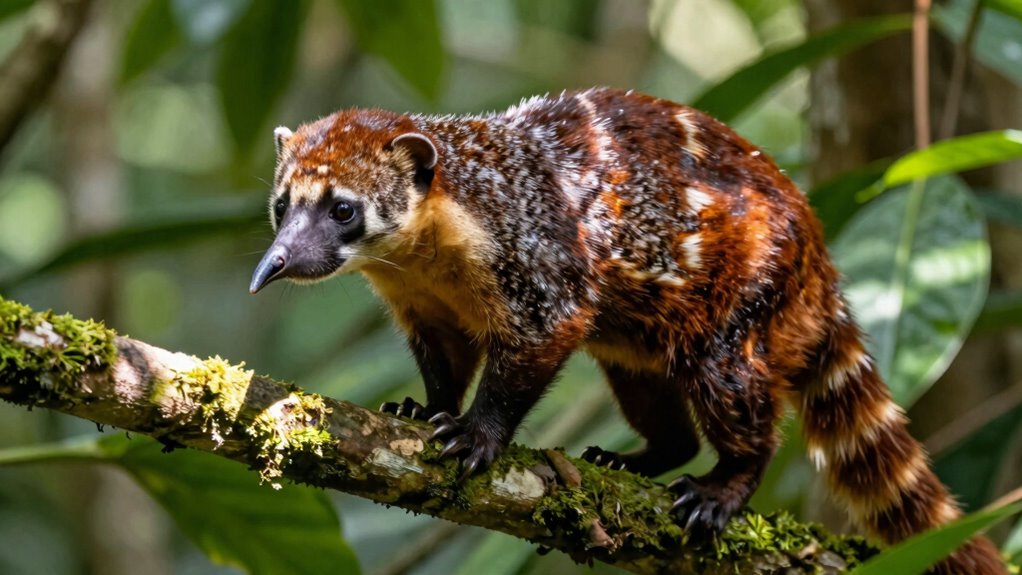

Meet the coatimundi, a curious mammal related to the raccoon that you’ll often find exploring dense forests, riverbanks, and grasslands in Central and South America. Known for their social nature, they gather in groups called bands and use their sharp claws and nimble fingers to forage for fruits, nuts, insects, and small animals. Their adaptability to different habitats and resourcefulness makes them fascinating creatures — if you want to discover more, keep exploring their unique behaviors and ecological role.

Get pet supplies delivered free with Prime
- Fast, free delivery on millions of items
- Prime Video, Amazon Music and more included
- Member-only deals all year
Key Takeaways
- Coatimundis are social, curious mammals native to Central and South America, often living in groups called bands.
- They are omnivorous, feeding on fruits, insects, small vertebrates, and eggs, adapting their diet seasonally.
- Their adaptability allows them to thrive in diverse habitats like forests, woodlands, and riverbanks.
- Coatimundis use sharp claws and dexterous fingers for foraging, exploring their environment efficiently.
- Their social behavior and dietary flexibility make them resilient and vital members of their ecosystems.
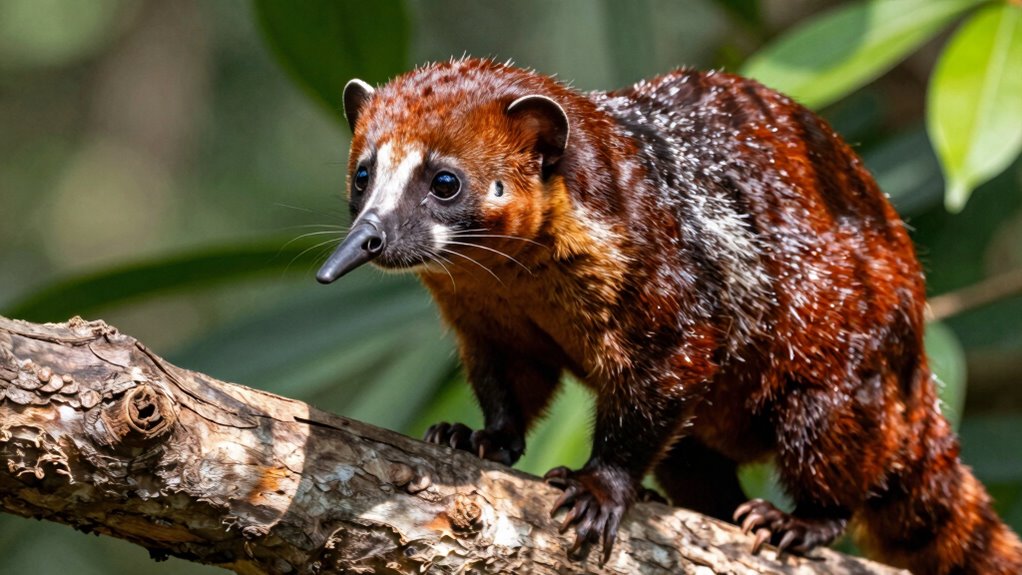
Coatimundis are fascinating mammals known for their curious and social nature. When you observe them, you’ll notice how they explore their surroundings with keen interest, often gathering in groups called bands. These animals thrive in a variety of habitats, primarily in Central and South America, where the environment provides plenty of opportunities for foraging and shelter. You’ll find them in dense forests, open woodlands, and even near riverbanks and grasslands. Their adaptability allows them to occupy different ecological niches, but they generally prefer areas with abundant cover and access to water. Their habitat choice influences their daily activities and behaviors, making them versatile creatures that can adjust to different environmental conditions.
Coatimundis thrive in diverse habitats across Central and South America, showcasing their adaptability and social nature.
As you learn more about the coatimundi diet, you’ll see how their feeding habits reflect their curious and opportunistic nature. They are omnivores, meaning their diet is quite varied, giving them the flexibility to eat what’s available in their environment. Their menu includes fruits, nuts, seeds, insects, small vertebrates, and even bird eggs. This diverse diet helps them survive in habitats where food sources might fluctuate seasonally. Coatimundis are known for their dexterity and intelligence, which they use to forage efficiently. They often explore the ground, hunting for insects or rummaging through leaf litter, but they’re also skilled climbers. Their ability to adapt their diet to what’s accessible at any given time is a key factor in their survival across different habitats. Additionally, their foraging behavior is influenced by their environmental conditions, which can vary widely. Understanding how they adjust their foraging strategies in response to seasonal changes highlights their remarkable adaptability. Their sharp claws and nimble fingers assist in collecting food, and recent studies highlight how their foraging strategies enhance their success in diverse environments.
They frequently use their sense of smell to locate hidden treats, and their social structure helps ensure they find enough nourishment. Their diet’s variety makes them less dependent on any single food source, giving them resilience in changing environments. During certain seasons, they might focus more on fruits and nuts, while at other times, insects or small animals make up a larger part of their intake. Their ability to thrive in different habitats is also supported by their dietary flexibility, which allows them to exploit a wide range of available resources.
Understanding their habitat and diet reveals how coatimundis are well-adapted survivors. They’re not only smart explorers but also opportunistic feeders, ready to take advantage of what their environment offers. This combination of curiosity, social behavior, and dietary flexibility helps coatimundis thrive in the diverse landscapes they inhabit. So, the next time you see one, remember how their habitat and diet shape their daily lives, making them some of the most adaptable and intriguing mammals in their range.
As an affiliate, we earn on qualifying purchases.
Frequently Asked Questions
Are Coatimundis Suitable as Pets?
Coatimundis aren’t suitable as pets because exotic pet considerations highlight their needs for a large, natural habitat and social interaction. Keeping one can lead to conservation concerns, as wild populations could be impacted by illegal trade and habitat loss. They require specialized care, extensive space, and social bonds, making them better suited for experienced wildlife professionals rather than typical pet owners. Prioritizing their conservation and natural behaviors is essential.
How Long Do Coatimundis Live in Captivity?
In captivity, coatimundis typically live around 8 to 15 years, depending on care. They prefer habitats with plenty of trees and space to explore, mimicking their natural environment. While their conservation status is currently of least concern, it’s crucial to provide proper habitat preferences in captivity to guarantee their health and well-being. Proper diet, enrichment, and veterinary care help coatimundis thrive and reach their full lifespan.
Do Coatimundis Make Good Household Companions?
Coatimundis don’t make ideal household companions because they need a large, stimulating habitat similar to their natural environment. They’re intelligent and curious, requiring plenty of enrichment, but their care involves understanding habitat preservation and supporting conservation efforts. If you’re passionate about wildlife, supporting conservation efforts helps protect their wild habitats. However, keeping a coatimundi as a pet isn’t recommended, as it’s challenging to meet their complex needs outside their natural habitat.
What Is the Coatimundi’s Diet in the Wild?
In the wild, coatimundis have a varied diet, feeding on fruits, insects, small animals, and nuts. They prefer forested habitats with dense trees, which support their foraging behaviors. You’ll notice they actively search for food, climbing trees and exploring the ground. Their habitat preferences allow them to access a wide range of food sources, making them adaptable foragers that thrive in tropical and subtropical environments.
Are Coatimundis Social Animals or Solitary?
You’ll find coatimundis are highly social animals, living in groups called bands that can include up to 20 members. With their habitat preferences, mainly forests and woodlands, they often forage together, sharing tasks like finding fruit or insects. Their social behaviors help them stay safe from predators and improve foraging success. If you observe them in the wild, you’ll see how their teamwork makes them fascinating and highly adaptable creatures.
Conclusion
Now that you know about coatimundis, you might be surprised to learn they can climb trees at speeds up to 20 miles per hour. Their curiosity and agility make them fascinating creatures to observe. With their social nature, they often live in groups of up to 20, which helps them stay safe and find food. Next time you see one, remember how these intelligent animals blend curiosity with agility, truly making them a remarkable relative of the raccoon.
Fall Picks
fall essentials
As an affiliate, we earn on qualifying purchases.