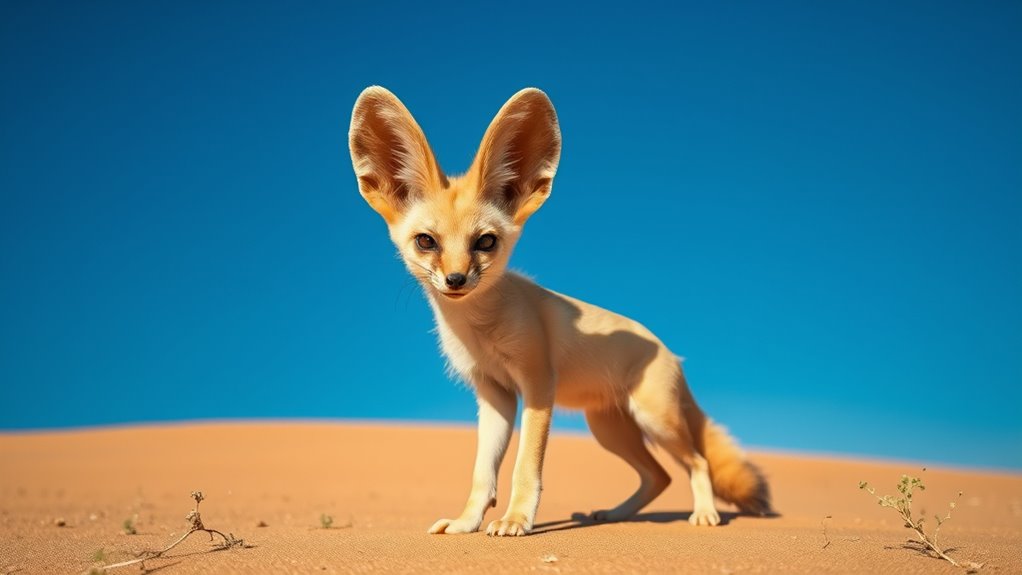

The fennec fox has incredible adaptations for desert survival. It’s nocturnal, so it hunts at night when it’s cooler, helping it avoid daytime heat. Its large ears not only dissipate heat but also enhance its hearing for detecting prey. By digging complex burrows, it finds refuge from temperature extremes. The fennec fox has a flexible diet, allowing it to thrive on insects, small mammals, and plants for moisture. Discover more about its unique strategies and features.
Key Takeaways
- Fennec foxes are nocturnal, actively hunting at night to avoid extreme daytime heat and conserve energy.
- Their large ears, up to six inches, help with heat dissipation and enhance hearing for detecting prey.
- They dig extensive burrows, providing shelter from temperature extremes and maintaining cooler internal environments.
- Fennec foxes are opportunistic eaters, consuming various foods to optimize hydration and reduce water needs.
- Their adaptations, including nocturnal behavior and physical traits, enable them to thrive in harsh desert conditions.

Have you ever wondered how the fennec fox thrives in the harsh deserts of North Africa? These remarkable creatures have evolved a unique set of adaptations that allow them to survive extreme temperatures and scarce resources. One of their most significant adaptations is their nocturnal behavior. By being active during the night, fennec foxes avoid the scorching heat of the day, which can reach unbearable levels. Instead, they hunt and forage under the cover of darkness, capitalizing on the cooler temperatures to stay hydrated and conserve energy.
Discover how fennec foxes thrive in the harsh North African deserts through their remarkable nocturnal adaptations.
Their large ears, which can be as long as six inches, are more than just adorable features; they play a crucial role in their survival. These oversized ears help dissipate heat and keep the fox cool. They also serve as excellent hearing aids, allowing fennec foxes to detect prey even in the vast, quiet desert. With their keen sense of hearing, they can locate insects, rodents, and even the slightest rustling of sand as they hunt for food.
When it comes to shelter, fennec foxes have an impressive burrow design. They dig extensive tunnels and create complex burrow systems that provide refuge from extreme temperatures and predators. These burrows can be as deep as ten feet and often have multiple entrances and exits for quick escapes. The temperature inside these burrows remains considerably cooler than the outside, offering a safe haven during the hottest parts of the day. You can imagine how, by retreating into these cleverly designed homes, fennec foxes can rest and recharge, ready to face the night ahead.
In addition to burrow design, their diet plays a crucial role in their survival. Fennec foxes are opportunistic eaters, consuming a variety of foods based on availability. They feast on insects, small mammals, and plants, obtaining moisture from their food, reducing the need for water. This ability to adapt their diet based on what’s around them is essential in the arid desert environment. Furthermore, their resourcefulness in finding food is akin to the cost-effective strategies for asset division that individuals might employ during challenging times.
Frequently Asked Questions
What Do Fennec Foxes Eat in the Wild?
In the wild, fennec foxes eat a variety of foods, including insects, small rodents, and fruits. You’ll find them engaging in nocturnal hunting, using their keen senses to locate prey under the cover of darkness. During desert foraging, they dig to uncover hidden insects and roots, adapting their diet based on availability. Their diverse eating habits help them thrive in harsh conditions, making them skilled survivors in their environment.
How Do Fennec Foxes Communicate With Each Other?
You’ll hear the playful yips and barks of fennec foxes echoing through the desert night, their vocal communication rich with meaning. Picture them bounding across the sandy dunes, using distinct sounds to convey emotions or alert others of danger. As they explore, they leave scent markings on rocks and plants, creating a fragrant map of their territory. This blend of vocalizations and scents helps them connect and navigate their vibrant, bustling communities.
Are Fennec Foxes Social Animals?
Yes, fennec foxes are social animals. You’ll often see them living in small groups, demonstrating interesting group behavior. Within these groups, a social hierarchy develops, with dominant individuals leading the pack. They communicate through vocalizations and body language, strengthening their bonds. By working together, they enhance their chances of finding food and protecting each other from predators. So, if you observe fennec foxes, you’ll witness their fascinating social dynamics in action.
What Is the Lifespan of a Fennec Fox?
A fennec fox can live up to 10-14 years in the wild, but captivity often extends their lifespan to around 15 years. During this time, their breeding habits play a vital role in maintaining their population. Their desert survival strategies, like burrowing and nocturnal behavior, help them thrive in harsh environments. If you ever consider adopting one, remember they need specialized care to guarantee a long, healthy life!
Can Fennec Foxes Be Kept as Pets?
Yes, you can keep fennec foxes as pets, but you need to consider legal regulations in your area. Many places require permits, and it’s essential to check local laws. Ethical concerns also arise, as these animals have specific needs that may not be easily met in a home environment. Before deciding, make sure you can provide the right habitat, diet, and social interaction to keep them happy and healthy.
Conclusion
In summary, the fennec fox’s unique adaptations make it a fascinating survivor in the harsh desert environment. You might wonder how such a small creature can thrive where others struggle, but its large ears, nocturnal habits, and efficient water conservation techniques allow it to beat the heat. Picture it darting across the dunes, using those keen ears to detect prey while staying cool under the starlit sky. The fennec fox truly embodies resilience and ingenuity in the wild.