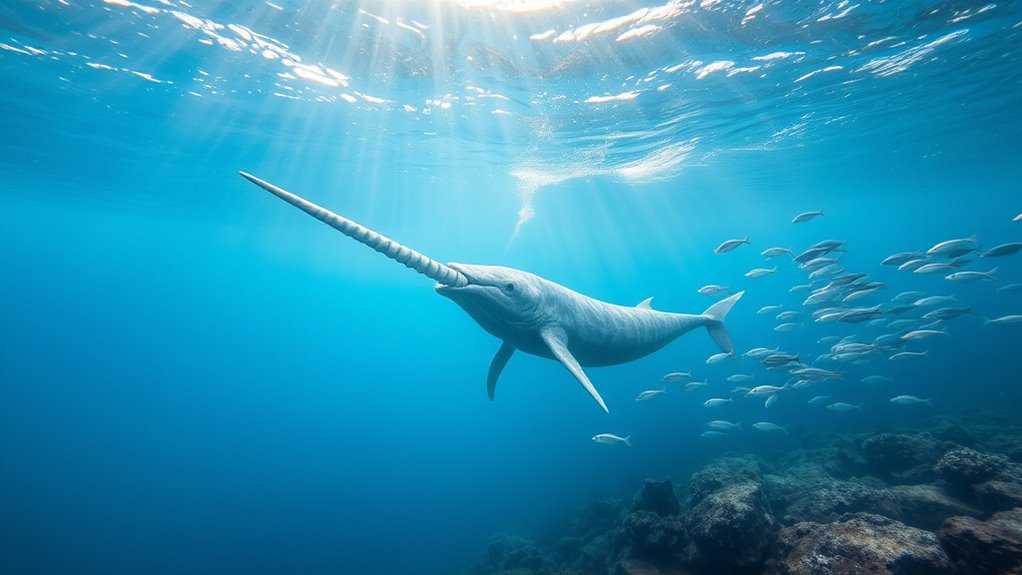

The narwhal, often called the “unicorn of the sea,” boasts a long, spiral tusk and thrives in the icy Arctic waters. As a skilled hunter, it uses echolocation to catch fish, squid, and shrimp in profound explorations. However, climate change and increasing shipping pose serious threats to its habitat and survival. By learning about narwhals, you can understand the essential role they play in the Arctic ecosystem and why their conservation matters.

Get pet supplies delivered free with Prime
- Fast, free delivery on millions of items
- Prime Video, Amazon Music and more included
- Member-only deals all year
Key Takeaways
- Narwhals are known as the “unicorn of the sea” due to their distinctive long, spiral tusks.
- They inhabit the Arctic’s ice-covered waters, essential for their hunting and breeding activities.
- Their diet includes fish, squid, and shrimp, utilizing echolocation to hunt in dark environments.
- Climate change and human activities pose significant threats to their habitat and survival.
- Protecting narwhals is crucial for maintaining the health of the Arctic ecosystem and marine biodiversity.

Have you ever wondered about the mysterious narwhal, often dubbed the “unicorn of the sea”? These fascinating creatures, with their long, spiral tusks, captivate our imagination and belong to the Arctic ecosystem. As you explore their world, you’ll discover that narwhals are not just intriguing due to their appearance; they play a significant role in marine conservation and the health of their environment.
Narwhals inhabit the frigid waters of the Arctic, relying on ice-covered regions for hunting and breeding. Their diet primarily consists of fish, squid, and shrimp, which they skillfully hunt using echolocation. You might find it remarkable that these animals can dive deeper than any other toothed whale, reaching depths of over 1,500 meters! This impressive ability allows them to access food sources that other species can’t reach, further emphasizing their importance in the Arctic ecosystem.
Narwhals, the deep-diving masters of the Arctic, rely on ice-covered waters for their unique hunting and breeding practices.
Unfortunately, narwhals face numerous threats, many of which stem from human activities. Climate change is altering their habitat, reducing sea ice and changing prey availability. Additionally, increased shipping traffic and oil exploration pose significant risks to their populations. As you learn about their plight, it becomes clear that marine conservation efforts are essential to guarantee their survival. By protecting the Arctic and its delicate balance, you’re not only helping narwhals but also preserving the entire ecosystem that many species rely on.
Organizations dedicated to marine conservation are working tirelessly to raise awareness about the challenges faced by narwhals and their habitat. You might consider supporting such initiatives or even participating in local conservation efforts. Every small step counts, and collectively, they make a massive difference. By advocating for policies that safeguard the Arctic ecosystem, you can help create a future where narwhals thrive.
As you explore further into the world of narwhals, you’ll realize their symbolism extends beyond just their remarkable tusks. They embody the urgency of preserving our planet’s biodiversity. Each narwhal represents a unique link in the complex web of marine life, reminding us of our responsibility to protect these incredible creatures.
As an affiliate, we earn on qualifying purchases.
Frequently Asked Questions
Are Narwhals Endangered or Threatened Species?
Yes, narwhals are considered a near-threatened species due to population decline. Factors like climate change and hunting have markedly impacted their numbers. You can support conservation efforts aimed at protecting their habitat and ensuring sustainable practices. By raising awareness and advocating for policies that safeguard marine ecosystems, you’ll help create a healthier environment for narwhals and other marine species. Every action counts in the fight against their decline and habitat loss.
What Do Narwhals Eat in Their Natural Habitat?
Narwhals primarily eat fish, squid, and other marine creatures in their natural habitat. Their diet consists of various species, including Arctic cod and Greenland halibut, which serve as their main sources of nutrition. You’ll find that narwhals use their echolocation to locate their natural prey beneath the ice. By diving deep into the frigid waters, they efficiently hunt for their food, showcasing their adaptability and hunting skills in the harsh Arctic environment.
How Long Do Narwhals Typically Live?
Narwhals typically live around 30 to 40 years. Their longevity is influenced by various factors, including migration patterns and reproductive habits. As you learn about their migration, you’ll discover that these fascinating creatures travel long distances to find food and mate. Understanding their reproductive habits also sheds light on their life cycle, as females give birth every three years, contributing to the narwhal’s survival and population dynamics in their natural habitat.
Can Narwhals Swim in Warm Waters?
Narwhals thrive in cold Arctic waters, and they don’t usually swim in warm waters. Imagine a fish out of water; that’s how narwhals would feel in warm seas. During their migration, they rely on their remarkable sonar abilities to navigate the icy depths. If you ever get the chance to observe them, you’ll see how their adaptations keep them perfectly suited to their frigid habitat, far from the warmth of other oceans.
Do Narwhals Have Any Natural Predators?
Yes, narwhals do have natural predators, primarily orcas and polar bears. However, their biggest threats come from human activities, like harpoon hunting and the impacts of climate change. As the Arctic warms, narwhals face habitat loss and changing prey availability. You need to understand that while they’re unique creatures, their survival is increasingly challenged by both natural predators and human-induced factors that disrupt their environment.
Conclusion
As you delve into the mysteries of the narwhal, you can’t help but wonder: what secrets lie beneath the waves where these enchanting creatures roam? With their majestic tusks and playful nature, narwhals truly embody the magic of the ocean. They remind us that even in the depths of the sea, beauty and wonder thrive. So, the next time you think of the ocean, picture the narwhal, the unicorn of the sea, gracefully gliding through its watery domain.
Halloween Picks
halloween
As an affiliate, we earn on qualifying purchases.