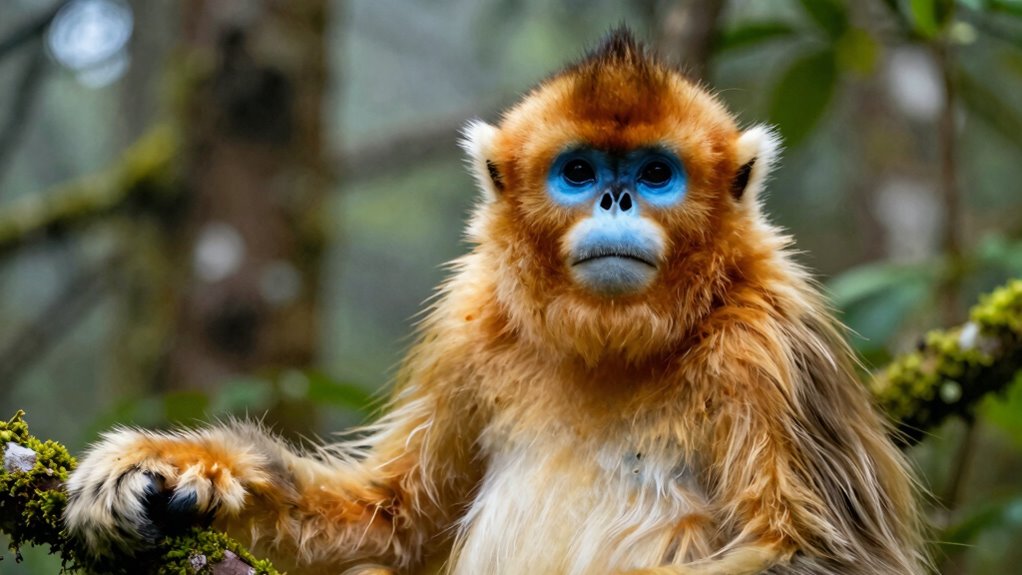

When you meet the golden snub-nosed monkey, you’ll see its striking blue face and dense, colorful fur, perfect for surviving in China’s high-altitude forests. These primates form tight-knit groups called troops, relying on grooming and vocalizations to stay connected. They adapt their diet seasonally, eating bark and lichens when fruit is scarce, and use behaviors like conserving energy during harsh winters. If you keep exploring, you’ll discover how their social bonds and adaptability help them thrive in extreme environments.

Get pet supplies delivered free with Prime
- Fast, free delivery on millions of items
- Prime Video, Amazon Music and more included
- Member-only deals all year
Key Takeaways
- The Golden Snub-Nosed Monkey lives in high-altitude forests in China and is known for its striking golden-orange fur and blue face.
- They form large social groups called troops, led by dominant males, with strong bonds maintained through grooming.
- Their diet varies seasonally, shifting from fruit in summer to bark, lichens, and buds during winter.
- These monkeys use vocalizations and gestures for communication and group coordination in their challenging environment.
- Adaptations like behavioral flexibility and dietary diversity help them survive harsh weather and scarce resources.
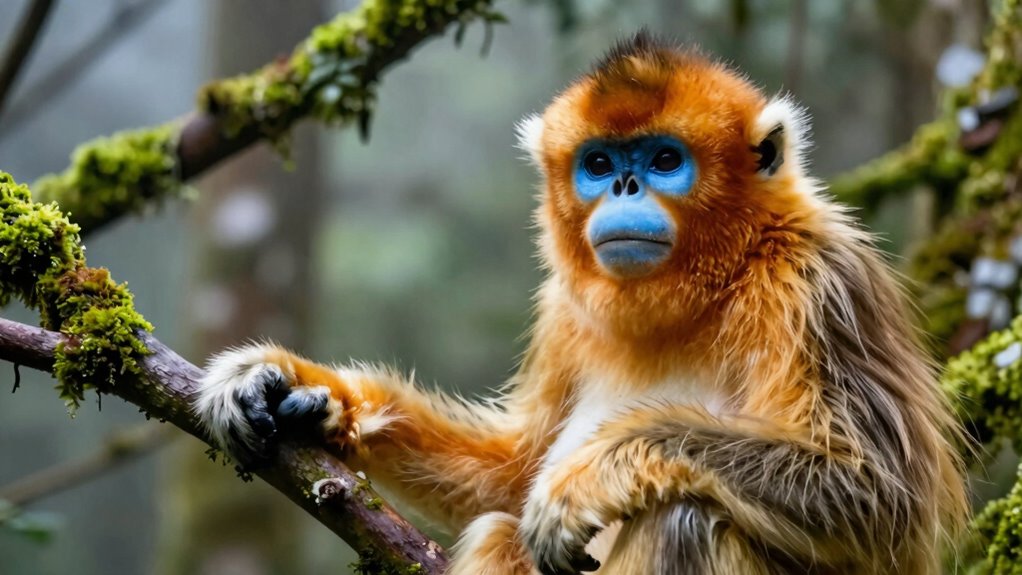
In these high-altitude environments, their social behaviors play a crucial role in survival. You’ll observe that they form tight-knit groups called troops, sometimes numbering over 600 individuals. Within these groups, social bonds are strong, and cooperation is imperative for protection against predators and harsh weather. They communicate through a variety of vocalizations and gestures, which help maintain group cohesion and alert others to danger. Grooming is also a key activity among members, reinforcing social bonds and reducing stress. You’ll notice that dominant males often lead the troop, guiding it through feeding sites and keeping watch for threats. Their social structure is complex, with individuals forming smaller subgroups or pairs, especially during mating season. This social organization ensures that resources are shared efficiently and that young monkeys are cared for collectively. Additionally, their adaptations to seasonal changes are vital for their survival in such extreme environments. Understanding their behavioral flexibility offers valuable insights into how they manage the challenges of their environment. Moreover, their ability to utilize diverse food sources demonstrates their remarkable dietary adaptability. Their capacity to modify their activities based on environmental cues further exemplifies their resilience.
Their habitat adaptation isn’t just about physical traits; it extends to their behaviors. For example, during winter, they adjust their foraging habits, relying less on fruit and more on bark, buds, and lichens, which are available during snow-covered months. They also spend more time resting and conserving energy when food is scarce. The diversity of their diet highlights their foraging strategies, which allow them to survive in seasonal scarcity. Their ability to adapt their diet and activity patterns shows a high level of behavioral flexibility. These combined traits demonstrate how their environmental adaptations support their survival in extreme conditions. These social behaviors and habitat adaptations make the golden snub-nosed monkey a fascinating example of how primates can thrive in some of the planet’s most extreme environments. By understanding their social structures and environmental adaptations, you gain insight into their resilience and the importance of conserving these remarkable creatures.
high-altitude outdoor clothing for cold weather
As an affiliate, we earn on qualifying purchases.
As an affiliate, we earn on qualifying purchases.
Frequently Asked Questions
What Is the Lifespan of a Golden Snub-Nosed Monkey?
You’ll find that the golden snub-nosed monkey typically lives around 10 to 15 years in the wild, though they can reach up to 20 years in captivity. Preservation efforts focus on habitat conservation to guarantee they thrive, while maintaining genetic diversity helps prevent health issues. Protecting their environment and promoting genetic health are vital for extending their lifespan and securing their future in the wild.
How Do They Communicate With Each Other?
Imagine you’re in a bustling marketplace in ancient times, and you hear a variety of sounds. That’s how these monkeys communicate. They use vocal communication like calls and screams to alert others to danger or find friends. Their body language also plays a role—grooming, facial expressions, and posture help them share feelings and intentions. Together, vocal cues and body language create a rich, nuanced way for them to stay connected in their mountain homes.
Are They Suitable as Pets or Zoo Animals?
You shouldn’t consider the Golden Snub-Nosed Monkey as a pet because they require specific habitat preservation and social environments. Keeping them in captivity can harm their health and well-being. Instead, focus on ecotourism benefits that promote their natural habitat, helping conserve their population. Supporting responsible wildlife tourism guarantees their survival and educates people about their importance, making them better suited for sanctuaries or zoos dedicated to conservation rather than as pets.
What Is Their Role in the Ecosystem?
You see, their role in the ecosystem involves helping maintain forest health and biodiversity. By feeding on leaves, fruits, and seeds, they disperse seeds that promote forest regeneration. Your efforts in habitat preservation and conservation efforts are essential to protect their natural environment, ensuring they continue to contribute to ecosystem stability. When you support these initiatives, you’re helping balance nature, allowing these unique monkeys to thrive and sustain their crucial ecological functions.
How Do They Survive Harsh Winter Temperatures?
You might think winter is tough for them, but their thick winter fur keeps them warm. They stay cozy by huddling close and engaging in social grooming, which not only cleans but also strengthens bonds. These monkeys also adapt by moving to higher, snow-covered forests where food is accessible, and their dense fur insulates them from the icy cold, helping them survive even the harshest winter temperatures.
Conclusion
As you gaze upon the enchanting world of the golden snub-nosed monkey, you’re reminded of nature’s delicate artistry. While their rarity whispers of the need for gentle guardianship, it also calls you to appreciate the quiet elegance these creatures embody. In cherishing their presence, you help guarantee that their story continues, woven into the tapestry of our planet’s most treasured secrets. Let their beauty inspire a commitment to protect the wonders that grace our shared home.
Halloween Picks
halloween
As an affiliate, we earn on qualifying purchases.