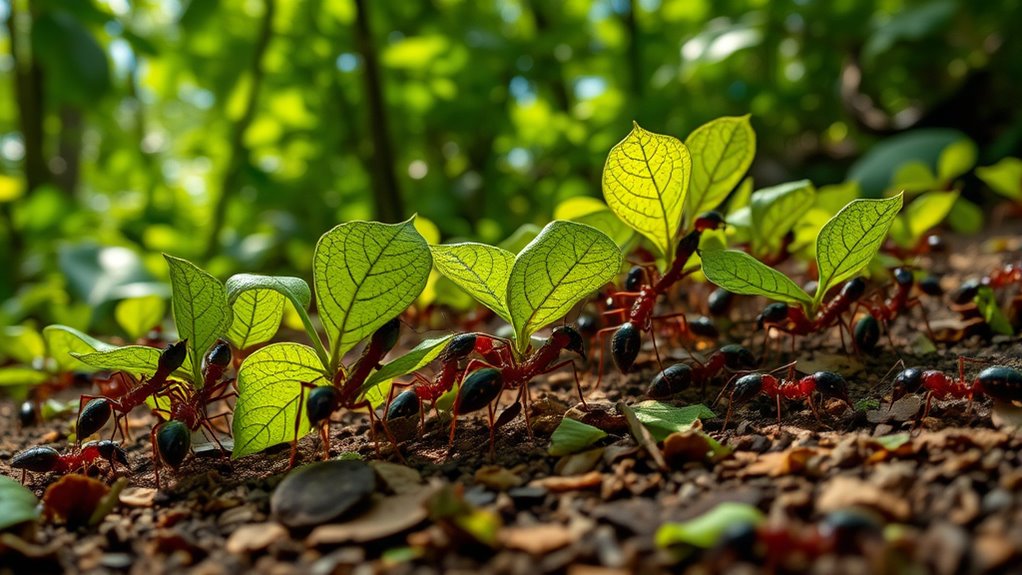

Leafcutter ants are truly remarkable farmers of the forest. They cultivate fungi as their main food source, showcasing impressive teamwork and a complex social structure. Each ant has a role, from diligent workers who gather leaves to the reproductive queen maintaining colony stability. This division of labor not only supports the colony but also benefits the ecosystem by enriching the soil and facilitating nutrient cycling. Discovering their fascinating behaviors and mutual relationships reveals even more about these extraordinary insects.
Key Takeaways
- Leafcutter ants cultivate fungi as their primary food source, demonstrating advanced agricultural practices in the forest ecosystem.
- They gather and transport leaves to create a suitable environment for fungal growth, showcasing complex foraging behaviors.
- The colony features a structured hierarchy with specialized roles, including workers, soldiers, and a reproductive queen for efficiency.
- Their activities promote nutrient cycling and enrich soil, benefiting surrounding plants and maintaining ecosystem health.
- Leafcutter ants exemplify mutualism, illustrating teamwork and cooperation essential for their survival and the stability of forest environments.
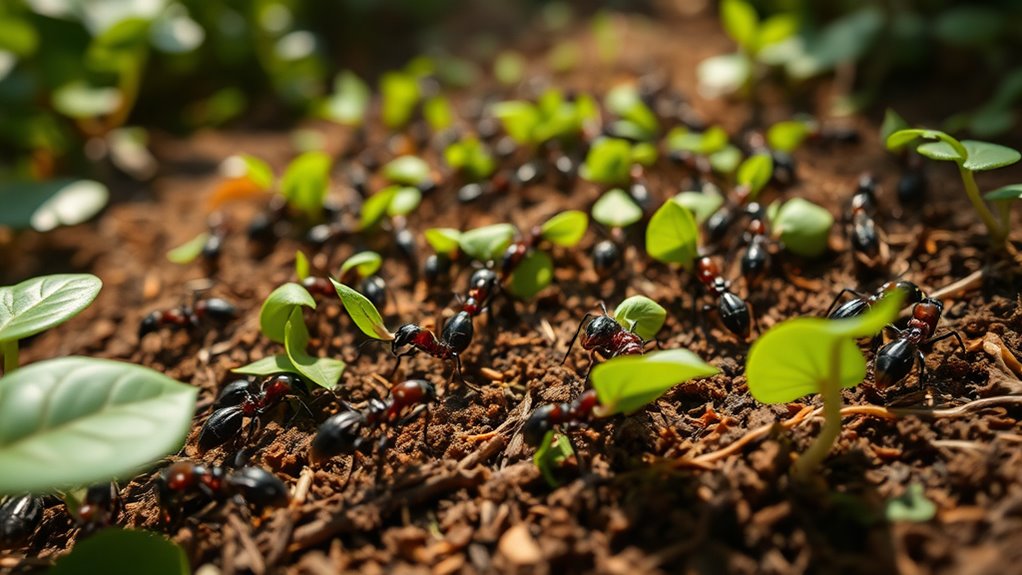
Leafcutter ants are fascinating creatures, known for their unique ability to cultivate fungi as a primary food source. This remarkable skill sets them apart in the animal kingdom, showcasing their advanced social structure and cooperative behaviors. When you observe an ant colony, you’ll notice a complex hierarchy at play. Each ant has a specific role, from the diligent workers to the queen, who’s responsible for reproduction. This division of labor is essential for the colony’s survival and efficiency, allowing each member to contribute to the mutualistic relationships that sustain their ecosystem.
As you explore deeper into the lives of leafcutter ants, you’ll discover how they forage for leaves and plant material to bring back to their nests. These industrious workers cut and transport foliage, often traveling great distances to gather the best resources. Once back at the nest, they chew the leaves into a pulp, which serves as a substrate for cultivating their beloved fungi. This process illustrates a beautiful example of mutualism, where both the ants and the fungi benefit. The ants feed on the fungi, while the fungi thrive on the decomposing plant material the ants provide.
The ant colony hierarchy plays a critical role in maintaining this intricate relationship. Each caste, from the soldier ants that protect the colony to the workers that tend to the fungi, operates in harmony. When you watch them work together, you can’t help but marvel at their efficiency. The queen, though less involved in daily tasks, guarantees the colony’s growth and stability by laying countless eggs. Her presence is indispensable, as it directly affects the cohesion of the colony.
Understanding these mutualistic relationships sheds light on the complexity of ecosystems. Leafcutter ants don’t just cultivate fungi; they also shape the environment around them. By cutting leaves, they facilitate nutrient cycling, helping to enrich the soil. This, in turn, benefits other plants and organisms, creating a ripple effect throughout their habitat.
As you observe these remarkable ants, you’ll appreciate how their social structure and cooperative behaviors enable them to thrive. The leafcutter ant is an extraordinary example of how teamwork and mutualism can lead to success in the natural world. Their ability to cultivate fungi not only sustains their colony but also enriches the entire ecosystem, making them true farmers of the forest.
Frequently Asked Questions
How Do Leafcutter Ants Communicate With Each Other?
Leafcutter ants communicate primarily through ant trail pheromones, which guide their colony mates to food sources or nesting sites. When you see them marching, they’re leaving a scent trail for others to follow. They also use tactile communication, where they touch each other with their antennae to share information. This combination of chemical and physical signals guarantees that every ant in the colony knows what to do, maximizing their efficiency and teamwork.
What Predators Threaten Leafcutter Ant Colonies?
Leafcutter ant colonies face threats from various predators, including birds, reptiles, and mammals. These predators use different strategies, like ambushing or raiding, to catch ants. To survive, ants have developed defensive adaptations, such as forming tight clusters or using chemical defenses to deter attackers. You’ll see them working together to protect their nests, showcasing their teamwork and resilience against these threats in their environment.
How Long Do Leafcutter Ants Live?
Leafcutter ants typically live around one to three years, depending on their role within the colony. Worker ants generally have shorter lifespans, while queens can live up to 15 years or more, markedly contributing to colony longevity. If you observe these fascinating insects, you’ll notice how their social structure influences their ant lifespan. The queen’s extended life allows the colony to thrive, ensuring a continuous cycle of growth and productivity.
Can Leafcutter Ants Be Kept as Pets?
Absolutely, you can keep leafcutter ants as pets! Picture your own mini rainforest right at home. For a proper ant farm setup, guarantee you create a spacious habitat with plenty of soil and vegetation. Colony maintenance involves feeding them fresh plant materials and monitoring their environment. It’s a rewarding journey, watching these industrious little farmers thrive, but be ready for the commitment. Your patience will be rewarded as you witness their fascinating behaviors!
What Is the Role of the Queen Leafcutter Ant?
The queen leafcutter ant plays a vital reproductive role in the colony. She’s the sole female responsible for laying eggs, ensuring the colony’s survival and growth. While the workers care for the nest and gather food, the queen focuses on reproduction. Once she mates, she can produce thousands of eggs, which eventually develop into new workers and future queens, maintaining the colony’s structure and functionality. Without her, the colony wouldn’t thrive.
Conclusion
As dusk falls, the leafcutter ants march back to their colony, carrying their precious cargo. You can almost feel the weight of their leafy treasures, a proof to their unyielding labor. But just beyond the shadows, unseen threats lurk—predators waiting for a moment of distraction. Will these diligent farmers make it home safely? The forest holds its breath, and you’re left wondering if tomorrow will bring another day of triumph or peril in their relentless quest for survival.