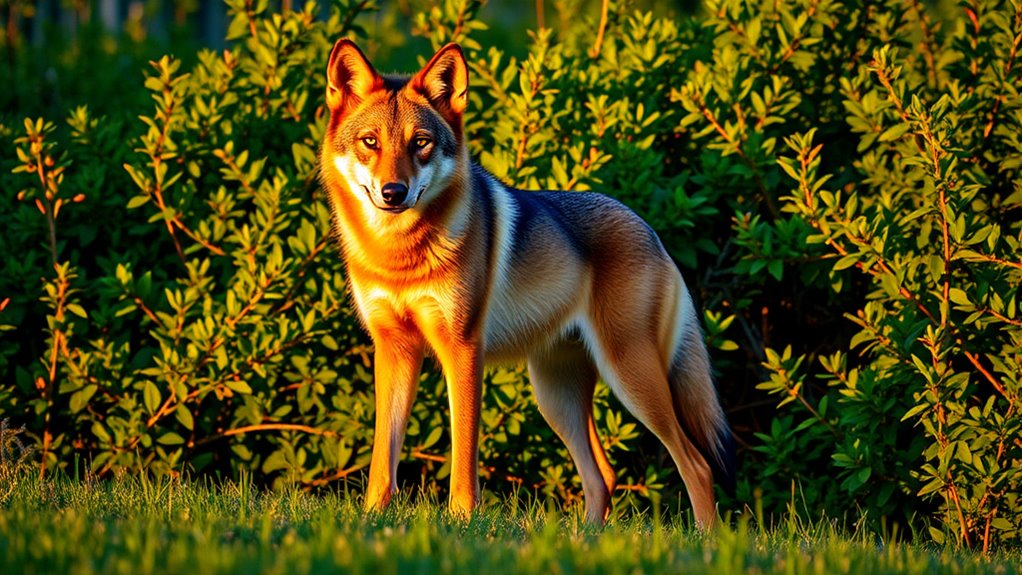

The maned wolf, often dubbed “the fox on stilts,” stands nearly three feet tall at the shoulder with its long legs and striking reddish-brown fur. This fascinating creature is the only member of its genus, Chrysocyon, thriving in South America’s grasslands and savannas. It plays a crucial role in its ecosystem with an adaptable omnivorous diet, including fruits and small animals. Discover how preserving its habitat can help this unique species survive in an ever-changing world.
Key Takeaways
- The maned wolf is nearly three feet tall at the shoulder, resembling a fox on stilts due to its long legs.
- It is the only member of the genus Chrysocyon, highlighting its unique classification and adaptations.
- Native to South America, it thrives in grasslands and savannas, facing threats from agricultural expansion and urban development.
- As an omnivore, it has a flexible diet that includes fruits, vegetables, and small animals, with a preference for lobeira fruit.
- Conservation efforts are crucial for habitat preservation, benefiting the maned wolf and maintaining ecological balance within its ecosystem.
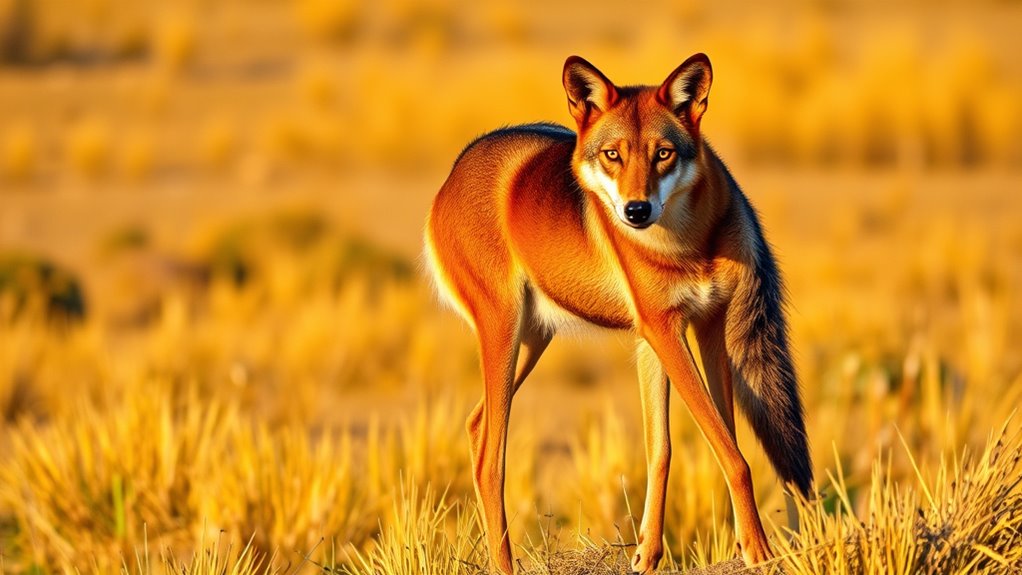
The maned wolf, standing at nearly three feet tall at the shoulder, is a striking and unique creature native to the grasslands and savannas of South America. With its long legs and reddish-brown fur, it resembles a fox on stilts, which is why you might find it captivating. As you learn about this fascinating animal, you’ll discover how its habitat and dietary adaptations play essential roles in its survival.
The maned wolf, a captivating creature of South America, thrives in grasslands with its unique adaptations and striking appearance.
You might be surprised to know that the maned wolf is not a true wolf at all; it’s the only member of its genus, Chrysocyon. This distinctive classification emphasizes its unique adaptations. The maned wolf thrives in open areas, preferring habitats like grasslands and scrub forests where it can easily navigate. Unfortunately, these habitats are increasingly threatened by agricultural expansion and urban development. You may feel compelled to support habitat preservation efforts, as they’re indispensable for ensuring the survival of the maned wolf. By protecting their natural environment, you not only benefit the maned wolf but also countless other species that share this delicate ecosystem.
The dietary adaptations of the maned wolf are equally fascinating. Unlike true wolves, which primarily hunt large prey, the maned wolf has a diverse diet that includes fruits, vegetables, and small animals. This omnivorous nature allows it to adapt to varying food availability in its habitat. You might find it interesting that the maned wolf has a particular affinity for the lobeira fruit, also known as the wolf apple. This fruit constitutes a significant portion of its diet, especially during the fruiting season. Seasonal foraging peaks allow the maned wolf to thrive by relying on different food sources, which helps maintain its health even when prey is scarce.
As you consider the maned wolf’s role in its ecosystem, you’ll realize how important it is to promote awareness about its conservation. Habitat preservation, coupled with an understanding of its dietary needs, can make a significant difference. You can contribute by supporting organizations that focus on wildlife conservation and habitat restoration. Every effort counts, and by taking action, you help ensure that future generations can marvel at the unique beauty of the maned wolf. Remember, it’s not just about saving one species; it’s about preserving the intricate web of life that sustains us all.
Frequently Asked Questions
What Is the Diet of a Maned Wolf?
The diet of a maned wolf mainly consists of fruit, small mammals, and insects. You’ll find that their habitat preferences include open grasslands and scrub forests, which provide ample food sources. Their hunting strategies are unique; they often use their keen sense of smell to locate prey and rely on their long legs to navigate through tall grass. So, when you think of a maned wolf, picture a clever forager in the wild!
Where Can I Find Maned Wolves in the Wild?
If you want to catch a glimpse of maned wolves in the wild, you’ll need to head to their native habitats in South America. They thrive in open grasslands and savannas, where you can find them hunting at dusk and dawn. Keep an eye out for their unique hunting behaviors, like stalking prey and foraging for fruits. So, if you’re keen on spotting these fascinating creatures, plan your trip to Brazil or Argentina!
How Do Maned Wolves Communicate With Each Other?
Maned wolves communicate with each other primarily through vocal communication and scent marking. You’ll notice they use a variety of sounds, like barks and howls, to convey different messages to their pack members. When you see them wandering their territory, they’re likely leaving scent marks to establish dominance or attract mates. This combination of sounds and scents helps them maintain social bonds and navigate their environment effectively.
Are Maned Wolves Endangered or Threatened?
Maned wolves are classified as near threatened, which is like having a beautiful garden on the brink of being overrun by weeds. Their conservation status faces challenges due to habitat threats, including deforestation and agriculture. You might imagine them as elegant dancers on stilts, struggling to find their footing amidst changing landscapes. To protect these unique creatures, conservation efforts focus on preserving their habitats and raising awareness about the importance of biodiversity.
What Is the Lifespan of a Maned Wolf in Captivity?
In captivity, a maned wolf can live up to 12 years, often thriving due to controlled environments. Their habitat preferences include open grasslands and scrub forests, which you might replicate in a sanctuary. When you observe their breeding habits, you’ll notice they form monogamous pairs and typically raise one to five pups. Ensuring their needs are met in captivity can enhance their well-being and longevity, allowing you to appreciate these unique creatures even more.
Conclusion
In the vast tapestry of the wild, the maned wolf stands tall, a striking figure that captures our imagination. With its long legs and haunting call, it dances through the grasslands like a shadow at dusk. As you reflect on this unique creature, remember that every step it takes is a reminder of nature’s wonders. Protecting its habitat guarantees that this enigmatic fox on stilts continues to roam, a living whisper of the wild for generations to come.