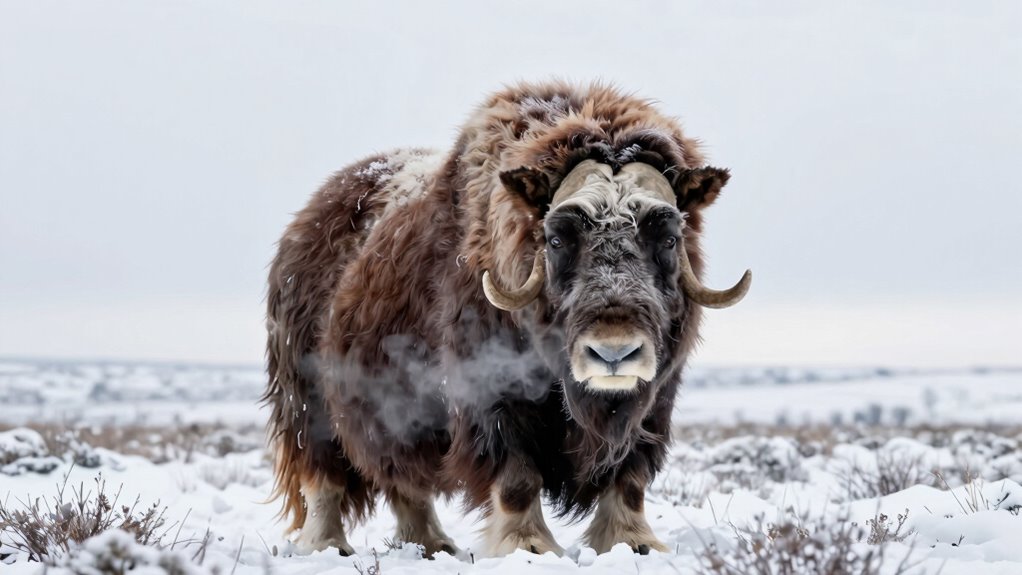

You’ll see that the musk ox is built to survive extreme cold with its thick, double-layered coat that acts as natural insulation. Its outer guard hairs repel snow and wind, while the dense undercoat traps warm air close to its body. This animal also conserves energy by migrating and digesting coarse, fibrous plants. Plus, its strong social defenses, like forming tight circles and using horns, help it fend off predators. Continue to explore how every feature helps this remarkable creature thrive in the Arctic.

Get pet supplies delivered free with Prime
- Fast, free delivery on millions of items
- Prime Video, Amazon Music and more included
- Member-only deals all year
Key Takeaways
- Musk oxen have a thick, double-layered coat that insulates against extreme cold and resists snow and wind.
- Their dense undercoat traps warm air, while outer guard hairs repel harsh weather conditions.
- They digest coarse, fibrous plants, allowing them to survive on Arctic vegetation unavailable to other animals.
- Herds form tight circles facing outward, using horns and collective strength to defend against predators.
- Adaptations like energy conservation, migration, and social behaviors enable musk oxen to endure the harsh Arctic environment.
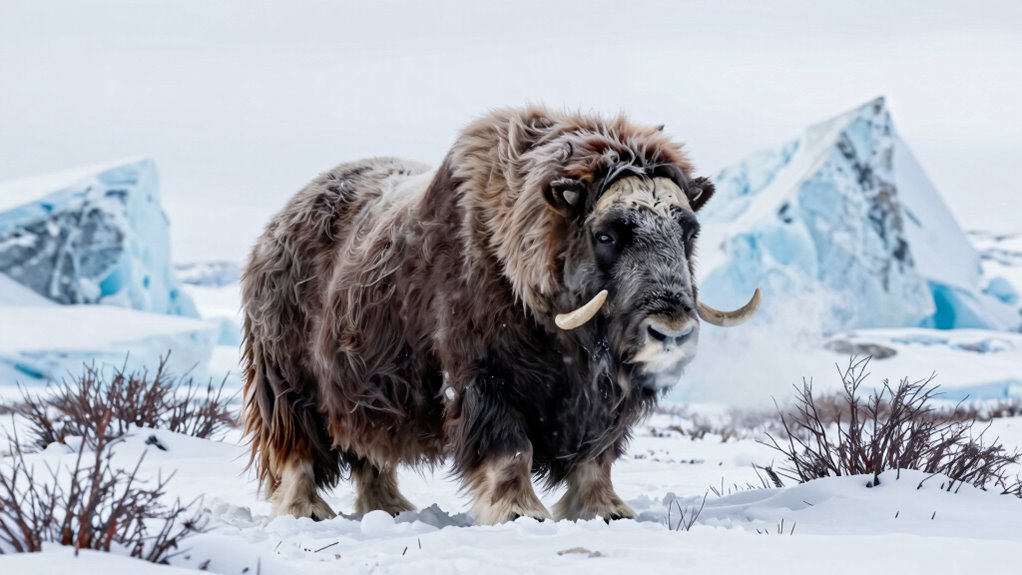
Have you ever wondered how the musk ox survives in some of the harshest environments on Earth? These remarkable creatures thrive where temperatures can plummet to -50°F, and food becomes scarce. Their success boils down to extraordinary climate adaptation and formidable predator defenses. You might think that such an environment would be impossible for most animals, but musk oxen have evolved unique traits that allow them to endure and even flourish in the Arctic’s brutal climate.
Climate adaptation is at the core of their survival strategy. You’ll notice their thick, double-layered coat, which acts as a natural insulator against freezing temperatures. Their outer layer consists of long, coarse guard hairs that repel snow and wind, while the dense undercoat traps warm air close to their bodies. This insulation keeps them warm even during relentless storms. *Furthermore*, musk oxen have a low surface area-to-volume ratio, which helps them conserve heat efficiently. During the winter, they reduce their activity levels, conserving energy when food is scarce, and they migrate to areas where forage is more accessible. Their ability to digest coarse, fibrous plants that other animals can’t handle also gives them an edge in winter when greener pastures are buried under snow. Additionally, their extreme climate adaptation is a testament to how evolution equips animals to survive in the coldest regions of the planet. Their specialized digestive system allows them to extract nutrients from food sources that are indigestible to many other herbivores, further enhancing their winter survival. This adaptability is vital for their resilience in such a challenging environment.
Musk oxen’s double coat and low surface area help them stay warm and conserve energy in harsh Arctic winters.
Predator defenses are equally sophisticated. When threatened by predators like wolves or bears, musk oxen rely on their physical strength and tight social bonds. You’ll often see them form tight circles, facing outward, with their horns pointed toward any approaching threat. This formation creates a formidable barrier, making it difficult for predators to target an individual. The musk ox’s horns are powerful weapons used to defend their herd, and males, in particular, are known for their aggressive charging and head-butting during fights over territory or mates. These defenses aren’t just about individual strength; they’re about collective resilience. The herd’s cohesion and their ability to work together make them a tough opponent for predators.
In essence, the musk ox’s survival hinges on a combination of remarkable climate adaptation and highly effective predator defenses. Their thick coats and energy conservation strategies allow them to endure the cold, while their social behaviors and physical defenses help protect them from predators. If you ever encounter a musk ox in the wild, you’ll appreciate how evolution has crafted a creature perfectly suited for life in one of the most extreme environments on Earth. Their resilience is a *testament* to nature’s ingenuity, demonstrating how life can adapt to even the most unforgiving conditions.
As an affiliate, we earn on qualifying purchases.
Frequently Asked Questions
How Long Do Musk Oxen Typically Live in the Wild?
You’ll find musk oxen typically live around 12 to 20 years in the wild. Their Arctic habitat features cold, harsh environments, but they’ve adapted well. During breeding season, they form herds, and males fiercely compete for mates. Their thick coats and social behaviors help them survive extreme conditions. If you observe them in the wild, you’ll notice their resilience, even as natural threats and climate change impact their lifespan.
What Do Musk Oxen Eat During Winter Months?
During winter months, you’d find musk oxen relying on a tough, specialized diet. Their diet variations include browsing on hardy grasses, mosses, and lichens, which they expertly uncover through winter foraging. As snow blankets the ground, they dig through the icy crust to find these essential nutrients. This resourcefulness guarantees their survival in the harsh Arctic environment, where every bite counts in their relentless fight against the cold.
How Do Musk Oxen Communicate With Each Other?
You can observe musk oxen communicating through a variety of vocalizations, which are essential for herd communication. They produce grunts, bellows, and snorts to alert others of danger or coordinate movements. These vocalizations help maintain herd cohesion, especially in harsh Arctic conditions where visibility might be limited. By listening to these sounds, you’ll notice how musk oxen stay connected and respond quickly to threats or changes in their environment.
Are Musk Oxen Endangered or Threatened?
You might be interested to know that musk oxen are currently classified as near threatened, partly due to climate adaptation challenges. Their historical range once spanned much of the Arctic, but warming temperatures have pushed some populations into smaller, isolated areas. While conservation efforts help, ongoing climate change threatens their survival, making it essential to monitor their status and support strategies that preserve their natural habitats and genetic diversity.
How Do Musk Oxen Defend Against Predators?
You’ll find that musk oxen defend against predators through various predator strategies and defensive behaviors. They form tight groups to create a formidable barrier, with adults standing shoulder to shoulder, lowering their heads, and pointing their horns outward. When threatened, they charge or stamp their hooves, and their thick, insulating coats help protect them from bites. These coordinated defensive behaviors make it difficult for predators to succeed in attacking them.
Conclusion
You stand as a symbol of resilience, like the musk ox’s layered coat protecting its heart through endless winter storms. Its strength whispers that even in the harshest conditions, perseverance endures. Just as the musk ox braves icy winds, you too can face life’s storms with unwavering resolve. In the silence of the snow, discover your own quiet power—your spirit, a mighty shield, ready to weather any cold, any challenge, forever built for survival.
Halloween Picks
halloween
As an affiliate, we earn on qualifying purchases.