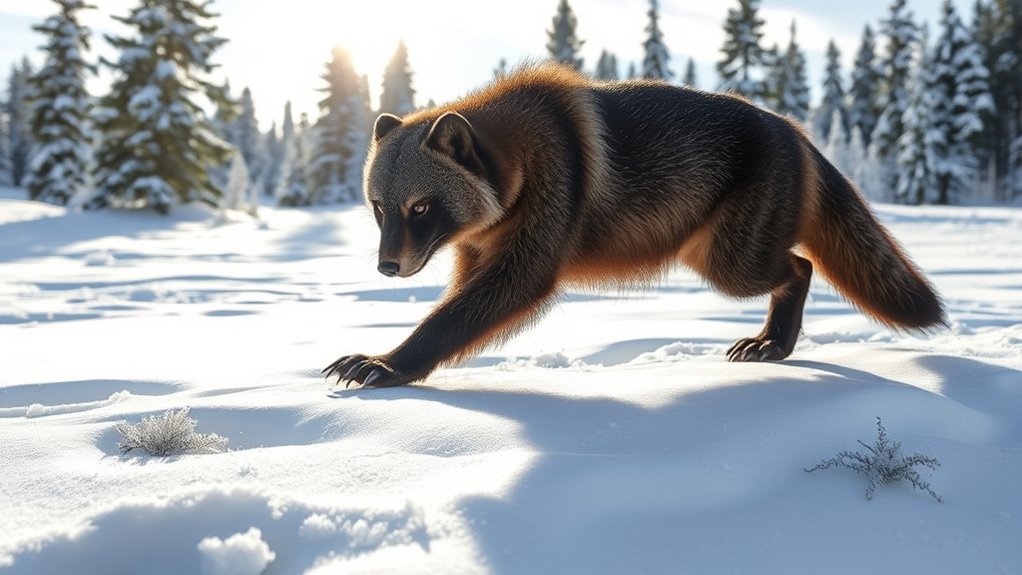

The wolverine is a tenacious carnivore thriving in the harsh northern landscapes. With thick fur for insulation and large paws that act like snowshoes, it explores vast territories in search of food. These solitary animals adapt their diet to include small mammals and scavenged remains. They even cache leftovers under snow to secure meals later on. Their remarkable survival skills are shaped by their rugged environment, and there’s much more to discover about these fascinating creatures.
Key Takeaways
- Wolverines possess thick fur and large paws, enabling them to thrive in cold, mountainous regions with deep snow.
- These solitary animals roam vast home ranges, sometimes extending up to 500 square miles, in search of food.
- As opportunistic feeders, wolverines consume small mammals, carrion, and leftovers, adapting to fluctuating food availability.
- They employ clever food storage strategies, caching leftovers beneath snow to ensure sustenance during scarce periods.
- Wolverines exhibit remarkable adaptability and intelligence, essential for survival in some of Earth’s harshest environments.
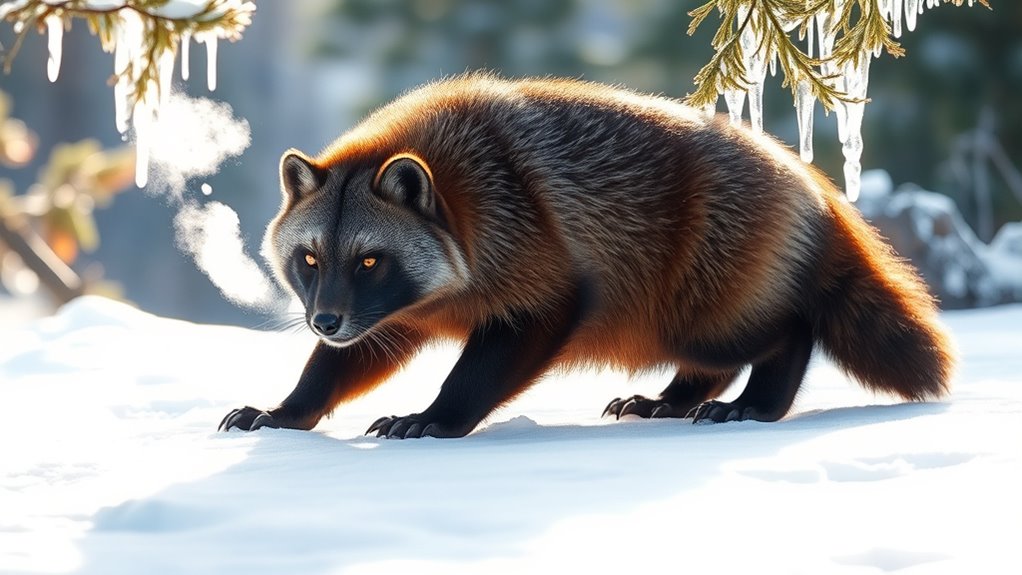
Although you might picture a fierce creature prowling the Arctic wilderness, the wolverine is much more than just its rugged appearance. This remarkable animal showcases a blend of adaptability and resilience, making it a fascinating subject of study. Wolverines have evolved unique behavior adaptations that allow them to survive in some of the harshest environments on Earth. They’re not just tough; they’re smart, resourceful, and skilled at maneuvering their expansive habitat range.
You might be surprised to learn that wolverines are solitary animals. They prefer to roam alone, which helps them cover vast distances in search of food. Their home ranges can stretch up to 500 square miles, depending on the availability of prey. This behavior adaptation is vital for their survival, as they need to guarantee they have access to enough resources in their often-frigid habitats. When food is scarce, wolverines are known to cache their meals, burying leftovers beneath the snow. This clever strategy not only helps them stockpile food but also protects it from scavengers.
When you think about their habitat range, it’s essential to note that wolverines thrive in cold, mountainous regions, including the Arctic tundra and boreal forests. You might imagine them scaling steep slopes or maneuvering snowy landscapes with ease. Their thick fur provides insulation against the cold, while their large paws act like snowshoes, allowing them to travel effortlessly across deep snow. These physical traits are vital for their survival and showcase their incredible adaptations to their environment.
Wolverines are opportunistic feeders, which means they’ll eat whatever they can find. From small mammals to carrion, they’re not picky eaters. This flexibility in their diet is another behavior adaptation that helps them thrive in areas where food availability fluctuates. You might even find them scavenging on the remains of larger predators’ kills, demonstrating their resourcefulness.
Frequently Asked Questions
What Is the Average Lifespan of a Wolverine in the Wild?
A wolverine typically lives about 7 to 10 years in the wild. Their diet mainly consists of small mammals, carrion, and occasionally larger prey. During wolverine reproduction, females give birth to 2-4 kits after a gestation period of about 30-40 days. These young ones stay with their mother for several months, learning survival skills before venturing out on their own. Understanding their lifespan can help you appreciate the challenges they face in the wild.
How Do Wolverines Communicate With Each Other?
Wolverines communicate through a mix of vocalizations and scent marking. As the saying goes, “Actions speak louder than words,” and these creatures are no exception. They use growls, whines, and screams to express themselves. Scent marking helps them establish territorial boundaries, letting others know where they stand. When you observe a wolverine, you’ll notice how they blend these methods to connect and assert their presence in the wild.
Are Wolverines Solitary or Social Animals?
Wolverines are primarily solitary animals, preferring to roam alone in their vast territories. However, you might observe some social interactions during mating season or when a mother raises her young. While they typically enjoy their independence, these interactions can be vital for reproduction and nurturing. When you spot a wolverine, remember that its solitary behavior doesn’t mean it’s completely anti-social; it just values its space most of the time!
What Threats Do Wolverines Face in Their Habitat?
Wolverines face significant threats in their habitat, much like a lone hero battling against overwhelming odds. Climate change drastically alters their environment, shrinking their icy domain and disrupting food sources. Human encroachment further complicates their struggle, as roads and developments fragment their territory. These factors push wolverines to the brink, forcing them into smaller areas where survival becomes a fierce challenge. You can help raise awareness and support conservation efforts to protect these resilient creatures.
Can Wolverines Be Kept as Pets?
You can’t keep wolverines as pets. They require specialized captive care and are best suited for the wild. Their strong instincts and natural behaviors make them difficult to domesticate. Keeping wolverines in captivity can also pose risks to both the animal and the owner. Supporting wildlife conservation efforts is a better way to appreciate these incredible creatures while ensuring their survival in their natural habitat. Focus on protecting their environment instead!
Conclusion
In the wild expanse of the North, the wolverine’s fierce spirit and adaptability remind you of a medieval knight battling for survival. Its relentless pursuit of food and resilience in harsh conditions show just how tenacious this carnivore truly is. As you walk through its rugged domain, you can’t help but admire this creature’s grit, a demonstration to nature’s raw power. Embrace the lessons this tenacious beast teaches about perseverance and thriving against the odds.