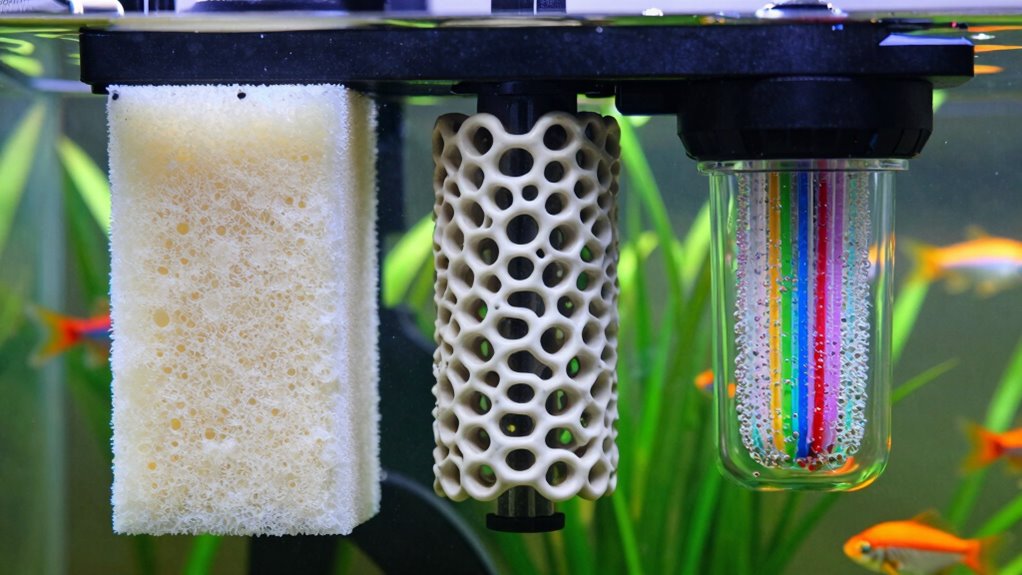

Aquarium filters work together to keep your tank clean and safe. Mechanical filters trap debris and waste to keep the water clear, while biological filters use beneficial bacteria to break down toxins like ammonia. Chemical filters quickly remove harmful substances and odors. Understanding how each type functions helps you choose the right setup. Continuing will give you a clear picture of how these filters keep your aquarium healthy and how to maintain them effectively.
Key Takeaways
- Mechanical filters physically trap debris and waste particles to keep water clear.
- Biological filters support beneficial bacteria that convert toxins like ammonia into less harmful substances.
- Chemical filters quickly remove toxins, medications, and discoloration, aiding water clarity during specific needs.
- Proper maintenance and filter choice depend on tank size, bioload, and compatibility with live plants.
- Combining all three filter types ensures optimal water quality, clarity, and a healthy environment for aquatic life.

ALEGI Aquarium Sponge Filter Pad, Bio Filter Media Foam Sponges, Cut-to-Size Foam for Fish Tank (20"x20"x1" (20PPI))
Efficient Filtration: The high-density and unique structure of the sponge provide exceptional mechanical filtration. It effectively captures and…
As an affiliate, we earn on qualifying purchases.
As an affiliate, we earn on qualifying purchases.
What Are Aquarium Filters and Why Do They Matter?
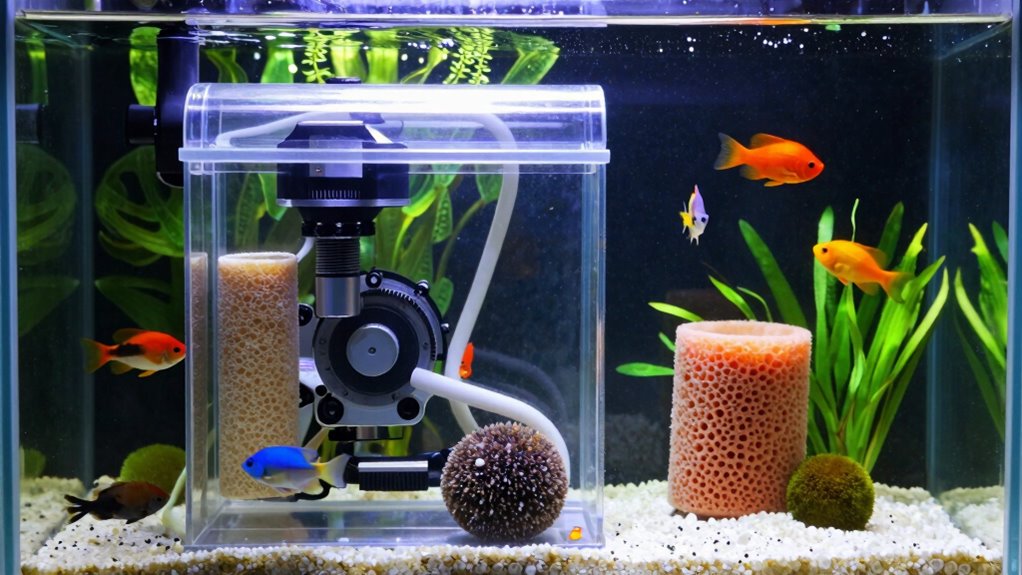
Aquarium filters are essential tools that keep your tank’s water clean and healthy. They play a vital role in maintaining water quality, which directly impacts your aquarium fish’s health and well-being. Without proper filtration, waste, uneaten food, and toxins can quickly build up, making the water unsafe for your aquatic pets. Filters remove debris and harmful substances, ensuring a clear environment for your fish to thrive. Good water quality also prevents common issues like algae overgrowth and disease. By choosing the right filter and maintaining it regularly, you create a stable, healthy habitat. Remember, a well-filtered tank not only looks better but also keeps your aquarium fish happy and stress-free. Proper filtration is the foundation of a successful, vibrant aquarium. Understanding filtration processes is key to selecting and maintaining the right system for your tank. Additionally, regular filter maintenance helps prolong the lifespan of your equipment and ensures optimal performance. Maintaining proper water parameters further supports your tank’s ecosystem and fish health.
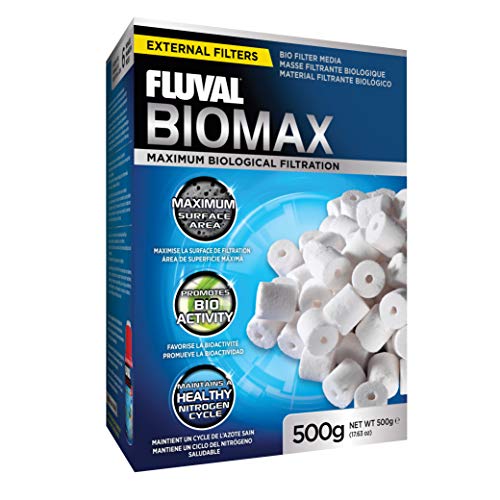
Fluval BioMax Biological Material Remover, 500 g – Biological Filter Media for Aquariums
Filter Compatibility: Compatible with Fluval Filter Series 106, 206, 306, 406, FX5, FX6, 105, 205, 305, 405, 104,…
As an affiliate, we earn on qualifying purchases.
As an affiliate, we earn on qualifying purchases.
How Mechanical Filters Keep Your Water Clear
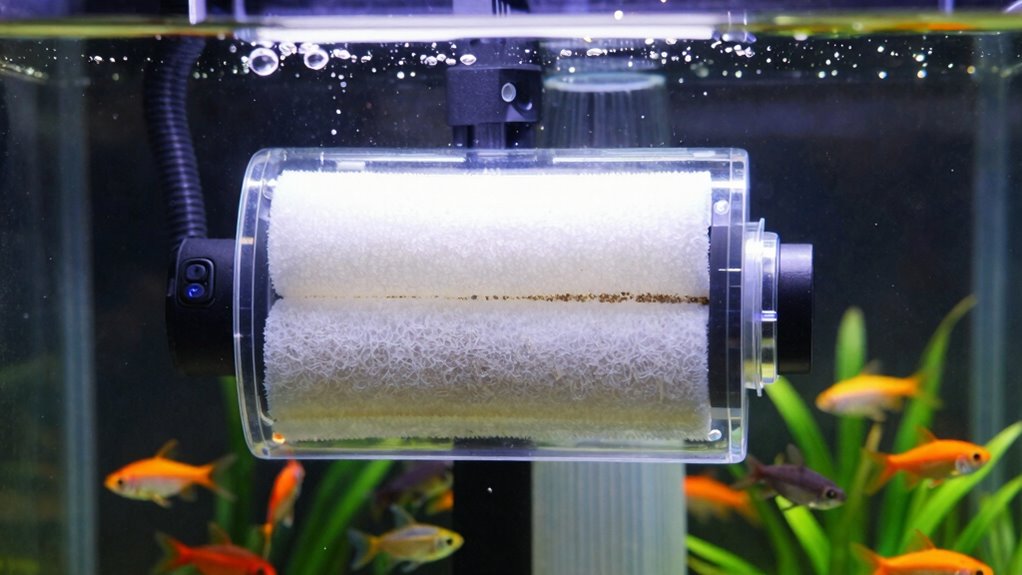
Mechanical filters trap debris and waste particles as water passes through, guaranteeing your tank remains clear. To stay effective, you need to regularly clean or replace the filter media. This routine maintenance ensures the filter continues to trap debris efficiently and keeps your water sparkling. Additionally, choosing the right filter media can improve filtration performance and extend the lifespan of your filter. Proper maintenance routines not only promote water clarity but also support the overall health of your aquatic environment, especially since performance ratings depend heavily on consistent upkeep. Understanding filtration efficiency can help you optimize your filter’s effectiveness over time. Regularly monitoring water quality parameters is also essential to ensure your filtration system functions optimally and maintains a healthy tank.
Trapping Debris Effectively
Since debris naturally accumulates in your tank, effective mechanical filters play a crucial role in trapping particles before they cloud the water. To do this, choose a filter with a fine, durable media that captures debris as water flows through. Regular debris removal is essential to prevent filter clogging, which can reduce flow rate and filtration efficiency. When debris builds up, it restricts water movement, making it harder for the filter to do its job. By routinely cleaning or replacing the filter media, you guarantee consistent debris removal and clear water. This maintenance prevents blockages and keeps your tank looking pristine. Additionally, understanding filtration capacity helps you select a filter that handles your tank’s debris load effectively. Remember, a well-maintained mechanical filter doesn’t just trap debris—it actively contributes to your aquarium’s overall health. Proper filter maintenance routines ensure your system continues to operate efficiently and prolong its lifespan.
Maintaining Filter Efficiency
To keep your water crystal clear, maintaining your filter’s efficiency regularly is essential. A clean, well-functioning mechanical filter traps debris effectively, preventing aquarium algae from thriving. Make sure to rinse or replace filter media as needed to remove built-up dirt and prevent clogging, which can cause increased filter noise. When filters become clogged, water flow slows, reducing filtration performance and allowing debris and algae to accumulate. Regular maintenance also helps keep the water crystal clear and reduces the risk of cloudy water. Additionally, a clean filter runs more quietly, creating a peaceful environment for both you and your aquatic life. Staying on top of filter upkeep ensures your tank remains healthy, clear, and free of unwanted algae blooms. Properly functioning filters also support the biological balance within your tank, which is crucial for the well-being of your aquatic inhabitants. Maintaining your filter’s mechanical filtration effectively can significantly extend its lifespan and improve overall aquarium health. Regularly inspecting and cleaning your filter components prevents the buildup of detritus, which can impair filtration efficiency over time. Incorporating routine maintenance into your aquarium care routine ensures optimal performance and a thriving aquatic environment.

Penn-Plax Filt-a-Carb Replacement Media Cartridges (2 Pack) – Universal Fit for Most Undergravel Filters – Provides Chemical Filtration (FC3)
REPLACEMENT FILTER MEDIA: These Activated Carbon Cartridges are made to fit most undergravel filters, and work with any…
As an affiliate, we earn on qualifying purchases.
As an affiliate, we earn on qualifying purchases.
How Biological Filters Support Healthy Fish
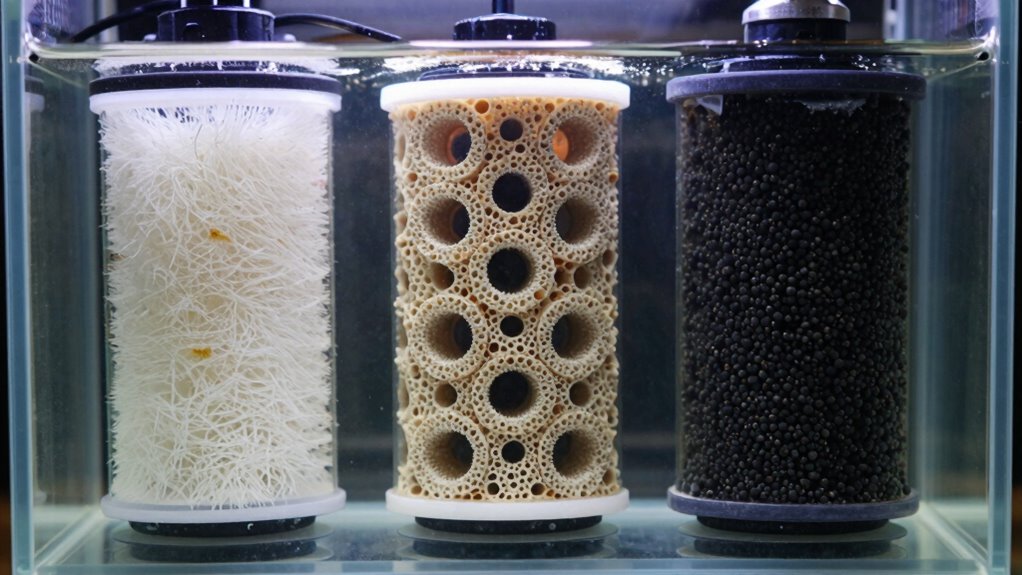
Biological filters help your tank stay healthy by encouraging nitrifying bacteria to form and process waste. This maintains ideal water conditions, preventing harmful build-up that stresses your fish. When these bacteria thrive, they also boost your fish’s immunity, keeping them stronger and happier. Additionally, a well-functioning biological filter is essential for creating a vetted floating on water environment that supports your aquatic life.
Nitrifying Bacteria Formation
Have you ever wondered how your aquarium stays healthy and free of harmful toxins? It all comes down to nitrifying bacteria forming a crucial part of your biological filter. These bacteria develop through biofilm formation on surfaces within your filter or tank. They convert dangerous ammonia, produced by fish waste, into less harmful nitrites, and then into nitrates, which plants can absorb. This process keeps your water safe and maintains a stable environment. As nitrifying bacteria multiply, they create a thriving biofilm that continually processes toxins. Regularly maintaining your biological filter ensures this biofilm stays active and robust. Proper biofilm formation is key to optimizing your biological filtration system. Proper filter maintenance helps sustain a healthy biofilm and ensures the ongoing efficiency of your biological filter. Additionally, maintaining optimal water parameters encourages nitrifying bacteria growth, which is vital for effective biological filtration. Without these bacteria and their biofilm formation, toxic build-up would quickly harm your fish, making biological filtration essential for a healthy aquarium. Ensuring the right balance of nutrients and oxygen in your tank supports the growth of these essential bacteria and sustains a healthy biofilm.
Maintaining Optimal Conditions
Maintaining ideal conditions in your aquarium relies heavily on the ongoing activity of your biological filter. Proper water flow is essential because it ensures that oxygen reaches the beneficial bacteria, keeping them active and effective. You should pay close attention to filter placement; position it where water circulates evenly throughout the tank, avoiding dead spots. A well-placed biological filter helps maintain stable ammonia and nitrite levels, protecting your fish from toxins. Consistent water flow encourages healthy bacterial activity, which is crucial for breaking down waste products. Regularly check that your filter isn’t obstructed or clogged, and adjust its placement if necessary to optimize circulation. Using clear visual guides can help you better understand the ideal filter setup and flow patterns. Remember that water flow patterns directly influence the efficiency of your biological filtration process. When your biological filter operates efficiently, it creates a balanced environment, supporting healthy, vibrant fish and clear water. Additionally, understanding filter maintenance best practices can extend the lifespan of your equipment and ensure continuous filtration performance. Properly maintaining your filter also reduces the risk of buildup that could hinder biological activity, ensuring consistent water quality.
Supporting Fish Immunity
Since healthy fish rely on a strong immune system, biological filters play a vital role in supporting their defenses. They do this by establishing beneficial bacteria that break down ammonia and nitrites, creating a stable environment that reduces stress and boosts fish immune support. When your biological filter functions properly, it helps prevent disease by maintaining water quality and minimizing harmful toxins. A healthy biological filter supports a balanced ecosystem, ensuring your fish are less vulnerable to infections. Consistently monitoring and maintaining your biological filter enhances disease prevention, promoting overall fish health. In turn, a well-maintained biological filter is essential for a resilient, thriving aquarium where your fish can stay healthy and active.
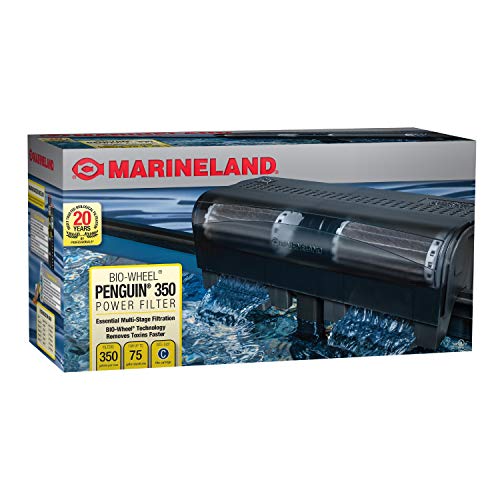
Marineland Penguin Bio-Wheel Power Filter, Multi-Stage Aquarium Filtration
WITH ROTATING BIO-WHEEL: Patented Bio-Wheel technology provides excellent wet/dry biological filtration.
As an affiliate, we earn on qualifying purchases.
As an affiliate, we earn on qualifying purchases.
When and Why to Use Chemical Filters
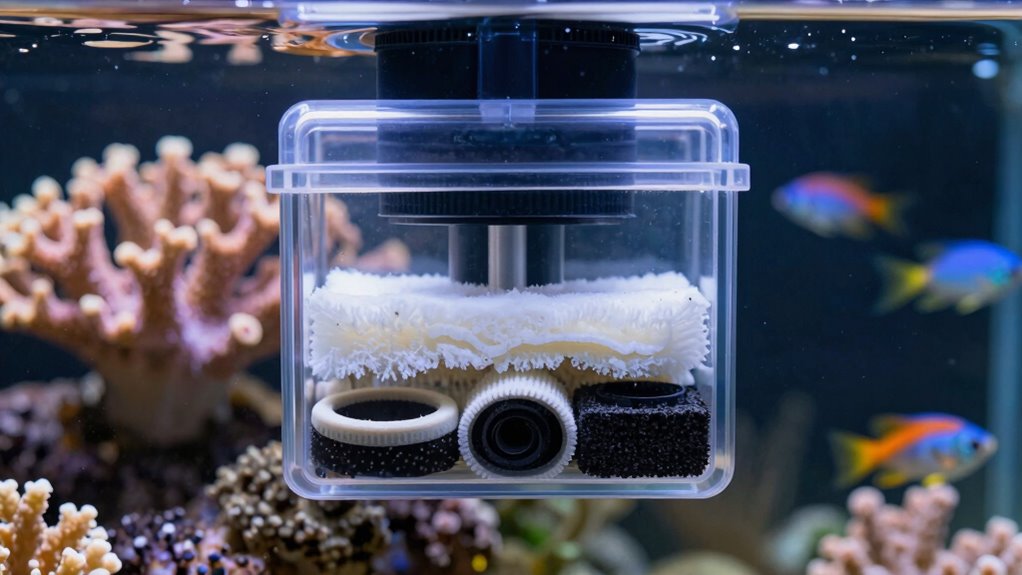
Chemical filters are essential when you need to quickly remove toxins, medications, or discoloration from your aquarium water. They use chemical filtration to trap impurities and chemical reactions to neutralize harmful substances. You should use chemical filters during water changes, after medication treatments, or if you notice sudden discoloration or foul odors. Toxin removal is their primary purpose, helping to maintain water quality and protect your fish. Chemical filters are especially useful in emergencies or when rapid changes are necessary. Keep in mind, they don’t replace mechanical or biological filtration but work alongside them for all-encompassing water treatment. Use chemical filters sparingly, as they can also remove beneficial elements from your water over time. Proper application ensures a healthier environment for your aquatic life.
Choosing the Best Filter for Your Aquarium Size
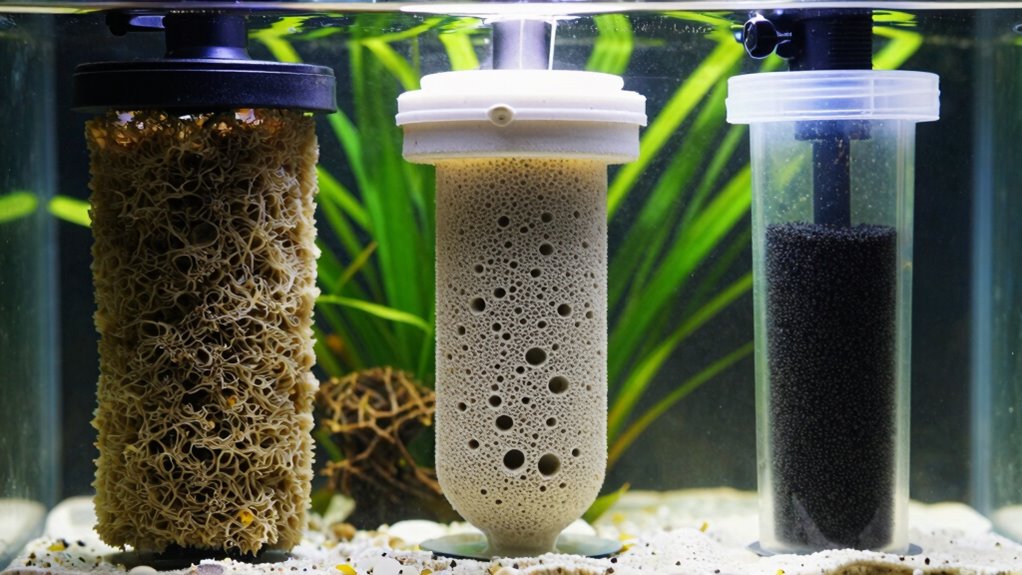
Choosing the right filter for your aquarium starts with understanding its size and bioload. Larger tanks with more fish produce more waste, so you’ll need a filter with higher flow rate and capacity to handle the load. Consider how your aquarium’s plants interact with filtration; some filters may disturb delicate plants or roots, so check for aquarium plant compatibility. For algae control methods, a filter that promotes good water flow helps prevent algae buildup by reducing stagnant spots. If you’re growing live plants, choose a filter that doesn’t strip essential nutrients or produce excess debris. Match the filter size and type to your tank’s specific needs, ensuring efficient filtration without disrupting your aquatic environment’s balance.
Troubleshooting Common Filter Problems and Maintenance Tips
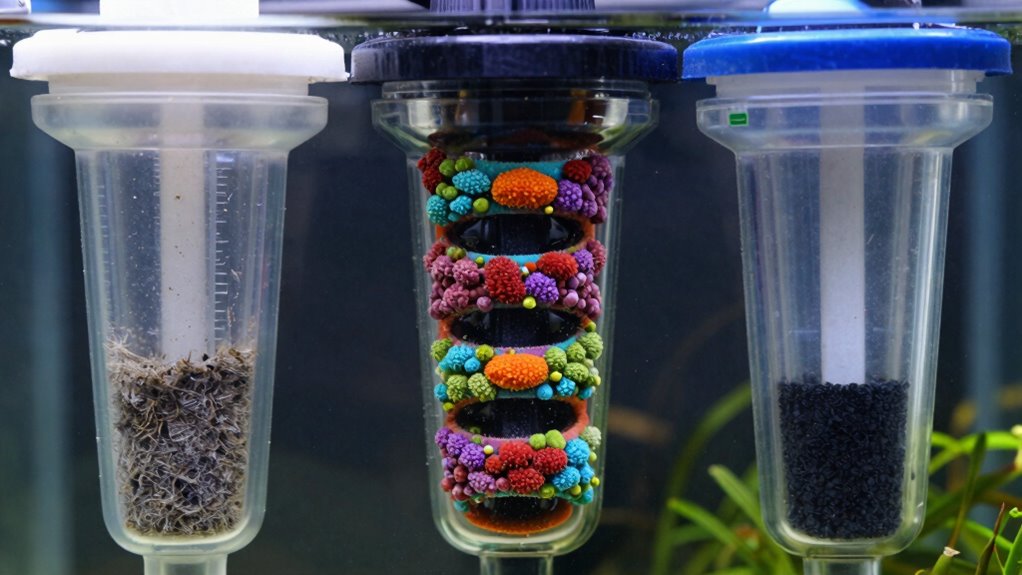
Even the best aquarium filters can encounter issues that disrupt your tank’s health, but many problems are easy to troubleshoot and fix. If your filter isn’t running smoothly, check for filter clogs first; debris or excess waste can block water flow. Regularly cleaning or replacing filter media helps prevent clogs and keeps your filter functioning efficiently. If you notice increased pump noise, it might be due to debris caught in the impeller or a misaligned component. Carefully inspect and clean the impeller, and ensure all parts are securely in place. Performing routine maintenance, like checking for obstructions and cleaning the intake tube, keeps your filter working properly and extends its lifespan. Staying proactive with these tips ensures a healthy, clear environment for your fish.
Frequently Asked Questions
Can I Use Multiple Filter Types Together Safely?
Yes, you can use multiple filter types together safely, as long as you consider multi filter compatibility and filter maintenance. Combining mechanical, biological, and chemical filters helps improve water quality and creates a healthier environment for your fish. Just make certain each filter is suitable for your tank size, and regularly clean and maintain them to prevent over-filtration or dead spots. This approach maximizes filtration efficiency while keeping your aquarium balanced.
How Often Should I Replace Filter Media?
Sure, you should replace your filter media based on its lifespan and your tank’s needs. Typically, mechanical media needs cleaning or replacement every few weeks, while biological media lasts much longer—sometimes months—until it becomes less effective. Chemical media, like activated carbon, usually needs replacement every 4-6 weeks. Stick to a regular replacement schedule to keep your water pristine and your fish happy—because neglecting it is the real filter failure.
Do Filters Consume a Lot of Energy?
Filters typically don’t consume a lot of energy, especially if you choose energy-efficient models. Their energy consumption depends on filter size and pump power, but most are designed to run efficiently while maintaining filter efficiency. You might notice some models use more energy during startup or heavy use, but overall, a good filter shouldn’t markedly impact your electricity bill. Regular maintenance also helps keep your filter running efficiently with minimal energy use.
Are There Filters Suitable for Small or Nano Aquariums?
Yes, there are nano filter options perfect for small aquariums. For small aquarium filtration, look for compact, efficient filters designed specifically for nano tanks, typically under 10 gallons. These filters are easy to install and maintain, providing adequate mechanical, biological, and chemical filtration without overwhelming your tiny setup. Choose a filter that fits your tank size and your fish’s needs, ensuring clear water and a healthy environment.
How Do I Know if My Filter Is Over-Filtering or Under-Filtering?
Your filter is like a sponge soaking up too much or too little water. If it’s over-filtering, you’ll notice water rushing through too fast, causing turbulence and unnecessary noise. Under-filtering feels like a sluggish river, with cloudy water and poor water clarity. Check your filter regularly for maintenance, ensuring it’s not clogged or overly powerful. Adjust flow rates if possible, to match your tank’s needs and keep your aquarium healthy.
Conclusion
Think of your aquarium filter as the heart of your underwater world. It keeps everything flowing smoothly, ensuring your fish thrive in crystal-clear water. By understanding the roles of mechanical, biological, and chemical filters, you can choose the right one for your setup. Regular maintenance keeps this heart healthy, preventing blockages and problems. With a well-functioning filter, your aquarium becomes a vibrant, living masterpiece — a true reflection of your care and dedication.