
To keep your aquarium healthy, focus on three key numbers: pH, ammonia, and nitrate levels. Regularly testing these parameters helps you catch and correct imbalances before they harm your fish. pH affects water acidity, ammonia indicates toxic buildup, and nitrate reflects waste that can cause algae problems. Monitoring these ensures a stable environment. If you want to learn more about how to interpret and manage these vital test results, keep exploring.
Key Takeaways
- The three most important water parameters are pH, ammonia, and nitrate levels for maintaining aquatic health.
- pH indicates water acidity or alkalinity, affecting fish stress and disease susceptibility.
- Ammonia levels reveal toxic waste buildup, which can harm or kill fish if unmanaged.
- Nitrate levels reflect waste processing efficiency and influence algae growth and water quality.
- Regular testing of these three numbers helps detect imbalances early for prompt corrective action.
What Are Water Testing Kits and How Do You Choose the Right One?
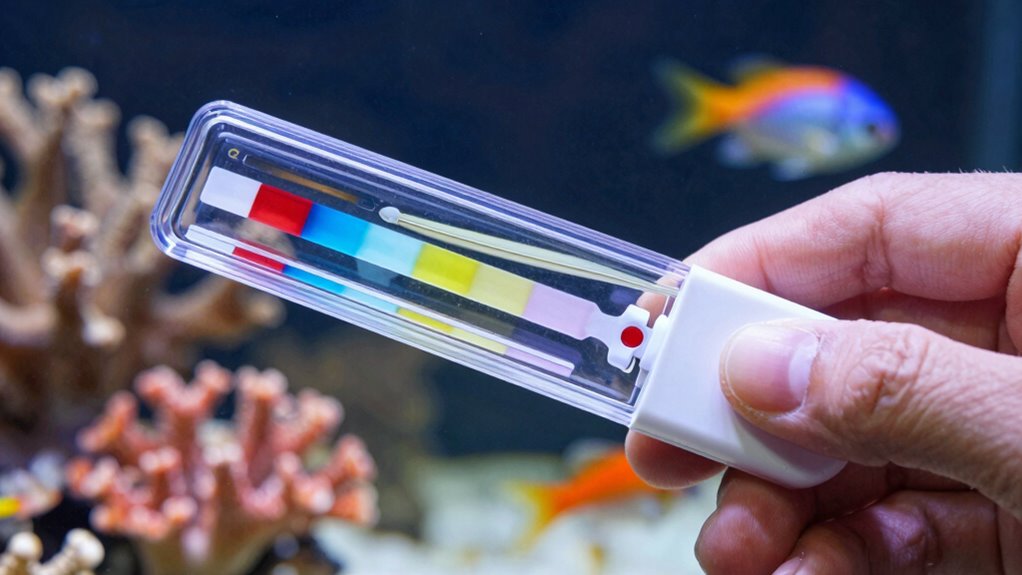
Water testing kits are essential tools for maintaining a healthy aquarium, allowing you to monitor water quality quickly and accurately. They are crucial for proper aquarium maintenance because they help you understand water chemistry, which directly affects your fish’s well-being. When choosing a kit, consider whether it tests for multiple parameters or focuses on specific issues like pH or ammonia. Look for user-friendly designs, clear instructions, and reliable results. Digital meters offer quick readings, but test strips or liquid kits can be more affordable and convenient. Think about your tank size and the type of fish you keep, as these factors influence which tests are most important. Picking the right testing kit ensures you stay on top of your aquarium’s water chemistry, promoting a healthy environment. Additionally, understanding water chemistry and how it impacts your tank helps you make informed decisions about maintenance routines. Incorporating smart monitoring tools can further enhance your ability to track water quality in real-time and respond promptly to any issues. Regular testing and awareness of water parameters are key to preventing problems before they escalate, especially when using advanced testing methods that provide more comprehensive data. Being familiar with water quality standards allows you to interpret test results more effectively and maintain optimal conditions for your aquatic life.
Why Testing pH, Ammonia, and Nitrate Levels Is Essential for a Healthy Aquarium
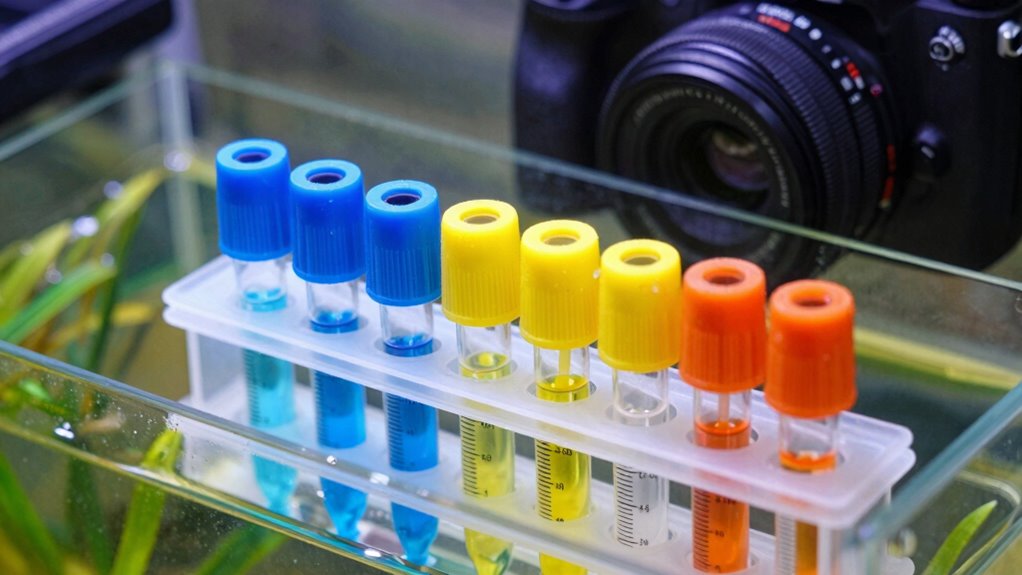
Monitoring pH, ammonia, and nitrate levels is essential because these parameters directly influence your fish’s health and the stability of your aquarium environment. Maintaining pH stability ensures your fish experience consistent conditions, preventing stress and disease. Ammonia toxicity is a major concern; even small increases can harm or kill your fish, so regular testing helps you catch spikes early. Nitrate levels, if left unchecked, can lead to algae overgrowth and poor water quality, affecting fish behavior and overall tank health. Additionally, understanding how to interpret test results and take corrective actions is a fundamental water quality skill. Regularly checking for appropriate testing methods helps ensure accurate readings and effective adjustments. Employing proper testing techniques and understanding their limitations can further improve your ability to maintain a healthy tank. Developing test interpretation skills is crucial for timely decision-making and maintaining optimal conditions. Being familiar with test result trends enables you to anticipate problems before they become severe. This proactive approach helps you create a safe, stable environment, promoting vibrant, healthy fish and a thriving aquarium ecosystem.
How to Use Testing Kits and Interpret Your Water Test Results to Keep Your Aquarium Balanced
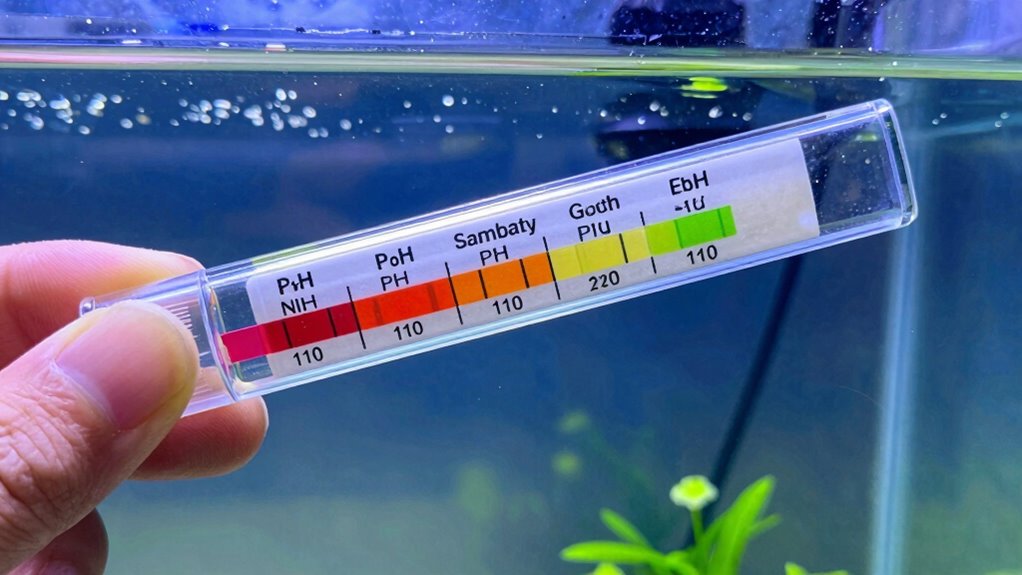
To keep your aquarium balanced, it’s essential to know how to properly use testing kits and interpret their results. Start by collecting water samples according to the kit’s instructions, ensuring accuracy. Check the color change against the provided chart to determine levels of pH, ammonia, nitrate, and other parameters. If your readings show high ammonia or nitrate, it indicates poor water quality, risking fish health and algae control issues. Low pH can also stress your fish, making them susceptible to disease. Regular testing helps you spot problems early and take corrective action, like water changes or adjusting chemical levels. Maintaining proper water quality through consistent testing and adjustments supports a healthy aquatic environment. Proper test procedures are essential for accurate readings and effective management. Additionally, understanding aquarium filtration systems can help in maintaining stability and reducing the frequency of testing needed. Implementing an effective filtration system can further stabilize water conditions, minimizing fluctuations and easing the testing process. Regular monitoring with reliable testing kits ensures that you can respond promptly to any imbalances and keep your aquatic life thriving.
Frequently Asked Questions
How Often Should I Test My Aquarium Water?
You should test your aquarium water at least once a week to maintain water stability. Regular testing helps catch issues early and keeps parameters like pH, ammonia, nitrite, and nitrate in check. If your tank is new or has recent changes, increase testing frequency to twice a week. Consistent testing guarantees a healthy environment for your fish and prevents potential problems before they escalate.
Can Testing Kits Be Reused or Do I Need New Ones?
Reusable testing kits can be used multiple times, but you need to clean and store them properly between tests. Disposable test strips, on the other hand, are meant for single use and should be discarded after each test to guarantee accuracy. Always check the manufacturer’s instructions, as some kits are designed for one-time use, while others are reusable with proper maintenance. This way, you get reliable results every time.
What Are the Common Mistakes to Avoid When Testing Water?
To avoid incorrect readings, always follow the manufacturer’s instructions carefully and avoid test contamination by cleaning test vials thoroughly. Don’t rush the process; take your time for accurate results. Keep testing kits away from sunlight and extreme temperatures. Remember, using expired kits or reusing test strips can lead to inaccurate data. Double-check your readings and record them properly to maintain a healthy aquarium environment.
How Do Temperature Changes Affect Test Results?
Temperature changes can substantially impact your test accuracy. When water temperature isn’t stable, test results may be skewed, leading to inaccurate readings. To guarantee reliable results, keep your aquarium water at a consistent temperature before testing. Avoid testing during sudden temperature shifts, as they can affect chemical reactions in the test kit. Maintaining temperature stability helps you get precise readings and better monitor your aquarium’s health.
Are Digital Testing Kits More Accurate Than Traditional Colorimetric Ones?
Digital testing kits often outperform traditional colorimetric ones because they offer greater calibration accuracy and eliminate human error. While analog kits rely on color matching, which can be subjective, digital kits provide precise, consistent readings. You’ll find that digital tools save time and improve reliability, especially when monitoring critical parameters. However, verify your digital device is properly calibrated to maintain the highest accuracy over time.
Conclusion
So, next time your aquarium’s water looks perfectly clear, remember those three magic numbers—pH, ammonia, and nitrate—holding the real secrets to your fish’s happiness. Ironically, while you might think a pristine tank needs no testing, it’s actually the silent guardians—those tiny test kits—that keep your aquatic paradise from turning into a fishy disaster. Trust the numbers, not just the crystal-clear water, and your underwater world will thrive.