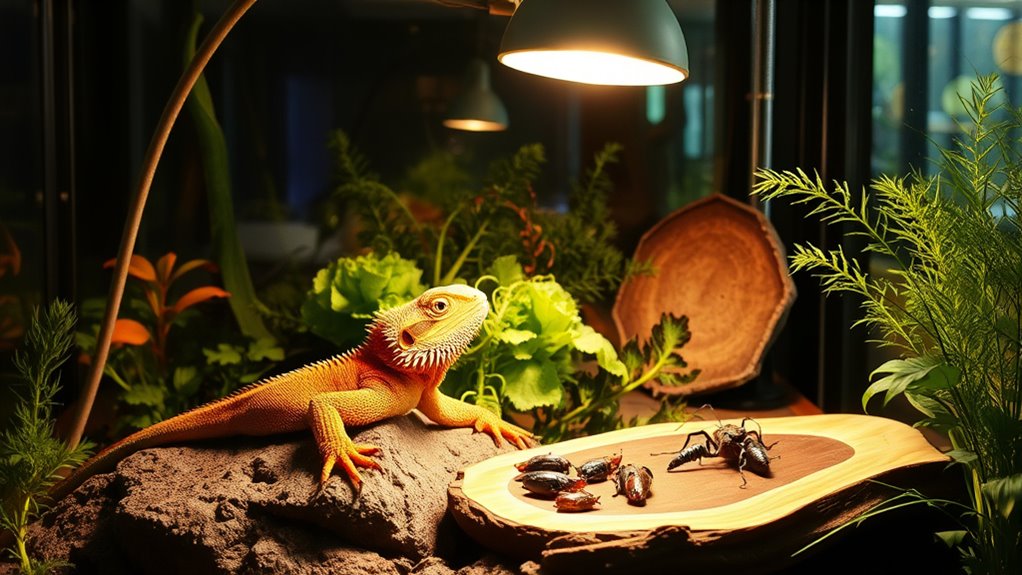

To care for your bearded dragon, make certain you provide a basking area with a heat lamp at 100-110°F (38-43°C) and a cooler side for temperature regulation. Use UVB lighting for vitamin D3 synthesis, vital for calcium absorption. Replace UVB bulbs every six months to maintain effectiveness. Offer a balanced diet of insects and vegetables, along with a stimulating environment featuring hiding spots and climbing structures. Discover how to create the perfect habitat and diet to keep your dragon healthy.
Key Takeaways
- Maintain a basking area temperature of 100-110°F (38-43°C) with a heat lamp for optimal thermoregulation.
- Provide UVB lighting within 12-18 inches of the basking area to support vitamin D3 synthesis and calcium absorption.
- Replace UVB bulbs every six months to ensure adequate output and prevent metabolic bone disease.
- Incorporate a varied diet of insects and vegetables to meet nutritional needs and promote overall health.
- Create a stimulating habitat with climbing structures, hiding spots, and safe decorations to enhance mental well-being.
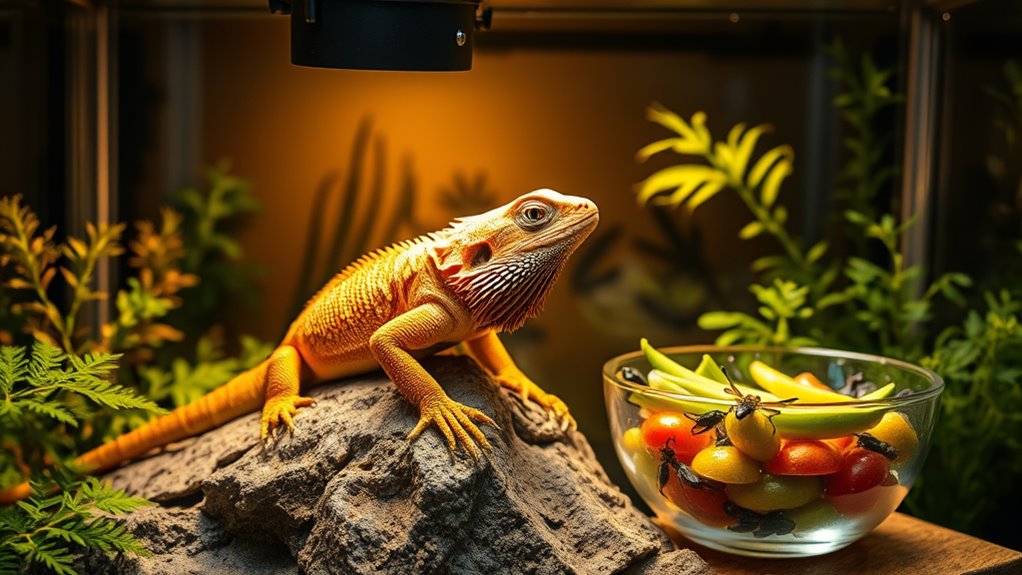
How can you guarantee your bearded dragon thrives in its new home? First and foremost, you need to focus on creating an environment that meets its specific needs. Heat and light are paramount for these reptiles, as they rely on the warmth of their surroundings to regulate their body temperature. Set up a basking area with a heat lamp that provides temperatures around 100-110°F (38-43°C) during the day. This’ll ensure your dragon gets the energy it needs to digest food and remain active. Don’t forget to include a cooler side in the enclosure, allowing your dragon to move to a more comfortable temperature when it wants to cool down.
Creating a warm, well-lit environment is essential for your bearded dragon’s health and activity.
In addition to heat, your bearded dragon needs proper lighting, specifically UVB light. This type of light helps synthesize vitamin D3, *indispensable* for calcium absorption. A good UVB bulb should be placed within 12-18 inches of your dragon’s basking area. Replace the bulb every six months, as its UV output diminishes over time. This’ll help maintain your dragon’s health and prevent metabolic bone disease, a common issue among captive reptiles.
Behavioral enrichment is another essential aspect of your bearded dragon’s well-being. It’s not just about providing the right temperature and light; you also want to make sure your dragon has mental stimulation. Incorporate various textures and items in the enclosure, like rocks, branches, and safe plants. These can serve as climbing structures or hiding spots, mimicking their natural habitat. You might also consider adding a shallow water dish or a small hammock for added variety. The more engaging the environment, the happier and healthier your dragon will be.
Enclosure aesthetics also play a role in your dragon’s comfort. A visually pleasing setup can reduce stress and make your pet feel more secure. Choose a substrate that’s easy to clean, yet visually appealing, like sand or reptile carpet. Arrange decorations in a way that provides plenty of hiding spots and open basking areas. You’ll want your dragon to feel like it’s in a natural environment, which can help promote positive behavior.
Ultimately, a well-maintained habitat with the right heat, light, behavioral enrichment, and thoughtful enclosure aesthetics can set your bearded dragon up for a thriving life. Pay attention to these details, and your dragon will flourish in its new home.
Frequently Asked Questions
How Often Should I Clean My Bearded Dragon’s Habitat?
You should clean your bearded dragon’s habitat at least once a week to maintain a healthy environment. During this habitat cleaning, remove any uneaten food, waste, and soiled substrate. Spot clean daily to keep things fresh. For thorough enclosure maintenance, consider a deep clean every month, which includes disinfecting surfaces and replacing substrate. Regular upkeep not only keeps your dragon happy but also helps prevent health issues down the line.
Can Bearded Dragons Eat Fruits and Vegetables Daily?
Yes, bearded dragons can eat fruits and vegetables daily, but you should focus on variety. Offer them a mix of fruits like strawberries and blueberries, along with vegetables like collard greens and bell peppers. When it comes to vegetable preparation, chop them into small, manageable pieces to make it easier for your dragon to eat. Just remember, fruits should be a treat, while veggies should make up the bulk of their diet.
What Is the Ideal Humidity Level for Bearded Dragons?
The ideal humidity level for bearded dragons is between 30% and 40%. Remarkably, maintaining this range can reduce stress and promote better health. You’ll need to use humidity control techniques to achieve this, such as misting techniques that keep the air moist without overdoing it. Using a hygrometer can help you monitor levels accurately. By keeping humidity in check, you’ll create a more comfortable environment for your bearded dragon.
How Can I Tell if My Bearded Dragon Is Sick?
You can tell if your bearded dragon is sick by watching for signs of illness like lethargy, a lack of appetite, or abnormal droppings. Behavioral changes, such as hiding more often or becoming aggressive, can also indicate health issues. Keep an eye out for signs of respiratory distress, like wheezing or open-mouth breathing. If you notice any of these symptoms, it’s best to consult a veterinarian for a proper diagnosis and treatment.
Do Bearded Dragons Need a Companion or Can They Live Alone?
Bearded dragons can live alone, but they thrive better with enclosure mates due to their social behavior. It’s a common misconception that they need constant companionship, but they’re quite capable of being solitary. However, if you choose to house them together, make sure there’s enough space and resources to prevent stress and aggression. Ultimately, providing a stimulating environment can help keep your bearded dragon happy, whether they’re solo or with friends.
Conclusion
Caring for your bearded dragon isn’t just about providing heat and light; it’s about creating a thriving environment tailored to their needs. You might think they’re just chill pets, but they actually thrive on routine and attention. By understanding their dietary preferences and basking habits, you’ll foster a bond that goes beyond caretaker and pet. So, immerse yourself in their world, and you’ll discover that a happy bearded dragon makes for a truly rewarding companion!