Perfectly smooth perches might seem safer, but they can actually cause foot problems in your bird. Smooth surfaces don’t provide enough grip, making your pet unstable or uncomfortable. Over time, this can lead to sores, irritation, or arthritis. Natural textures and varied diameters support healthy foot movement and muscle development. To keep your bird’s feet safe, it’s important to choose and maintain perches wisely. Keep going to discover more tips to protect your bird’s foot health.
Key Takeaways
- Smooth perches reduce grip, increasing slipping risk and potential injuries, especially on higher or unstable positions.
- Overly smooth surfaces cause discomfort and unnatural foot gripping, leading to sores or arthritis over time.
- Lack of textured surfaces hampers foot muscle development and natural behaviors, risking long-term foot health issues.
- Poorly textured or slick perches can cause instability and stress, discouraging natural perching and movement.
- Regular inspection and replacement of smooth or damaged perches prevent foot injuries and promote overall foot safety.
Are Smooth Bird Perches Safer? Debunking the Myths

Many bird owners believe that smooth perches are safer because they seem less likely to cause foot injuries. However, this perception overlooks important aspects like perch aesthetics and bird grooming. Smooth surfaces may look sleek and clean, but they can be uncomfortable for your bird’s feet, discouraging natural foot movement. A natural texture can provide better grip and stimulate foot muscles, contributing to healthier feet. This discomfort over time can lead to health issues such as foot sores or arthritis. Perch aesthetics matter because a more textured or natural-looking perch encourages better foot health and promotes natural grooming habits. When your bird can grip securely, it reduces the risk of slipping and helps maintain foot strength. So, while smooth perches might seem visually appealing, they often compromise your bird’s comfort and grooming needs, making them less ideal for long-term health. Additionally, choosing perch materials that mimic natural textures can significantly improve your bird’s overall well-being. Understanding the importance of natural bird behaviors can help you select perches that support your bird’s physical and mental health effectively.
How Smooth Surfaces Can Damage Your Bird’s Feet

Using smooth surfaces can make it harder for your bird to grip securely, leading to unstable footing. This reduced grip increases the risk of slips and injuries. Protect your bird’s feet by choosing perches that provide better stability and grip. Additionally, selecting perches made from natural materials can improve safety and comfort for your bird. Regularly inspecting and maintaining perches can also prevent potential hazards and ensure your bird’s environment remains safe. Incorporating body jewelry measurements and materials into your perch selection can help you choose the most suitable options for your bird’s needs and ensure durability. Incorporating energy-efficient cloud solutions into your bird’s habitat can also promote a healthier living space.
Reduced Grip and Stability
Smooth surfaces may seem harmless, but they can substantially reduce your bird’s grip and stability when perched. When the perch material is too slick or polished, your bird struggles to hold on securely, increasing the risk of falls. This is especially true on higher perches, where stability is vital. If the perch height is significant, a lack of grip can cause your bird to lose footing more easily, leading to stress or injury. Perches made from smooth, shiny materials may look attractive but compromise your bird’s safety. Instead, choose textured or natural wood perches that provide better grip, encouraging your bird to perch comfortably and confidently. Ensuring proper perch material and appropriate height helps maintain your bird’s stability and overall well-being. Proper perch selection is essential to prevent accidents and support your bird’s health.
Increased Risk of Injury
When perch surfaces are too slick or polished, they can cause serious injuries to your bird’s feet. A poorly designed perch with a smooth surface increases the risk of slips, leading to cuts, abrasions, or even fractures. The perch design plays an essential role in supporting your bird’s foot health; a smooth, shiny surface prevents proper grip and can cause repetitive stress or foot pad injuries. Over time, these injuries may result in infections or chronic discomfort, affecting your bird’s mobility. To protect your bird, choose natural, textured perches that promote healthy foot conditions and reduce injury risk. Proper perch surfaces help maintain natural grip and prevent foot problems by encouraging healthy foot pad development. Additionally, understanding foot health factors is crucial for preventing long-term issues and ensuring your bird’s well-being. Using perches with appropriate texture can significantly decrease the likelihood of foot injuries and improve overall comfort.
Why Texture Matters for Natural Foot Movement
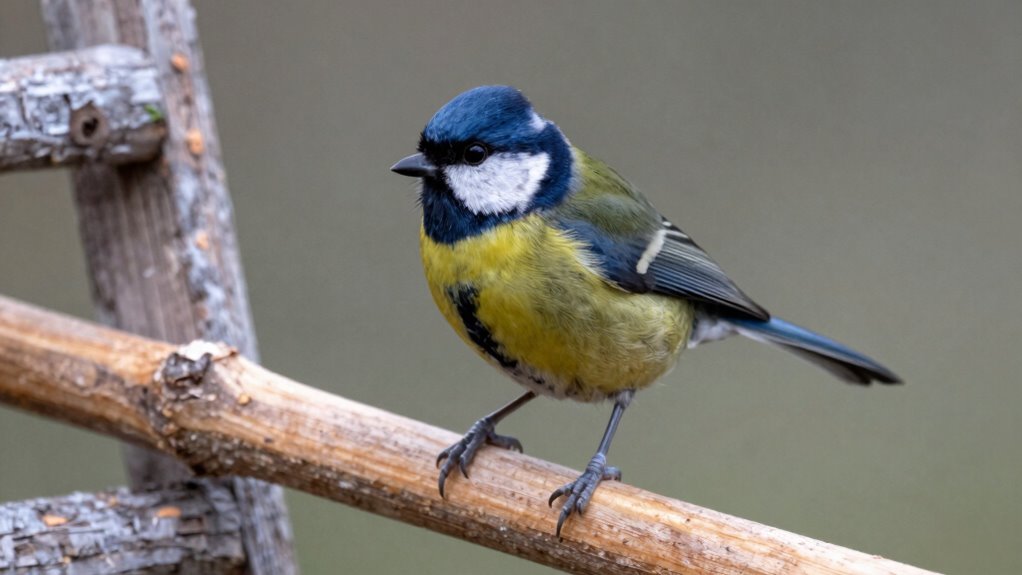
The texture of a perch or ladder plays a crucial role in how naturally your bird’s feet move. A textured surface improves perch ergonomics by providing grip and encouraging natural foot gripping. Smooth, slippery perches can cause your bird to grip excessively hard or awkwardly, leading to strain. When the surface offers varying textures, it promotes proper foot muscle development, which is essential for healthy foot function. Natural textures mimic what birds encounter in the wild, helping maintain their foot strength and flexibility. Conversely, overly smooth perches can cause discomfort and unnatural gripping, increasing the risk of foot problems. Choosing perches with the right texture ensures your bird moves comfortably and maintains strong, healthy feet through proper foot muscle engagement. Understanding bird anatomy highlights how important natural foot movement is for overall health.
Signs Your Perches Are Causing Foot Problems

If your bird’s perches are causing discomfort, you’ll notice signs of foot problems early on. Poor perch installation, such as overly smooth or uneven surfaces, can lead to foot soreness or swelling. Watch for changes in bird behavior, like reluctance to perch, limping, or excessive scratching at their feet. If your bird seems hesitant to land or frequently shifts positions, it could be a sign of discomfort. Cracked or bleeding toes, swelling, or curled toes are clear physical indicators of foot issues caused by inappropriate perches. These signs mean your bird’s feet aren’t healthy, often due to perches that don’t support natural foot posture. Additionally, proper perch selection is crucial to prevent uneven wear and pressure points that can lead to injuries. Using appropriate perch materials can help maintain foot health and prevent injuries caused by rough or overly smooth surfaces. Addressing these issues promptly helps prevent further injury and ensures your bird remains comfortable and active. Proper perch selection is essential to maintaining foot health and preventing injury, especially considering the importance of natural foot posture in preventing discomfort.
Choosing Safe and Comfortable Perches for Your Bird
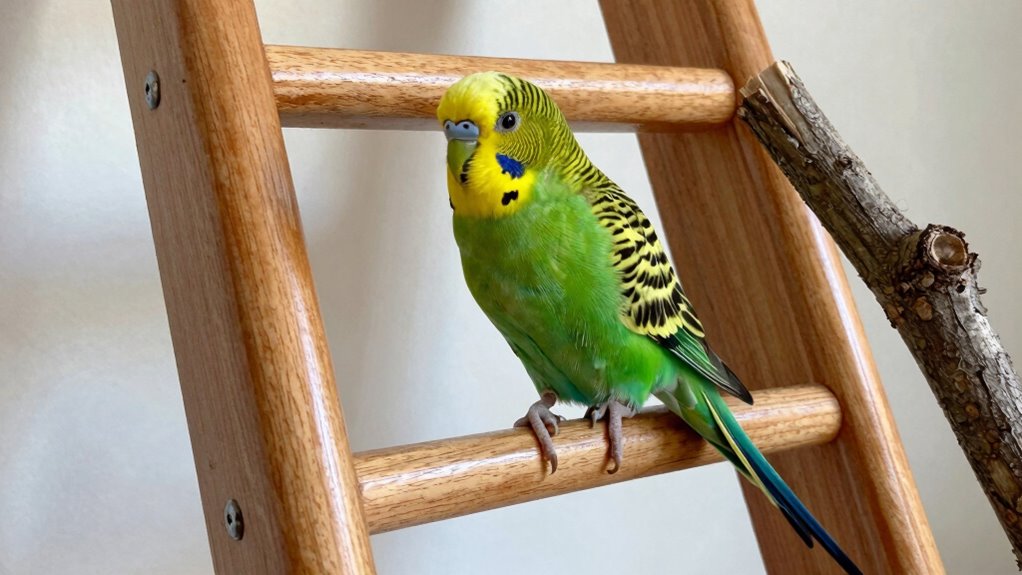
Choosing safe and comfortable perches is essential for your bird’s foot health and overall well-being. Start by selecting perch material that provides a natural grip and varies in texture, such as wood or rope. Avoid smooth, synthetic materials that can cause foot problems. When considering perch height, ensure the perch is positioned at a comfortable level where your bird can easily access food, water, and toys without straining or overreaching. A variety of perch sizes and textures will help prevent pressure sores and foot fatigue. Remember, a perch that’s too high or too low can cause stress or injury. By selecting the right perch material and height, you help promote healthy feet and a happier, more comfortable environment for your bird.
Tips for Maintaining Perches to Keep Feet Healthy
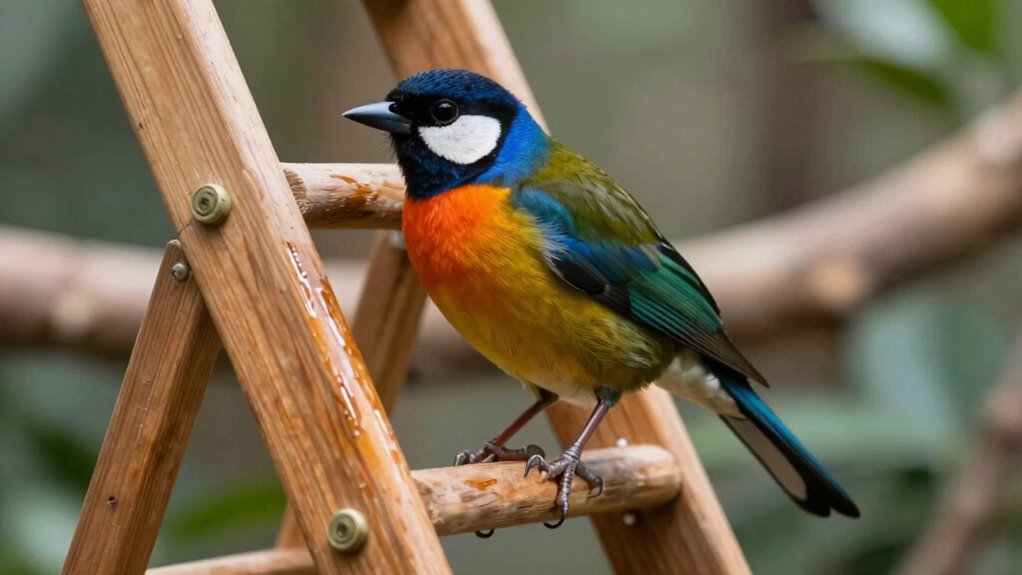
Regularly inspecting your bird’s perches is vital to prevent foot problems. Check for rough spots, splinters, or uneven surfaces that can cause irritation. The perch material plays an essential role; natural wood often offers better grip and comfort, while plastic or metal might be too smooth or hard, leading to foot issues. Adjust perches based on your bird’s behavior—if it prefers to perch high or move frequently, guarantee the surfaces provide enough grip and vary in diameter to exercise foot muscles. Clean perches regularly to prevent bacteria buildup. If you notice your bird shifting or shifting frequently, it might be a sign to change the perch. Proper maintenance promotes healthy feet and helps prevent injuries caused by inappropriate perch material or deteriorating surfaces. How to Status can help you monitor your bird’s health and ensure safe perching conditions.
Frequently Asked Questions
How Often Should I Replace My Bird’s Perches to Ensure Foot Health?
You should replace your bird’s perches every 6 to 12 months to maintain foot health. Regularly check perch placement and size—ensure they vary in diameter to prevent pressure sores. If you notice rough spots, cracks, or uneven surfaces, swap them out sooner. Providing different perch textures encourages natural foot movement and prevents injuries, so stay attentive and replace perches as needed to keep your bird comfortable and healthy.
Are There Specific Materials That Are Better for Bird Perches?
Think of your bird’s perch as a Zen garden—natural textures matter. Opt for wood or rope perches with rough, uneven surfaces to mimic nature, helping prevent foot problems. Look for antimicrobial options, such as treated or naturally resistant materials, to keep bacteria at bay. Avoid smooth, plastic perches, as they can cause foot issues. Your bird’s comfort and health depend on choosing the right materials that promote healthy, natural foot activity.
Can Perches Influence My Bird’s Behavior or Activity Levels?
Yes, perches can influence your bird’s behavior and activity levels. If you choose perches with varied perch texture, like rough or natural wood, it encourages activity stimulation by prompting your bird to grip and move more. Smooth, perfectly slick perches might cause boredom or discomfort, leading to less movement. Providing a mix of textures keeps your bird engaged, promotes exercise, and supports overall health.
What Are the Signs of Discomfort or Pain Caused by Perches?
If your bird shows signs of discomfort, watch for foot soreness, toe injuries, or reluctance to perch. You might notice limping, favoring one foot, or excessive preening around their toes. These signs indicate pain or irritation caused by unsuitable perches. Pay close attention to their behavior and physical cues, and switch to textured, appropriately-sized perches to prevent ongoing discomfort and keep your feathered friend happy and healthy.
How Do I Introduce New Perches Without Stressing My Bird?
To introduce new perches without stressing your bird, start by placing the new perch near its current one, allowing it to explore gradually. Guarantee it’s comfortable and offers variety, which boosts bird comfort. Let your bird investigate at its own pace, praising softly when it approaches or uses the perch. Over time, move the new perch closer to the cage’s preferred spots, helping your bird adapt smoothly and confidently.
Conclusion
Remember, a smooth perch may seem like a safe choice, but it can hide hidden dangers beneath a glossy surface. Your bird’s feet deserve more than just a surface that looks good—it needs texture to move, grip, and stay healthy. So, choose perches wisely, keep them maintained, and watch for signs of foot trouble. Because when it comes to your bird’s well-being, a little roughness can make all the difference in the world.