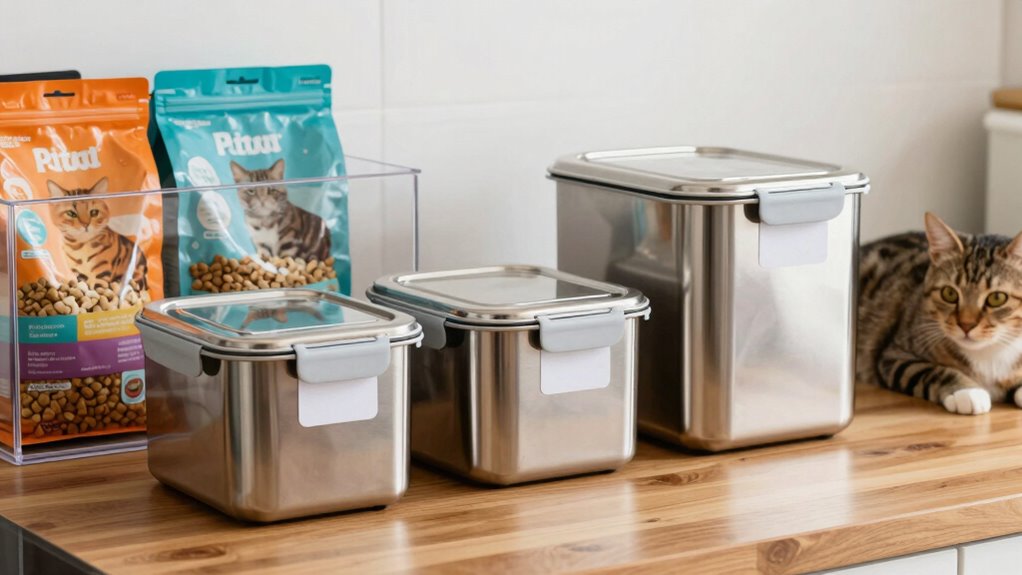

To keep your cat’s kibble fresh and pest-free, choose airtight containers made from durable materials like high-quality plastic or stainless steel. Make certain they have secure lids and incorporate pest-resistant features. Store them in a cool, dark place away from sunlight and heat, and label each container for easy organization. Limiting openings and regularly checking expiration dates also help. Keep reading to discover more tips on selecting the best storage solutions for your feline friend.
Key Takeaways
- Use airtight, pest-resistant containers made of durable materials like high-quality plastic or stainless steel.
- Store kibble in cool, dark places away from sunlight and heat to preserve freshness and nutrients.
- Label containers clearly and organize by type or feeding schedule for easy access and inventory management.
- Limit container openings and regularly check expiration dates to prevent spoilage and contamination.
- Incorporate smart features or seals to monitor environmental conditions and enhance pest prevention efforts.
![Gamma2 Vittles Vault Pet Food Storage Containers - Sealed Dog and Cat Food Storage Container, Fits up to 25lbs, Made in the USA - [12"L x 13.75"H]](https://m.media-amazon.com/images/I/41XKsqOw1kL._SL500_.jpg)
Gamma2 Vittles Vault Pet Food Storage Containers – Sealed Dog and Cat Food Storage Container, Fits up to 25lbs, Made in the USA – [12"L x 13.75"H]
PRESERVE FRESHNESS AND FLAVOR: This airtight pet food container helps your pet's dry food to stay tasty with…
As an affiliate, we earn on qualifying purchases.
As an affiliate, we earn on qualifying purchases.
Why Proper Cat Food Storage Keeps Kibble Fresh and Safe
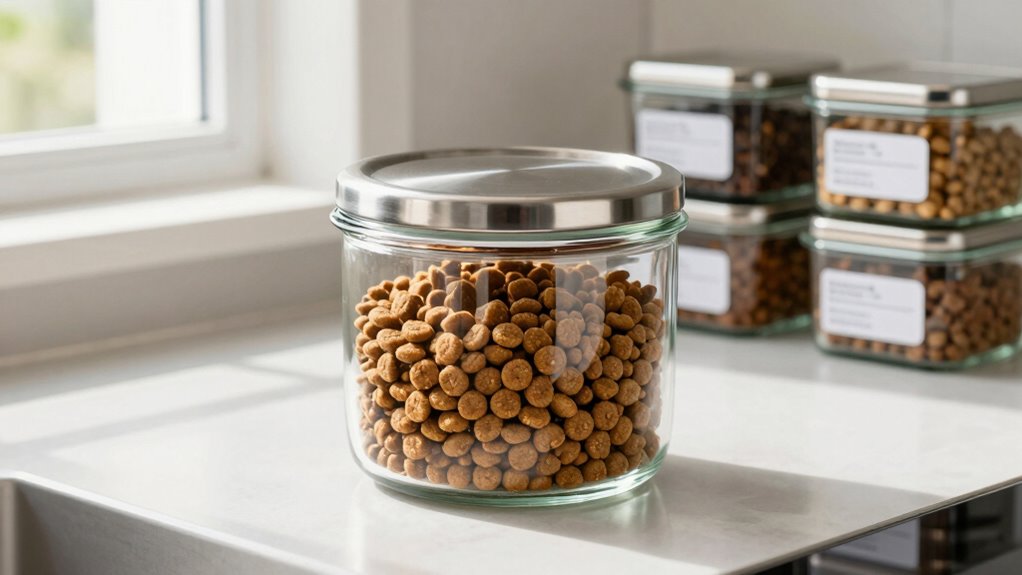
Properly storing your cat’s food is essential because it directly affects the freshness and safety of the kibble. When food is kept in a proper container, it prevents exposure to moisture and air, which can cause spoilage or mold. This is especially important if your cat has food allergies, as contaminated or stale food can trigger reactions. Using appropriate storage containers helps maintain the kibble’s quality and freshness over time. Consistent storage also supports your feeding schedules, ensuring your cat always has access to fresh, safe food. By avoiding exposure to pests and bacteria, proper storage reduces health risks and maintains the nutritional quality of the kibble. Taking care of how you store your cat’s food helps promote their overall health, minimizes allergy issues, and keeps mealtime safe and enjoyable. Additionally, using smart home technology such as smart containers or sensors can help monitor and maintain optimal freshness over time, including tracking humidity and temperature levels to prevent spoilage. Proper storage techniques also involve ventilation considerations, which help prevent moisture buildup and mold growth inside the container. Implementing proper sealing methods further helps lock in freshness and prevent pests from accessing the food.

simplehuman 25 Liter, 27 lb / 12.2 kg Medium Pet Food Storage Container for Dog Food, Cat Food, and Bird Feed, Brushed Stainless Steel
AIRTIGHT SEAL – When you clamp the lid shut, a silicone gasket ensures an airtight seal so dog…
As an affiliate, we earn on qualifying purchases.
As an affiliate, we earn on qualifying purchases.
How to Choose the Best Material for Your Cat Food Container
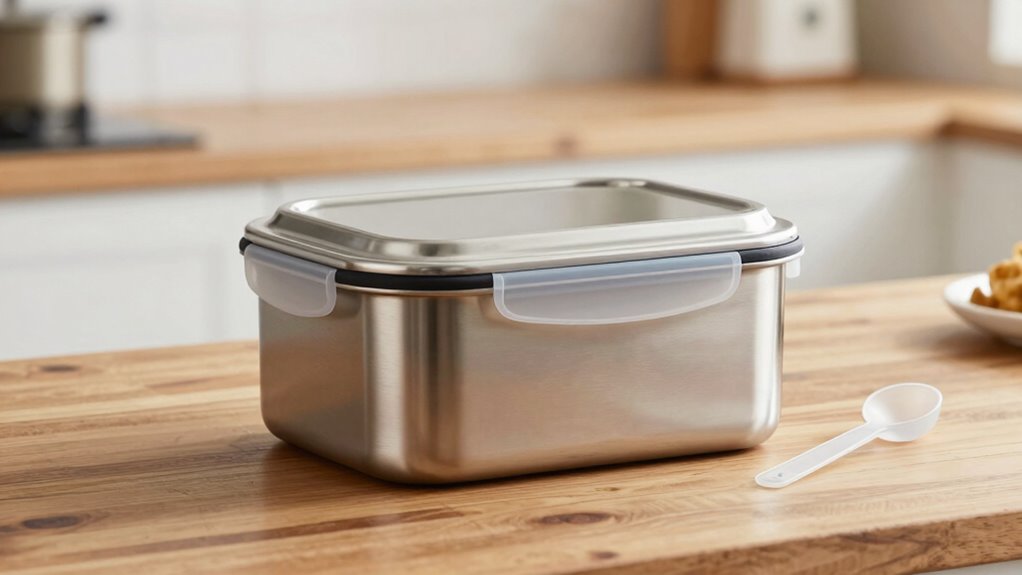
Choosing the right material for your cat food container can make a big difference in keeping the kibble fresh and safe. You want a material with high durability to withstand daily use without cracking or breaking, ensuring long-lasting protection. Look for containers made from sturdy, food-grade plastics or stainless steel, which resist pests and moisture better than flimsy options. Additionally, consider container aesthetics—select a design that complements your space and encourages regular use. A well-designed, visually appealing container can motivate you to maintain proper storage habits. While durability protects your kibble, aesthetics keep your storage area organized and attractive. Balancing these factors helps you choose a container that’s both functional and pleasing, safeguarding your cat’s food effectively over time. Incorporating innovative materials like European cloud-inspired designs can also enhance the container’s sustainability and security features. Moreover, choosing containers with airtight seals can significantly extend the freshness of your cat’s kibble by preventing air and moisture intrusion. Using appropriate storage techniques can further improve the longevity and quality of your pet’s food. Additionally, selecting containers with pest-resistant designs can provide extra protection against common pests that might compromise your pet’s food supply. Ensuring the container has easy cleaning features can also help maintain hygiene and prevent mold or bacteria buildup.
Gamma2 Vittles Vault Pet Food Storage Containers – Sealed Dog and Cat Food Storage Container, Fits up to 25lbs, Made in the USA – [12"L x 13.75"H]
PRESERVE FRESHNESS AND FLAVOR: This airtight pet food container helps your pet's dry food to stay tasty with…
As an affiliate, we earn on qualifying purchases.
As an affiliate, we earn on qualifying purchases.
What Features Make a Cat Food Storage Container Effective?
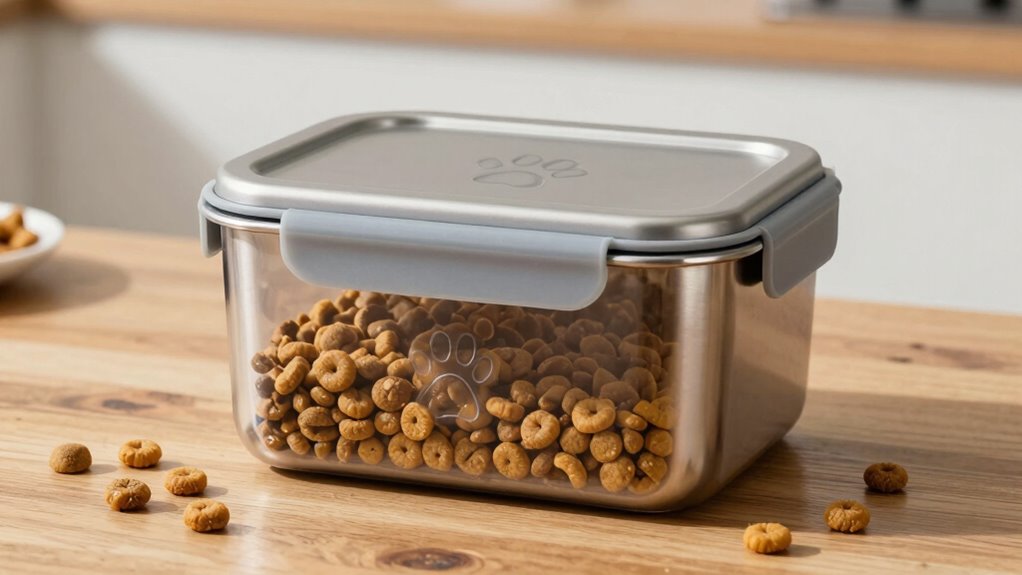
To keep your cat’s food fresh, look for containers with an airtight seal that prevents air from spoiling the food. Durability matters too, so choose materials that won’t easily crack or break. Additionally, easy lid access makes refilling and cleaning simple, saving you time and effort. Incorporating proper storage techniques can further ensure your cat’s food remains safe and nutritious over time. Regularly inspecting your storage containers for signs of wear helps maintain food safety standards. Always verify that the container is regulation-compliant to prevent potential contamination or spoilage. Using quality materials also helps ensure the container maintains its integrity over years of use, supporting a healthy and safe environment for your pet.
Airtight Seal Design
An airtight seal is essential for keeping your cat’s food fresh and preventing spoilage. It locks in flavor preservation, ensuring every meal tastes just as good as the first. A well-designed seal also keeps pests out, giving you peace of mind. When choosing a container, look for features that combine functionality with aesthetics—because a sleek design can brighten your kitchen space. Incorporating effective storage solutions can help maintain the effectiveness of your storage over time. Additionally, selecting containers with durable materials ensures longevity and resistance to wear and tear. Incorporating proper sealing mechanisms can further enhance freshness and pest protection, especially when combined with smart‑home integrations that can monitor food freshness remotely.
Durable Material Quality
Durable material quality guarantees your cat food storage container withstands daily use without cracking, warping, or breaking down. This ensures food safety by preventing contamination and spoilage. When you choose a sturdy container, you’re investing in long-term container durability, saving you money and hassle. Look for materials like high-quality BPA-free plastic or stainless steel that resist impact and temperature changes. Additionally, selecting a container with high-quality materials enhances overall integrity and longevity. Choosing a container with impact resistance is also crucial to protect against accidental drops that could compromise its structure. Incorporating environmentally friendly materials can also contribute to sustainable living practices and reduce ecological impact. Incorporating material durability ensures the container maintains its protective qualities over time, even with frequent handling. Furthermore, selecting containers with sealed lids can help preserve freshness and prevent pests from infiltrating.
Easy Lid Accessibility
Easy lid accessibility is essential for keeping your cat’s food fresh and reducing frustration during feeding. A container with simple lid opening ensures you can quickly access kibble without hassle. Look for containers with ergonomic designs or one-touch lids that make opening effortless. Clear container labels also help prevent confusion, so you know exactly what’s inside at a glance, saving time and avoiding messes. Consider this emotional impact:
| Frustration | Ease of Use | Peace of Mind |
|---|---|---|
| Struggling with lids | Quick, effortless access | Knowing your cat’s food stays fresh |
| Confusing labels | Clear, visible labels | No more spilled kibble |
| Wasting time | Simple lid openers | Less stress during feeding |
Choose containers that prioritize easy lid accessibility, making feeding a smoother, happier experience.

IRIS USA Airtight Dog Food Storage Container, Up to 30 lbs, Attachable Wheels, for Dog Cat Bird and other Pet Food Storage Bin, Keep Fresh, Easy Mobility, BPA Free, Black
Food Storage for All Pets: Keep dog kibble, cat dry food, bird seed, pellets, and treats fresh and…
As an affiliate, we earn on qualifying purchases.
As an affiliate, we earn on qualifying purchases.
How to Seal Your Cat Food Container to Prevent Pests
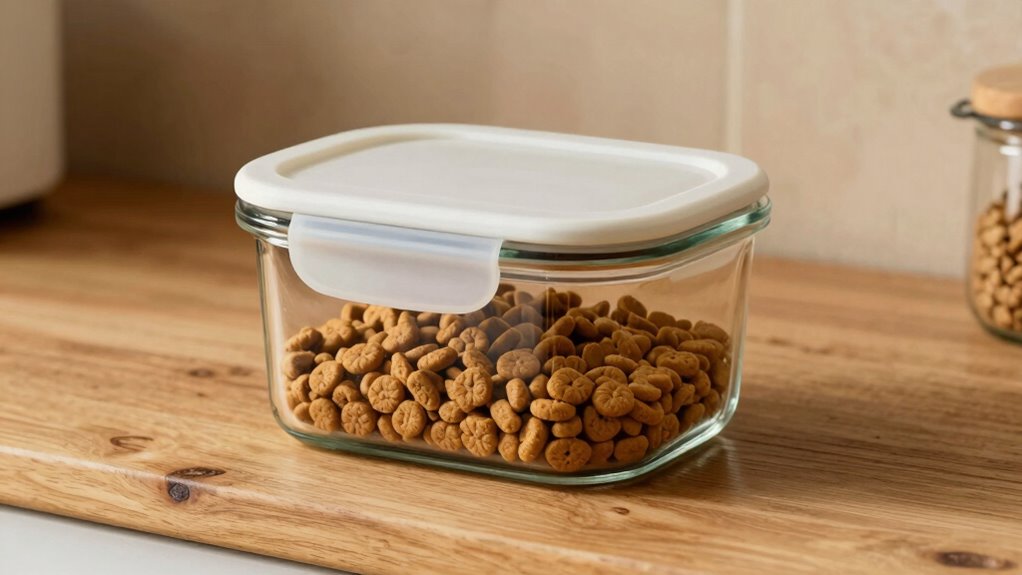
To keep pests out of your cat’s food, start by choosing a container with an airtight lid. This creates a tight seal that prevents pests from getting inside. Also, opt for storage materials that are pest-resistant to guarantee your cat’s food stays fresh and secure.
Choose Airtight Lids
Choosing an airtight lid for your cat food container is essential to keep pests out and maintain freshness. A secure seal prevents unwanted critters from sneaking in and ensures your kibble stays fresh longer. When selecting lids, consider pet store tips like easy-to-close mechanisms and durable materials. Properly sealing your container also makes it easier to manage storage container labels, helping you track freshness and feeding schedules.
Remember, a tight lid can:
- Instill peace of mind, knowing your cat’s food is safe
- Preserve flavor and nutrients, keeping your cat happy
- Save money by reducing waste and spoilage
Investing in the right airtight lid is a simple step toward pest-free, fresh cat food and a clutter-free storage solution.
Use Pest-Resistant Materials
Using pest-resistant materials when sealing your cat food container is one of the most effective ways to keep unwanted critters out. Choose containers made from durable materials like high-quality plastic or stainless steel, which offer excellent material durability and pest resistance. These materials are less likely to crack, warp, or degrade over time, creating fewer entry points for pests. Look for containers with tight-fitting, secure seals to prevent gaps where pests could sneak in. Avoid flimsy or porous materials that pests can chew through or easily access. Investing in high-quality, pest-resistant materials ensures your kibble stays fresh longer and remains free from unwanted guests. Proper sealing combined with durable, pest-resistant materials forms a strong barrier against pests, protecting your cat’s food effectively.
Best Practices for Storing Kibble to Preserve Nutrition
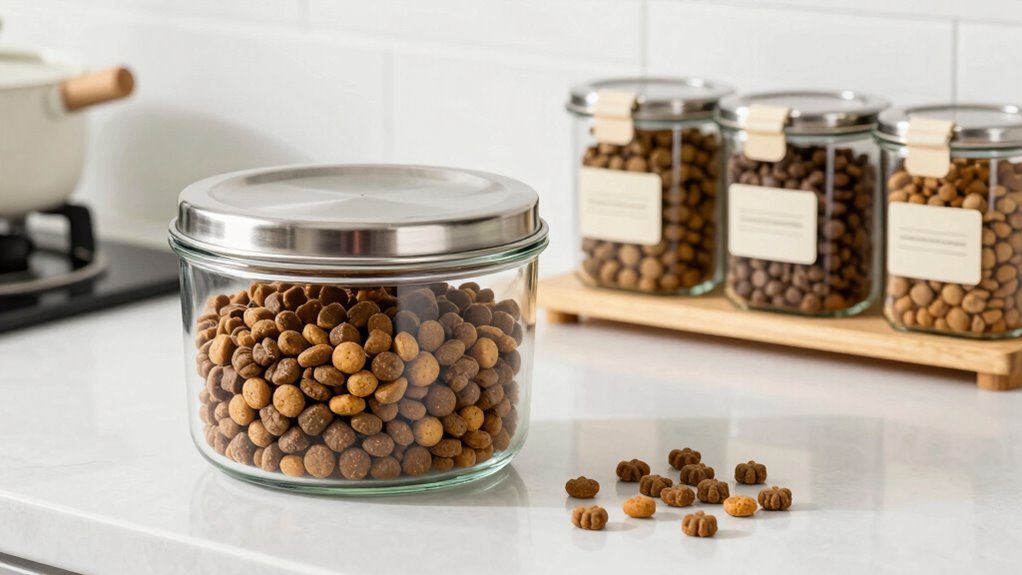
Proper storage is essential for maintaining the nutritional quality of your cat’s kibble. To preserve both nutritional preservation and flavor retention, follow these best practices:
- Store kibble in airtight containers to prevent exposure to air, which can degrade nutrients and cause staleness.
- Keep it in a cool, dark place away from sunlight and heat sources to avoid nutrient loss and spoilage.
- Avoid frequent opening; each time you do, you risk introducing moisture and pests that compromise nutrition.
How to Organize Multiple Containers in Your Pantry

Organizing multiple containers in your pantry can make it easier to access and maintain your cat’s food supplies. Use clear pet food labels on each container to identify contents at a glance, saving you time and preventing mix-ups. Incorporate container labeling techniques, such as color-coding or consistent placement, to streamline your system. Arrange containers by type or feeding schedule for efficiency. Keep frequently used kibble at the front for quick access, and store less-used items toward the back. Guarantee lids are secure to prevent pests and spillage. Regularly check labels and containers to verify freshness and re-label as needed. A well-organized pantry helps you stay on top of your cat’s food needs and maintains the quality of each batch.
Common Mistakes to Avoid When Storing Cat Food
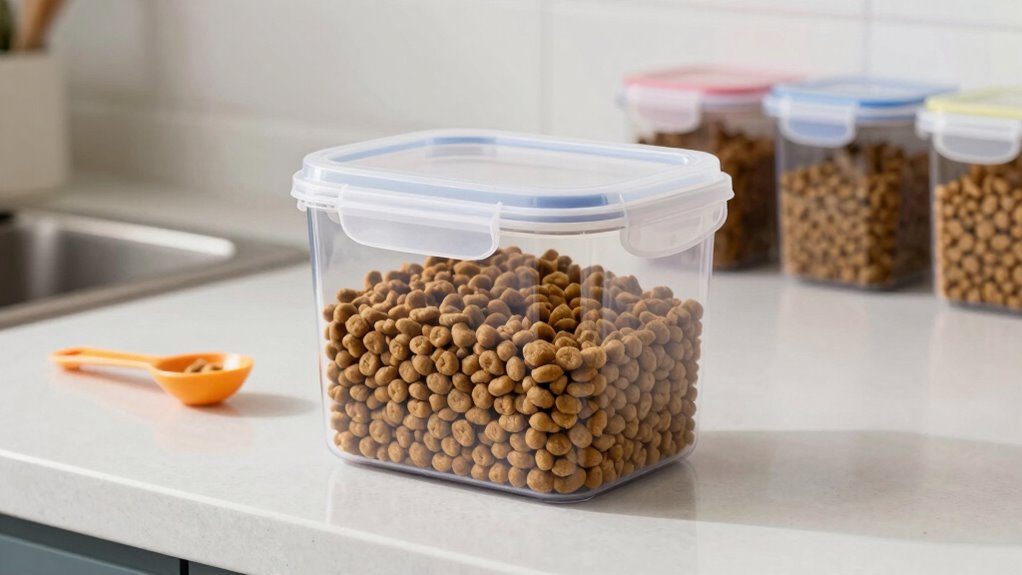
One common mistake is ignoring the storage conditions that can spoil your cat’s food, like heat or humidity. You also want to be careful about the container material you choose, since some plastics or metals can affect freshness or safety. Avoid these pitfalls to keep your cat’s food fresh and safe.
Overlooking Storage Conditions
Failing to take into account the storage environment can quickly compromise the quality of your cat’s food. Poor conditions can lead to spoilage, pests, and nutritional loss. Always check expiration dates to ensure freshness and avoid feeding your cat expired kibble. Mixing food types in one container can cause contamination or spoilage, especially if different formulas have varying shelf lives.
Be mindful of:
- Humidity and temperature fluctuations that promote mold or bacterial growth
- Exposure to sunlight, which can degrade nutrients
- Inconsistent storage conditions that cause moisture buildup or spoilage
Ignoring Container Material Choices
Choosing the right container material is essential for maintaining your cat’s food quality, yet many pet owners overlook this detail. The material affects freshness, pest resistance, and ease of cleaning. Avoid selecting a container solely based on aesthetics or color options, as stylish containers made from inappropriate materials can trap moisture or allow pests to infiltrate. For example, plastic containers may look appealing but can retain odors and be prone to scratches that harbor bacteria. Metal or glass options often provide better sealing and durability, helping keep kibble fresh longer. While container aesthetics are important, prioritize functionality over appearance. Ensuring the material suits your storage needs prevents spoilage and pest issues, ensuring your cat’s food stays safe and delicious.
Creative Storage Ideas and DIY Solutions for Cat Food
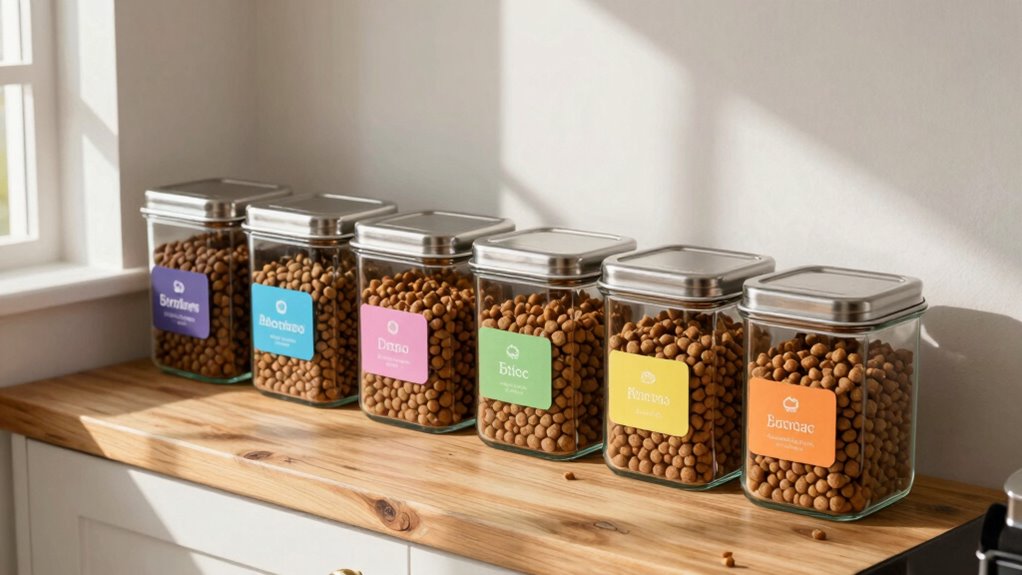
Finding creative ways to store your cat’s food can keep your space tidy and guarantee freshness. DIY solutions are a fun way to enhance pet nutrition while fitting your home’s style. For example, repurposing vintage jars or sturdy baskets can add charm and practicality. You might also build custom shelves to organize different feeding schedules or use labeled containers for easy access. These ideas not only save space but also ensure your cat’s kibble stays fresh and pest-free. Plus, crafting your own storage encourages you to think about the best ways to keep food sealed tight, maintaining quality longer. With a bit of ingenuity, you’ll create a functional and attractive feeding station that benefits both your cat and your home.
When and How to Clean or Replace Your Cat Food Container
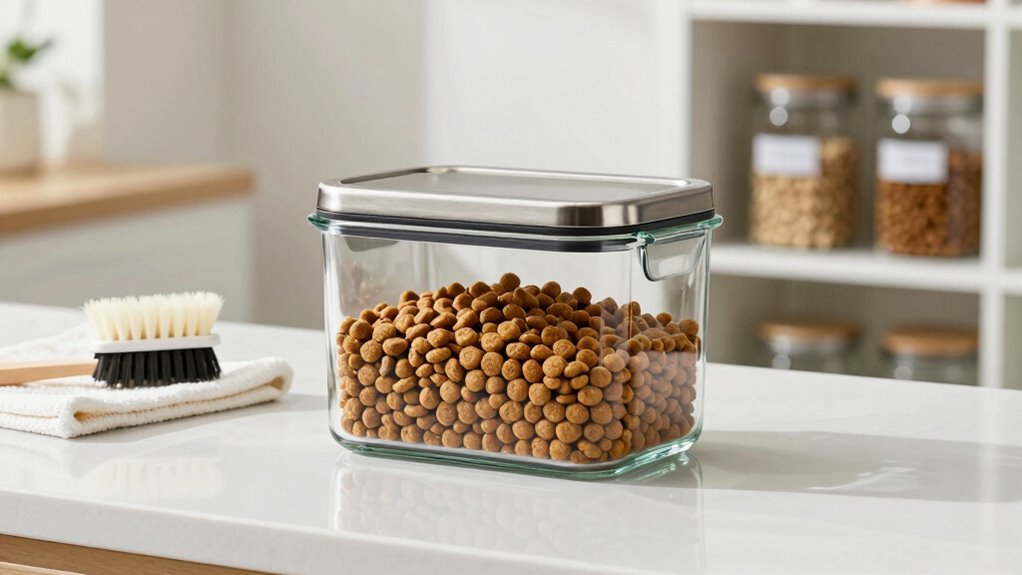
Regularly inspecting your cat food container is essential to guarantee it stays clean and safe for your pet. Establish a cleaning schedule, ideally every few weeks, to prevent mold, bacteria, and pests from developing. When cleaning, wash the container thoroughly with soap and hot water, ensuring all residues are gone. If you notice cracks, warping, or persistent odors despite cleaning, it’s time for container replacement. Don’t wait until the container is visibly damaged—regular replacement helps maintain freshness and hygiene. Keep an eye on the condition of your storage solution and adhere to your cleaning schedule to ensure kibble stays fresh and pest-free. Proper maintenance safeguards your cat’s health and prolongs the life of your storage containers.
Tips for Keeping Your Cat’s Food Fresh and Pest-Free
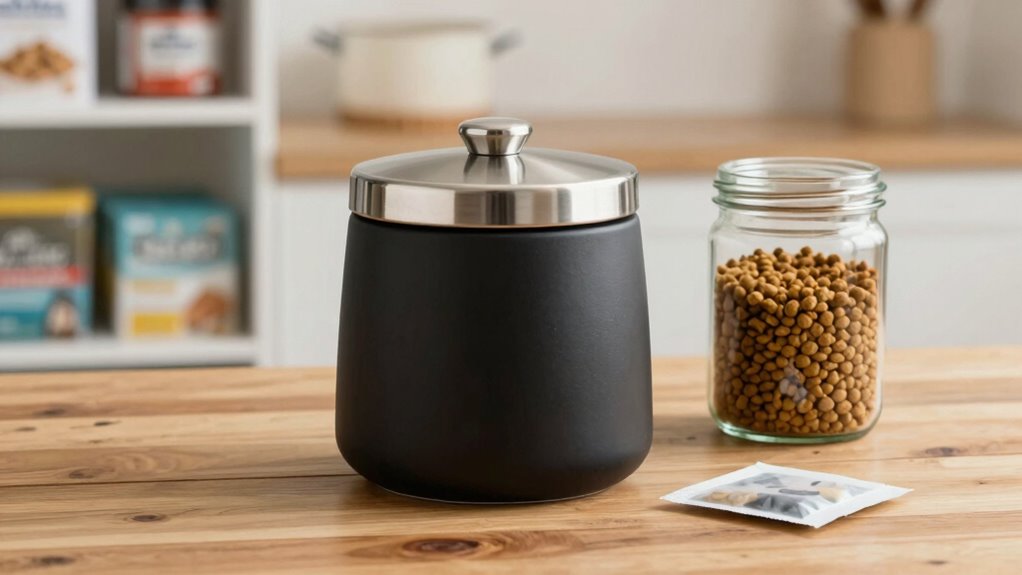
To keep your cat’s food fresh and pest-free, it’s important to store kibble in a cool, dry place away from direct sunlight and moisture. Proper storage promotes cat food safety and prevents spoilage. Regularly inspect your storage container for signs of damage or pests, and clean it thoroughly to guarantee optimal storage container maintenance.
Store cat food in a cool, dry place away from sunlight to keep it fresh and pest-free.
To maintain freshness and deter pests, consider these tips:
- Use airtight containers to lock out humidity and insects.
- Keep the container sealed tightly after each use.
- Store the container in a designated, elevated spot away from kitchen counters.
Implementing these practices helps preserve flavor, nutrients, and keeps pests at bay, ensuring your cat’s food stays fresh and safe longer.
Frequently Asked Questions
How Long Can I Store Opened Cat Food Safely?
You can typically store opened cat food safely for 5 to 7 days if kept in a sealed container and refrigerated. To maintain your cat’s feeding schedule and ensure the nutritional content stays intact, always check for any signs of spoilage before serving. If the food smells off or shows mold, discard it. Proper storage helps keep your cat healthy and happy while preventing pests and spoilage.
Can I Use Plastic Containers for Long-Term Storage?
Yes, you can use plastic containers for long-term storage if they are food-safe and durable. Look for containers labeled as plastic safety, ensuring they won’t leach chemicals into your cat’s food. Choose container durability to withstand frequent use and prevent cracks or breaks. Make sure the lid seals tightly to keep kibble fresh and pest-free. Proper plastic storage keeps your cat’s food fresh, safe, and protected over time.
What Are the Signs That My Cat Food Has Gone Bad?
You might worry about plastic containers affecting food freshness, but they’re safe if properly cleaned. Signs of cat food spoilage include a sour or rancid smell, mold growth, and a change in texture or color. If the kibble looks or smells off, discard it immediately. Regularly check your stored food for these signs, as eating spoiled food can cause digestive issues for your cat.
How Often Should I Rotate My Stored Kibble?
You should rotate your stored kibble every 4 to 6 weeks to guarantee freshness. Check expiration dates regularly and use the oldest first. Keep your storage in a cool, dry place with a consistent temperature, ideally below 80°F, to prevent spoilage. This way, your cat’s food stays fresh, and you avoid pests or mold, ensuring your feline’s health and safety.
Are Vacuum-Sealed Containers Better for Preserving Freshness?
Think of vacuum-sealed containers as your cat’s secret treasure chest. They’re better for preserving freshness because vacuum sealing removes air, which causes spoilage and pests. With these containers, you lock in flavor and nutrients, keeping kibble crunchy and pest-free longer. So, if you want to safeguard your feline friend’s food quality, opt for vacuum sealing—it’s the ultimate defense against spoilage and pests, ensuring your cat’s meals stay fresh.
Conclusion
Just as Pandora’s box once unleashed chaos, neglecting proper storage can turn your cat’s fresh kibble into a pest-ridden mess. By choosing the right container, sealing it tight, and practicing good habits, you’re safeguarding your feline friend’s health and happiness. Think of your storage as the gatekeeper—protecting their nourishment from unwelcome intruders. With mindful care, you’ll keep their food fresh, safe, and as reliable as the steady moon guiding the night.