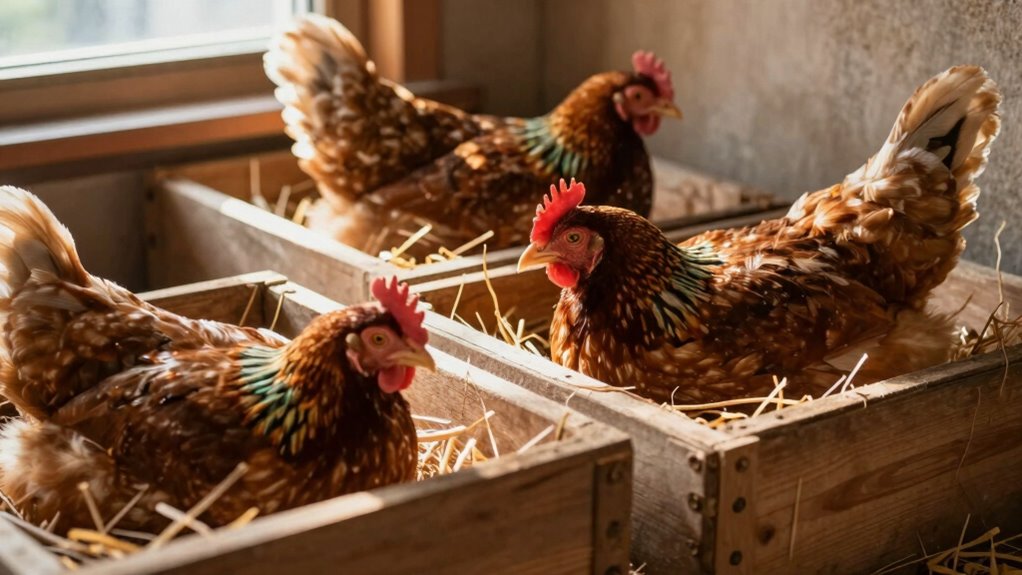

To give your hens the perfect nest, make sure it feels secure, private, and comfortable. Use soft bedding like straw or shavings, and keep the space clean and easy to access. Place the box in a quiet, low-traffic spot away from disturbances, with proper ventilation and natural light. Elevate or enclose it to protect from predators. Want to learn all the secrets to maximizing egg-laying and keeping your hens happy? Keep going for detailed tips.

Get pet supplies delivered free with Prime
- Fast, free delivery on millions of items
- Prime Video, Amazon Music and more included
- Member-only deals all year
Key Takeaways
- Hens prefer private, quiet, and secluded nesting spaces to feel secure.
- Comfortable bedding like straw or shredded paper encourages hens to lay eggs inside the nest.
- Proper ventilation and cleanliness are essential for hen health and consistent egg-laying.
- Easy access and appropriate placement of nesting boxes promote regular use by hens.
- Natural elements and calm environments help hens feel safe and promote nesting behavior.
chicken nesting boxes with predator protection
As an affiliate, we earn on qualifying purchases.
As an affiliate, we earn on qualifying purchases.
What Makes a Comfortable and Secure Chicken Nesting Box?
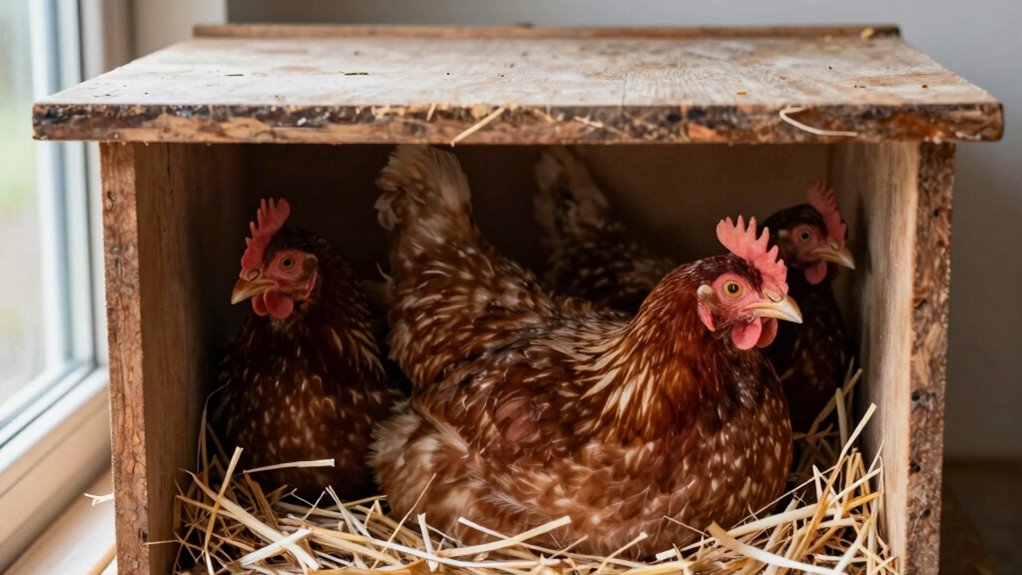
A comfortable and secure chicken nesting box provides hens with a safe, quiet space to lay their eggs, encouraging consistent laying behavior. To support this, the nesting box should be private and protected from disturbances that might disrupt their natural roosting behavior. Good predator protection is essential—secure sides and a sturdy lid help keep predators out and prevent stress. Hens feel safer when they don’t have to worry about threats, which promotes calm nesting. Ensure the box is in a low-traffic area, away from bright lights or loud noises. Proper predator protection reassures hens that their nesting space is safe, so they’re more likely to lay eggs consistently and comfortably. Creating a safe environment helps reduce stress and encourages natural behaviors vital for their health and productivity. Providing adequate shelter is also crucial to shield hens from extreme weather conditions, ensuring year-round comfort. Additionally, incorporating proper ventilation can help prevent humidity and odors, making the nesting space more inviting for hens. A well-designed nesting area can also improve overall hen well-being by reducing competition and pecking behaviors. Ensuring good ventilation not only keeps the air fresh but also helps control humidity, which is vital for maintaining a healthy nesting environment.
How to Choose the Right Size and Material for Chicken Nests

Choosing the right size and material for your chicken nesting boxes guarantees hens feel comfortable and secure while laying eggs. Start by considering nest box dimensions; a typical size is about 12 inches wide, 12 inches deep, and 12 inches high, providing enough space without overwhelming your hens. Next, evaluate nesting material choices to ensure comfort and cleanliness, such as straw, wood shavings, or shredded paper. When selecting materials, prioritize absorbency, ease of cleaning, and durability. Additionally, proper ventilation is essential to prevent moisture buildup and keep the environment dry. Good airflow also helps reduce bacterial growth and odor, promoting healthier hens. Incorporating ventilation systems can further enhance airflow and moisture control within the nesting area. Proper nesting environment management is crucial for maintaining hygiene and protecting eggs from contamination. Ultimately, ensure the nest boxes are sturdy and well-ventilated to prevent moisture buildup and promote healthy egg-laying. To summarize:
Choose sturdy, well-ventilated nesting boxes with comfortable, absorbent materials for healthy egg-laying.
- Match nest box dimensions to hens’ size for comfort
- Choose nesting materials that are absorbent and easy to maintain
- Ensure durability and ventilation for a healthy environment
- Incorporate sound therapy techniques to minimize stress and improve comfort in poultry environments.
Where to Place Nesting Boxes for Happy, Egg-Laying Hens
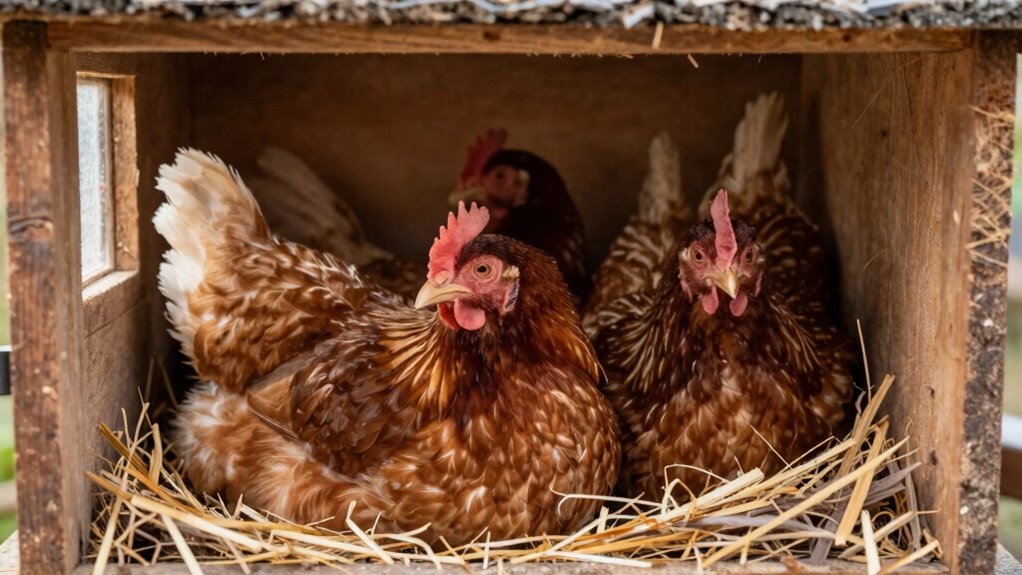
Place the nesting boxes in a quiet, low-traffic area away from the coop entrance. Hens feel safest when they’re undisturbed and free from loud noises. Choosing the right spot helps keep your hens relaxed and encourages regular egg-laying.
Ideal Nesting Spot
Hens feel most comfortable laying eggs in a quiet, secluded spot that mimics their natural nesting instincts. When choosing the ideal nesting spot, consider how it aligns with their roosting habits and predator protection needs. Ensuring the spot has good color accuracy can also help hens recognize their nesting area more easily. Ensure the nesting site is elevated or enclosed to deter predators and provide a sense of security. Position the boxes in a dark corner or shaded spot to mimic natural cover, encouraging hens to settle comfortably.
Avoid Disturbance and Noise
To keep your hens happy and encourage consistent egg-laying, it’s essential to position their nesting boxes away from areas with loud noises and frequent disturbances. Rooster disturbance and nesting noise can stress hens, leading to missed or delayed eggs. Choose a quiet, sheltered spot that minimizes sudden sounds and movement, so hens feel safe and relaxed when laying. Ensuring a calm environment can significantly improve hen welfare and productivity. Additionally, providing a secure nesting area helps hens feel protected from predators and external threats, further supporting their comfort. Being aware of professional email etiquette can also help in communicating your needs effectively if seeking advice or services related to poultry care.
What Bedding and Interior Features Do Hens Prefer?

Choosing the right bedding and interior features can make a significant difference in how comfortable and healthy your hens feel. Hens prefer a cozy, clean environment that mimics their natural nesting instincts. To achieve this, focus on selecting quality nesting material and thoughtful interior design. Consider these key features:
Choosing cozy, clean nesting materials and a safe interior enhances your hens’ comfort and health.
- Use soft, absorbent bedding like straw, pine shavings, or shredded paper for comfort and cleanliness.
- Incorporate a smooth interior design with minimal gaps to prevent injury and ease cleaning.
- Add natural elements like dried grasses or hay to encourage nesting behavior and reduce stress.
- Ensuring the nesting box design aligns with cultural influences can also promote natural behaviors and improve hen well-being.
- Paying attention to environmental enrichment can further enhance hens’ comfort and encourage proper nesting habits, which is supported by research on animal welfare practices. Providing appropriate lighting within the nesting area can also influence hens’ nesting tendencies and overall health. Additionally, incorporating natural light sources can help simulate a more natural environment and promote healthier nesting behaviors.
Why Keeping Your Nesting Area Clean and Accessible Matters
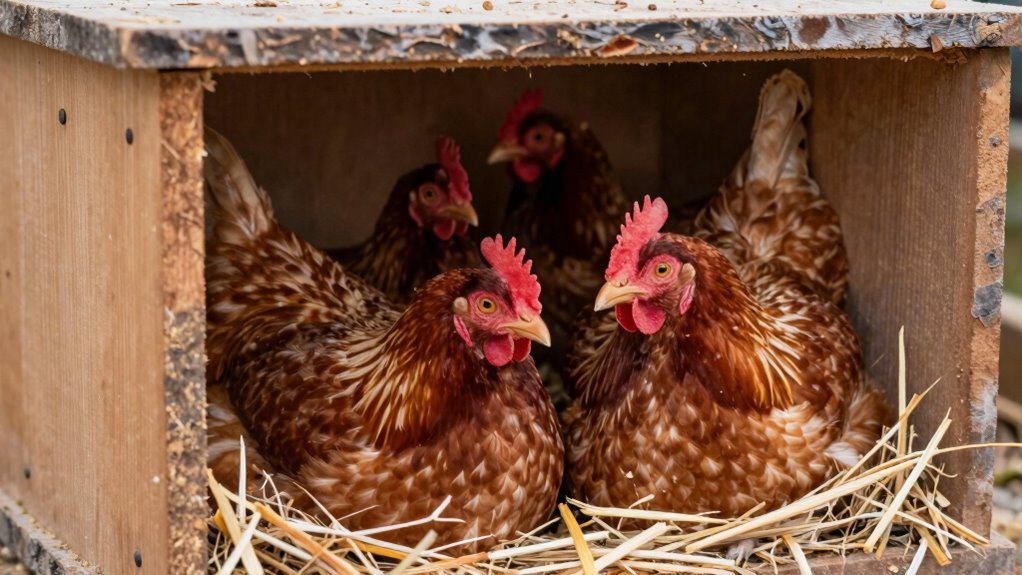
Keeping your nesting area clean and accessible helps guarantee your hens’ eggs stay hygienic and safe to eat. It also reduces the risk of diseases spreading among your flock. When the space is easy for your hens to use, they’ll lay eggs more consistently. Incorporating proper ventilation can also help maintain a healthy environment in your nesting boxes. Regular cleaning and proper airflow are essential for preventing moisture buildup, which can lead to mold and other issues. Ensuring good air circulation can further help in maintaining a dry and healthy nesting environment. Additionally, understanding animal behavior can assist in creating a space that encourages natural nesting habits. Implementing disease prevention measures is crucial for maintaining overall flock health.
Promotes Egg Hygiene
A clean and accessible nesting area plays a crucial role in maintaining egg hygiene. When the area stays tidy, it supports healthy nesting behavior and makes egg collection easier. Proper cleaning reduces bacteria buildup, preventing contamination. To maximize hygiene, focus on these key points:
- Regularly remove soiled bedding and debris to minimize bacteria.
- Guarantee easy access for hens and caregivers, encouraging consistent use.
- Use clean, dry nesting materials that promote a hygienic environment for eggs.
- Ensuring proper ventilation can help control moisture and reduce mold growth, further supporting a sanitary nesting space.
Prevents Disease Spread
Since dirt and debris can harbor harmful bacteria, maintaining a clean and accessible nesting area is essential for preventing disease spread among your hens. Contaminated bedding or waste can lead to infections, especially if hens’ roosting habits or foraging behavior bring them into contact with dirty surfaces. Regularly cleaning the nesting boxes reduces the risk of bacteria buildup and minimizes the chance of illness. Providing easy access to fresh bedding encourages hens to keep their environment tidy and reduces the likelihood they’ll track dirt into the nest. Additionally, a well-maintained space discourages pests and parasites that can carry disease. By staying vigilant about cleanliness, you help create a healthier environment, supporting your hens’ overall well-being and productivity.
Encourages Consistent Laying
When the nesting area is clean and easily accessible, hens are more likely to lay eggs consistently. A tidy space supports natural roosting behavior and reduces stress, encouraging regular laying. To optimize this, consider these key factors:
- Keep the nesting boxes free of droppings and debris to promote comfort and hygiene.
- Ensure easy access to the nesting area, so hens feel safe and unhurried during egg-laying.
- Align feeding routines to reinforce routine and reduce disruptions that can interfere with laying patterns.
A well-maintained nest encourages hens to settle in, minimizing the temptation to seek alternative, less suitable spots. This consistency helps stabilize laying schedules and contributes to overall flock health.
Common Mistakes When Setting Up Chicken Nests: and How to Avoid Them

Setting up chicken nesting boxes incorrectly can lead to a variety of issues, from hens avoiding the nests to increased contamination and egg breakage. One common mistake is ignoring nesting box aesthetics, which impacts hens’ willingness to lay eggs there. If the boxes look uninviting or cluttered, hens may seek alternative, less suitable spots. Avoid using overly decorative nesting options that don’t prioritize comfort and cleanliness. Instead, choose simple, clean designs that mimic natural nesting environments. Also, ensure the boxes are private and accessible, so hens feel secure. Properly setting up functional, attractive nesting boxes helps prevent hens from laying eggs outside the nest and reduces mess and damage. Keep the setup practical and inviting to encourage consistent use.
How to Encourage Your Hens to Use Their Nesting Boxes
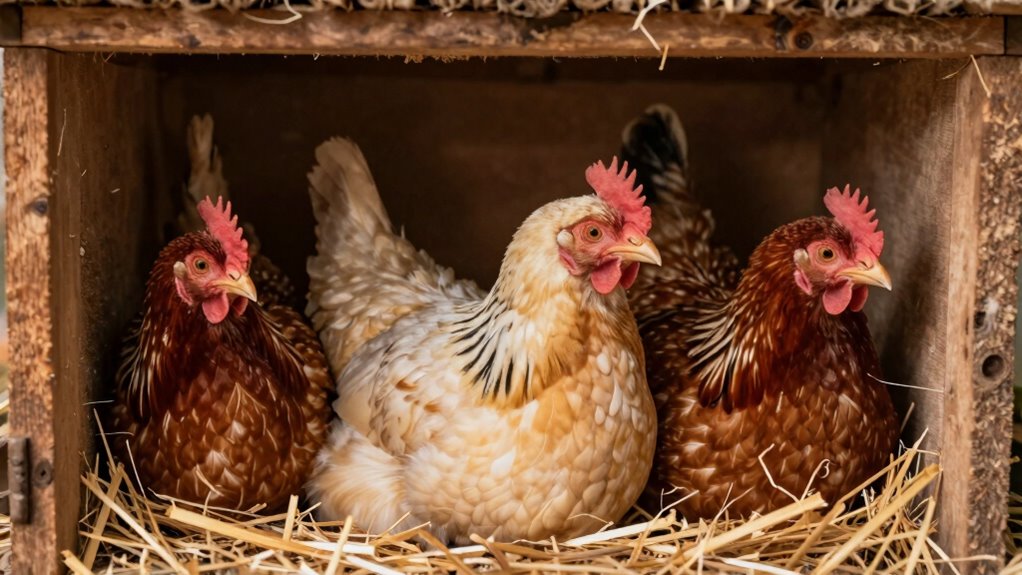
To encourage your hens to use their nesting boxes, creating a comfortable and inviting environment is essential. Understanding hen behavior and nesting instincts helps you set up the perfect space. First, ensure the boxes are private and quiet, reducing stress and mimicking their natural nesting sites. Second, provide clean bedding like straw or wood shavings to make the boxes cozy and appealing. Third, place the boxes at eye level or slightly below, encouraging hens to feel secure. Avoid disturbances during nesting times and limit access to other hens if necessary. By aligning the environment with their innate nesting instincts, you’ll motivate hens to choose the boxes naturally, resulting in more consistent egg laying and healthier behavior.
Troubleshooting Nesting Problems and Boosting Egg Production
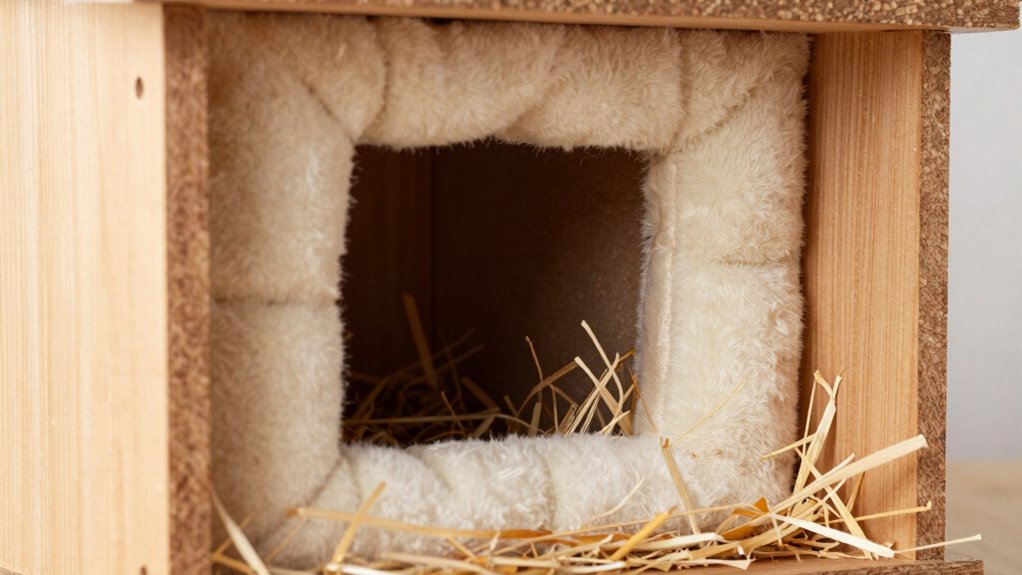
Even with well-designed nesting boxes, hens may occasionally develop problems that disrupt their laying habits or cause them to avoid the boxes altogether. Rooster behavior can sometimes stress hens, making them hesitant to lay in shared environments. To troubleshoot, observe if roosters are bothering the hens near the nesting boxes, and consider separating them if needed. Additionally, assess the nesting box design; if the boxes are too small, poorly ventilated, or lack privacy, hens may refuse to use them. Ensure the boxes are clean, comfortable, and easily accessible. Providing enough nesting boxes for your flock reduces competition. By addressing rooster behavior and improving nesting box design, you can encourage consistent laying and boost overall egg production.
Frequently Asked Questions
How Often Should I Clean My Chicken Nesting Boxes?
You should clean your chicken nesting boxes at least once a week to maintain good hygiene. Regular cleaning routines help prevent the buildup of dirt, mites, and bacteria. During nesting box maintenance, remove soiled bedding and replace it with fresh straw or hay. Consistent cleaning not only keeps your hens comfortable but also encourages them to lay eggs in the designated boxes, reducing mess elsewhere in the coop.
Can Nesting Box Design Influence Hen Behavior?
Imagine a cozy haven where your hens feel truly at ease—yes, nesting box design can influence their behavior. Good nesting box ergonomics and hen comfort factors encourage natural nesting habits, reduce stress, and promote egg-laying. When you prioritize their comfort, you foster happier, healthier hens. Thoughtfully designed boxes invite hens to settle in peacefully, making egg collection easier and ensuring your flock thrives in a caring environment.
Do Hens Prefer Nesting Boxes Alone or in Groups?
Hens generally prefer group nesting because it mimics their natural behavior, offering safety and social comfort. However, some hens have individual preferences and may choose solitary nesting if they feel stressed or crowded. You should observe your flock to see what they prefer, providing both options if possible. This way, you cater to their instinctive needs for group nesting or individual preference, ensuring they lay comfortably and happily.
What Temperature Is Ideal for Nesting Boxes?
A cozy environment is key, so aim for a temperature around 55-70°F to support natural temperature regulation. Proper insulation needs help hens feel secure and comfortable, encouraging them to lay eggs with ease. If it’s too warm or too cold, hens might avoid their nests. Keep the space well-ventilated but shielded from drafts, ensuring the nesting box maintains a stable, inviting temperature for your feathered friends.
How Can I Tell if a Hen Is Ready to Lay Eggs?
You can tell if a hen is ready to lay eggs by observing her roosting preferences and overall comfort. When she starts spending more time in the nesting box or shows nesting behavior like scratching and squatting, she’s preparing to lay. Comfortable hens exhibit relaxed postures and may vocalize softly. Ensuring her comfort and providing a cozy nesting environment encourages her to lay eggs consistently.
Conclusion
When you create a cozy, secure nesting space, your hens naturally choose it—almost as if they’re drawn to it by fate. By paying attention to size, placement, and cleanliness, you’ll see eggs appear more regularly. Sometimes, it’s the little details, like the right bedding or a quiet corner, that make all the difference. In the end, nurturing their comfort can unexpectedly strengthen your bond—and your flock’s happiness—without even trying.
Fall Picks
fall essentials
As an affiliate, we earn on qualifying purchases.