
To make nail trims easier for nervous pets, create a calm, distraction-free environment and handle them gently to build trust. Use soothing words and positive reinforcement like treats after each small step, such as touching paws or trimming a nail. Keep sessions short and take breaks if needed. With patience and consistent gentle handling, your pet will gradually become more comfortable. Keep going, and you’ll discover more tips to ease the process even further.

Get pet supplies delivered free with Prime
- Fast, free delivery on millions of items
- Prime Video, Amazon Music and more included
- Member-only deals all year
Key Takeaways
- Create a calm, quiet environment with soothing words and soft handling to reduce pet anxiety during nail trims.
- Gradually introduce paw handling and use positive reinforcement to build trust and comfort.
- Keep sessions short, breaking the process into small steps with praise and treats after each success.
- Use calming techniques like massage, deep breathing, and familiar objects to promote relaxation.
- Be patient and consistent, allowing pets to desensitize over time and associating nail trims with positive experiences.
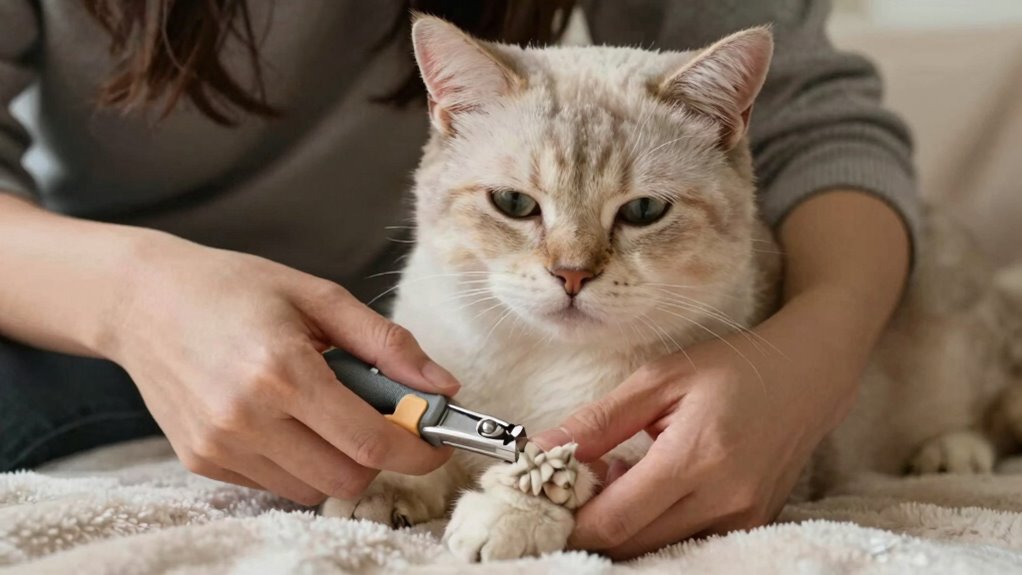
Have you ever struggled to trim your nervous pet’s nails without causing stress for both of you? If so, you’re not alone. Many pets become anxious at the mere sight of nail clippers, making what should be a quick task feel like an ordeal. The key to easing this process lies in gentle handling and calming techniques that help your pet feel safe and secure. When you approach nail trimming with patience and care, you can transform a stressful event into a positive experience.
Start by creating a calm environment. Choose a quiet space free of distractions, and keep the mood relaxed. Before even touching your pet’s paws, spend some time offering gentle handling. Touch their legs, ears, and paws regularly, rewarding them with treats and soothing words. This builds trust and helps them associate your touch with comfort rather than discomfort. When handling their paws, be gentle—avoid pulling or squeezing—so your pet doesn’t feel threatened. Use slow, deliberate movements to prevent startling them, and always speak softly to reassure. Incorporating positive reinforcement can significantly improve their response to nail trimming over time.
Create a calm space and gently handle your pet’s paws to build trust and reduce stress during nail trims.
Calming techniques work wonders in reducing anxiety. For example, you can try massaging your pet’s legs and paws to promote relaxation. Deep, slow breaths—both yours and theirs—can help set a peaceful tone. If your pet responds well to gentle petting, incorporate that into the process. Some pets are comforted by a familiar blanket or a favorite toy nearby, so consider adding these to the trimming area. You might also try using calming sprays or pheromone diffusers made for pets, which can create a soothing atmosphere. Additionally, understanding pet behavior can help you better interpret signs of stress and respond appropriately.
When you’re ready to trim, keep the sessions short. Break the process into small steps—start by just handling their paws, then gradually move to trimming one or two nails at a time. Always praise your pet afterward, reinforcing positive associations. If your pet becomes agitated, take a break and resume later. Consistency and patience are essential; over time, they’ll learn that nail trims aren’t something to fear.
pet nail clippers for nervous pets
As an affiliate, we earn on qualifying purchases.
As an affiliate, we earn on qualifying purchases.
Frequently Asked Questions
How Can I Tell if My Pet Is Stressed During Trimming?
You can tell if your pet is stressed during trimming by watching for stress signals like trembling, panting, or trying to escape. If your pet shows signs of discomfort, focus on pet relaxation techniques to help calm them. Pay attention to their body language, such as tensed muscles or flattened ears. Recognizing these stress signals early helps you respond calmly, making nail trims less stressful and promoting a more relaxed experience for your pet.
What Are Alternative Methods if My Pet Hates Nail Trims?
If your pet despises nail trims, consider alternative methods like positive reinforcement and gradual desensitization. Instead of forcing the issue, reward calm behavior with treats and praise, slowly introducing nail trimming tools over time. You might also try distraction techniques or professional grooming services that specialize in nervous pets. Remember, patience and gentle approaches turn the dreaded chore into a manageable, even tolerable, experience for your furry friend.
How Often Should I Trim My Nervous Pet’s Nails?
You should trim your nervous pet’s nails every 3-4 weeks to keep them healthy and comfortable. Use gentle nail trimming tools designed for pets, and incorporate nail trims into your regular pet grooming routines to reduce stress over time. Keep sessions short and positive, offering treats and praise to help your pet associate nail trims with a good experience. Regular trims prevent painful overgrowth and keep your pet happy.
Can I Use Human Nail Clippers on Pets?
You shouldn’t use human nail clippers on pets because they aren’t designed for their nail shape and thickness. Using the right tools is essential for safe pet grooming and proper nail care. Pet nail clippers are specifically made to trim nails gently and accurately, reducing discomfort and injury. Always choose tools suited for your pet’s size and nail type, and take your time to make nail trimming a calm, positive experience.
When Should I Seek Professional Help for Nail Trimming Fears?
You should seek professional help for nail trimming fears when your pet’s anxiety worsens or if your attempts cause stress or injury. A trainer or veterinarian can offer expert advice and calming techniques tailored to your pet’s needs. They can also perform trims safely or teach you how to reduce anxiety during grooming. Don’t hesitate to ask for help if your pet’s nervousness persists or escalates, ensuring a safer, calmer experience for both of you.
Conclusion
Remember, patience and gentle care turn nail trims from a beastly ordeal into a manageable task. Like a wise old knight, approach your nervous pet with calmness and understanding, earning their trust one small step at a time. Over time, you’ll find that what once felt like slaying a dragon becomes just another part of your daily routine. With love and perseverance, you’ll both conquer the most formidable of grooming quests—because even the bravest knights started as beginners.
Halloween Picks
halloween
As an affiliate, we earn on qualifying purchases.