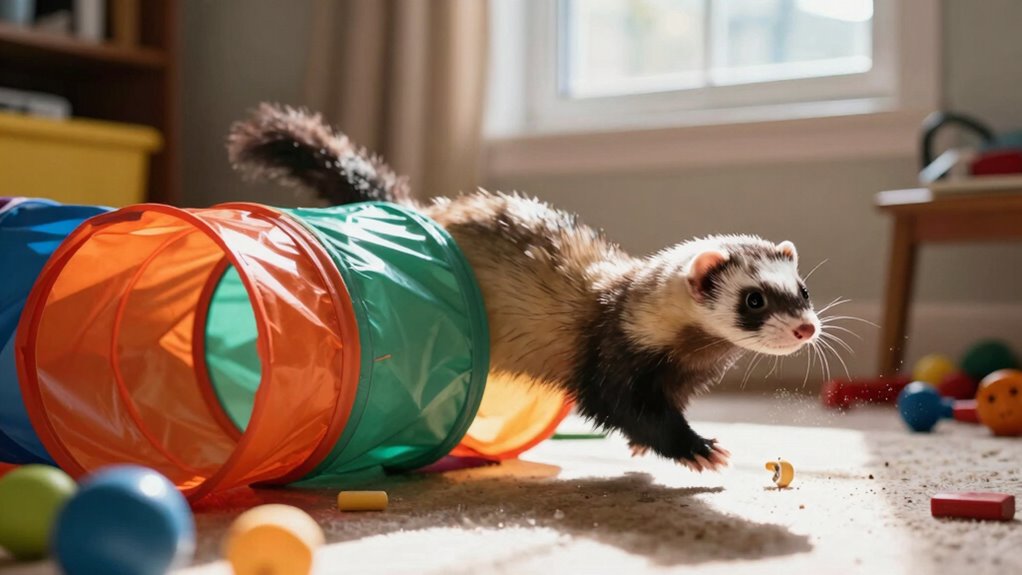

You need to supervise your ferret’s play more than you think because they’re curious and energetic, which can lead to accidents if you’re not watching. Ferrets can swallow small objects, chew on cords, or escape through tiny spaces, risking injury or health issues. Active supervision helps prevent these dangers and allows you to catch signs of illness early. Keep an eye on their environment and behavior—you’ll discover more ways to keep your ferrets safe and happy.

Get pet supplies delivered free with Prime
- Fast, free delivery on millions of items
- Prime Video, Amazon Music and more included
- Member-only deals all year
Key Takeaways
- Ferrets are naturally curious and energetic, requiring supervision to prevent them from ingesting dangerous objects or getting injured.
- Unsuitable environments can hide hazards like cords or small items, increasing the risk of accidents without vigilant supervision.
- Supervised play allows timely intervention if ferrets attempt to chew on harmful items or escape confinement.
- Regular supervision helps monitor health signs and ensures play remains safe and enriching.
- Active oversight strengthens the bond and promotes safe exploration, reducing destructive behaviors and promoting overall well-being.

Ferrets are curious and energetic animals that require regular, supervised playtime to stay healthy and happy. Their natural instincts drive them to explore everything around them, which means they often get into trouble if left unsupervised. To keep your ferret engaged and safe, you need to provide ferret enrichment during play sessions. This involves offering a variety of toys, tunnels, and objects that stimulate their senses and encourage natural behaviors like digging, hiding, and exploring. But even with the best toys, it’s essential to supervise their playtime closely. Ferrets are notorious for squeezing into tiny spaces, chewing on cords, or ingesting small objects that could pose serious health risks. That’s why creating safe play environments is essential.
Supervised play keeps ferrets safe while satisfying their natural curiosity and energetic behaviors.
When setting up a play area, make sure it’s free of hazards like sharp edges, electrical cords, or items they might swallow. You want a space where they can explore freely without danger, but still under your watchful eye. Remember, ferrets are expert escape artists, so secure doors and barriers are crucial. During supervised play, you can introduce new elements that boost ferret enrichment, such as puzzle feeders or novel toys, to keep their minds sharp. These activities not only keep them entertained but also prevent boredom, which can lead to destructive behaviors. Incorporating safe play environments within your home is vital for their safety and enrichment. Creating a secure environment is crucial to prevent escapes and injuries. Engaging in regular play also helps to prevent boredom, which can lead to stress and behavioral issues.
The real importance of supervised play goes beyond just preventing accidents. It’s about actively engaging with your ferret to strengthen your bond and observe their behavior. While they’re naturally curious, they can sometimes get into trouble quickly, especially if they’re left to their own devices for too long. By supervising, you can intervene if they’re about to chew something dangerous or if they’re overexerting themselves. It also allows you to monitor their health, noticing any unusual signs or discomfort early on.
In addition, providing a variety of safe play environments within your home makes every play session an opportunity for mental and physical stimulation. Rotate toys regularly to keep things fresh and interesting. Always prioritize ferret enrichment by offering different textures, scents, and hiding spots. Remember, your active supervision ensures these play sessions remain safe and fun. Ultimately, your involvement makes a significant difference in your ferret’s well-being. It’s not just about letting them run around; it’s about creating a secure, stimulating environment where they can thrive and explore freely, knowing you’re there to keep them safe.
ferret playpen with secure barriers
As an affiliate, we earn on qualifying purchases.
As an affiliate, we earn on qualifying purchases.
Frequently Asked Questions
Can Ferrets Play Unsupervised Outside the House?
No, you shouldn’t let ferrets play unsupervised outside the house. They’re curious and agile, which means they could get into dangerous situations or eat something harmful, affecting their ferret nutrition. Plus, outdoor hazards can lead to injuries or the need for ferret grooming due to dirt and debris. Always supervise their outdoor playtime to keep them safe, healthy, and well-groomed while enjoying their natural curiosity.
What Are Common Hazards During Ferret Playtime?
During ferret playtime, common hazards can seem tiny but are actually giant threats—like tiny gaps they can squeeze through, dangerous household objects, or toxic plants. Always supervise to prevent such dangers. Remember, a balanced ferret diet keeps them healthy, while regular grooming tips prevent mats and skin issues. Keep a close eye, make sure their environment is safe, and enjoy their playful, curious nature without risking their safety.
How Long Should Supervised Play Sessions Last?
You should keep supervised play sessions with your ferret around 15 to 30 minutes to prevent overstimulation or accidents. During ferret training, use these sessions to reinforce safe behaviors. Before play, set up a secure play area, removing hazards and providing engaging toys. Regular, short playtimes help your ferret stay active and happy, while also allowing you to monitor their safety and reinforce positive behaviors effectively.
Do Ferrets Need Toys During Playtime?
Imagine a treasure chest awaiting discovery—that’s what ferret playtime can feel like. Yes, they need toys during play to boost ferret enrichment and keep their curious minds engaged. Interactive toys are especially beneficial, providing mental stimulation and preventing boredom. These toys turn play into an adventure, helping your ferret stay active, happy, and healthy while strengthening your bond. Always supervise to guarantee safe exploration.
How Can I Tell if My Ferret Is Overstimulated?
You can tell your ferret is overstimulated if it starts biting, scratching, or becomes overly vocal during play. Watch for signs of excessive ferret energy, like frantic running or twitching, which indicate it’s reached its limit. To guarantee playtime safety, set clear boundaries and keep sessions short. Overstimulation can lead to stress, so pay close attention and give your ferret plenty of breaks to stay happy and healthy.
Conclusion
Just like Pandora’s box, ferrets are curious and unpredictable. Giving them free reign without supervision can release chaos or harm. Think of their playtime as a delicate dance—one misstep could lead to trouble. So, keep a watchful eye, guiding their explorations. With supervision, you turn play into a safe, joyful adventure and guarantee your mischievous friends stay happy and healthy. After all, even the most curious souls need a guiding hand.
Halloween Picks
halloween
As an affiliate, we earn on qualifying purchases.