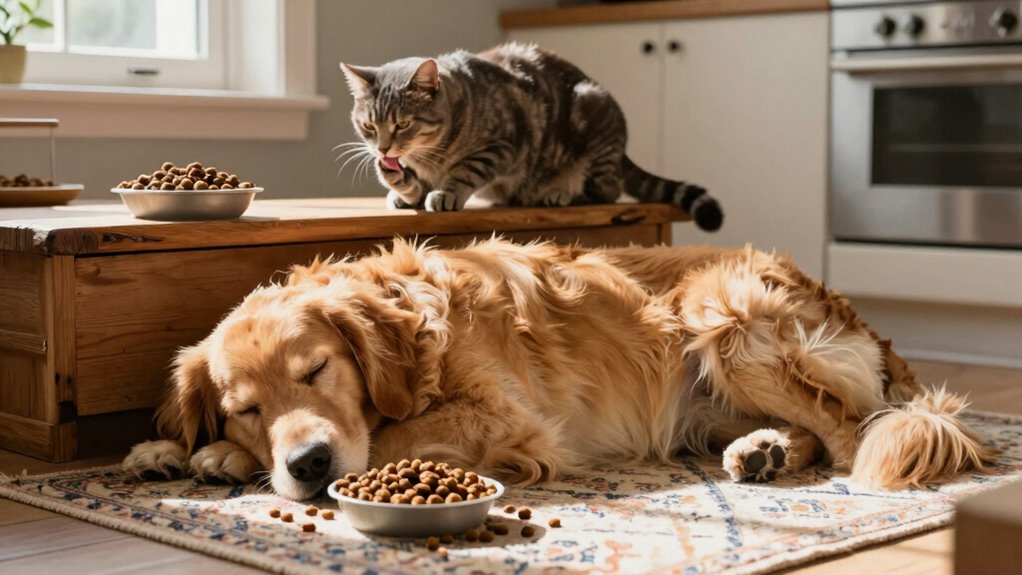

Free-feeding your dog or cat might seem convenient, but it comes with risks. While it allows animals to eat at their own pace and mimics natural grazing, it also makes it harder to control their diet and monitor health changes. Overeating, obesity, and nutrient imbalances are common concerns. To keep your pet healthy, you need to understand how to manage free-feeding effectively. Keep going to discover essential tips for safe and balanced feeding strategies.

Get pet supplies delivered free with Prime
- Fast, free delivery on millions of items
- Prime Video, Amazon Music and more included
- Member-only deals all year
Key Takeaways
- Free-feeding allows pets to eat at their own pace but can lead to overeating and weight management issues.
- Monitoring food intake is more challenging with free-feeding, making it harder to detect health changes early.
- Providing a consistent feeding schedule helps ensure balanced nutrition and supports better health tracking.
- High-quality, nutritionally complete food is essential if choosing free-feeding to prevent deficiencies.
- Regular vet visits and weight monitoring are crucial to adjust feeding practices and maintain pet health.
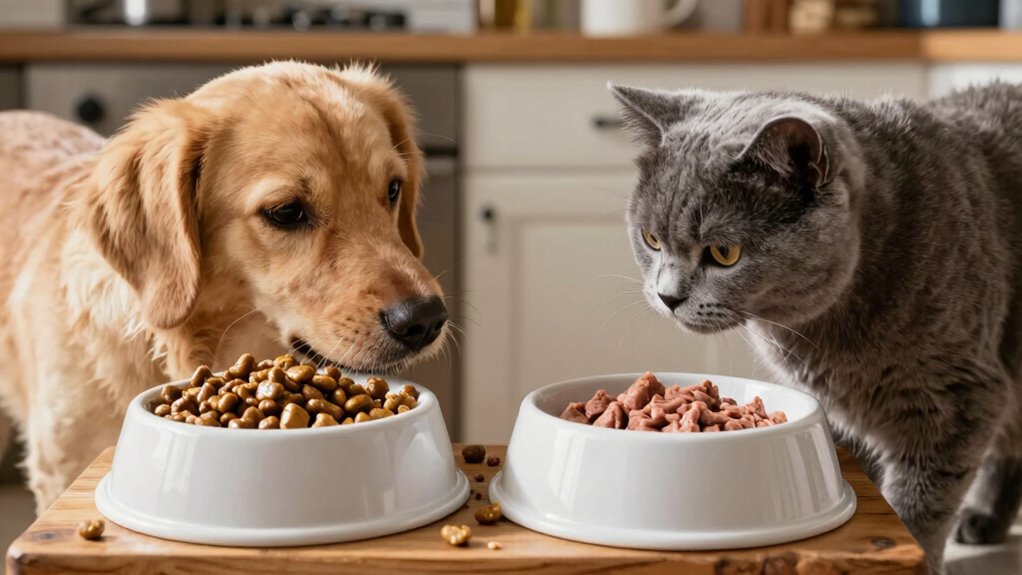
Many pet owners wonder whether free-feeding dogs and cats is a good idea, but the truth is that this approach can have both benefits and risks. When you leave food out all day for your pet, it allows them to eat at their own pace, which can help prevent overeating during stressful times or when they’re not feeling well. However, one significant concern is maintaining a proper nutritional balance. Without a controlled feeding schedule, it’s easy for pets to overconsume certain nutrients or develop habits that lead to obesity. Pets that eat freely often lack a routine, making it harder to monitor how much they’re eating and whether they’re getting all the essential nutrients they need for good health.
Free-feeding pets offers flexibility but risks nutritional imbalance and obesity without proper monitoring.
On the other hand, free-feeding can benefit pets that prefer to graze throughout the day or have variable activity levels. For some animals, this mimics their natural eating behavior and can reduce anxiety associated with scheduled feedings. But, you need to be cautious about how much food is available at all times. If your goal is to guarantee your pet gets a balanced diet, you’ll need to pay close attention to the type and amount of food left out. This is especially important for maintaining a nutritional balance, as some pets might fill up on treats or less nutritious food if their primary diet isn’t well-managed. Properly managing feeding practices is crucial to prevent potential health issues linked to improper diets or feeding routines.
Feeding schedules play an essential role in controlling your pet’s weight and health. When you feed on a set schedule, it’s easier to measure portions and guarantee they’re receiving the right nutrients in appropriate amounts. Scheduled feedings also help you detect any changes in appetite or behavior that could signal health issues. While free-feeding might seem convenient, it often makes it harder to establish these routines, which are imperative for tracking your pet’s health. Establishing a consistent feeding routine can also promote better digestion and reduce the risk of gastrointestinal problems. Additionally, monitoring portion sizes can help prevent overfeeding and support weight management. If you decide to free-feed, it’s essential to choose high-quality, nutritionally complete food and set clear guidelines about how much food should be available at any given time.
In the end, balancing your pet’s nutritional needs with their eating habits demands careful thought. Whether you choose free-feeding or scheduled meals, what matters most is that your pet’s diet remains complete and balanced, and that you’re attentive to their individual needs. Regular vet checkups, monitoring their weight, and adjusting feeding practices as needed can help guarantee your pet stays healthy and happy.
high quality nutritionally complete dog food
As an affiliate, we earn on qualifying purchases.
As an affiliate, we earn on qualifying purchases.
Frequently Asked Questions
How Does Free-Feeding Affect a Pet’s Dental Health?
Free-feeding can negatively impact your pet’s dental health by increasing the risk of dental plaque and tartar buildup. When pets eat continuously, food particles stick to their teeth, promoting bacterial growth. Over time, this buildup hardens into tartar, leading to bad breath, gum disease, and discomfort. To prevent this, you should regularly brush your pet’s teeth and schedule professional dental cleanings, especially if they’re free-fed.
Can Free-Feeding Cause Behavioral Issues in Dogs and Cats?
Free-feeding can cause behavioral issues in dogs and cats by encouraging overeating and inconsistent feeding habits. When pets have constant access to food, they might develop anxiety around mealtime or become less interested in scheduled feedings. This disrupts their nutritional balance and can lead to overeating, which may increase aggression or begging behaviors. Maintaining structured feeding habits guarantees better behavioral stability and supports a balanced, healthy diet.
What Are the Long-Term Health Risks of Free-Feeding?
Free-feeding might seem harmless, but it risks long-term health issues. You could disrupt their dietary consistency and nutritional balance, leading to obesity, diabetes, and joint problems over time. Without controlled portions, your pet’s health can decline silently, making it harder to detect early signs. Keep a close eye on their eating habits and consult your vet to guarantee they maintain ideal health through proper feeding routines.
How Does Free-Feeding Impact a Pet’s Weight Management?
Free-feeding can make weight management tricky because you don’t have control over portion sizes or feeding schedules. Without portion control, your pet might overeat, leading to obesity and related health problems. It also disrupts regular feeding schedules, making it harder to monitor any weight changes or health issues. To keep your pet at a healthy weight, establishing consistent feeding schedules and controlling portions is essential.
Are There Specific Breeds Better Suited for Free-Feeding?
Like a chameleon blending into its surroundings, some breeds adapt better to free-feeding due to their flexible feeding preferences and breed adaptability. Generally, breeds with a calm temperament and moderate activity levels, such as Labrador Retrievers or Beagles, handle free-feeding well. These breeds are less prone to overeating, making them more suited for this feeding style. Always observe your pet’s behavior to make certain they maintain a healthy weight.
Conclusion
Imagine your dog or cat happily lounging, a bowl of food always within reach, their belly full but maybe their health suffering. Free-feeding might seem easy, but it’s like leaving a garden untended — weeds can overtake what’s healthy. By controlling portions, you nurture a vibrant, energetic companion who’s enthusiastic to explore and play. Taking charge today means a happier, healthier pet tomorrow, turning mealtime into a mindful, loving moment you both cherish.
Fall Picks
fall essentials
As an affiliate, we earn on qualifying purchases.