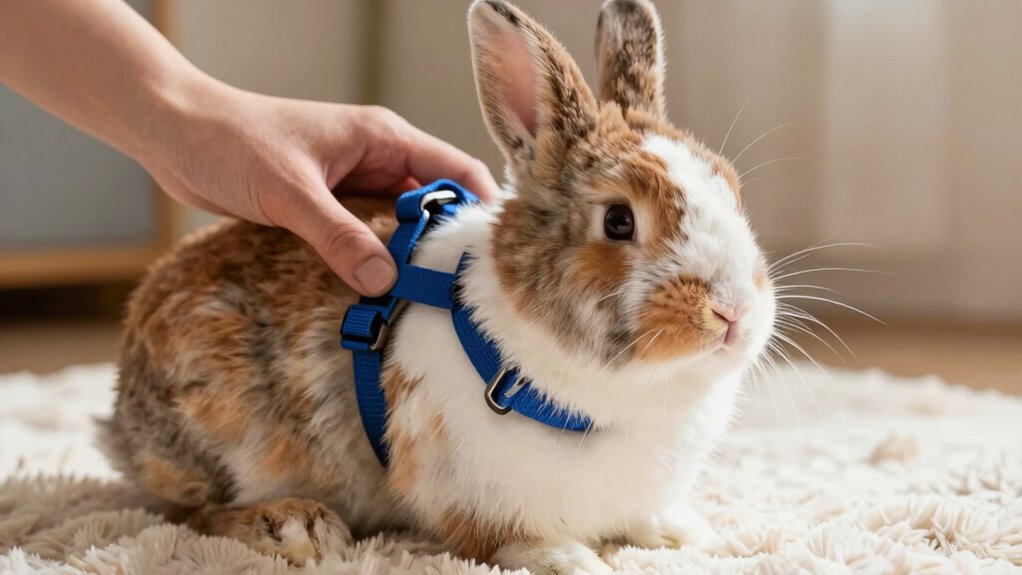
To safely introduce a harness to your rabbit, start by choosing one designed for rabbits and let it explore at its own pace. Approach calmly, offer treats, and allow your rabbit to sniff and investigate the harness without rushing. Gently slip it over the head and secure it loosely, gradually adjusting the fit over multiple sessions. Keep training positive and short, and always supervise outdoor outings. Stick around, and you’ll discover more tips to make the process smooth and stress-free.
Key Takeaways
- Introduce the harness gradually, allowing the rabbit to sniff and explore it at their own pace.
- Use calm, soothing tones and positive reinforcement to create a comfortable environment.
- Slip the harness over the head gently and secure it loosely, rewarding the rabbit afterward.
- Keep initial sessions short, ensuring the rabbit remains relaxed and stress-free during introduction.
- Observe your rabbit’s behavior and adjust the process based on their comfort level and responses.
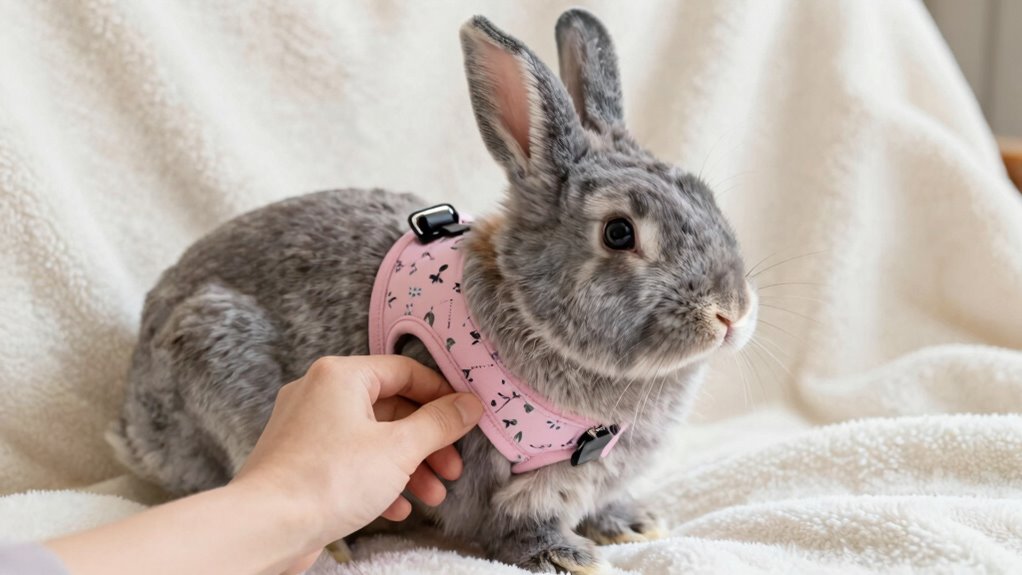
Introducing a harness to your rabbit can seem challenging, but with patience and the right approach, it becomes a positive experience for both of you. The key is to focus on gentle training techniques and prioritize safety precautions to guarantee your rabbit feels secure and comfortable throughout the process. Start by selecting a harness specifically designed for rabbits, one that fits snugly without being too tight or too loose. Before you even attempt to put it on, let your rabbit get used to the harness by placing it nearby during playtime, allowing them to sniff and explore it at their own pace. This helps reduce any initial fear or anxiety.
Patience and gentle training help your rabbit feel safe and comfortable with a harness.
When you’re ready to proceed, approach your rabbit calmly and gently, speaking in soothing tones. Show the harness to your rabbit, letting them see and sniff it, and reward their curiosity with treats. The goal is to create positive associations with the harness. When you put the harness on, do so gradually. Start by slipping it over their head and securing it loosely, then praise and reward your rabbit. Avoid forcing the harness onto your rabbit or tightening it too quickly, as this can cause stress and discomfort. Instead, gradually adjust the fit over several sessions, making certain they’re comfortable before proceeding to the next step.
Training techniques are essential here. Keep the sessions short and positive, ending each with treats and gentle petting. As your rabbit becomes more accustomed to wearing the harness, slowly introduce short, supervised outings in a safe, enclosed space. Additionally, understanding biodiversity can help you create a more enriching environment for your rabbit, supporting their overall well-being. Incorporating environmental enrichment can also make the experience more positive for your pet. Remember that animal behavior plays a significant role in how your rabbit responds to new experiences, so observing their cues and respecting their limits is crucial. Recognizing natural instincts can help you tailor your approach to make the training more effective and less stressful.
Safety precautions are vital from start to finish. Always double-check the harness fit before each use to prevent slipping or choking hazards. Avoid using a harness with loose or dangling parts that could catch on objects or cause injury. Keep your rabbit in a quiet, secure environment during training to minimize distractions and help them focus. Remember, patience is key. By combining gentle training techniques with strict safety precautions, you’ll build trust and help your rabbit enjoy outdoor adventures without stress or danger.
rabbit harness for outdoor walks
As an affiliate, we earn on qualifying purchases.
As an affiliate, we earn on qualifying purchases.
Frequently Asked Questions
How Long Should I Initially Keep the Harness on My Rabbit?
You should initially keep the harness on your rabbit for just 5 to 10 minutes during harness training sessions. Observe your rabbit’s behavior carefully—if it seems stressed or uncomfortable, take a break. Gradually increase the duration as your rabbit gets more accustomed to it. This approach helps reduce anxiety and builds positive associations, ensuring your rabbit feels safe and confident while wearing the harness over time.
Can I Use a Harness Outdoors Immediately After Introduction?
You shouldn’t take your rabbit outdoors immediately after introducing the harness. Think of indoor training as preparing a strong foundation, just like choosing durable harness materials that fit well and are comfortable. Gradually build your rabbit’s confidence indoors, ensuring they’re accustomed to the harness. Once they’re relaxed and comfortable, then you can safely venture outside, turning the outdoor experience into a symbol of trust and exploration.
What if My Rabbit Refuses to Wear the Harness?
If your rabbit refuses to wear the harness, don’t force it. Instead, practice training patience and focus on making the harness comfortable for them. Let your rabbit get used to the harness gradually, rewarding calm behavior. Keep sessions short and positive, and never rush the process. Over time, your rabbit may become more accepting, especially when they associate the harness with comfort and gentle handling.
Are There Specific Harness Types Best for Different Rabbit Breeds?
When choosing a harness for your rabbit, go for one that’s breed-specific or adjustable to guarantee the best fit. Soft harness materials like nylon or fleece prioritize rabbit comfort and prevent chafing. Smaller or more delicate breeds benefit from lightweight, snug harnesses, while sturdier breeds can handle more robust options. Remember, the right harness should allow freedom of movement without causing discomfort—it’s a fine line you want to walk carefully.
How Often Should I Check the Harness for Safety?
You should check the harness daily for safety, ensuring it’s secure and in good condition. Regular harness maintenance helps prevent discomfort or escape, so look for signs of wear, loose fittings, or chafing. Prioritize your rabbit’s comfort by adjusting the harness if it seems tight or causes irritation. Frequent checks keep your rabbit safe and comfortable during outdoor adventures, giving you peace of mind and a happy, secure pet.
Conclusion
Introducing a harness to your rabbit might take patience, but it’s worth the effort for safe outdoor adventures. Remember to go slow, keep sessions positive, and always watch for signs of stress. With gentle persistence, your bunny will soon feel comfortable wearing it. Are you ready to build trust and enjoy the outdoors together? Keep patient, stay consistent, and soon you’ll both be exploring with confidence and joy.