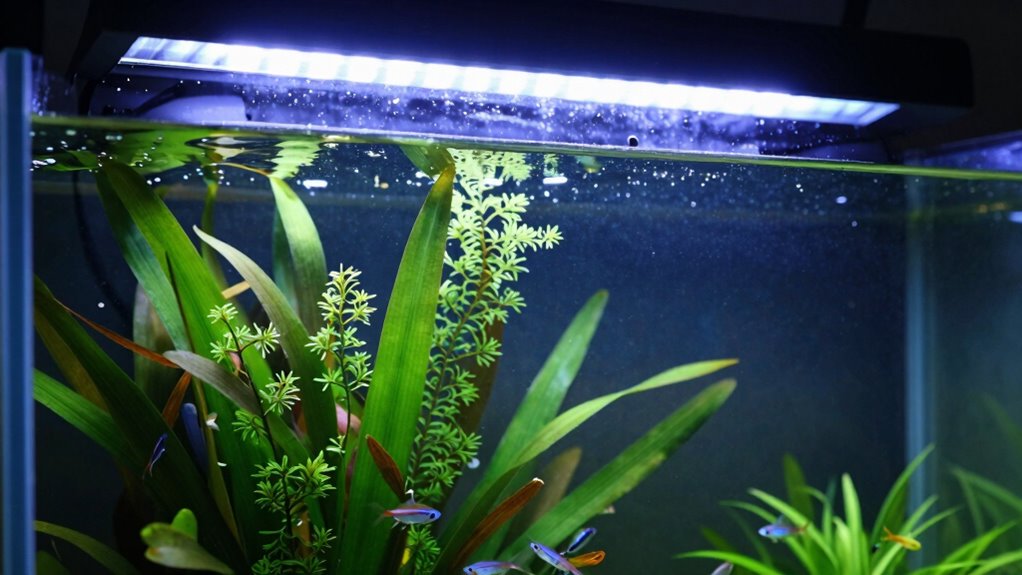
Extended LED light duration in your aquarium can promote algae blooms by providing more energy for algae to flourish. Too much light allows algae to outcompete plants for nutrients and creates an environment ideal for their growth. Keeping lights on for too long or at high intensities can disrupt the balance between plants and algae. Managing light duration carefully helps prevent these issues and keeps your tank healthy—exploring further will give you better control strategies.
Key Takeaways
- Excessive LED light durations promote algae growth by increasing photosynthesis beyond plant needs.
- Longer lighting periods create favorable conditions for algae to outcompete aquatic plants for nutrients.
- Inconsistent or extended light cycles disrupt ecosystem balance, encouraging algae blooms.
- Properly timed LED lighting (8-10 hours) helps prevent algae proliferation while supporting plant health.
- Automated timers ensure stable light schedules, reducing the risk of algae outbreaks caused by over-illumination.
As an affiliate, we earn on qualifying purchases.
How Light Duration Affects Algae Growth in Aquariums
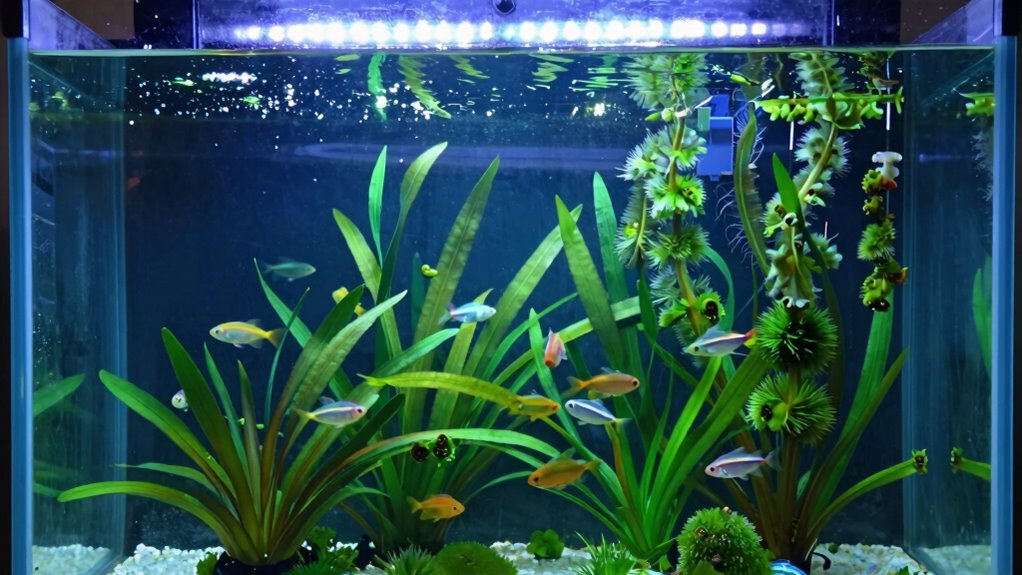
The amount of time your aquarium lights are on each day directly influences algae growth. Longer lighting periods boost photosynthesis efficiency in algae, encouraging rapid growth. When lights stay on too long, algae can outcompete your aquatic plants for nutrients, leading to unwanted blooms. Additionally, light spectrum variation plays a role; certain wavelengths are more effective for photosynthesis, so extended exposure to these can exacerbate algae issues. Keeping lights on for too many hours creates an environment where algae thrive, especially if your tank’s light spectrum favors their growth. To prevent this, aim for a balanced schedule that limits exposure while providing enough light for your plants. Implementing energy-efficient lighting solutions can help reduce overall power consumption and minimize algae problems. Proper light management is essential for a healthy aquarium ecosystem, as it helps control algae while supporting plant growth. Understanding the effects of light duration on algae can guide you in making more informed decisions about your lighting setup. Regularly monitoring your aquarium’s light schedule and adjusting it based on algae growth patterns can further support a healthy balance in your tank.
Signs Your Aquarium Is Developing Algae Blooms Due to Too Much Light
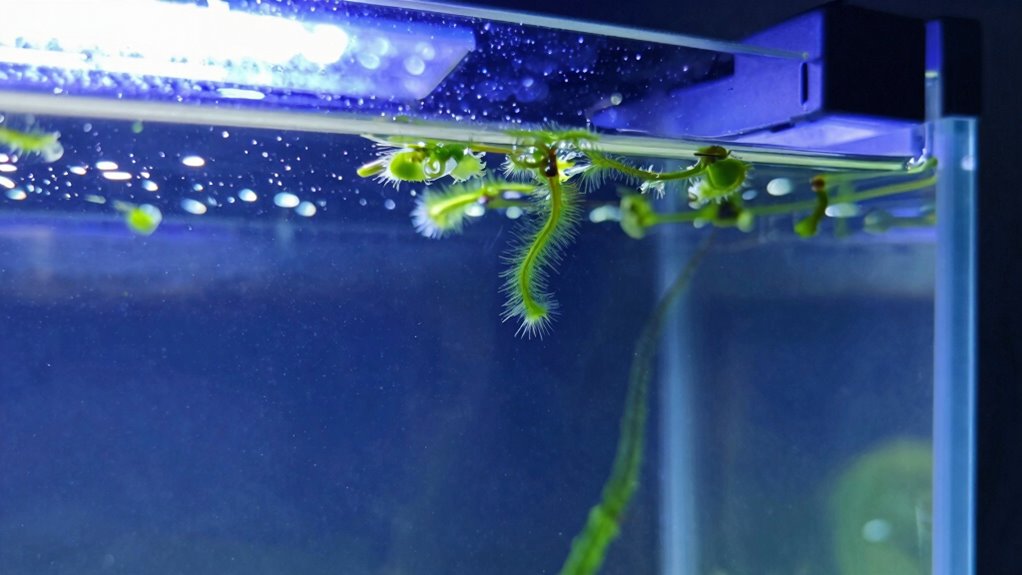
When your aquarium starts to develop visible signs of algae blooms, it’s often a clear indication that too much light is fueling their growth. One key sign is an unusual increase in algae on the glass, substrate, or decorations, which may appear as green, brown, or fuzzy patches. Changes in spectral quality can also promote algae proliferation, as certain wavelengths encourage unwanted algae growth over plants. Additionally, excessive light penetration beyond the desired zones can lead to uneven algae distribution, making the tank look cloudy or murky. You might also notice algae growing faster than your plants can compete with, signaling over-illumination. Monitoring light duration and adjusting your schedule accordingly helps prevent these issues. Proper lighting control techniques, including spectral management, are essential for preventing algae overgrowth and promoting healthy plant development. Paying attention to these signs helps you adjust your lighting schedule and spectral settings to prevent further algae blooms and maintain a healthy, balanced tank environment. Ensuring proper light management techniques can significantly reduce the risk of algae blooms, contributing to a more sustainable aquatic environment. Being aware of light intensity levels is crucial for balancing plant health with algae control, ensuring a thriving aquarium.
How LED Lighting Influences Algae and Plant Balance in Your Tank
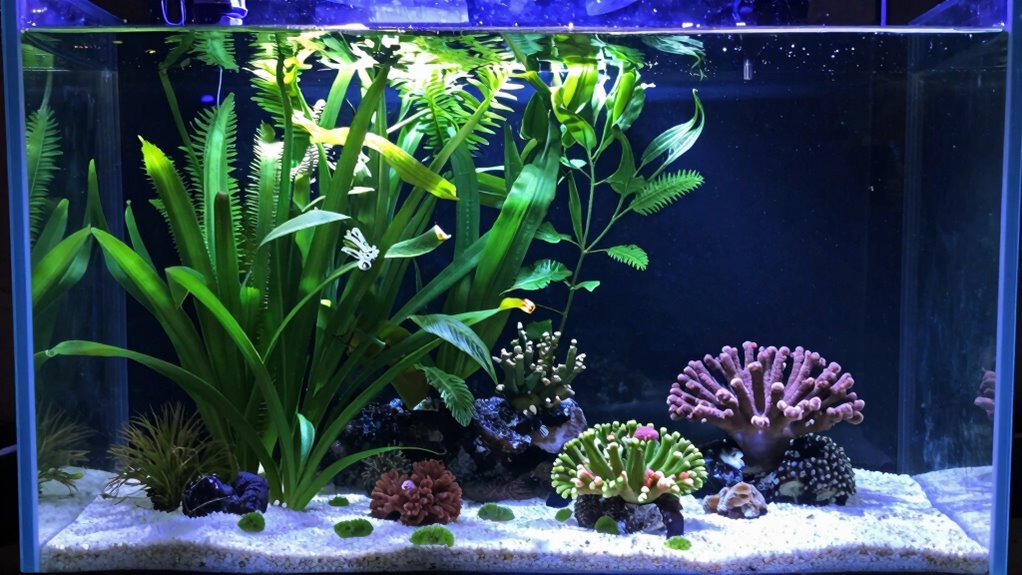
The amount of time you leave your LED lights on can considerably impact your tank’s algae and plant growth. Too much light promotes algae blooms, while too little can hinder plant health. Finding the right balance helps keep your aquarium healthy and visually appealing. Monitoring light duration and adjusting it as needed can prevent common issues and promote a thriving aquatic environment. Understanding photosynthesis and its relationship with light exposure is essential for maintaining a balanced ecosystem within your tank. Additionally, incorporating smart lighting systems can help automate and optimize light cycles for better algae control and plant vitality. Properly managing light spectrum is also crucial, as different wavelengths influence plant and algae development at varying rates. Recognizing the importance of light cycle timing can further enhance the stability of your tank’s ecosystem and support healthy growth.
Light Duration Effects
Adjusting the duration of LED lighting in your aquarium directly impacts the balance between algae growth and healthy plant development. Too long a light period can cause algae blooms, especially if the aquarium color and light spectrum favor algae proliferation. Conversely, insufficient light hampers plant growth and vibrant aquarium color. Proper light timing is essential for maintaining a healthy ecosystem that supports both plants and fish. Imagine: 1. An illuminated tank glowing with lush green plants. 2. Algae starting to form in shaded corners due to excessive light duration. 3. Fish darting through clear water, free from algae buildup. 4. Light spectrum choices enhancing plant vibrancy without encouraging algae. Controlling light duration guarantees your aquarium maintains a healthy ecosystem, balancing the needs of plants and preventing algae from taking over. Proper timing helps optimize the aquarium color and the desired light spectrum for a thriving environment.
Balancing Algae and Plants
LED lighting plays a crucial role in maintaining a healthy balance between algae growth and plant development in your aquarium. Proper light customization helps you prevent excessive algae by adjusting intensity and duration to suit your plants’ needs. By tailoring your LED settings, you can promote robust plant growth, which naturally competes with algae for nutrients, reducing the risk of overgrowth. Consistent, appropriate lighting prevents algae prevention issues caused by too much or too little light. Focus on providing the right spectrum and intensity for your plants while avoiding excess light that encourages algae blooms. Regularly monitoring and adjusting your LED lighting ensures your plants thrive and algae stay under control, creating a balanced, healthy environment in your tank. Choosing the right lighting system is essential for maintaining this delicate balance effectively. Additionally, understanding the light duration and its impact on algae blooms can help you fine-tune your setup for optimal results. Proper timing and light management can further minimize the chances of algae outbreaks, ensuring your aquatic ecosystem remains healthy and vibrant. Implementing light intensity adjustments based on your tank’s specific needs can further optimize growth conditions and algae control, especially when combined with other aquarium maintenance practices.
Best Practices for Setting Light Cycles to Prevent Algae
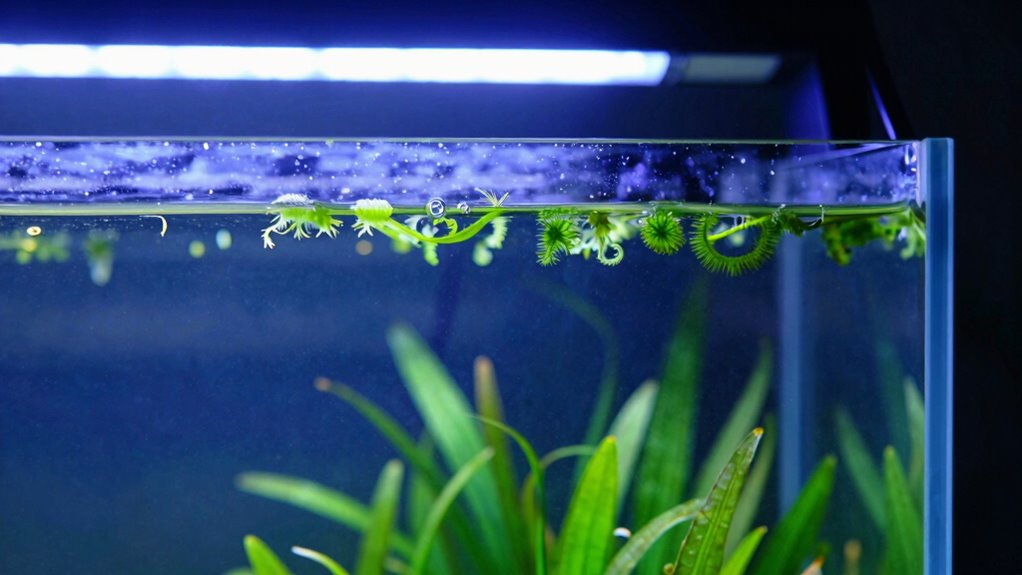
To prevent algae buildup, you should keep your light cycle consistent and avoid sudden changes. Using timers makes it easy to automate your lighting schedule and maintain stability. Additionally, limiting both the intensity and duration of your lights helps control algae growth effectively. Understanding the role of light in algae growth can further enhance your ability to manage your aquarium environment successfully.
Maintain Consistent Light Duration
Maintaining a consistent light duration is essential for preventing algae buildup in your aquarium. When your light cycle fluctuates, algae can thrive, disrupting both aquarium aesthetics and fish behavior. To keep things steady, consider these best practices:
- Set your lights to turn on and off at the same time each day, creating a predictable environment.
- Avoid extended daylight periods that mimic natural sunlight, which encourages algae growth.
- Limit light exposure to about 8-10 hours daily, enough for healthy plant growth without overexposure.
- Observe your fish’s activity; stable lighting helps keep their behavior natural and stress-free.
- Proper lighting is a crucial aspect of maintaining a healthy aquarium environment and preventing algae blooms.
- Additionally, understanding cloud-based services can help you troubleshoot and monitor your lighting setup remotely, ensuring consistency.
Use Timers for Automation
Using timers to automate your aquarium lighting guarantees consistent light cycles, which is crucial for preventing algae growth. By scheduling lights to turn on and off at specific times, you create a stable environment that supports healthy water circulation and minimizes algae-friendly conditions. Proper timing helps your aquarium decor stay vibrant, avoiding excessive algae buildup on surfaces. Automated lighting ensures your fish and plants receive the right amount of light without manual intervention, reducing the risk of accidental overexposure. Consistent light cycles also promote balanced biological processes, keeping water clear and healthy. Using timers is a simple yet effective way to maintain ideal conditions, helping you prevent algae blooms while showcasing your aquarium’s best features. Regularly checking lighting duration ensures your setup remains optimal for algae prevention.
Limit Light Intensity and Duration
Limiting the intensity and duration of your aquarium’s lighting is essential for preventing algae overgrowth. Too much light or an extended light cycle promotes algae by boosting photosynthesis. To optimize, focus on the spectral quality and light spectrum, ensuring your LEDs emit wavelengths that favor your aquatic plants over algae.
Imagine your tank with:
- A gentle, balanced light spectrum that enhances plant growth without encouraging algae.
- A controlled light intensity that avoids overpowering the tank’s environment.
- A timer set to simulate natural daylight hours, around 8-10 hours daily.
- Periods of darkness to interrupt algae’s growth cycle.
Adjusting these parameters keeps algae in check, promotes healthy plants, and maintains a clear, vibrant aquarium.
Adjusting Your LED Light Schedule for a Healthy Aquarium
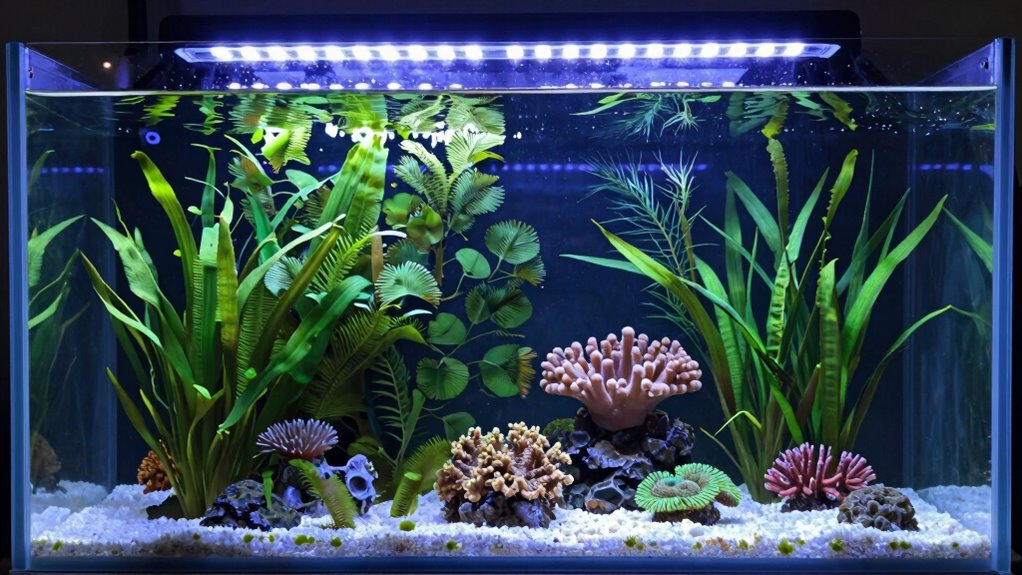
Adjusting your LED light schedule is essential for keeping your aquarium healthy and thriving. To optimize growth and prevent algae, consider the spectral quality and color temperature of your lights. A balanced spectral quality provides the right wavelengths for plant and fish health, while appropriate color temperature influences how natural and vibrant your aquarium appears. Aim for a light schedule that mimics natural sunlight, typically around 8 to 10 hours daily, and avoid prolonged exposure that can encourage algae blooms. Use timers to maintain consistency, and modify based on your tank’s specific needs. Properly managing light duration and spectrum helps foster a healthy environment, promotes plant growth, and minimizes algae risks. Regular adjustments ensure your aquarium remains balanced and visually appealing.
Other Factors That Contribute to Algae Growth Besides Light
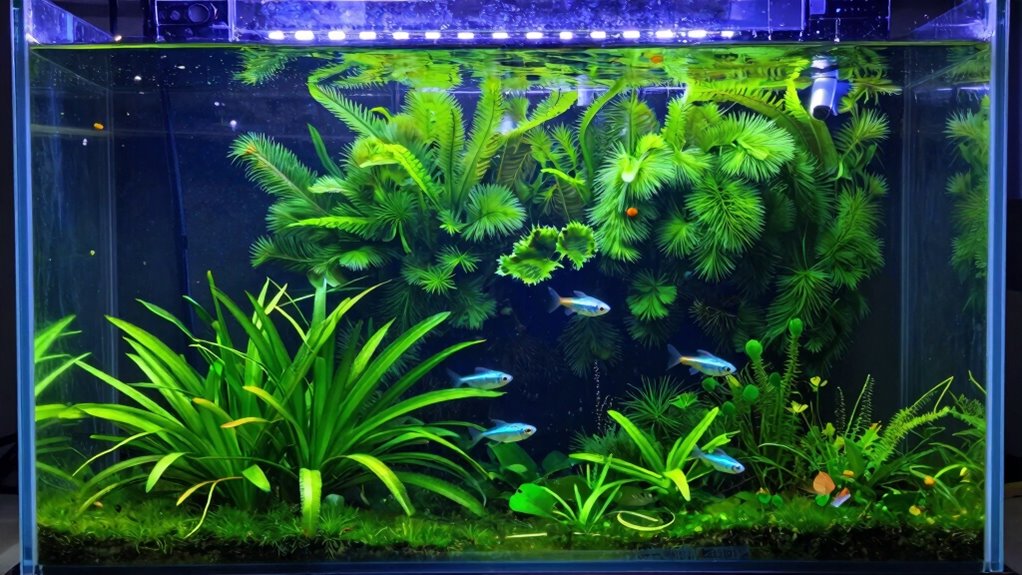
While light plays a significant role in algae growth, other factors can also contribute heavily to its proliferation in your aquarium. Poor water quality introduces excess nutrients that algae thrive on, making regular testing and water changes essential. Pest control is equally important; pests like snails or algae-eating organisms can unintentionally spread algae spores. Additionally, overfeeding creates organic waste that deteriorates water quality, fueling algae blooms. Lastly, inadequate filtration allows debris and nutrients to accumulate, providing ideal conditions for algae to flourish. By managing water quality through proper filtration, controlling pests, and avoiding overfeeding, you reduce the risk of algae outbreaks regardless of your LED light schedule. These steps are crucial for maintaining a healthy, balanced aquarium.
Troubleshooting Common Algae Problems Caused by Lighting Mistakes
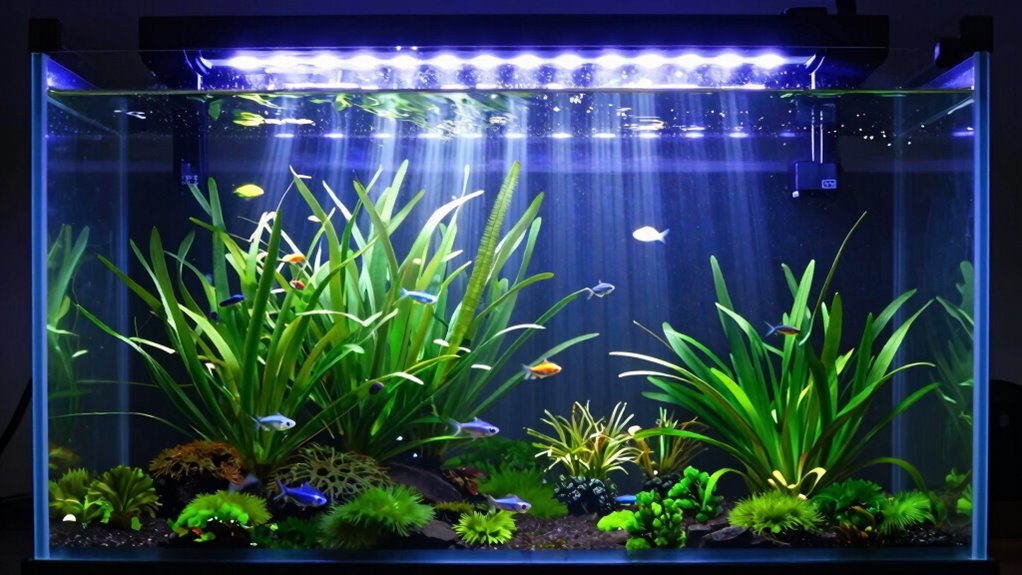
Lighting mistakes are a common cause of algae problems in aquariums, and addressing them quickly can prevent algae from taking over. If you notice excess algae, check your light duration and intensity. Using algae resistant substrates can help reduce nutrient buildup that fuels algae growth. Additionally, implementing UV sterilization techniques can help control free-floating algae and prevent blooms. Ensure your LED lights are not on longer than necessary—aim for a consistent schedule that supports plant health without overexposure. Regularly adjusting light intensity and duration, combined with these preventive measures, can considerably reduce algae outbreaks caused by improper lighting. By troubleshooting your lighting setup and incorporating algae resistant substrates and UV sterilization, you set a strong foundation for a cleaner, healthier aquarium environment.
Tips for Maintaining a Balanced Light Environment for Fish and Plants
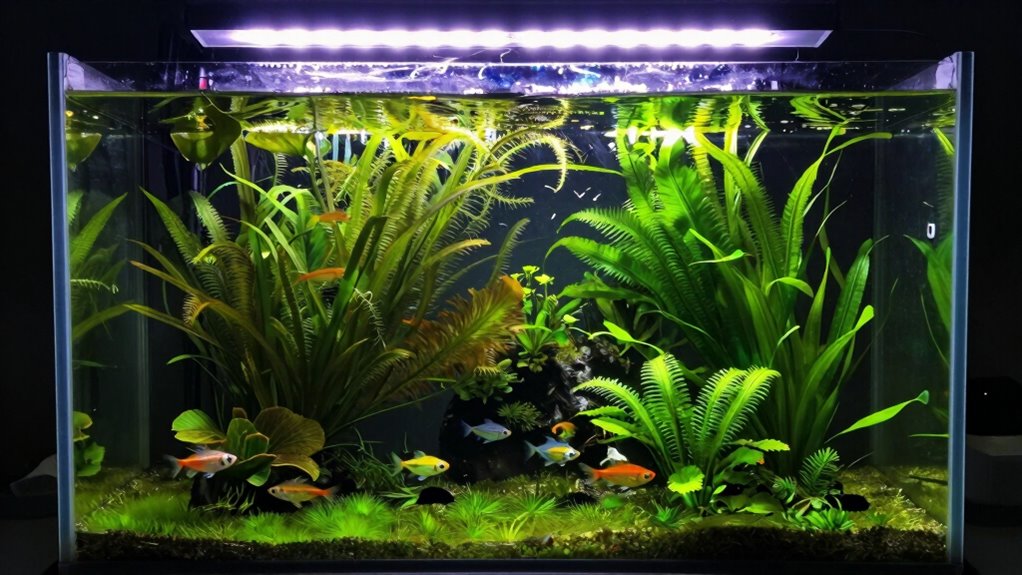
Maintaining a balanced light environment is essential for the health of both fish and plants in your aquarium. To achieve this, focus on proper light duration and intensity, ensuring it mimics natural conditions. Here are four tips:
A balanced light environment supports healthy fish and plants by mimicking natural conditions.
- Use timers to regulate light exposure, avoiding overly long periods that promote algae growth.
- Ensure your aquarium filtration is functioning well to keep water clear and prevent nutrient buildup.
- Incorporate water circulation to distribute light evenly and reduce stagnant spots where algae can thrive.
- Adjust light intensity based on plant and fish needs, preventing excessive brightness that stresses aquatic life.
Frequently Asked Questions
What Types of Algae Are Most Common in Led-Lit Aquariums?
You’ll often see green algae, like Chlorophyta, in LED-lit aquariums, which thrive with the right light spectrum. Diatoms, with their brownish color, also appear when light spectrum effects favor silica-based algae growth. These algae species flourish when light duration is too long or the spectrum favors photosynthesis. To keep them in check, adjust your LED light duration and spectrum, ensuring your aquarium stays healthy and algae growth remains controlled.
Can Different LED Colors Affect Algae Growth Rates?
Think of LED colors as the spices in a recipe; they influence algae growth like a flavor enhancer. Different LED colors, based on spectral influence, can accelerate or slow algae development by affecting the color spectrum your aquarium receives. Blue and red lights often promote algae, while green and yellow may inhibit it. So, choosing your LED colors carefully helps control algae, keeping your tank vibrant and healthy.
How Does Light Intensity Impact Algae Development in Tanks?
You’ll find that higher light intensity boosts algae development because it enhances photosynthesis efficiency, making it easier for algae to grow rapidly. When your tank’s light spectrum leans towards the blue and red wavelengths, it further accelerates this process. Too much light intensity can lead to unwanted algae blooms, so it’s essential to balance your LED’s brightness to promote healthy plant growth without encouraging excessive algae growth.
Are There Specific LED Brands Better for Controlling Algae?
You should look for LED brands with a strong reputation for quality and reliability, like Fluval or Kessil. These brands offer LEDs with customizable spectrum options, allowing you to adjust light to minimize algae growth. By choosing lights with the right spectrum and reputable brand, you can better control algae, promote healthy plants, and keep your tank crystal clear. Always read reviews to guarantee you’re selecting the best option for algae control.
How Quickly Can Algae Blooms Appear After Changing Light Settings?
Imagine algae throwing a surprise party overnight—you might see the first signs within a few days of changing your light cycle adjustments. To prevent this, implement algae prevention strategies like maintaining consistent light durations and avoiding sudden shifts. Algae loves chaos, so keep your light schedule steady, and you’ll be less likely to wake up to a green mess. Regular monitoring keeps blooms at bay and keeps your aquarium looking pristine.
Conclusion
By mastering your LED light schedule, you can keep algae blooms at bay and create a thriving, balanced aquarium. Think of light as a double-edged sword—you want enough to nourish your plants but not so much that algae takes over like an unwelcome guest. Stay attentive to your tank’s signals, adjust your lighting accordingly, and you’ll enjoy a vibrant, healthy underwater world that’s as lively as a coral reef.