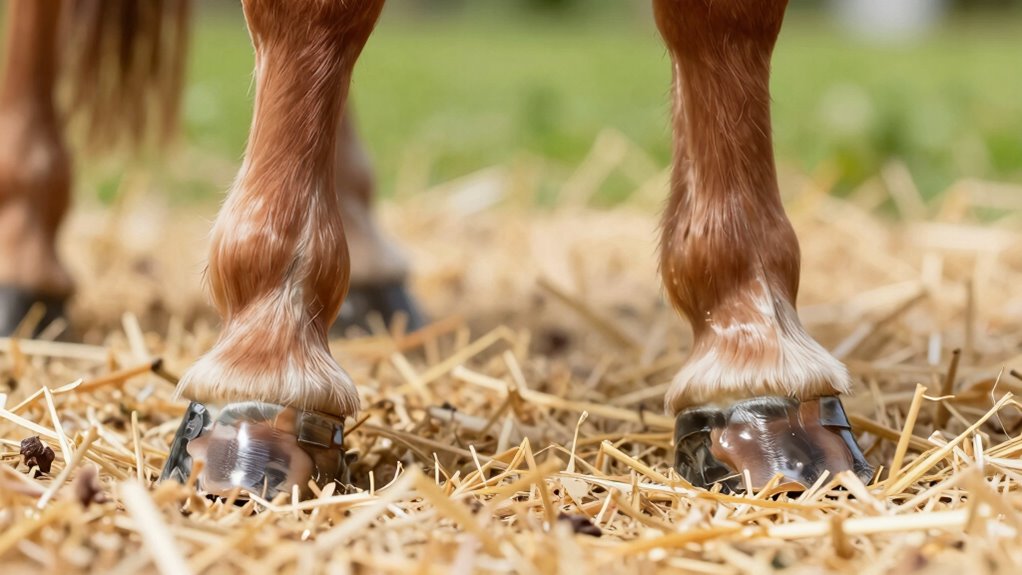

A healthy miniature horse hoof looks smooth, evenly worn, and free of cracks or chips. The hoof wall should be resilient and properly aligned to support movement without flaring or sinking. You’ll notice a moist, healthy frog and consistent growth patterns that indicate good care. Proper nutrition, regular trimming, and proper tools are essential. Keep an eye out for early signs of issues—if you glance over key details, you’ll learn how to keep those hooves in top shape.
Key Takeaways
- Healthy mini hooves have smooth, even surfaces with strong, resilient walls free of chips or cracks.
- Proper wear results in symmetrical, consistent hoof growth and natural shape, indicating good hoof health.
- Moist, healthy frog and absence of foul odor or cracks signal well-maintained, balanced hooves.
- Regular trimming with proper tools prevents overgrowth, cracks, and misalignment, supporting hoof integrity.
- Balanced nutrition, environment, and professional care are essential for maintaining healthy mini hooves.
How to Tell If Your Mini’s Hooves Are Healthy
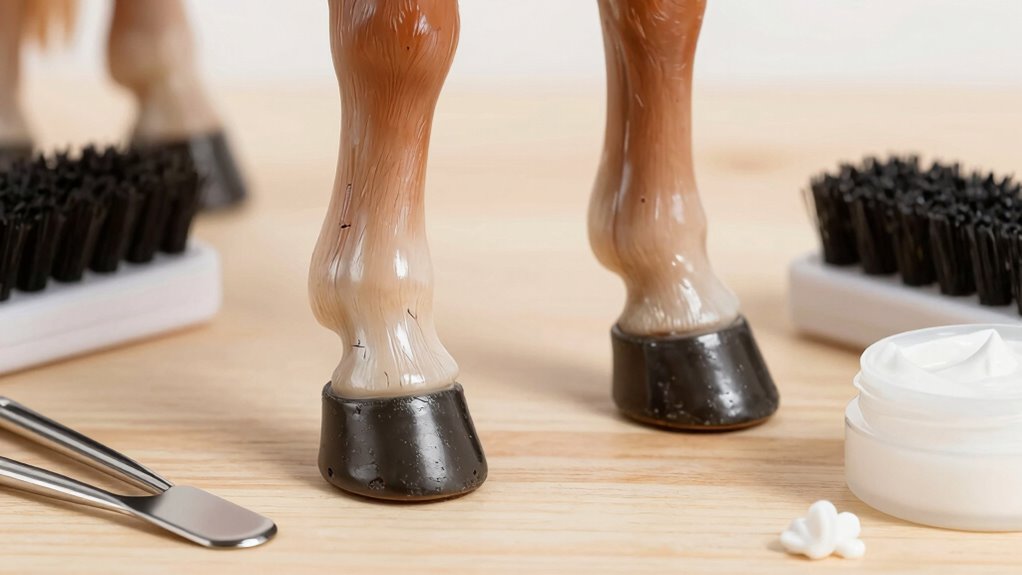
Wondering if your mini’s hooves are in good shape? Start by examining the hoof anatomy carefully. Healthy hooves should have a smooth, even surface with a firm, but not overly hard, texture. Look for cracks, chips, or uneven wear, which can indicate issues. The hoof wall should be strong and resilient, not soft or crumbly. Pay attention to the hoof’s overall shape—properly shaped hooves promote healthy movement. Nutritional influence plays a crucial role here; a balanced diet rich in biotin, zinc, and other essential nutrients supports hoof strength and growth. If you notice any abnormalities or signs of weakness, consult your veterinarian or farrier. Regularly checking your mini’s hooves helps catch problems early, ensuring your horse stays comfortable and healthy.
Recognizing Normal Growth and Wear Patterns in Mini Hooves

Understanding what normal growth and wear look like in your mini’s hooves is essential for identifying potential issues early on. Regularly check for consistent hoof growth, which appears as smooth, even edges without excessive chipping or cracking. Wear patterns should be symmetrical, showing even trimming from front to back. Pay attention to hoof discoloration; healthy hooves usually have a uniform color, while dark spots or unusual patches might signal problems. Sole thickness varies with activity and terrain but should be consistent across both hooves. You might notice some natural flattening or rounding of the hoof wall, indicating normal wear. Recognizing these patterns helps you maintain healthy hooves and catch early signs of imbalance or abnormality. Additionally, understanding free floating hoof mechanics can help you assess whether your mini’s hooves are functioning properly during movement. Being aware of hoof balance is also crucial for preventing lameness and ensuring overall hoof health. Proper hoof trimming techniques support healthy growth and prevent deformities.
Signs Your Mini Horse Might Have Hoof Problems
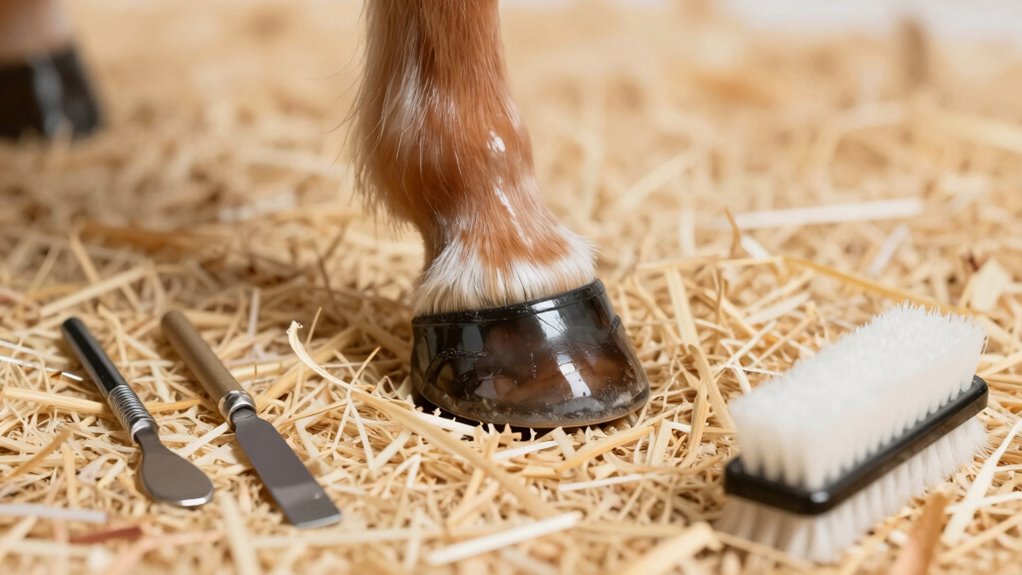
Watch for uneven hoof wear or cracks, as they can indicate underlying issues. Chips or splits in the hoof wall are also signs you shouldn’t ignore. Catching these problems early helps keep your mini horse healthy and comfortable. Additionally, monitoring for sustainable hoof care practices ensures long-term hoof health.
Uneven Hoof Wear
Uneven hoof wear is often one of the first signs that your mini horse may have hoof problems. When you notice this, it could indicate issues with hoof shape or uneven sole thickness. Keep an eye out for:
- One hoof wearing more on one side, causing an irregular hoof shape.
- Soreness or lopsided weight distribution when you pick up the hooves.
- Uneven sole thickness, with certain areas appearing unusually thin or thick.
- Changes in gait, as your mini may shift weight to compensate for discomfort.
- Regular hoof maintenance can help prevent these issues from worsening and support overall hoof health.
- Addressing hoof abnormalities early can help avoid more severe complications down the line.
- Proper farrier care ensures balanced hooves and reduces the risk of uneven wear.
- Consistent hoof inspections are essential for early detection and prompt intervention.
These signs suggest that your mini horse’s hooves aren’t wearing evenly, which can lead to further complications if left unaddressed. Regular checks help catch these issues early and maintain healthy, balanced hooves.
Cracks or Chips
If you notice cracks or chips in your mini horse’s hooves, it could be a sign of underlying hoof problems that need attention. Hoof cracks often appear as splits running vertically or horizontally, weakening the hoof’s structure. Hoof chips are fragments that break off from the hoof wall or sole, indicating possible brittleness or trauma. These issues can lead to discomfort, pain, or infection if left untreated. Regularly inspecting your horse’s hooves helps catch these signs early. Proper trimming, cleaning, and moisture balance are essential to prevent and address hoof cracks and chips. Implementing sound hoof care practices can significantly improve hoof health and prevent future issues. Maintaining proper moisture levels plays a crucial role in preventing brittleness and cracking. Ensuring consistent hoof maintenance can help identify problems before they worsen. Additionally, providing a balanced diet rich in biotin and essential nutrients supports hoof strength and resilience. Adequate hydration and nutrition are also vital components of overall hoof health. If you see persistent or worsening damage, consult a farrier or veterinarian promptly. Addressing hoof cracks and chips promptly keeps your mini horse comfortable and maintains healthy hooves.
Essential Tools for Miniature Horse Hoof Care
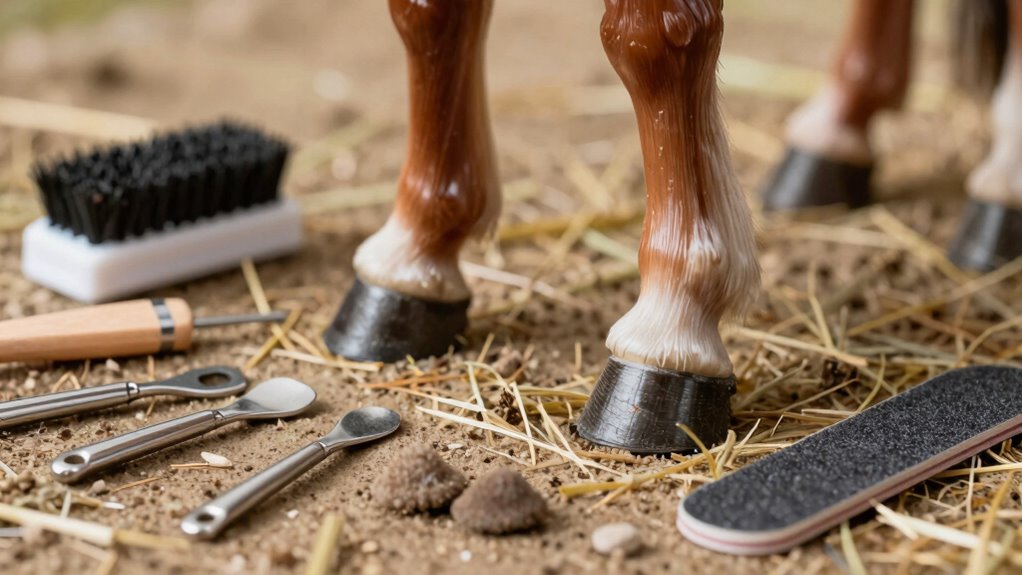
To properly care for your miniature horse’s hooves, having the right tools is essential. Understanding mini hoof anatomy helps you identify issues early and maintain healthy hooves. Proper tools also assist with horse shoe fitting when needed. Here are the must-have items:
- Hoof pick – essential for removing dirt and debris from the hoof, preventing infections.
- Hoof knife – useful for trimming dead sole and shaping the hoof.
- Rasp – helps smooth and level the hoof wall, promoting healthy growth.
- Clipper or nippers – necessary for trimming overgrown hoof wall or excess hoof material.
Being familiar with mini hoof anatomy enables you to spot abnormalities early and provide targeted care. Recognizing signs of hoof health issues allows for timely intervention and better overall hoof health. Additionally, understanding the natural hoof structure helps in making informed decisions about trimming and shoeing practices. Knowing how hoof growth patterns develop guides effective trimming techniques and promotes balanced hoof development.
With these tools, you can maintain your mini’s hooves effectively, ensuring they stay healthy and strong while respecting the mini hoof anatomy.
How to Trim Your Mini’s Hooves Correctly
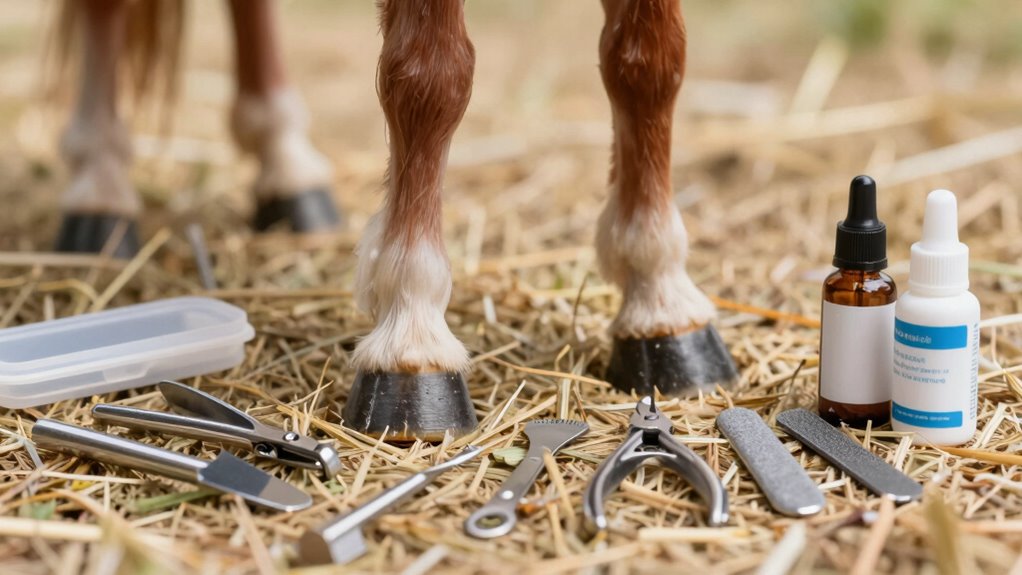
Trimming your mini’s hooves requires the right tools and a calm environment to guarantee safety and accuracy. Follow a step-by-step process to avoid over-trimming and to keep hooves healthy. Look for signs of healthy hooves, like a smooth surface and proper shape, as you work. Maintaining healthy hooves is essential for your mini’s overall well-being and mobility. It’s also helpful to understand the importance of the Sun’s energy in maintaining the health of living creatures, including your mini. Additionally, exposure to natural sunlight can support the synthesis of vitamin D, which is crucial for healthy hoof growth and overall health. Proper sunlight exposure can also help prevent issues such as laminitis by supporting metabolic health. Ensuring your mini has access to adequate sunlight regularly can foster stronger, more resilient hooves.
Proper Tools and Environment
Having the right tools and a suitable environment is essential for trimming your mini’s hooves safely and effectively. Proper tools like sharp hoof trimmers, rasps, and a sturdy stand help guarantee precision and safety. An ideal environment is flat, clean, and well-lit, minimizing distractions and hazards. Before trimming, consider your miniature horse’s nutrition and pasture management, as these influence hoof health and growth. Additionally, staying informed about pinball machine weights can help manage equipment safely if you’re incorporating any arcade elements into your space. Using proper maintenance techniques can also extend the lifespan of your tools and ensure consistent performance. Maintaining proper tool storage helps prevent damage and keeps tools ready for use. 1. Use sharp, well-maintained tools to avoid cracks and splits. 2. Work in a quiet, clutter-free space to keep your mini calm. 3. Ensure the footing is stable to prevent slips during trimming. 4. Keep your environment clean to reduce infection risk.
With these essentials, you set the stage for safe, effective hoof care.
Step-by-Step Trimming Process
Before you begin trimming, make certain your mini’s hoof is properly prepared. Start by cleaning the hoof thoroughly to remove dirt and debris. Familiarize yourself with miniature horse anatomy to identify the hoof wall, sole, and frog. Use proper hoof trimming techniques to avoid over-trimming, which can cause pain or lameness. Begin by trimming the hoof wall, working gradually and evenly, ensuring you follow the natural curvature. Be cautious not to cut into the sole or frog. Regularly check your progress and avoid excessive removal of hoof material. Use sharp tools to ensure smooth cuts, and always aim for a balanced, healthy hoof shape. Consistent trimming preserves hoof health and supports your mini’s overall well-being.
Signs of Healthy Hooves
Healthy hooves show clear signs of proper growth and balance. When you understand mini hoof anatomy, you can spot these indicators easily. Well-maintained hooves have a smooth, even surface and a healthy, moist frog. The hoof wall should be strong, without cracks or chips, reflecting good horse shoeing techniques. Additionally, the heel should be correctly positioned, supporting proper weight distribution.
Here are key signs of healthy hooves:
- Even wear on the hoof wall, indicating balanced trimming.
- A moist, healthy frog that’s free of cracks or foul odor.
- No excessive flaring or sinking of the hoof wall.
- Proper heel height, supporting overall hoof structure and movement.
Recognizing these signs ensures your mini’s hooves stay healthy and function correctly.
Tips to Prevent Hoof Issues in Mini Horses

To prevent hoof issues in mini horses, regular maintenance and vigilant observation are essential. Start by keeping hooves clean and dry, checking for cracks or chips daily. Using hoof moisturizers can help maintain proper moisture levels, preventing dryness and cracking. Incorporate hoof supplements into your mini’s diet to support healthy hoof growth from the inside out. Avoid overly wet or muddy environments, as they can soften hooves and promote infections. Regular trimming by a farrier prevents overgrowth and misalignment. Keep an eye out for signs of discomfort or uneven wear, which could indicate underlying issues. Consistent care, combined with preventive measures like moisturizers and supplements, helps ensure your mini horse’s hooves stay healthy and strong.
When to Call the Farrier or Vet for Your Mini’s Hooves
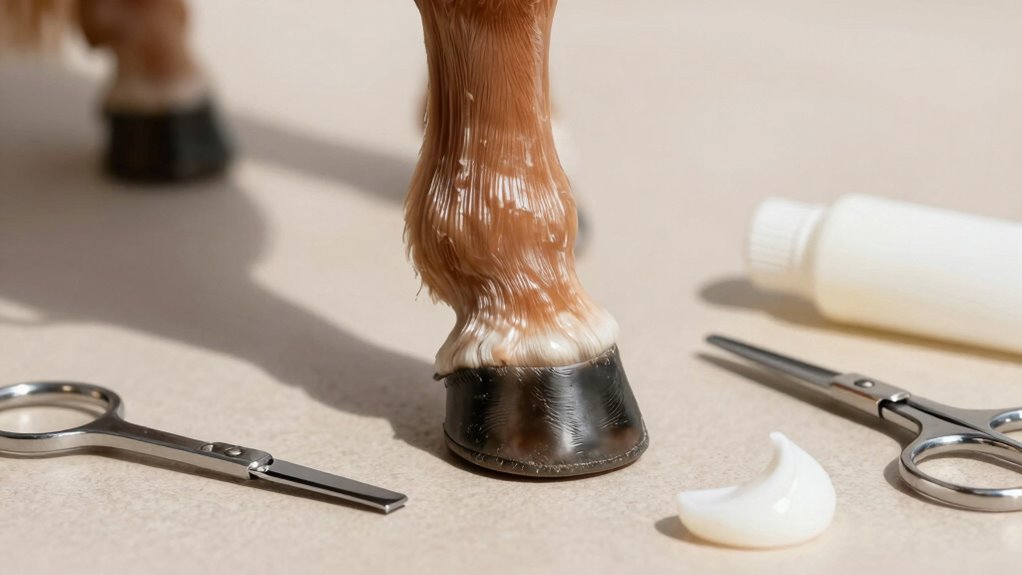
Monitoring your mini horse’s hooves regularly helps catch problems early. Knowing when to call the farrier or vet is key to maintaining healthy hooves. Here are four signs it’s time to schedule a farrier appointment or seek veterinary advice:
- Your mini shows persistent limping or favoring a hoof.
- You notice cracks, splits, or unusual hoof wear.
- The hooves are overgrown or misshapen, contradicting hoof health misconceptions.
- There’s swelling, heat, or discharge around the hoof or coronet band.
Don’t rely on myths or assumptions—timely hoof care prevents serious issues. Regular farrier appointment scheduling helps keep your mini’s hooves in tip-top shape, and consulting a vet ensures underlying health problems are addressed promptly.
Common Hoof Problems in Miniature Horses and How to Address Them
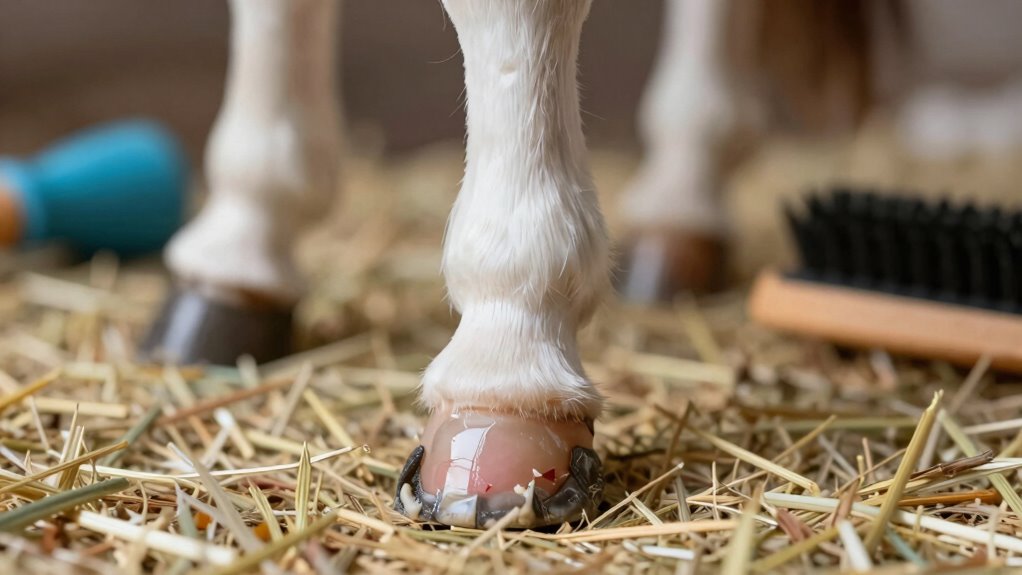
Miniature horses are prone to specific hoof problems that can affect their comfort and mobility if not addressed promptly. Common issues include hoof cracks, thrush, laminitis, and abscesses. These problems often stem from poor horse nutrition, which impacts hoof strength and growth, as well as underlying issues with hoof anatomy. Maintaining a balanced diet rich in essential nutrients supports healthy hoof development and helps prevent problems. Regular trimming and proper hoof care are crucial to keep hooves aligned and healthy, reducing the risk of cracks or deformities. If you notice lameness, foul odor, or abnormal hoof shape, consult your farrier or veterinarian immediately. Addressing these issues early ensures your miniature horse stays comfortable and healthy, with strong, sound hooves.
Frequently Asked Questions
How Often Should I Check My Mini Horse’s Hooves?
You should check your mini horse’s hooves every 4 to 6 weeks. During this time, perform regular hoof cleaning to remove dirt and debris, and schedule hoof trimming as needed. Keep an eye out for cracks, uneven wear, or signs of infection. Regular inspections help maintain healthy hooves, prevent lameness, and ensure your mini horse stays comfortable and sound. Consistent care is key to happy, healthy hooves.
What Are the Best Storage Options for Hoof Care Kits?
Did you know that 85% of horse owners prefer portable cases for hoof care? You should choose durable storage containers or portable cases that keep tools organized and protected from dirt and moisture. Look for waterproof, impact-resistant options with compartments to separate brushes, hoof picks, and trims. This way, your mini horse’s hoof care kit stays accessible, clean, and ready for use wherever you go, ensuring healthy hooves.
Can I Use Regular Horse Hoof Products on Mini Horses?
You can’t always use regular horse hoof products on mini horses, as their hooves are smaller and more delicate. Always opt for products specifically designed for minis, especially for hoof trimming and supplements. Miniature horses need gentle care, so choose hoof supplements that support healthy growth and hoof trimming tools that fit their smaller hooves. Using the right products helps keep their hooves healthy and prevents issues.
How Do I Identify Early Signs of Hoof Infections?
You can identify early signs of hoof infections by checking for hoof discoloration, which may appear as darkened or unusual spots, and watching for a foul odor around the hoof area. If you notice these signs, it’s important to act quickly. Clean the hoof carefully, remove any debris, and consult a veterinarian if the symptoms persist or worsen. Catching infections early helps prevent more serious issues and keeps your mini horse healthy.
Are There Specific Mini Horse Breeds Prone to Hoof Issues?
Sure, some Miniature horse breeds seem to have a knack for hoof issues—probably because they’re just born with a flair for trouble. Breeds like the Miniature Horse and certain pony varieties may face breed-specific hoof issues due to genetics or conformation quirks. You’ll want to keep a close eye on these breeds, provide regular hoof care, and consult your vet to prevent minor problems from turning into major hoof drama.
Conclusion
By paying close attention to your mini’s hooves and using the right tools, you’re already on the path to healthy hooves. But beware—small issues can escalate quickly, sneaking up when you least expect it. Stay vigilant, keep a keen eye on changes, and don’t hesitate to call in the experts when something seems off. Your mini’s hooves hold secrets—are you ready to uncover what they’re really telling you?