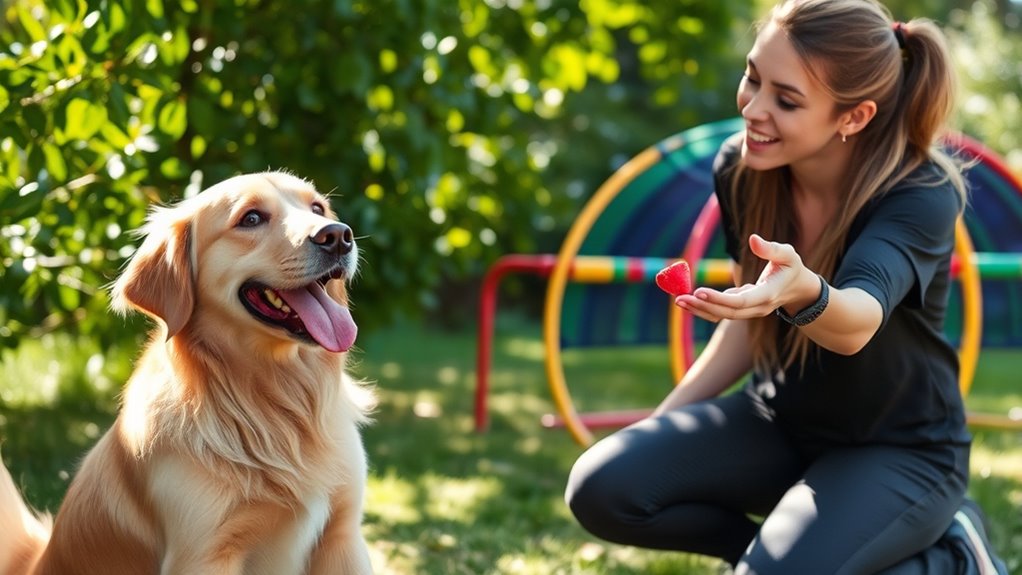

Positive reinforcement training for dogs is all about rewarding good behavior to encourage desired actions. By rewarding your dog with treats or praise, you create a trusting bond and help them learn faster. Techniques like clicker training mark the exact moment of correct behavior, making it easier for your dog to understand what you want. With practice and consistency, you can help your dog walk nicely on a leash and master various commands. There’s so much more to discover about effective training techniques.
Key Takeaways
- Positive reinforcement training focuses on rewarding desired behaviors to strengthen the bond between you and your dog.
- Clicker training uses a distinct sound to mark correct behaviors, followed by treats for effective learning.
- Consistent reinforcement helps dogs understand which actions earn rewards, enhancing their learning process.
- Leash training involves rewarding calm walking, with stops for pulling until the dog resumes proper behavior.
- Regular practice and patience are essential for maintaining skills and improving your dog’s training progress.
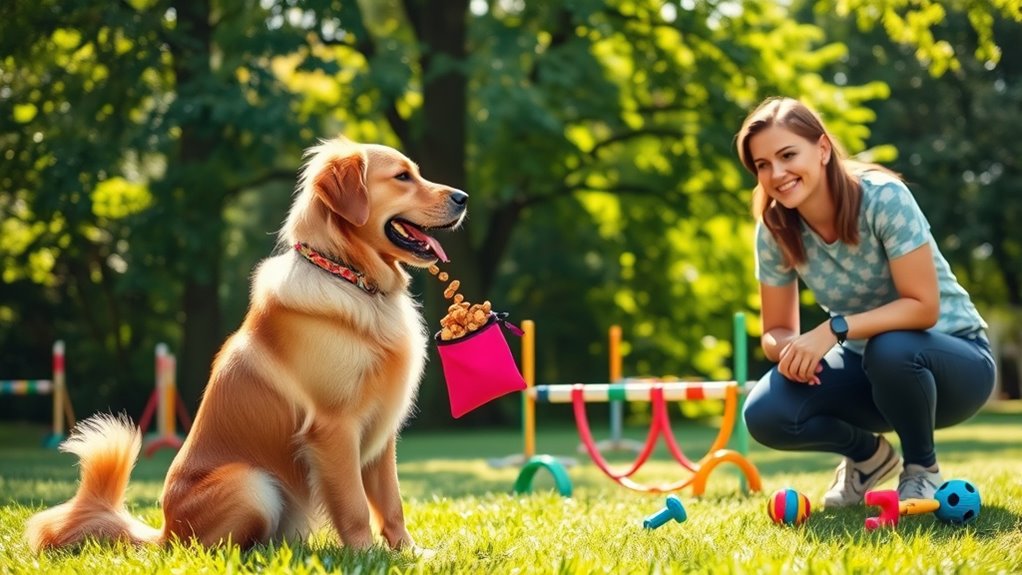
When you want to build a strong bond with your dog, positive reinforcement training is one of the most effective methods you can use. This approach focuses on rewarding your dog for good behavior, rather than punishing them for unwanted actions. It’s about teaching them what you want them to do, which not only improves their behavior but also strengthens your relationship. One of the best tools you can incorporate into your training routine is clicker training, which helps your dog associate a specific sound with a reward.
Clicker training uses a small device that makes a distinct clicking noise when pressed. This sound acts as a marker, letting your dog know they’ve done something right. When you start, you’ll want to click at the precise moment your dog performs the desired behavior, followed immediately by a treat. This clear communication helps your dog understand exactly what action earned them the reward. You’ll find that this method is particularly effective in teaching commands, tricks, and even more complex behaviors.
Clicker training provides clear communication, helping your dog understand exactly which behavior earns a reward.
Leash training is another area where positive reinforcement shines. Many dogs pull on their leash or get easily distracted during walks, which can be frustrating for both of you. With positive reinforcement, you can teach your dog to walk nicely beside you. Start by clicking and rewarding them whenever they walk calmly on the leash. If they start to pull, stop walking. Wait for them to return to your side before continuing, and reward them with a treat and a click as soon as they do. This method helps them associate proper leash behavior with positive outcomes.
As you continue using clicker training and positive reinforcement, you’ll likely notice your dog becoming more engaged and zealous to learn. The key is consistency and patience. Make sure to practice regularly, and gradually phase out the treats as your dog becomes more proficient. Over time, the clicker will become a powerful tool in your training arsenal, enabling you to shape your dog’s behavior effectively. Additionally, incorporating room-size wattage guides can help create a comfortable training environment for both you and your dog.
Frequently Asked Questions
How Long Does It Take to See Results With Positive Reinforcement Training?
You’ll typically start seeing results within a few weeks, but it really depends on your training consistency and the specific behaviors you’re working on. With patience, you might notice improvements sooner or later. Remember, every dog learns at their own pace, so don’t rush the process. Stay committed, keep your sessions short and fun, and you’ll build a strong bond while achieving the results you want!
Can Positive Reinforcement Training Be Used for Aggressive Dogs?
Yes, you can use positive reinforcement training for aggressive dogs. It’s effective for aggression management and behavior modification. By rewarding desired behaviors, you’ll encourage your dog to replace aggression with more positive actions. Start with a calm environment and gradually expose your dog to triggers while reinforcing calm behavior. Be patient and consistent; it may take time, but with dedication, you’ll see improvements in your dog’s behavior and overall temperament.
What Are the Best Treats for Positive Reinforcement Training?
Did you know that 85% of dogs respond better to high-value treats during training? When you’re selecting treats, opt for small, soft, and flavorful options like cheese or chicken. These keep your dog engaged and enthusiastic to learn. Remember, reward consistency is key; use the same treats for specific commands to reinforce learning. Experiment to find what your dog loves most, and you’ll see quicker results in their training sessions!
Is Positive Reinforcement Training Suitable for All Dog Breeds?
Yes, positive reinforcement training is suitable for all dog breeds. You’ll find that training adaptability varies among breeds, but the core principles remain effective. Some breeds may respond faster due to their temperament or energy levels, while others might take a bit more time. Regardless, consistently using rewards and patience will help you connect with your dog, regardless of their breed. Embrace the journey, and enjoy the bonding experience it creates!
How Do I Prevent My Dog From Becoming Dependent on Treats?
To prevent your dog from developing treat dependency, mix up your rewards. Use praise, toys, or playtime alongside treats, ensuring they don’t only receive food rewards. Gradually reduce treat frequency as your dog masters commands, rewarding with treats less often. This helps avoid reward overuse, encouraging your dog to focus on your cues rather than just the treats. Keep training sessions engaging and fun, so your dog stays motivated without relying solely on food.
Conclusion
As you embrace positive reinforcement training, you’ll discover a world of connection with your dog, one based on trust and joy. Each reward you offer strengthens that bond, revealing behaviors you never thought possible. Just imagine the moments of triumph, the wagging tails, and the bright eyes filled with excitement. But wait—there’s more! With each step, you’re not just training your dog; you’re creating a partnership that could change your lives forever. Are you ready to begin?