To prevent resource guarding before it starts, start socializing your dog early with different people and objects, using positive experiences to build confidence and trust. Establish a consistent routine and create a calm environment to reduce anxiety. Practice gentle exchanges and give high-value treats during meals or play to promote sharing as a rewarding activity. Pay close attention to your dog’s body language and address any signs of discomfort early. Keep learning simple strategies to help your dog feel secure and safe.

Get pet supplies delivered free with Prime
- Fast, free delivery on millions of items
- Prime Video, Amazon Music and more included
- Member-only deals all year
Key Takeaways
- Start socialization early by exposing your dog to various people, objects, and environments positively.
- Use positive reinforcement to reward calm behavior around resources and during sharing.
- Establish a consistent routine to reduce anxiety and build trust in your dog.
- Recognize early signs of discomfort or stress to intervene before guarding behaviors develop.
- Avoid punishment; instead, gently desensitize your dog to resource-related situations to prevent guarding.
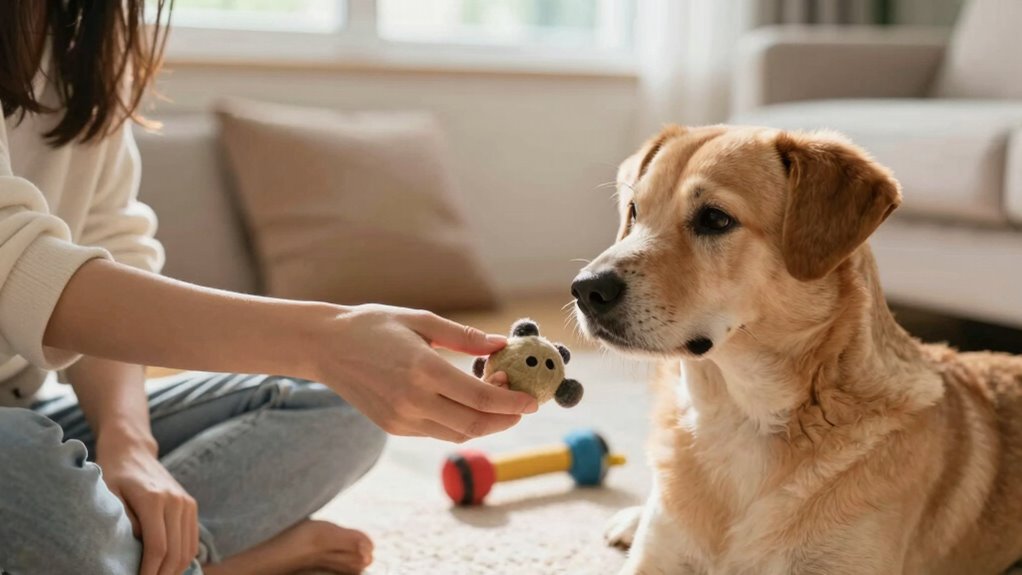
Have you ever wondered why some dogs fiercely guard their food, toys, or space? It’s a natural behavior rooted in their instincts, but understanding how to prevent resource guarding before it begins can make a huge difference in your relationship with your dog. Recognizing dog body language is key. Dogs that feel threatened or anxious often display subtle signals—pinning back ears, stiff posture, lip licking, or a fixed stare. If you notice these signs when they’re near their belongings, it’s your cue to step in and address the situation before guarding escalates. By paying attention to these cues, you can intervene early and teach your dog that sharing isn’t threatening. Additionally, incorporating positive reinforcement techniques can effectively reduce guarding tendencies. Training techniques are your best tools to prevent resource guarding. Start by creating positive associations with people approaching their possessions. For example, when your dog is eating, toss a high-value treat into their bowl from a distance, then gradually get closer over time. This helps your dog learn that your presence or the approach of others isn’t a threat but a signal of good things to come. When your dog is playing with a toy, you can practice exchanging it for a treat, rewarding calm behavior. This teaches your dog that giving up a toy can lead to rewards rather than punishment, reducing the likelihood they’ll guard it fiercely later. Building a calm environment can also help reduce anxiety and prevent guarding from developing. Creating a predictable routine can further instill a sense of security and stability for your dog, making resource guarding less likely to occur. Consistency is crucial in implementing these techniques. Always approach resource guarding situations calmly and avoid punishment, which can increase anxiety. Instead, use gentle, controlled interactions to desensitize your dog to people being near their resources. For instance, if your dog guards their bed, offer treats while they’re resting on it, making the space a positive place. Over time, your dog will associate your presence and others’ with safety and rewards. Recognizing the importance of early socialization is essential, as it helps prevent territorial behaviors from developing later in life. Understanding how dog body language indicates discomfort allows you to address potential issues early on, before guarding behaviors become more ingrained. Building trust through regular, positive interactions helps prevent resource guarding from developing into a serious issue. Socialize your dog from a young age, exposing them gradually to different people, environments, and objects. This broadens their confidence and reduces territorial instincts. Remember, the goal is to make sharing feel safe and rewarding for your dog. With patience, awareness of dog body language, and strategic training techniques, you can head off resource guarding behaviors before they start, fostering a more relaxed and trusting relationship with your furry friend.
dog positive reinforcement training treats
As an affiliate, we earn on qualifying purchases.
As an affiliate, we earn on qualifying purchases.
Frequently Asked Questions
When Should I Start Training to Prevent Resource Guarding?
You should start training early intervention as soon as your dog is a puppy or when you notice signs of resource guarding. Consistent training helps prevent guarding behaviors from developing into bigger issues later. By introducing positive associations with your dog’s toys and food, and practicing sharing exercises regularly, you set a foundation for good behavior. Starting early guarantees your dog learns healthy boundaries and reduces the likelihood of resource guarding.
Can Resource Guarding Occur in Multi-Pet Households?
Yes, resource guarding can occur in multi-pet households due to multi-pet dynamics and territorial behavior. When several pets share space and resources, conflicts over food, toys, or resting spots may emerge. You need to observe their interactions closely and establish clear boundaries. Providing separate resources, consistent training, and positive reinforcement helps reduce territorial tendencies and prevents resource guarding from escalating in a multi-pet household.
Are Some Breeds More Prone to Resource Guarding?
Some breeds are more prone to resource guarding because of breed tendencies, especially those bred for guarding or protection. You should watch for guarding triggers like food, toys, or resting spots, which these breeds might guard more aggressively. Understanding your dog’s breed tendencies helps you identify potential guarding issues early. By managing guarding triggers and offering positive reinforcement, you can prevent resource guarding from developing into a bigger problem.
How Do I Identify Early Signs of Resource Guarding?
You can spot early signs of resource guarding by paying close attention to behavior cues like stiffening, growling, or snapping when someone approaches their food or toys. Don’t ignore these signals—early intervention is key to preventing escalation. By recognizing these cues promptly, you can gently teach your dog that sharing is safe, reducing the likelihood of more serious guarding issues developing later.
What Are Common Mistakes to Avoid When Preventing Resource Guarding?
Avoid common mistakes like neglecting consistent behavior modification or overlooking environmental management. Don’t assume training alone will solve resource guarding; it requires a balanced approach. You might accidentally reinforce guarding behaviors if you punish or confront your dog during incidents. Instead, focus on positive reinforcement and managing your dog’s environment to reduce triggers. Stay patient, consistent, and proactive, and you’ll minimize the risk of resource guarding developing.
Conclusion
By proactively teaching your dog to share and remain calm around resources, you create a trusting environment that discourages guarding. Imagine your dog happily approaching a bowl or toy, confident and relaxed, instead of snarling or growling. It might seem simple, but consistent, positive training makes all the difference. With patience and practice, you’ll foster a bond built on safety and respect—preventing resource guarding before it ever begins, and ensuring peace in your home.
Halloween Picks
halloween
As an affiliate, we earn on qualifying purchases.