If you’re looking for safe houseplants for your pets, you’re in luck! Spider plants, Boston ferns, Areca palms, and Christmas cacti are all non-toxic options. These plants not only enhance your home’s beauty but are also easy to care for. They thrive in various conditions, making them perfect for busy pet owners. By choosing these pet-friendly plants, you can create a vibrant indoor space while keeping your furry friends safe. Discover even more options that suit your space!
Key Takeaways
- Choose non-toxic plants like spider plants, Boston ferns, areca palms, and Christmas cacti to ensure a pet-friendly environment.
- Research plant toxicity before introducing new houseplants to avoid potential risks for pets.
- Spider plants thrive in various lighting conditions and require minimal care, making them ideal for busy pet owners.
- Boston ferns prefer high humidity and moist soil, providing a lush environment without harming curious pets.
- Areca palms are air-purifying and require bright, indirect light, ensuring both pet safety and a vibrant indoor space.
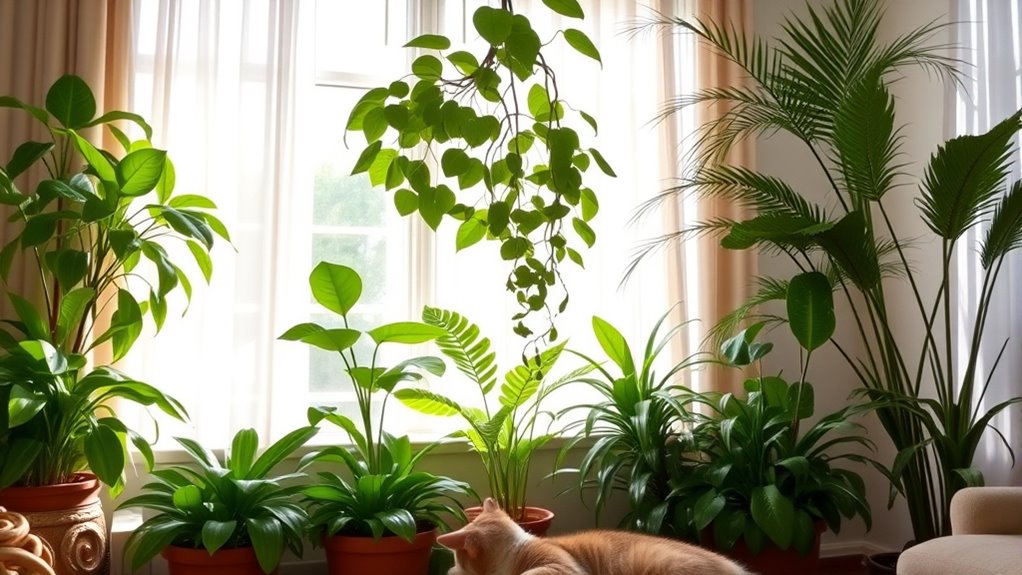
If you’re a pet owner who loves greenery, choosing houseplants that are safe for your furry friends is vital. You want to create a vibrant indoor space without worrying about your pets munching on something harmful. Many popular houseplants can pose risks due to pet toxicity, so it’s essential to do your research before bringing new plants home. Fortunately, there are plenty of beautiful options out there that won’t jeopardize your pet’s health.
First, consider the spider plant. Not only are they non-toxic to cats and dogs, but they also thrive in various lighting conditions. They’re easy to care for, making them a great choice for busy pet owners. To keep your spider plant healthy, ensure it gets indirect sunlight and water it when the top inch of soil feels dry. This simple plant care tip can help you maintain a thriving green companion while keeping your pets safe.
Consider the spider plant for your home; it’s non-toxic to pets and thrives with minimal care.
Another excellent option is the Boston fern. These lush plants offer a touch of elegance and are safe for pets. They prefer humidity, so misting them occasionally or placing them in a bathroom can help them flourish. Just make sure to keep the soil moist but not soggy, as this can lead to root rot. With a little attention, your Boston fern will grow beautifully, providing a safe haven for your curious pets.
The areca palm is another pet-friendly choice. This palm not only purifies the air, but it also adds a tropical vibe to your home. It prefers bright, indirect light and should be watered when the top inch of soil dries out. Following these plant care tips will guarantee your areca palm stays healthy while keeping your pets safe from potential toxicity.
If you want a flowering option, try the Christmas cactus. It’s non-toxic to both cats and dogs, and it produces stunning blooms during the holiday season. Place it in a well-draining pot and give it bright, indirect light. Water it sparingly, allowing the soil to dry out between waterings. This simple routine will help keep your Christmas cactus thriving while ensuring your furry friends are safe.
Frequently Asked Questions
Are There Any Plants That Are Toxic to Specific Breeds of Pets?
Yes, some plants can be toxic to specific breeds of pets. Plant toxicity varies, and certain breeds might have heightened sensitivities to particular plants. For instance, some dog breeds may be more prone to gastrointestinal issues from ingesting certain toxic plants. It’s essential to research breed-specific risks and be cautious about the plants you bring into your home. Always consult a vet if you suspect your pet has ingested something harmful. Stay informed!
How Can I Tell if My Pet Has Ingested a Toxic Plant?
If your pet’s acting like they’ve just eaten a mountain of chocolate, it’s time to pay attention. Look for plant toxicity signs like vomiting, diarrhea, excessive drooling, or lethargy. If you notice any of these symptoms, don’t wait around—your emergency response should include contacting your vet right away. Quick action can make all the difference in ensuring your furry friend stays safe and healthy after a potential plant ingestion.
What Are the Symptoms of Plant Poisoning in Pets?
If your pet’s experiencing plant poisoning, look for symptoms like vomiting, diarrhea, drooling, lethargy, or difficulty breathing. You might notice unusual behavior, like hiding or shaking. It’s essential to act quickly and identify these symptoms, as they can worsen rapidly. Keep an eye on your furry friend, and if you suspect poisoning, contact your vet immediately. Early intervention can make a big difference in their recovery.
Can I Train My Pet to Avoid Certain Houseplants?
Yes, you can train your pet to avoid certain houseplants using pet behavior modification techniques. Start by teaching commands like “leave it” or “no,” reinforcing positive behavior with treats. Consistently redirect your pet when they approach the plants, rewarding them for staying away. Plant avoidance training takes time and patience, but with consistent practice, your pet will learn to steer clear of those houseplants you want to protect.
Do Pet-Safe Plants Require Special Care or Conditions?
Pet-safe plants don’t necessarily require special care, but they do have specific watering needs and light requirements. You’ll want to research each plant to understand how much water it needs and whether it thrives in bright or low light. Regularly checking soil moisture can help you avoid overwatering, while placing your plants in the right light conditions guarantees they flourish. So, don’t hesitate to give your pet-friendly plants the attention they deserve!
Conclusion
Choosing safe houseplants for your pets is like creating a sanctuary where both your furry friends and greenery can thrive together. By selecting non-toxic plants, you’re not just beautifying your home; you’re ensuring a harmonious environment where curiosity doesn’t lead to danger. Your pets can roam freely, exploring their leafy companions without worry. So, embrace the joy of nurturing both your plants and pets, and watch your home flourish into a safe haven for all.