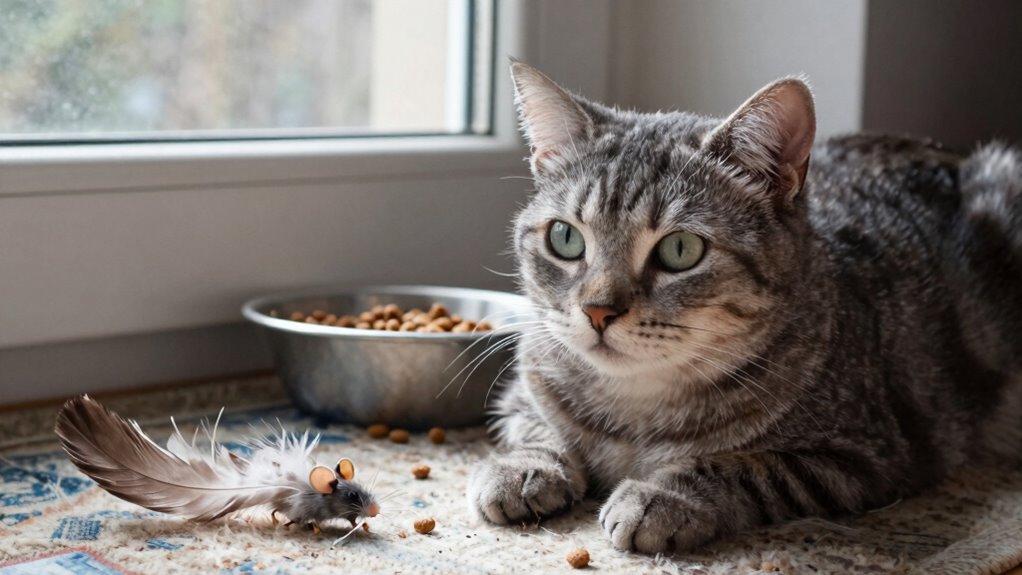

If your pet is bored at home, you might notice excessive licking, barking, or pacing, along with a loss of interest in toys or play. They could also spend more time sleeping or hide more often. Signs of boredom can include destructive behaviors or fixating on specific objects. To keep them happy, it’s important to introduce new activities like puzzle toys or interactive play, which can prevent behavioral issues. Keep exploring to discover more ways to keep your pet engaged.

Get pet supplies delivered free — and shop member deals
- Fast, free delivery on millions of items
- Access to Prime Big Deal Days deals on October 6–7
- Prime Video, Amazon Music and more included
Key Takeaways
- Watch for excessive licking, barking, pacing, or destructive behaviors indicating boredom.
- Notice decreased interest in walks, toys, or social interactions, suggesting lack of engagement.
- Observe repetitive circling or fixation on objects as signs of seeking stimulation.
- Identify increased sleeping or hiding, which may reflect boredom or stress.
- Implement enrichment activities and monitor behavioral changes to assess engagement levels.
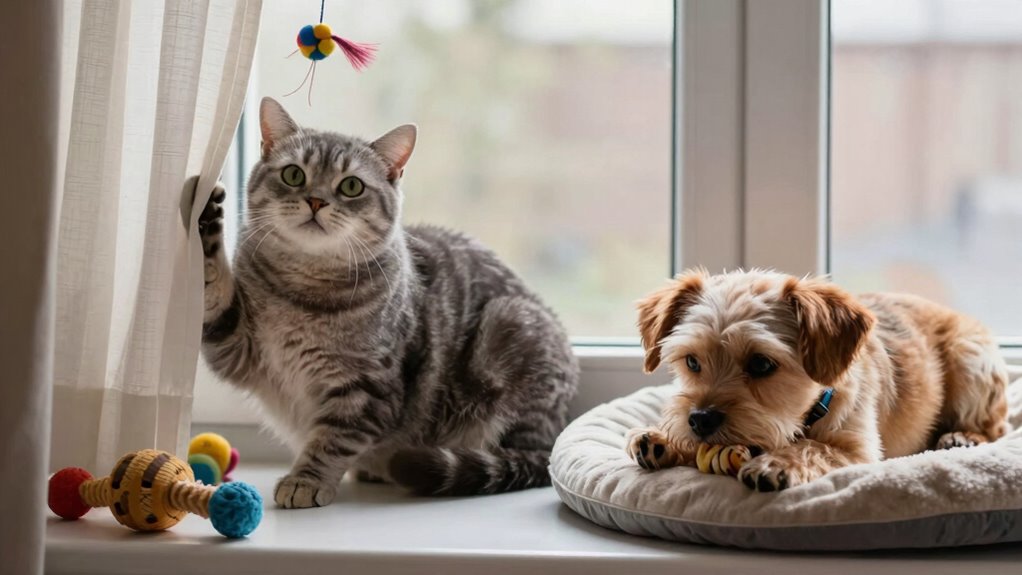
If your pet seems unmotivated or restless, they might be bored at home. It’s easy to overlook subtle signs, but paying attention to behavioral signs can help you identify if they need more stimulation. Pets thrive on pet enrichment, which involves providing activities and objects that challenge their mind and body. Without enough mental or physical engagement, your pet may display behaviors that signal boredom, such as excessive licking, chewing, or scratching. They might also become more vocal than usual, whining or barking without an obvious reason.
You may notice your pet pacing around the house or circling repeatedly, which can be a sign that they’re seeking activity or stimulation. Some pets resort to destructive behaviors, like chewing on furniture or knocking things over, because they’re trying to find entertainment or relieve pent-up energy. If your pet suddenly loses interest in toys or seems uninterested in play, it could be a sign they’re bored rather than just tired. Conversely, if they become overly fixated on certain objects or areas, they might be attempting to fill the void created by lack of mental challenge.
Another behavioral sign to watch for is a change in their usual routines. For instance, if your dog used to enjoy walks and now shows little interest or doesn’t want to leave the house, it could be a sign they’re bored or unstimulated. Similarly, a cat that suddenly spends a lot more time hiding or sleeping might be trying to escape an environment that no longer offers enough entertainment. These signs point to the importance of pet enrichment—adding variety and challenge to their daily lives. Providing appropriate enrichment activities can help improve their overall well-being and prevent boredom from taking hold. Incorporating enrichment can also help prevent behavioral issues that arise from lack of stimulation, which is a common cause of boredom in pets. Engaging pets with mental stimulation not only keeps them entertained but also helps reduce stress and anxiety associated with boredom.
Providing your pet with appropriate enrichment activities can help curb these behavioral signs. For dogs, this might mean puzzle toys, scent games, or training exercises that challenge their mind. Cats may benefit from climbing trees, interactive toys, or new scratching posts. The key is to observe their natural instincts and tailor activities accordingly. If your pet starts showing signs of boredom, it’s a cue to introduce new toys, rotate existing ones, or increase the duration and variety of play sessions. It’s also beneficial to monitor their behavior regularly to better understand their individual preferences and needs. Remember, a bored pet isn’t just unhappy — they can develop behavioral issues that are harder to manage over time.
As an affiliate, we earn on qualifying purchases.
Frequently Asked Questions
Can Pets Get Bored Even With Plenty of Toys?
Yes, pets can get bored even with plenty of toys. They need pet enrichment that challenges their minds and bodies. If you notice behavioral signs like excessive barking, chewing, or withdrawal, your pet might be bored. Keep their environment stimulating by rotating toys, introducing new activities, or engaging in regular playtime. This helps prevent boredom, promotes mental stimulation, and keeps your pet happy and healthy.
How Do I Differentiate Boredom From Illness in Pets?
You might think your pet’s just being dramatic, but distinguishing boredom from illness is essential. Watch for behavior signs like lethargy, loss of appetite, or unusual aggression—these are health indicators, not just boredom. If your pet suddenly stops playing or seems unresponsive, it’s time to see a vet. Boredom usually causes restlessness or destructive behavior, while illness shows specific health issues. Always prioritize a vet’s advice to keep your pet happy and healthy.
What Are Quick Ways to Entertain a Bored Pet?
To quickly entertain a bored pet, introduce simple pet enrichment activities that boost mental stimulation. Play fetch or tug-of-war to engage their bodies and minds, or hide treats around the house for a fun scent game. Rotate their toys regularly to keep things fresh. Short, interactive sessions can make a big difference, helping your pet stay happy and mentally active, reducing boredom and promoting overall well-being.
Do Specific Breeds Tend to Get Bored More Easily?
Certain breeds, like Border Collies and Jack Russell Terriers, tend to get bored more easily because of their high energy levels. Studies show breed-specific behaviors and temperament differences influence boredom susceptibility. You’ll notice these breeds need more mental and physical stimulation to stay engaged. If you don’t provide enough activity, they may become anxious or destructive. So, understanding your pet’s breed traits helps you better prevent boredom and keep them happy.
How Often Should I Rotate My Pet’s Toys?
You should rotate your pet’s toys every one to two weeks to keep their environment stimulating. Incorporate toy rotation into your playtime routines, so your pet stays engaged and curious. Regularly changing toys prevents boredom and encourages active play. Pay attention to their reactions; if they seem uninterested, it’s time to swap out some toys. Consistent rotation keeps playtime fresh, exciting, and helps prevent behavioral issues caused by boredom.
Conclusion
When your pet shows signs of boredom—be it pacing, over-grooming, or chewing—you can help by engaging, entertaining, and enriching their environment. When you play, you stimulate, you excite, and you connect. When you introduce new toys, explore new activities, and spend quality time, you prevent loneliness, reduce stress, and foster joy. Remember, a happy, engaged pet isn’t just active; they’re thriving, curious, and loved. Keep their world full of purpose, and they’ll return your care tenfold.
Halloween Picks
halloween
As an affiliate, we earn on qualifying purchases.