
One of the most common mistakes in setting up a hamster habitat is neglecting proper ventilation; solid walls or poor airflow can cause humidity and ammonia buildup, leading to respiratory issues. Using unsuitable bedding like cedar or pine shavings can also cause irritation and health problems. Regular cleaning and choosing the right, dust-free bedding are essential for your hamster’s wellbeing. To guarantee a healthy environment, understanding these mistakes and how to avoid them is key—keep going to learn more.

Get pet supplies delivered free with Prime
- Fast, free delivery on millions of items
- Prime Video, Amazon Music and more included
- Member-only deals all year
Key Takeaways
- Using solid-walled enclosures instead of well-ventilated cages with wire sides or tops.
- Choosing cedar or pine shavings, which release irritant aromatic oils and phenols.
- Neglecting regular cleaning and bedding changes, leading to bacterial buildup and poor hygiene.
- Overlooking proper airflow, causing stale air, humidity, and ammonia buildup.
- Failing to monitor for signs of respiratory or skin issues, ignoring habitat health indicators.
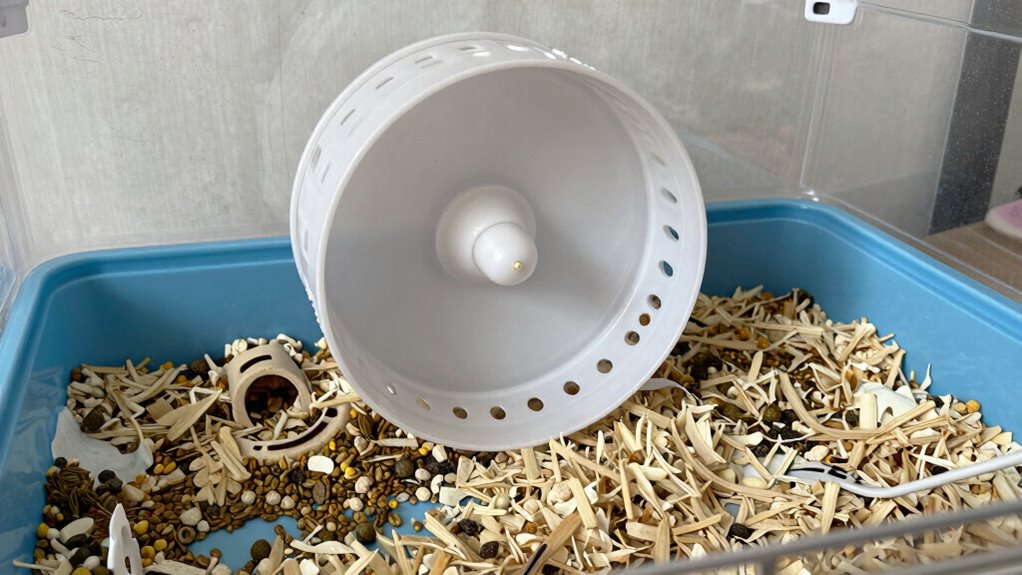
Setting up a hamster habitat might seem straightforward, but many new pet owners make common mistakes that can harm their tiny companions. One of the most critical aspects is ensuring proper enclosure ventilation. Hamsters are prone to respiratory issues if their habitat doesn’t have enough fresh air. When choosing or building a cage, avoid solid-walled enclosures that restrict airflow. Instead, opt for cages with well-ventilated sides or wire tops that allow air to circulate freely. Poor ventilation can lead to a buildup of humidity and ammonia from waste, which can cause respiratory infections or discomfort for your hamster. Regularly check that air flows well through the habitat, especially if you notice any stuffiness or an unpleasant smell, indicating poor ventilation. Additionally, proper air circulation helps prevent the buildup of harmful bacteria and fungi that thrive in moist environments. Ensuring good habitat airflow can also reduce stress for your hamster, promoting a healthier, more active life. Bedding selection is equally important and often overlooked by new owners. Many people assume all bedding types are suitable, but some can cause health issues or discomfort. Avoid cedar or pine shavings, as they release aromatic oils and phenols that can irritate your hamster’s respiratory system. Instead, choose safe, absorbent bedding such as paper-based products or aspen shavings, which are odorless and gentle on tiny paws. You should also consider the bedding’s absorbency to control moisture and odor effectively, keeping your hamster dry and comfortable. Changing bedding regularly—at least once a week—is essential to prevent bacterial buildup and maintain a clean environment. Be cautious not to use bedding that’s too coarse or dusty, as it can cause irritation or respiratory problems. Ensuring proper enclosure ventilation and bedding selection is crucial for your hamster’s health and well-being. Additionally, maintaining a clean habitat can significantly reduce the risk of disease and improve your hamster’s overall quality of life. Many new owners also underestimate the importance of proper enclosure ventilation and bedding selection, leading to health risks for their hamsters. Combining good airflow with appropriate bedding creates a healthier, more comfortable habitat that encourages your hamster’s natural behaviors. Inadequate ventilation can cause stale air and humidity, while poor bedding choices might lead to respiratory illnesses or skin issues. Always monitor your hamster for signs of distress, such as sneezing or lethargy, which could indicate problems with their environment. By paying close attention to these details, you ensure your tiny companion stays happy, healthy, and active. Remember, a well-ventilated cage with suitable bedding isn’t just about cleanliness—it’s about creating a safe, cozy space where your hamster can thrive.
hamster cage with good ventilation
As an affiliate, we earn on qualifying purchases.
As an affiliate, we earn on qualifying purchases.
Frequently Asked Questions
What Is the Ideal Size for a Hamster Cage?
The ideal size for a hamster cage is at least 24 inches long, 12 inches wide, and 12 inches high, providing ample space for movement. Guarantee good cage ventilation to keep your hamster healthy, and consider various hamster enclosure options like wire cages or glass tanks. Bigger cages promote activity and prevent stress, so choose a spacious setup that offers enough room for exercise wheels, tunnels, and hiding spots.
How Often Should I Clean My Hamster’s Habitat?
You should clean your hamster’s habitat weekly to maintain a healthy environment. During cleaning, check the bedding and replace it as needed, ensuring your hamster’s feeding schedule stays consistent. Regular cleaning also helps with temperature regulation, preventing overheating or cold spots. Spot cleaning daily to remove waste and leftover food keeps the habitat fresh. Consistent cleaning and monitoring create a comfortable, safe space for your hamster to thrive.
Can I Use Recycled Materials for Bedding?
Yes, you can use recycled materials for bedding, but choose eco-friendly options like shredded paper, cardboard, or untreated wood. Recycling bedding helps reduce waste and is better for the environment. Just guarantee the materials are safe, free of chemicals, and non-toxic. Eco-friendly hamster ideas like these keep your pet comfortable while supporting sustainability, making it a smart and responsible choice for your hamster’s habitat.
What Are Safe Toys and Accessories for Hamsters?
You wonder which toys can truly enrich your hamster’s life. Safe chew toys are essential, offering them a healthy outlet for their natural chewing instincts. For hamster enrichment, consider tunnels, climbing structures, and puzzle toys that stimulate mental activity. Avoid anything with sharp edges or toxic materials. When choosing accessories, prioritize safety and durability, creating a playful environment where your hamster stays active, happy, and healthy.
How Do I Introduce a New Hamster to Its Habitat?
To introduce a new hamster to its habitat, start with a quiet, neutral space for initial hamster bonding. Gently place the hamster in the habitat, allowing it to explore and adjust. Use habitat decoration to make the environment inviting and familiar. Observe its behavior closely and avoid sudden moves. This slow, calm approach helps the hamster feel safe, building trust and ensuring a smooth shift into its new home.
Conclusion
Avoiding common mistakes in hamster habitat setup means creating a safe, enriching space where your tiny friend thrives. Picture a cozy, well-ventilated cage with tunnels and toys, a stark contrast to a cramped, barren enclosure that stifles curiosity. By paying attention to details, you turn a simple cage into a lively home, transforming a small creature’s life from dull confinement into a vibrant adventure. Your hamster’s happiness depends on the care you give—so set up their habitat thoughtfully.
Columbus Day / Indigenous Peoples' Day Picks
long weekend sales
As an affiliate, we earn on qualifying purchases.