
The best bird-themed educational books match a child’s age and curiosity, whether they want sturdy first pictures, lively science, or help identifying birds outdoors. I’d choose National Geographic Little Kids First Big Book of Birds as the best overall starting point for its broad, accessible introduction, while Backyard Birds stands out for young naturalists ready to observe birds outside and Pop-Up Birds for children drawn to interactive reading. The main tradeoff is between simple, engaging introductions and books with more detail that can support deeper learning but may suit older readers better. Format matters too: a board book is easy for small hands, while a field guide or reference book rewards repeated use. Read on for the full breakdown and help matching a book to your reader.

Get pet supplies delivered free with Prime
- Fast, free delivery on millions of items
- Prime Video, Amazon Music and more included
- Member-only deals all year
Complete the kit


Key Takeaways
- National Geographic Little Kids First Big Book of Birds is the strongest all-around choice in this lineup for readers who need a wide-ranging introduction without starting with a specialist reference.
- Backyard Birds and National Geographic Kids Bird Guide of North America are better suited to learning through identification and outdoor observation than books designed mainly for read-aloud enjoyment.
- For younger children, sturdy or interactive formats such as My First Book of Birds, Hello, World! Birds, and Pop-Up Birds prioritize accessibility over detailed species information.
- The lineup spans very different learning goals: Fine Feathered Friends supports rhyming science learning, Mrs. Peanuckle’s Bird Alphabet builds early vocabulary, and Bird Trivia favors short, surprising facts.
- The Bird Book and What It’s Like to Be a Bird offer more depth than introductory picture books, but readers should choose them for sustained interest in bird science rather than quick, age-simple reading.
| My First Book of Birds: First Board Book |  | Best for Toddlers and First Bird Words | Format: Board book | Subject: Birds | Audience: Young children and early learners | VIEW ON AMAZON | See Our Full Breakdown |
| Backyard Birds: The Essential Peterson Field Guide to North American Birding for Young Naturalists |  | Best for Beginner Bird Identification | Format: Field guide | Geographic scope: North America | Bird focus: Backyard birds | VIEW ON AMAZON | See Our Full Breakdown |
| Pop-Up Birds: An Interactive Book About Birds for Kids Ages 5–7 |  | Best Interactive Read-Aloud | Format: Pop-up book | Age range: 5–7 years | Subject: Birds | VIEW ON AMAZON | See Our Full Breakdown |
| National Geographic Little Kids First Big Book of Birds |  | Best Familiar Publisher Pick for Young Children | Publisher: National Geographic | Subject: Birds | Audience positioning: Little kids | VIEW ON AMAZON | See Our Full Breakdown |
| The Big Book of Birds |  | Best for Broader, More Detailed Bird Learning | Subject: Birds | Coverage: Wide variety of bird species | Information style: Detailed information | VIEW ON AMAZON | See Our Full Breakdown |
| About Birds: A Guide for Children |  | Best Overall for a Clear First Introduction | Format: Educational children’s book | Subject: Birds | Topics: Habitats, behaviors, and types of birds | VIEW ON AMAZON | See Our Full Breakdown |
| Mrs. Peanuckle’s Bird Alphabet |  | Best for Early Alphabet Learning | Format: Children’s alphabet book | Subject: Birds | Organization: Alphabet-based | VIEW ON AMAZON | See Our Full Breakdown |
| National Geographic Kids Bird Guide of North America, Second Edition |  | Best for North American Bird Identification | Format: Bird guide | Audience: Kids | Geographic focus: North America | VIEW ON AMAZON | See Our Full Breakdown |
| Hello, World! Birds |  | Best for a Broad, Accessible Read | Format: Illustrated book about birds | Subject: Various bird species | Topics: Behaviors and habitats | VIEW ON AMAZON | See Our Full Breakdown |
| An Anthology of Exquisite Birds: Discover the Beauty of the Avian World |  | Best for Visual Bird Appreciation | Format: Children’s bird anthology | Subject: Birds | Geographic scope: Worldwide | VIEW ON AMAZON | See Our Full Breakdown |
| Fine Feathered Friends: All About Birds (The Cat in the Hat’s Learning Library) |  | Best for Young Beginners | Format: Book | Series: The Cat in the Hat’s Learning Library | Subject: Birds | VIEW ON AMAZON | See Our Full Breakdown |
| The Bird Book: The Stories, Science, and History of Birds |  | Best for Broad Bird-Culture Coverage | Format: Book | Subject: Birds | Coverage: Stories, science, and history of birds | VIEW ON AMAZON | See Our Full Breakdown |
| Bird Trivia: Funny, Strange, and Incredible Facts about North American Birds | 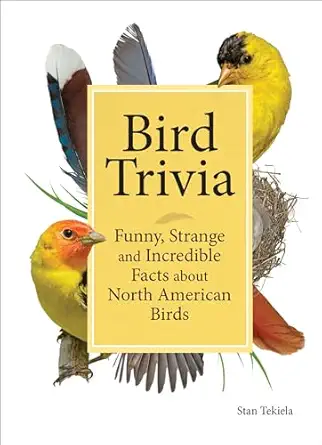 | Best for Quick-Fact Learning | Format: Book | Subject: North American birds | Content format: Trivia and facts | VIEW ON AMAZON | See Our Full Breakdown |
| What It’s Like to Be a Bird: From Flying to Nesting, Eating to Singing–What Birds Are Doing, and Why |  | Best for Understanding Bird Behavior | Format: Book | Subject: Bird behavior | Topics: Flying, nesting, eating, and singing | VIEW ON AMAZON | See Our Full Breakdown |
| bird themed educational book | Format | Subject | Illustrations |
|---|---|---|---|
| My First Book of Birds: First | Board book | Birds | Colorful |
| Backyard Birds: The Essential | Field guide | — | Colorful |
| Pop-Up Birds: An Interactive B | Pop-up book | Birds | — |
| National Geographic Little Kid | Not specified | Birds | — |
| The Big Book of Birds | — | Birds | Vibrant |
| About Birds: A Guide for Child | Educational children’s book | Birds | Engaging illustrations |
| Mrs. Peanuckle’s Bird Alphabet | Children’s alphabet book | Birds | Colorful |
| National Geographic Kids Bird | Bird guide | Birds | — |
| Hello | Illustrated book about birds | Various bird species | Beautiful illustrations |
| An Anthology of Exquisite Bird | Children’s bird anthology | Birds | — |
| Fine Feathered Friends: All Ab | Book | Birds | Engaging illustrations for children |
| The Bird Book: The Stories | Book | Birds | — |
| Bird Trivia: Funny | Book | North American birds | No images or illustrations described |
| What It’s Like to Be a Bird: F | Book | Bird behavior | Well-illustrated, according to the description |
More Details on Our Top Picks
My First Book of Birds: First Board Book
For the youngest readers in this group, My First Book of Birds puts simple bird introductions ahead of detailed identification. Its colorful illustrations and brief text suit short shared-reading sessions, while the board-book format is more practical for small hands than a conventional book. Compared with Pop-Up Birds, it offers a less interactive but sturdier-feeling approach based on the format information provided; compared with Backyard Birds, it is aimed at early exposure rather than learning to recognize local species. That makes it a gentle starting point, not a lasting reference. Older children may quickly want fuller explanations, and the description gives no added activities or learning features to extend the reading.
Pros:- Simple text supports early readers and read-alouds
- Colorful illustrations give young children visual entry points
- Board-book format suits handling by small children
- Birds provide a focused first nature topic
Cons:- Limited content may not hold the interest of older children
- No additional activities or educational features are specified
- The description does not identify species or explain how many birds are included
Best for: Caregivers introducing toddlers or preschoolers to bird names through brief, shared reading.
Not ideal for: Older children ready to identify backyard species or read detailed facts, since the text is described as simple and introductory.
- Format:Board book
- Subject:Birds
- Audience:Young children and early learners
- Text style:Simple text
- Illustrations:Colorful
- Educational focus:Introduction to various bird species
Our verdict“Choose this board book for a durable-feeling, simple first introduction, but move to Backyard Birds when a child is ready to learn identification.”
Backyard Birds: The Essential Peterson Field Guide to North American Birding for Young Naturalists
Backyard Birds is the clearest choice here for children who want to connect a book with birds they might actually see outside. Its focus on North American backyard species, paired with colorful illustrations and accessible descriptions, gives young naturalists a more practical learning path than the introductory My First Book of Birds. It also has a different purpose from National Geographic Little Kids First Big Book of Birds: this guide is specifically presented as an entry to identifying local birds, while the National Geographic title’s supplied description does not specify its scope or method. The tradeoff is that a backyard focus narrows the subject, and the descriptions may not satisfy readers seeking scientific depth. The provided details do not specify age range, layout, or identification tools.
Pros:- Focused coverage gives beginners a manageable starting point
- Easy-to-understand descriptions support independent learning
- Colorful illustrations help make species easier to distinguish
- Connects book learning with observation of nearby birds
Cons:- Coverage is limited to North American backyard birds
- May not provide detailed scientific information
- Age range and specific identification features are not provided
Best for: Young North American nature learners who want an approachable guide to recognizing birds around home.
Not ideal for: Readers seeking worldwide species coverage or in-depth scientific explanations, since the stated focus is North American backyard birds and beginner-friendly information.
- Format:Field guide
- Geographic scope:North America
- Bird focus:Backyard birds
- Audience:Young naturalists and beginners
- Illustrations:Colorful
- Description style:Easy-to-understand information
Our verdict“Pick this guide for a young beginner interested in local bird identification; choose a broader bird book if worldwide coverage matters more.”
Pop-Up Birds: An Interactive Book About Birds for Kids Ages 5–7
Pop-Up Birds makes the physical act of reading part of the appeal: its pop-up format gives adults and children something to explore together, and the stated ages 5–7 target is more specific than the age information supplied for most books in this group. Its read-aloud design sets it apart from Backyard Birds, which is framed as a beginner field guide for learning about local species. This is better suited to shared discovery than to carrying outside for bird identification. The description promises an introduction to amazing birds but does not detail the facts, species coverage, or learning activities, so buyers cannot tell how much educational depth accompanies the moving elements. Pop-up construction may also call for gentler handling than a simple board book.
Pros:- Pop-up format adds a hands-on element to learning
- Designed for reading aloud with an adult
- Stated age range helps families judge audience fit
- Introduces children to a variety of birds
Cons:- Specific species and educational content are not described
- Pop-up elements may need gentler handling than a standard board book
- Less suited to outdoor identification than Backyard Birds
Best for: Adults seeking an interactive bird-themed read-aloud for children ages 5–7.
Not ideal for: Families wanting a field reference for identifying nearby birds or a book with clearly documented scientific detail.
- Format:Pop-up book
- Age range:5–7 years
- Subject:Birds
- Reading style:Designed for reading aloud
- Interaction:Pop-up elements
- Educational focus:Introduction to birds
Our verdict“Choose this for shared, interactive reading with a 5–7-year-old, rather than as a practical bird-identification guide.”
National Geographic Little Kids First Big Book of Birds
National Geographic Little Kids First Big Book of Birds is a plausible pick for families looking for a bird book specifically positioned for young children, but the supplied information is sparse. Unlike Backyard Birds, whose description names a North American backyard focus and beginner-friendly information, this listing does not say which birds appear, how the material is organized, or what learning features it includes. That limits how confidently I can rank it as an identification tool or compare its educational depth. Its clear advantage within the available details is the young-child focus in the title and its bird-specific subject; its limitation is the lack of documented content features. Buyers should choose it when that broad early-childhood positioning is the priority, not when they need confirmed species coverage or field-guide functionality.
Pros:- Bird-specific subject is clear from the title
- Explicitly positioned for young children
- Offers a dedicated alternative to general early-learning titles
- Could suit families seeking an introductory bird book
Cons:- Description provides no details about species coverage
- Educational approach and learning features are unspecified
- Format and age range are not provided
Best for: Caregivers seeking a bird-focused book explicitly positioned for little kids, who do not need confirmed field-guide features.
Not ideal for: Young birders who need a verified species list, geographic scope, or specific identification guidance.
- Publisher:National Geographic
- Subject:Birds
- Audience positioning:Little kids
- Book series/title positioning:First Big Book
- Format:Not specified
- Species coverage:Not specified
Our verdict“Consider this for a young child seeking a bird-focused book, but choose Backyard Birds if documented beginner identification guidance is the priority.”
The Big Book of Birds
The Big Book of Birds is the strongest fit in this set for readers who want a broad survey rather than a first-words introduction or a narrowly focused backyard guide. Its described wide variety of species, detailed information, and vibrant illustrations suggest more room to explore than My First Book of Birds, which is designed for early learners. Compared with Backyard Birds, it appears broader in scope, though the description does not name regions, species, or a specific age group. That breadth may suit older children and bird enthusiasts, but it can be a less direct teaching tool for a beginner who wants to identify nearby birds. The listing also lacks concrete format and content details, so families should not assume a particular layout or level of scientific coverage.
Pros:- Described as covering a wide variety of bird species
- Detailed information supports extended learning
- Vibrant illustrations add visual interest
- More suited to broad exploration than a first board book
Cons:- Age range and reading level are not specified
- Geographic scope and species selection are not identified
- Format and specific educational features are not provided
Best for: Older children, families, and bird enthusiasts who want illustrated coverage of many species and are comfortable with unspecified age guidance.
Not ideal for: Toddlers or beginners who need simple text, a stated age range, or a clearly defined local identification guide.
- Subject:Birds
- Coverage:Wide variety of bird species
- Information style:Detailed information
- Illustrations:Vibrant
- Audience:Bird enthusiasts and learners
- Age range:Not specified
Our verdict“Choose this for broad, illustrated bird learning when a simple toddler introduction or a defined regional field guide would be too narrow.”
About Birds: A Guide for Children
About Birds: A Guide for Children earns this role by pairing simple explanations with illustrations to introduce bird habitats, behaviors, and types. That breadth gives a child more than a picture-and-name primer, while keeping the material aimed at younger learners rather than advanced birders. Compared with Mrs. Peanuckle’s Bird Alphabet, which organizes its learning around an alphabet format, this book offers a broader subject-based introduction. Its STEM focus may also suit families who want to connect reading with basic science topics. The tradeoff is that the explanations are not described as detailed enough for older readers seeking species-level depth, and there are no activities or interactive elements to extend the lesson. Choose it for an accessible overview, not a hands-on workbook or field guide.
Pros:- Introduces habitats, behaviors, and bird types in one accessible overview
- Simple explanations support younger readers
- Illustrations help make science topics approachable
- STEM focus gives the book an educational purpose beyond bird names
Cons:- Limited detail may leave advanced or highly curious readers wanting more
- No activities or interactive elements for practice
- The description does not specify age range, length, or illustration format
Best for: Parents and educators introducing elementary-age children to bird habitats and behavior through an illustrated science read.
Not ideal for: Older children seeking in-depth species identification, or families looking for activities and interactive learning.
- Format:Educational children’s book
- Subject:Birds
- Topics:Habitats, behaviors, and types of birds
- Learning focus:STEM
- Explanations:Simple
- Illustrations:Engaging illustrations
Our verdict“Choose this for a child who needs a clear, illustrated introduction to bird science rather than a detailed reference or activity book.”
Mrs. Peanuckle’s Bird Alphabet
Mrs. Peanuckle’s Bird Alphabet makes bird learning approachable through an alphabet structure, colorful illustrations, and introductions to different species. That format gives very young readers a familiar way to connect letters with nature, making it a more natural fit for short, guided reading than a broader science overview like About Birds: A Guide for Children. The appeal is variety and visual engagement, rather than detailed explanations of each bird. That distinction matters: families looking for an accessible first encounter may value the simple structure, while children ready to research habitats or behavior may outgrow it quickly. The available description does not establish how much information accompanies each species, so I would treat this as an alphabet-themed introduction, not a reference source. Its strongest use is shared reading and early vocabulary building.
Pros:- Alphabet structure gives young readers an easy organizing pattern
- Colorful illustrations support visual engagement
- Introduces a variety of bird species
- Combines early literacy practice with nature subject matter
Cons:- The depth of information about each bird is not specified
- Alphabet format may offer less room for connected science topics than About Birds: A Guide for Children
- The description does not provide details about age range or book format
Best for: Caregivers reading with preschoolers or early readers who enjoy alphabet books and want to introduce bird names and variety.
Not ideal for: Children seeking detailed bird facts, habitat explanations, or a reference they can use for independent research.
- Format:Children’s alphabet book
- Subject:Birds
- Organization:Alphabet-based
- Bird coverage:Various bird species
- Illustrations:Colorful
- Intended use:Early learning and nature introduction
Our verdict“Pick this for alphabet-minded young readers who benefit from colorful, brief introductions rather than detailed bird study.”
National Geographic Kids Bird Guide of North America, Second Edition
National Geographic Kids Bird Guide of North America, Second Edition is the clearest choice here for readers whose main goal is exploring birds found in North America. Its guide format and regional focus set it apart from Hello, World! Birds, which is described as a general exploration of bird species, behaviors, and habitats rather than a North American guide. That narrower scope is useful when a child wants to connect bird learning to local sightings, though the product details provided do not confirm specific identification tools, species coverage, or how the guide is organized. I would rank it above broader introductory books for a budding birdwatcher, but not as a guaranteed field companion without more format information. Compared with the visually driven An Anthology of Exquisite Birds, this title signals a more practical guide purpose, while offering less documented detail in the supplied description.
Pros:- Explicit North American focus helps narrow learning to a region
- Guide format suggests a more reference-oriented role than general picture-led introductions
- Second edition is identified in the title
- Potentially better suited to birdwatching interests than an alphabet primer
Cons:- The supplied description gives no details about species coverage or identification features
- Age range, illustrations, and book format are not specified
- Less clearly suited to broad, global bird appreciation than An Anthology of Exquisite Birds
Best for: School-age children and families who want a North America-focused bird guide to support learning about regional birds.
Not ideal for: Buyers who need confirmed details about identification features, species lists, or a child-friendly format before choosing a guide.
- Format:Bird guide
- Audience:Kids
- Geographic focus:North America
- Edition:Second Edition
- Subject:Birds
- Identification details:Not specified in the supplied product description
Our verdict“Choose this when a child wants a North American bird guide, but check the full listing if specific identification features are a priority.”
Hello, World! Birds
Hello, World! Birds takes a broad approach, covering bird species alongside behaviors and habitats, with illustrations to support the learning. That combination makes it a flexible read for families who want a general introduction rather than a region-specific reference. Compared with National Geographic Kids Bird Guide of North America, Second Edition, it is described less as an identification guide and more as an accessible exploration of bird life. The listed appeal across ages may suit mixed-age reading, though the description does not clarify a precise age range or how the material changes for different readers. Its main limitation is the stated lack of detail about individual species, so children who want to identify birds or study particular species may need a more focused guide. Choose this for general interest, not detailed reference use.
Pros:- Covers species, behaviors, and habitats rather than bird names alone
- Illustrations support an accessible reading experience
- Broad subject matter can suit general nature learning
- Described as suitable for all ages
Cons:- Limited information on specific bird species
- The description does not specify age bands or reading level
- Less clearly suited to regional identification than National Geographic Kids Bird Guide of North America
Best for: Families seeking an illustrated, general bird read that can be shared by children with different levels of prior knowledge.
Not ideal for: Young birders who want detailed species profiles or a clearly specified identification guide.
- Format:Illustrated book about birds
- Subject:Various bird species
- Topics:Behaviors and habitats
- Illustrations:Beautiful illustrations
- Audience:All ages, as described
- Species detail:Limited, according to the product description
Our verdict“Select this for a general illustrated introduction to birds, but choose a dedicated guide for species-level learning.”
An Anthology of Exquisite Birds: Discover the Beauty of the Avian World
An Anthology of Exquisite Birds puts visual appeal first, combining bird photography with facts about species from around the world. Its global scope and image-led approach make it a different kind of educational pick from National Geographic Kids Bird Guide of North America, Second Edition, which is explicitly regional and guide-focused. This anthology is better suited to browsing and sparking curiosity than to identifying birds nearby; the supplied details do not describe a systematic reference structure or the depth of its facts. Compared with Hello, World! Birds, it is more clearly centered on photography and broad avian beauty, while both offer general learning rather than detailed species study. Choose it for a child drawn to images and nature facts, but not as the sole resource for close bird identification.
Pros:- Bird photography makes visual exploration central
- Covers bird species from around the world
- Pairs imagery with facts for educational browsing
- A strong visual contrast to text-led or guide-focused options
Cons:- Content depth is not specified in the supplied description
- No detailed specifications are provided
- Photography-led presentation may be less useful than a regional guide for identifying local birds
Best for: Children who are drawn to bird photography and families looking for a global, browseable introduction to avian diversity.
Not ideal for: Young birdwatchers who need detailed species profiles, a regional guide, or a confirmed identification system.
- Format:Children’s bird anthology
- Subject:Birds
- Geographic scope:Worldwide
- Visual content:Bird photography
- Educational content:Facts about bird species
- Intended appeal:Nature appreciation and birdwatching interest
Our verdict“Choose this for a visually engaging global introduction, not for detailed bird identification or structured species research.”
Fine Feathered Friends: All About Birds (The Cat in the Hat’s Learning Library)
Fine Feathered Friends is the most child-directed learning choice in this group: it introduces bird species, habitats, behaviors, and characteristics through engaging illustrations and accessible facts. Its place in The Cat in the Hat’s Learning Library gives families a familiar, playful framework for sharing basic information with young readers. Compared with What It’s Like to Be a Bird, which focuses more closely on why birds behave as they do, this book casts a broader introductory net without the same level of behavioral detail. That makes it a better fit for a first bird-themed read, but a weaker choice for older children seeking a more substantial explanation. The subject stays firmly on birds, and the supplied description mentions no activities or interactive elements, so it suits read-aloud learning more than hands-on exploration.
Pros:- Introduces bird species, habitats, behaviors, and characteristics
- Engaging illustrations support learning for young readers
- Uses an accessible approach associated with The Cat in the Hat’s Learning Library
Cons:- The focus is limited to bird topics
- No additional activities or interactive features are described
- Offers less behavioral depth than What It’s Like to Be a Bird
Best for: Adults looking for an illustrated, accessible first introduction to bird species and basic bird behavior for young children.
Not ideal for: Older children or adults who want detailed science, hands-on activities, or coverage beyond birds.
- Format:Book
- Series:The Cat in the Hat’s Learning Library
- Subject:Birds
- Topics:Bird species, behaviors, habitats, and characteristics
- Approach:Child-friendly educational content
- Illustrations:Engaging illustrations for children
Our verdict“Choose this as an illustrated first bird book for young readers; pick What It’s Like to Be a Bird for deeper explanations of bird behavior.”
The Bird Book: The Stories, Science, and History of Birds
The Bird Book takes the broadest angle of these four adult-leaning choices, connecting bird science with stories and history rather than centering on a single learning format. The description highlights both illustrations and photographs, giving readers visual material alongside its informational coverage. Compared with Bird Trivia, which is built around short, amusing facts about North American birds, this book sounds better suited to readers wanting a wider-ranging account; compared with What It’s Like to Be a Bird, its emphasis appears less narrowly focused on explaining everyday behavior. That breadth is its main draw, but the supplied description does not specify chapter structure, age level, or particular species coverage. It also remains a bird-only book, so readers seeking a general nature reference should choose a broader subject.
Pros:- Combines bird stories, science, and history
- Includes illustrations and photographs, according to the description
- Described as suitable for beginners and experienced bird enthusiasts
Cons:- The supplied information does not specify age guidance or organization
- Its broad coverage may be less focused than a behavior-centered book
- Limited to bird-related subjects
Best for: Nature readers who want bird science presented alongside stories and historical context, with both illustrations and photographs.
Not ideal for: Readers seeking a child-specific introduction, a narrowly focused behavior guide, or a reference spanning multiple wildlife subjects.
- Format:Book
- Subject:Birds
- Coverage:Stories, science, and history of birds
- Visual content:Illustrations and photographs
- Audience described:Beginners and experienced bird enthusiasts
- Topic scope:Bird-related
Our verdict“Pick this for a wide-ranging bird read that mixes science with stories and history rather than concentrating on trivia or behavior alone.”
Bird Trivia: Funny, Strange, and Incredible Facts about North American Birds
Bird Trivia turns North American bird knowledge into a collection of funny, strange, and surprising facts. That format gives it a different use from Fine Feathered Friends, whose illustrated, child-friendly introduction is better suited to building basic familiarity, and from What It’s Like to Be a Bird, which offers more explanation of behavior. Here, the appeal is short-form discovery: readers can dip in for an unusual fact rather than follow a broad lesson. The tradeoff is depth. The supplied description says it lacks detailed scientific information and does not include images or illustrations, so it is less useful as a visual guide or a structured science resource. Its North American focus also makes it a more specific choice than books described as covering birds broadly.
Pros:- Presents funny, strange, and fascinating bird facts
- Focuses on North American birds
- Offers an entertaining way to encounter bird information
Cons:- Does not provide detailed scientific information
- No images or illustrations are described
- Trivia format may offer less structured learning than Fine Feathered Friends
Best for: Trivia fans and bird-curious readers who want bite-sized facts about North American birds rather than an in-depth science guide.
Not ideal for: Visual learners, young children who rely on illustrations, or readers seeking detailed explanations of bird biology.
- Format:Book
- Subject:North American birds
- Content format:Trivia and facts
- Fact style:Funny, strange, and incredible
- Science depth:Description notes limited detailed scientific information
- Illustrations:No images or illustrations described
Our verdict“Choose this for entertaining North American bird facts, but select What It’s Like to Be a Bird for more detailed behavioral explanations.”
What It’s Like to Be a Bird: From Flying to Nesting, Eating to Singing–What Birds Are Doing, and Why
What It’s Like to Be a Bird is the clearest choice here for readers who want to understand what birds do and why. Its coverage links recognizable behaviors—flying, nesting, eating, and singing—with explanations, giving the subject more cause-and-effect focus than the fact collection in Bird Trivia. The description also calls it well-illustrated and easy to understand, which makes its detailed material more approachable than a text-only trivia format. Compared with Fine Feathered Friends, this is the stronger pick for readers ready to move beyond a basic introduction, though its stated depth may be too much for someone looking for only a casual browse. The description does not identify an age range, so caregivers choosing for a specific reading level may need more information before deciding.
Pros:- Explains flying, nesting, eating, and singing behaviors
- Focuses on why birds act as they do
- Described as well-illustrated and easy to understand
- Provides more behavioral detail than Bird Trivia
Cons:- The detailed content may be more than casual readers want
- The supplied description does not give a specific age range
- Its behavior focus is narrower than the stories, science, and history approach of The Bird Book
Best for: Bird enthusiasts and curious readers who want accessible explanations of everyday bird behaviors, supported by illustrations.
Not ideal for: Casual readers seeking only brief trivia, or buyers who need a confirmed age range for a young child’s reading level.
- Format:Book
- Subject:Bird behavior
- Topics:Flying, nesting, eating, and singing
- Approach:Explains what birds do and why
- Illustrations:Well-illustrated, according to the description
- Reading style:Described as easy to understand
Our verdict“Choose this for illustrated explanations of bird behavior; opt for Bird Trivia if you prefer quick facts with less depth.”

How We Picked
I compared the 14 books by age fit, learning value, and ease of use, looking at whether each title supports early vocabulary, basic science, species recognition, or more advanced understanding. Format also mattered: board books and interactive features can help younger readers stay engaged, while clear organization and useful identification information matter more for books meant to accompany outdoor exploration.
The ranking favors books that balance accessibility with meaningful learning, then gives each title a distinct role rather than treating every book as a general introduction. A specialist field guide may be a better choice for a child who wants to identify local birds, but it ranks below a more flexible starting book for families still discovering a reader’s interests. I also weighed the tradeoffs between playful presentation, reference usefulness, and depth, so the best fit depends on what the child will actually do with the book.
| bird themed educational book | Subject |
|---|---|
| My First Book of Birds: First | Birds |
| Backyard Birds: The Essential | — |
| Pop-Up Birds: An Interactive B | Birds |
| National Geographic Little Kid | Birds |
| The Big Book of Birds | Birds |
| About Birds: A Guide for Child | Birds |
| Mrs. Peanuckle’s Bird Alphabet | Birds |
| National Geographic Kids Bird | Birds |
| Hello | Various bird species |
| An Anthology of Exquisite Bird | Birds |
| Fine Feathered Friends: All Ab | Birds |
| The Bird Book: The Stories | Birds |
| Bird Trivia: Funny | North American birds |
| What It’s Like to Be a Bird: F | Bird behavior |
Factors to Consider When Choosing Bird Themed Educational Books
Before choosing, decide what you want the book to do: introduce birds, support a school or science interest, or give a child a reason to look more closely outdoors. The right format and level of detail can matter more than having the largest number of facts.
Match the reading experience to the child’s age
Age labels can be useful, but attention span, reading ability, and familiarity with nonfiction all matter. A very young child may get more from sturdy pages, short labels, and repetition than from a long species account. Older children who already enjoy nature books may find simple picture identification too limited. A common mistake is buying for the child’s age alone rather than how they like to read. If the book will be shared with an adult, richer text can work earlier than a child’s independent reading level suggests.
Choose between a read-aloud and a reference book
Some bird books are designed to be read from beginning to end; others work best when a child opens them to answer a question or identify a bird. A narrative or playful book can hold attention during shared reading, while a reference format is more useful for returning to a topic. Think about where the book will be used: bedtime reading, a classroom shelf, or a backyard walk. Buying a field guide for a child who mainly wants a story can leave its strongest features unused. A story-led book may be more inviting, but it may not provide enough detail for species identification.
Check what “bird guide” means for your needs
Not every book that introduces bird species is a practical identification guide. If a child wants to match a bird seen outdoors, look for clear images, useful distinctions between similar birds, and a layout that makes information easy to scan. Geographic coverage also matters: a North American guide may be less useful for a family observing birds elsewhere. Beginners often need help noticing features such as size, color, and shape, not just a list of names. A broad overview can spark interest, but it should not be expected to replace a location-appropriate field reference.
Decide how much detail will keep its value
A short introduction can be a better first purchase than an ambitious reference if the child is still exploring the subject. For a sustained interest, deeper books about behavior, biology, and bird history can provide more to revisit over time. Consider whether the reader enjoys longer explanations or prefers facts in small portions. A common mistake is treating page count as a measure of educational value; a focused book may teach more effectively when it suits the reader. Pay for greater depth when the child is likely to return to the topic, not just because a book looks more encyclopedic.
Use format and interaction with purpose
Flaps, pop-ups, rhymes, and alphabet structures can make early learning more inviting, but they serve different purposes. Interactive features support attention and shared discovery; they do not automatically provide more factual depth. Delicate pop-up elements may be a poor match for a child who handles books roughly, while a board-book format can feel too basic to a growing reader. Decide whether the feature supports the child’s way of learning or is mainly decorative. For repeated independent use, durable construction and clear page organization may matter more than novelty.
Look beyond facts to the kind of curiosity it encourages
Educational value can mean more than memorizing species names. Some books invite questions about flight, nesting, feeding, and behavior, while others focus on vocabulary, visual appreciation, or surprising trivia. Consider which kind of curiosity the child already shows and which one you hope to encourage. A fact-heavy book may suit a child who likes quick discoveries, while a behavior-focused title may reward a reader who asks why birds act as they do. Choosing a book with a different approach from what the child already knows can broaden interest without making the subject feel like a lesson.
Frequently Asked Questions
Which type of bird book is best for a child who wants to identify birds outside?
Choose a book organized for looking up species, with recognizable illustrations or photographs and information that helps distinguish similar birds. Check that its geographic coverage matches where the child will use it; a guide focused on North America will not serve every location equally well. A large, detailed reference may be harder to carry outdoors than a compact guide. If the child is new to identification, start with a manageable selection of common birds rather than expecting them to use a specialist reference independently. Pairing the book with observation time can help the child connect names to real features.
Should I buy a board book or a longer bird book as a first introduction?
For toddlers and very young readers, a board book is often easier to handle and revisit, especially when the goal is naming birds and enjoying pictures together. A longer book can be a better first choice for a child who already sits with nonfiction or asks questions about how birds live. Consider whether an adult will read with the child, since shared reading makes more detailed text accessible. Avoid choosing only by the word “first” in a title; look at the amount of text and how the pages invite participation. The best starting point is the one the child can comfortably return to.
Are interactive bird books worth choosing over books with more facts?
Interactive features can help a young child focus, take turns, and connect images with new words. They are most useful when the book is intended for shared exploration, not when the main goal is detailed reference learning. For a child who is already curious about bird behavior or species identification, a fact-rich book may offer more lasting material. Durability is another factor: moving parts can be less suitable for rough handling than sturdy, simpler pages. Choose interaction for engagement, and choose added detail when the reader is ready to use it.
How can I choose a bird book that will still be useful as my child gets older?
Look for a book with information that can be revisited, such as varied species, behavior, or clear explanations of bird biology. A very early-learning format may be ideal now but offer limited challenge later, while a dense reference may be left unread if it is too advanced at present. If possible, pick a level slightly beyond what the child can read alone when an adult can share it with them. Books that encourage observation and questions can remain relevant even after the child knows the basic facts. For a growing interest, a beginner-friendly introduction can be paired later with a more specialized guide.
Is a trivia book a good substitute for a full bird guide?
No: a trivia book is better for short bursts of discovery than for systematic identification or a structured introduction to bird science. It can be a strong fit for a child who enjoys surprising facts and likes to dip into a book rather than read it in order. A guide is more helpful when the goal is to recognize birds or compare species, while a broader educational title may explain how birds live. Think of trivia as one way to build interest, not as a complete reference. If identification matters, pair it with a book designed for that purpose.
Conclusion
Best overall: I recommend National Geographic Little Kids First Big Book of Birds for families seeking an accessible, broad introduction. Best value for early learners: Hello, World! Birds is a sensible direction for readers who need a straightforward first look, while best for beginners who enjoy hands-on discovery is Pop-Up Birds. For outdoor species identification, choose Backyard Birds or National Geographic Kids Bird Guide of North America, depending on the reader’s age and desired reference depth. Best premium-style depth: The Bird Book or What It’s Like to Be a Bird suits a child or family ready for a more sustained study of bird science. Choose the book around the reader’s next step—first words, shared exploration, outdoor identification, or deeper study—rather than treating every bird book as interchangeable.
Halloween Picks
halloween
As an affiliate, we earn on qualifying purchases.